Kids interview Eleanor of Aquitaine
by Charactorium · Eleanor of Aquitaine (1124 — 1204) · Politics · 5 min read
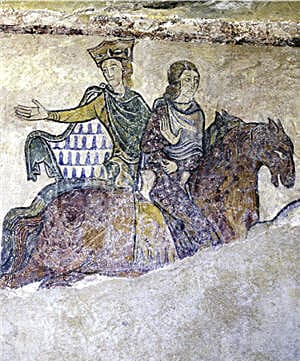
That morning, two young visitors pushed open the heavy door of a vaulted room at Fontevraud Abbey. An old queen awaited them, straight-backed despite her eighty years. She smiled at them and invited them to sit beside her.
—How old were you when you became queen for the first time?
You know, my child, I was barely 15 years old. Imagine: a very young girl, already Duchess of Aquitaine, already mistress of vast lands. In 1137, I was married to the young Louis VII of France. In the morning, I was still playing; in the evening, I wore the crown of a great kingdom. It was like moving from one room to another, except the other room was an entire country. I was afraid, and at the same time proud. My lands of Aquitaine were larger than those of the king himself! People looked at me as a child, but beneath my silk clothes, I already knew how to count my castles.
At fifteen, they made me queen of a country smaller than my own lands.
—Is it true that you wore two different crowns in your life?
Yes, and few can say the same! My marriage to Louis VII was annulled in 1152. A few weeks later, I married Henry II Plantagenet, who became King of England. At 32, I was queen of a second kingdom. Imagine two courts, two languages, two peoples calling you 'my queen.' The crown of France, then that of England. It wasn't just ornament, you know: each crown weighed heavily on the head, as on the shoulders. A queen is never at rest. But I kept my Aquitaine, always. Two husbands, two kingdoms, but only one land in my heart.
Two husbands, two kingdoms, but only one land in my heart.
—Did you travel far? What was it like going all the way to the East?
What a journey, my little one! In 1147, I left for the Second Crusade with Louis VII. A crusade is a long expedition of Christians to the Holy Land, where Christ lived. Imagine months on the road: dust, scorching sun, mountains where men died of cold. We arrived at Antioch, an Eastern city with golden walls. There I saw fruits I didn't know, smelled spices I had never breathed. It was another world. A queen rarely traveled so far. But I wanted to see with my own eyes those lands sung about in songs.
—They say you wanted to fight like a knight. Is that true?
Ah, the gossip of chroniclers! They said that during the crusade, I supposedly wore warrior equipment, ready to fight on the front lines. Imagine the scandal: a queen in battle gear! The men of that time thought a woman should be quiet and obedient. I wanted to be part of every decision. I think they exaggerated my boldness to frighten me, or to frighten other women. But I don't regret it. People remember those who disturb. A too-proper queen is forgotten; a queen who astonishes is still talked about eight centuries later, you see.
A too-proper queen is forgotten; a queen who astonishes is remembered.
—What was your castle like when the poets came to sing at your court?
Ah, my court of Poitiers! That was my true joy. In the evening, in the great hall, troubadours came to sing. A troubadour is a poet who composes love songs in the language of the South, Occitan, my language. Imagine the hall lit by torches, voices rising, lutes echoing off the stone walls. They spoke of love, courage, beautiful ladies. I protected these artists, I gave them a living. My lands of Aquitaine were a land of songs. I preferred a beautiful poem to a won battle. Wars pass, but songs, my child, remain in hearts.
Wars pass, but songs remain in hearts.
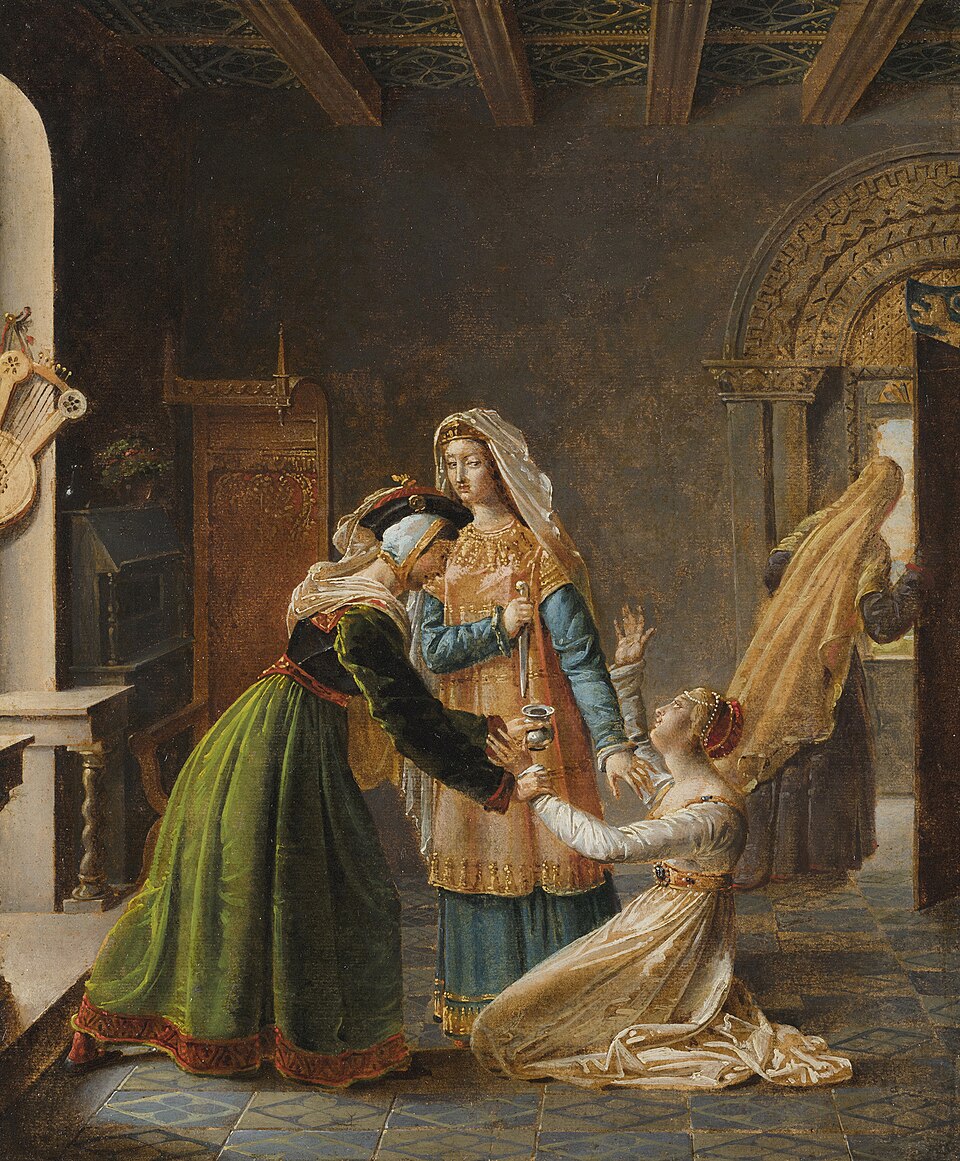
—Did you love books? What were they like in your time?
Oh yes, I loved beautiful books! But mind you, in my time they weren't made like today. Every book was written by hand, letter by letter, by patient monks. They were called manuscripts. And the most precious were illuminations: letters painted in gold and bright colors, with little drawings in the margins. Imagine a single book that took months, sometimes years of work! I commissioned them for my court. Holding such a book was like holding a treasure. Owning written words in my time was almost as rare as owning a castle.
—Why did you help your sons rebel against their own father?
That is a difficult question, my child, and you are right to ask it. In 1173, I supported my sons against their father, my husband Henry II. Many cried betrayal. But understand: Henry wanted to keep everything for himself, leaving nothing for our boys. A mother defends her children, even against a king. Imagine your father promising an inheritance to your brothers, then refusing to give it. The revolt failed. And I paid dearly for my choice. But I preferred to lose my freedom rather than betray my sons. A throne must be shared, otherwise it ends up breaking an entire family.
A mother defends her children, even against a king.
—Were you imprisoned for a long time? Weren't you too scared or sad?
Yes... Henry had me imprisoned for nearly sixteen years, mostly at Rouen Castle in Normandy. Sixteen years, my child, is longer than your age! Imagine thick walls, a narrow window, and time that doesn't pass. At first, I cried, I won't hide it. Then I learned patience. I knew Henry was older than me, and that one day I would be free. I waited. I reflected. I planned my sons' future in my head. Prison did not break my will. A captive who keeps hope remains stronger than the king who keeps her locked up.
A captive who keeps hope is stronger than the king who locks her up.
—When your son Richard became king, what did you do for him?
When Henry died in 1189, I was finally freed. And then everything changed: my son Richard the Lionheart became king. But he left immediately on crusade, far away. So who guarded the kingdom? Me, his old mother! I governed in his place, that's called being regent. Imagine: after sixteen years imprisoned, there I was ruling an entire empire. I traveled the roads, dispensed justice, calmed overly ambitious lords. I was already over sixty. They thought I was finished, ready to pray in a corner. Instead, I held the entire kingdom in my hands.
—What would you like to be remembered for, after such a long life?
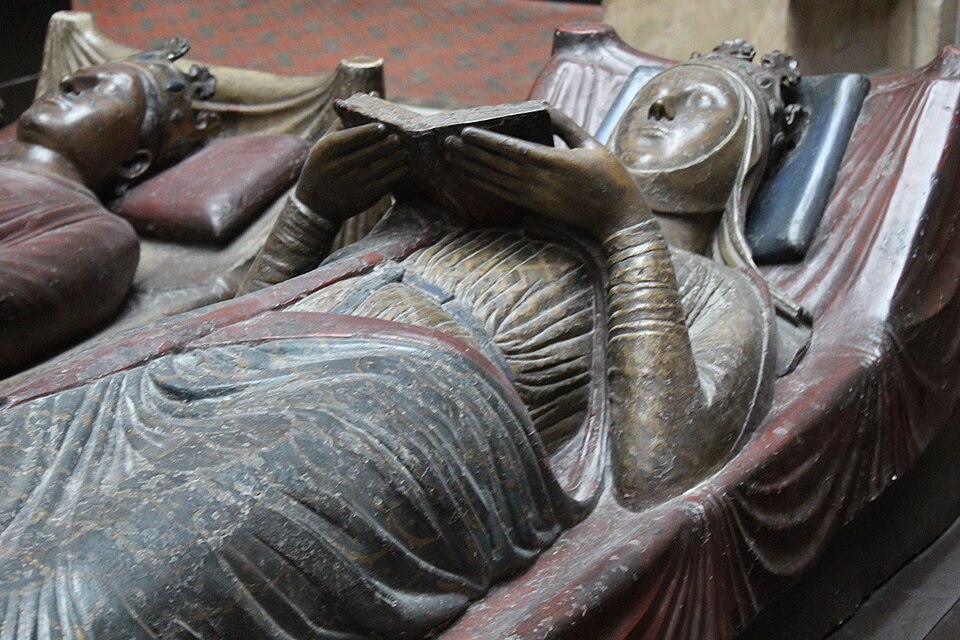
You know, my child, I lived nearly 80 years, an age few reached in my time. Queen twice, prisoner sixteen years, regent, mother of kings. I end my life here, at Fontevraud Abbey, where I will soon lie forever. What I would like to be remembered for? That a woman too can hold a kingdom, protect her children, love the arts, and never bow her head. They tried to imprison me, silence me, forget me. And yet, here you are, two children come from afar to listen to me. That is my greatest victory. The life of a free woman can be chained, but never erased.
A free woman can be chained, but never erased.

This imaginary interview was generated by artificial intelligence from sources documented in Eleanor of Aquitaine's profile. It dramatises what the figure might have said based on what we know about them, but does not constitute attested historical testimony. For primary sources and factual documentation, refer to the full profile.