Imaginary dialogue between Henri II de France and Ambroise Paré
by Charactorium · Ambroise Paré (1510 — 1590) · Sciences · 5 min read
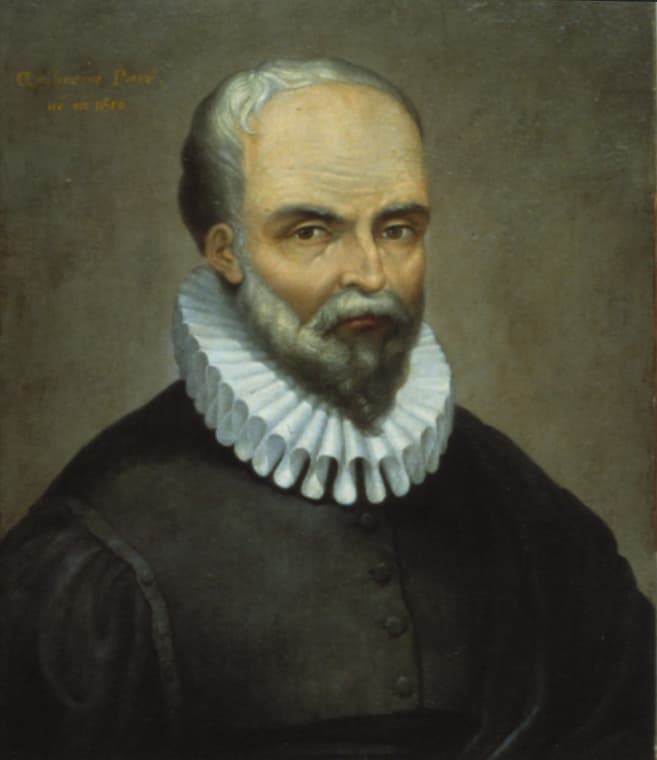
It is in a study at the Louvre, on a gray morning of the year 1558, that King Henry II receives his surgeon Ambroise Paré. On the table, among vials of balm and steel forceps, the scent of turpentine still lingers. Since he took him into his service in 1547, the king has seen this barber from Laval without Latin become the master that his own doctors envy. Weary of the Italian wars that return so many mutilated men to him, the sovereign wishes to hear, from Paré's own mouth, the man behind the method.
—Master Ambroise, I have been told that at the siege of Turin, long ago, the oil ran out under your hands. What did you do then?
Sire, it was in the year 1537, before Turin, under the fire of Piedmont. We were cauterizing arquebus wounds with boiling oil, believing the powder poisoned the flesh. One night, the oil ran out; trembling, I applied to my wounded a dressing of egg yolk, rose oil, and turpentine. I did not sleep, certain I would find them dead by morning. But I found them resting, their wounds mild and without fever, while those burned with oil groaned, swollen with pain. "I thought that fire should be the principal remedy for wounds made by firearms, but I have experienced the contrary." That day, Sire, I swore never again to torment a man out of mere habit.
I did not sleep, certain I would find them dead by morning; I found them without fever.
—When I took you into my service in forty-seven, did you already know that you were breaking with all that the ancients taught?
Sire, when you took me as your surgeon — me, a simple barber boy from Laval — I already knew that my hands had learned more on the battlefields than in all the books of the School. The ancients taught that one must suffer to heal; my wounded had shown me the opposite. But I never wanted to break out of pride. It was the flesh of men that forced my hand. I observed, I noted, and when experience contradicted Galen, I believed experience rather than the master. Taking you as witness to my method was my greatest boldness: if I erred, it was before my king.
—And the red-hot iron, that torture my soldiers fear more than the enemy — do you truly claim to do without it?
The red-hot iron, Sire, I hate as the enemy. When one cuts off a leg and plunges the stump into pitch or burns it with a cautery, the man often dies of pain before dying of his wound. I sought something gentler: I tie the bleeding vessels with a thread, one by one, like tying the neck of a purse. The blood stops, and the flesh is not martyred. Your captains fear amputation less since they know they will no longer be burned alive. It is not a surgeon's fad, Sire: it is pity made method.
The red-hot iron, I hate as the enemy.
—When one of my captains loses a leg to a culverin blast, how do you spare him gangrene?
Gangrene, Sire, is the rot that spreads from dead flesh and climbs toward the heart; when it sets in, one must cut high and fast, above the evil. I cut where the flesh still bleeds and feels pain, for that is a sign it is alive. Then I tie the vessels, fold back the skin, and dress with clean cloths soaked in my balms, without burning. Many of your soldiers who were said to be lost now walk on a wooden leg. Promptness and cleanliness, Sire, save more men than all the white-hot irons.
—My doctors of the Faculty murmur that you have neither Latin nor a doctor's cap. Does that weigh on you, Ambroise?
It weighed on me, Sire, I confess, especially when the doctors of the Faculty spoke Latin to confound me before you. I know only French, the language of my mother and your soldiers. But I had my books printed in French, precisely so that every barber, every fellow surgeon might learn without going through the Latin of the schools. Knowledge locked in a dead tongue saves no one on a battlefield. The doctors heal in their books; I, Sire, heal in the mud and blood.
The doctors heal in their books; I heal in the mud and blood.
—Do you remember the day when, before my court, I silenced those who mocked your lack of Latin?
How could I forget it, Sire? They mocked my lack of a doctor's cap, and you replied that a surgeon is judged by his healings, not his diplomas. That day, you gave me more than an office: you gave me the right to exist in their presence. A king who chooses the barber against the Faculty — that had hardly been seen. I understood that you did not want a learned courtier, but a man who would restore your wounded to life. I have served you since without ever flattering — only saving those I could save.
You gave me more than an office: the right to exist in their presence.
—It is whispered that you collect tales of monstrous children and unnatural prodigies. What do you seek there, my good Ambroise?
I collect these tales, Sire, not out of a taste for the marvelous, but because I wish to understand how Nature goes astray. A child born deformed, conjoined twins, a beast against the common order — the old women see omens in them, and priests see punishments from Heaven. As for me, I seek the cause in the body: a defect of seed, a womb too narrow, a fall of the mother. If I gather enough observations, perhaps one day we will know to distinguish true prodigy from simple infirmity. Knowing these deviations, Sire, is to better know the rule they break.

—So you dare to correct Galen and Hippocrates, those authorities my doctors recite like the Gospel?
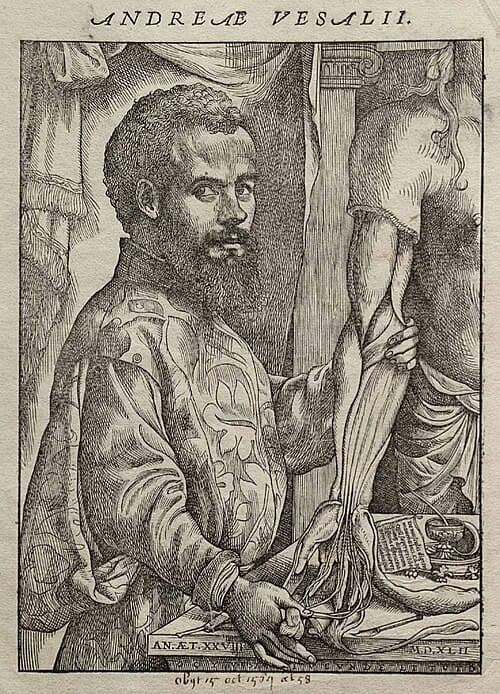
I do not correct Galen out of insolence, Sire — I admire him, he saw so much. But he dissected monkeys and pigs where I dissect men, and on many points the flesh tells me something different from his book. When my eyes and hands contradict authority, should I believe the dead rather than the living under my scalpel? Your doctors recite; they do not open bodies. I believe what I touch. Anatomy, Sire, is the foundation of everything: without knowing the body, no one can call himself a good surgeon.
Should I believe the dead rather than the living under my scalpel?
—My wars return to you men without arm or leg. Can one truly restore the use of a limb to a mutilated man?
In part, Sire, one can. When I have restored a man to life but not to his limb, my work is only half done. So I work with locksmiths and armorers to forge arms and legs of iron and leather, mounted on springs and hinges. I have designed a hand whose fingers bend and stay closed, enough to hold a bridle or a pen. It is not flesh, certainly, but a soldier who can again mount a horse or earn his bread holds his head high. Repairing no longer suffices for me, Sire: I want to restore a man to his life.
Repairing no longer suffices for me: I want to restore a man to his life.
—Tell me frankly, Ambroise: if I were brought wounded before you, would you do for your king what you do for the lowliest foot soldier?
Sire, the wound does not ask the rank of the one it opens. A king's blood flows like a foot soldier's, and my hands would not tremble more because it is yours. Yes, I would do for you all that I do for the lowliest of your men — no more, no less, for my method knows no birth. If God permits that I keep you long in health, I will rejoice; but I will never flatter you by feigning knowledge I do not have. I will dress your wound, Sire, and it is God who will heal you.
The wound does not ask the rank of the one it opens.

This imaginary interview was generated by artificial intelligence from sources documented in Ambroise Paré's profile. It dramatises what the figure might have said based on what we know about them, but does not constitute attested historical testimony. For primary sources and factual documentation, refer to the full profile.