Imaginary interview with Ambroise Paré
by Charactorium · Ambroise Paré (1510 — 1590) · Sciences · 6 min read
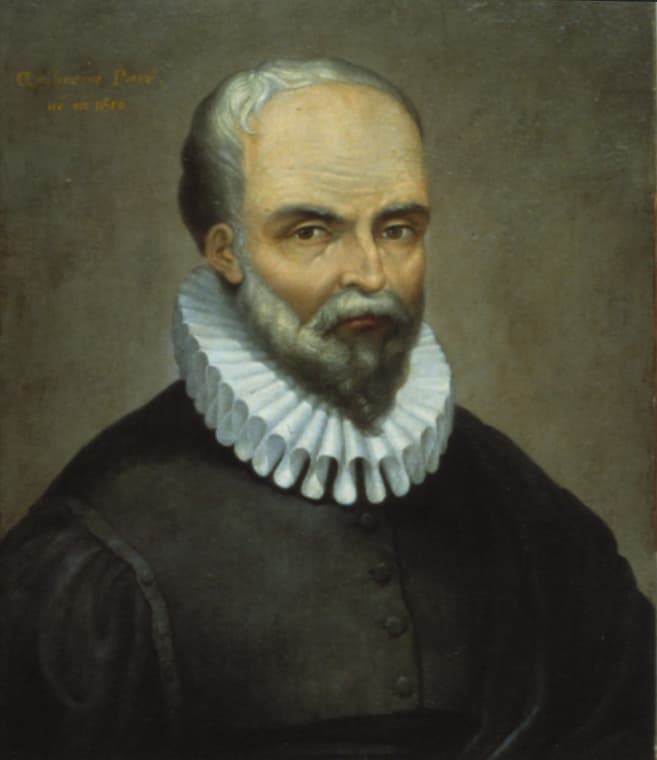
Paris, a winter evening in 1585. In his lodgings near the court, cluttered with anatomical plates and instruments of polished iron, the old king's surgeon receives us, a notebook of observations still open on the table. Past seventy-five, his hand remains steady and his speech, vigorous, keeps the accent of a craftsman who has seen more wounds than books.
—How did a simple barber-surgeon, without a university degree, come to treat kings?
I've been reproached enough: I never wore out my breeches on the benches of the Faculty of Medicine of Paris, I have no doctor's Latin. I learned my trade with razor and probe in hand, at the Hôtel-Dieu, among the poor whom no one cared for. Then came the armies, and the battlefields made me a master better than any lecture hall. In 1547, I became surgeon to King Henri II, and after him to three more kings. The scholars clung to their ancient texts; I held the wounded body. When a man bleeds, he doesn't ask for your diploma, he asks you to stop him from dying. That is all my title.
When a man bleeds, he doesn't ask for your diploma, he asks you to stop him from dying.
—Do you remember the day you stopped pouring boiling oil on wounds?
I'll remember it until my end. It was at the siege of Turin, in 1537. I had been taught that arquebus wounds were poisoned by gunpowder, and that boiling oil must be poured on them to drive out the venom. But one night, the oil ran out. Trembling, I made an ointment of egg yolk, rose oil, and turpentine, and anointed the wounded without burning them. I did not sleep, thinking I would find them dead in the morning. On the contrary: those ones rested gently, without fever, their flesh healing well; the others, cauterized, burned with pain and swelling. So I resolved never again to cruelly burn these poor people. That is the whole beginning of my Treatise on the Arquebus Wound.
I resolved never again to cruelly burn these poor people.
—What did you understand, that morning, about the origin of gunshot wounds?
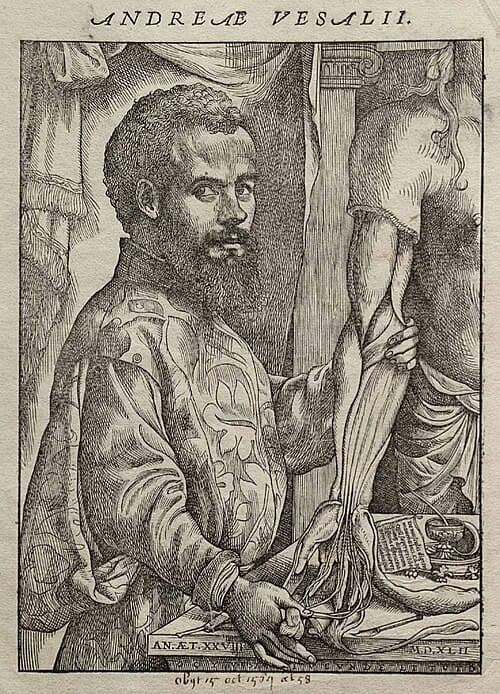
I understood that the ancients were wrong, and that I had been wrong with them. I had been told again and again: gunpowder carries a poison that corrupts the flesh. But my eyes and hands taught me otherwise. I experimented the contrary, and found that rose oil with theriac was better than all the fire in the world. It is not the weapon that poisons, it is the mortification that takes hold of a poorly treated wound. Look at Andreas Vesalius, who published his great anatomy in 1543: he too dared to look at the body rather than believe Galen on his word. We were of that time when people stopped reciting and finally observed. I never wrote anything except what I had seen on a hundred wounded men, not what a book claimed.
—Why did you oppose using red-hot iron to stop bleeding during amputations?
Because it is a barbarity that kills almost as much as it saves. To stop the hemorrhage of a severed limb, red-hot iron or boiling oil was applied to the living flesh: the pain killed more than a few, and gangrene often set in where the fire had passed. I preferred to grasp each vessel and tie it with a thread — the ligature. As I wrote in my Ten Books on Surgery: I do not wish to use cauteries, nor fire to stop the blood, but I will use ligatures. A simple forceps to hold the vessel, a thread to tie it, and the man keeps his life without screaming. The gentle often achieves what the cruel cannot.
The gentle often achieves what the cruel cannot.
—What did you reply to the doctors who judged your methods contrary to tradition?
I replied with the respect due to their gown, but without yielding on the substance. Anatomy is the base and foundation of surgery, and without knowledge of the human body, one cannot be a good surgeon — I said and maintained this. Yet many held the humors and old texts as the only truth, and had never opened a body with their own hands. I dissected, measured, drew, and recorded everything in my notebook. During the Wars of Religion that began in 1562, I had a thousand occasions to test my ligatures on the living. When a scholar told me it could not be done, I showed him the healed patient standing. The dispute of words always yields before the healed man.
The dispute of words always yields before the healed man.
—It is said that, in old age, you still made iron limbs for the crippled. What drove you?
Pity, and the challenge of the craftsman. Cutting off a limb saves a life; but what life does one leave to a man who has no hand to earn his bread or greet his prince? So I sought, even in my old age, to give back a little of what amputation had taken. I designed articulated wooden legs, iron hands moved by springs and small gears, whose fingers could bend and hold. I worked on these with locksmiths and clockmakers, for the wounded body needs the help of the blacksmith as much as the surgeon. It is not only wounds that must be dressed: it is the whole man that must be set back on his feet in the world.
It is not only wounds that must be dressed: it is the whole man that must be set back on his feet.
—How did you imagine these mechanical hands, you who were a man of the scalpel and not of clockwork?
The surgeon must know how to look at everything. When I saw the mechanism of a lock or the gears of a clock, I thought of the articulation of a finger, the play of tendons that I had so often exposed under the surgical probe. The human body is itself a wonderful machine, made of levers and cords; one need only copy its art with iron and leather. I recorded these inventions among my works, with their figures, so that another after me could remake and perfect them. For I never believed that knowledge should die with its man. What I found, I wrote in good French, not Latin, so that the lowliest barber in the provinces could benefit from it.

—What drove you to write an entire book on monsters and prodigies?
The same thing that drives me to open a body: the desire to understand what Nature does, even when she seems to go astray. I have seen and considered the monsters and prodigious things born against the order of Nature, and I judged it good to know them for the advancement of science. Some see omens and Heaven's wrath; I do not rule out God's finger, but I also seek natural causes — a defective seed, a womb too narrow, a blow received. My Treatise on Monsters and Prodigies, published in 1573, thus mixes the surgeon's observation and man's wonder. For there is as much to learn from what deviates as from what follows the rule.
There is as much to learn from what deviates as from what follows the rule.
—Do you remember a royal wound that particularly marked you?
The death of King Henri II, in 1559, still haunts me. During a tournament, a lance broke and a splinter of wood entered his head through the eye. I was summoned, and with others we tried on the heads of executed criminals to understand the path the splinter had taken. We tried everything; nothing worked, and the king died after several days. It was a lesson in humility: there are wounds before which art remains mute. A surgeon who thinks himself all-powerful is a fool or a liar. I dressed the wound, but it was God who healed him — or called him back. That measure is not learned in books, but at the bedside of the dying.
I dressed the wound, but it was God who healed him.
—If you could imagine being read a century from now, what would you want people to remember about your work?
I don't know if I will be read, and it is vanity to think too much of it. But if some young surgeon one day opens my Works, I would want him to take from them less my recipes than my way: to look before believing, to tie rather than burn, to pity the patient as a brother. Cauterization with iron, boiling oil, those cruelties I fought — may they be forgotten, and good riddance. Let them rather keep this simple idea, which I defended all my life against the disputers: surgery is not a trade of words, but a help from man to man. The rest — my ligatures, my iron hands, my gentle dressings — others will do better than me. I will have been only a beginning.
To look before believing, to tie rather than burn, to pity the patient as a brother.

This imaginary interview was generated by artificial intelligence from sources documented in Ambroise Paré's profile. It dramatises what the figure might have said based on what we know about them, but does not constitute attested historical testimony. For primary sources and factual documentation, refer to the full profile.