Imaginary interview with Aminata Sow Fall
by Charactorium · Aminata Sow Fall (1941 — ?) · Literature · Culture · 6 min read
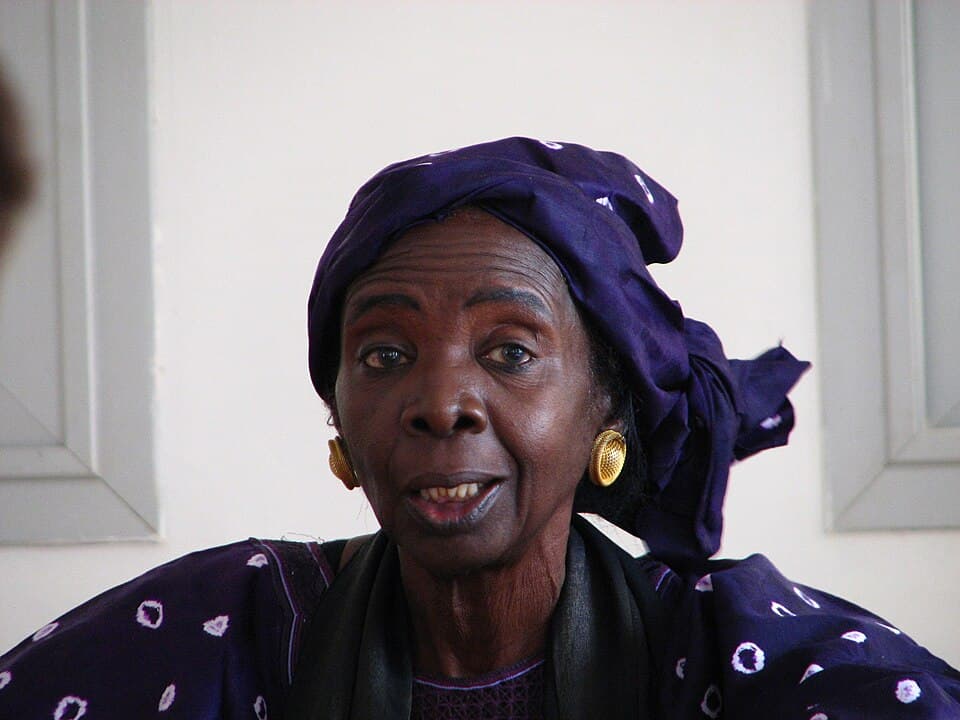
Late afternoon in Dakar, in a house in the Médina where an inner courtyard tempers the heat. Aminata Sow Fall receives between two piles of manuscripts, a glass of ataya within reach. The conversation begins in a low voice, that of a woman who prefers to observe before speaking.
—How does one become a novelist when, around you, it's almost exclusively men who write?
In 1976, when Le Revenant came out, I was made to feel I was sitting at a table that wasn't set for me. The Francophone African novel spoke with a deep, masculine voice, and here was a woman from Saint-Louis inviting herself in with the story of Bakar, that boy who believed success lay in clothes and money spent. I didn't want to write a manifesto. I wanted to show a man trapped by appearances, because I saw that sickness everywhere around me. What they called a breach, I experienced as a necessity: someone had to tell society here through a woman's eyes, without asking permission.
I was sitting at a table that wasn't set for me.
—Why did you insist on first publishing in Africa rather than in Paris?
My first books came out at the Nouvelles Éditions Africaines, in Dakar, and that was no coincidence. I write first for people who, when reading, recognize the smell of their street, the noise of their market, their neighbor's boubou. Going through Paris meant accepting that someone else would decide if my world deserved to be printed. I taught French, I read the great European authors, and I measured exactly how much our voice was missing from their shelves. So publishing here meant saying: the African reader exists, he doesn't need to be translated for himself. That conviction has never left me, and it explains many choices I made later.
—Where did you get the idea of imagining a beggars' strike?
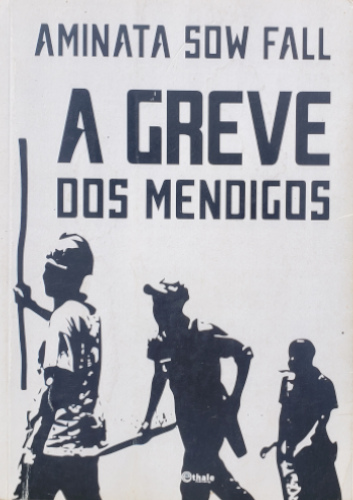
From the street, quite simply. In Dakar, beggars are everywhere; you chase them away in the morning and look for them in the evening, when you have to give alms to clear your conscience. One day I asked myself: what if they decided, themselves, to stop holding out their hands? La Grève des Bàttu was born from that reversal. The bàttu are the outcasts, those swept from the city like a courtyard, and then by withdrawing they trap the powerful. For without a poor person to give to, how does the rich fulfill his duty? I wrote it with irony, but irony was a knife: I wanted people to laugh and feel ashamed in the same breath.
Without a poor person to give to, how does the rich fulfill his duty?
—You talk about the sébile, that small calabash. Why did this object occupy you so much?
Because an empty calabash says more than a long speech. The beggar holds it out, you toss a coin in, and everyone thinks they're square with God. In my novel, it's those withdrawn bowls, those hands that no longer reach out, that panic the notables. Alms — sadaqa — is not a kindness among us; it's a pillar, a religious duty one cannot do without. By depriving the rich of their poor, I wasn't touching money: I was touching salvation. That's where the book disturbed, I think. You can mock the powerful, but when satire lodges its finger in faith and hypocrisy mixed together, then you no longer laugh quite the same way.
—What did the selection of this novel for the Goncourt Prize in 1979 mean to you?
One morning I was told that La Grève des Bàttu was on the final shortlist for the Goncourt, in Paris. I didn't win, and honestly, that's not what marked me. What mattered was that a story about Dakar's beggars, written in Wolof in its soul even though the sentences were French, had made it that far. An African woman, for the first time, on that list. It opened doors I hadn't sought: translations, readers on other continents, students suddenly studying our streets. I've always thought that recognition from elsewhere is only worth what it makes visible here. The prize is forgotten; the readers it brings you, never.
—In L'Appel des arènes, a child prefers wrestling to school. Does that boy resemble you?
Nalla didn't like school as it was imposed on him; he loved the arenas, the drums, the songs — everything his parents wanted him to forget. I wrote that novel in 1982 because I saw families dreaming of westernizing their children to the point of cutting them off from their own blood. The school notebook brandished as a promise of the future sometimes becomes a wall: you learn one world, and you erase the other, that of traditional wrestling, the voices of the elders. I'm not saying school is bad — I taught all my life. I'm saying that a transmission that requires forgetting where you come from doesn't educate, it mutilates. A child needs both banks.
A transmission that requires forgetting where you come from doesn't educate, it mutilates.
—You fought for a long time for African literature to enter the curriculum. Why so ardently?
Because a child who never opens a book that speaks of his own grandmother ends up believing that his life isn't worth telling. I spent years in teaching, then at the ministry in charge of Culture, repeating that obvious fact. We gave our students snowy landscapes and castles — beautiful, but silent about themselves. I wanted the school notebook to also welcome our griots, our arenas, our cities. This isn't withdrawal: reading the other is wonderful, provided you've first met yourself. Putting our texts in schools meant telling children here that their world has literary value, that it deserves ink as much as any other.
—In 1991, you founded Éditions Khoudia. What made this gesture necessary?
Fatigue, first of all, at seeing African manuscripts waiting for the whim of a Parisian office. I had published in Dakar, I knew it was possible, but I wanted to build something lasting. So with a few others, I co-founded Éditions Khoudia, right here, an independent house to publish our authors without begging for approval from elsewhere. This isn't just about pride. As long as the African book is thought up, manufactured, and sold thousands of kilometers away, we remain tenants of our own speech. I wanted the whole chain — writing, printing, selling — to be able to stand on the continent. Cultural sovereignty is not decreed in speeches; it is built with printers, booksellers, paper.
As long as the African book is manufactured thousands of kilometers away, we remain tenants of our own speech.
—What does a book printed on the continent concretely mean to you?
A modest yet decisive object. A book held in Dakar, coming from a press here, sold in a neighborhood shop, is a small victory against the idea that everything that matters is decided far away. I've seen young people light up discovering that a novel could speak their inner language. It's for them that I persisted. People think culture is big festivals — I knew the excitement of those years when Dakar wanted to be the capital of Negro arts — but culture, deep down, is these patient gestures: editing, distributing, getting people to read. A people that produces its own books stops waiting for someone else to tell them who they are.
—You are described as an observer more than a moralizer. How would you define your way of writing?
Writing, for me, is first of all observing. I watch my society, its contradictions, its hypocrisies, and I try to shed light on them without judging. That doesn't mean I have no anger — I do — but I distrust the writer who climbs onto a platform to hand out good and bad marks. In the morning, early, before Dakar fully awakens, I reread, I correct, I seek the right word that shows without accusing. My job is not to tell the reader what to think, but to place before him a mirror clear enough that he can no longer look away. The rest is up to him.
My job is to place before the reader a mirror clear enough that he can no longer look away.
—With L'Ex-père de la nation, you take on power itself. What did you have to say about it?
In 1987, I imagined a deposed president, imprisoned by those who had carried him to the top. I wasn't aiming at anyone in particular; I looked at a generation of independences that had promised heaven and reaped disillusionment. Corruption, the lone man drunk on his power, former comrades turned jailers — I observed all of that without needing to invent it. Again, I didn't want to write a pamphlet. I preferred to enter the head of that fallen man, listen to his voice, understand how one becomes both executioner and victim of one's own reign. That's how I believe I serve the truth: not by shouting, but by forcing the reader to sit for a moment in the skin of the one he would condemn.
This imaginary interview was generated by artificial intelligence from sources documented in Aminata Sow Fall's profile. It dramatises what the figure might have said based on what we know about them, but does not constitute attested historical testimony. For primary sources and factual documentation, refer to the full profile.