Imaginary dialogue between Léopold Sédar Senghor and Aminata Sow Fall
by Charactorium · Aminata Sow Fall (1941 — ?) · Literature · Culture · 6 min read
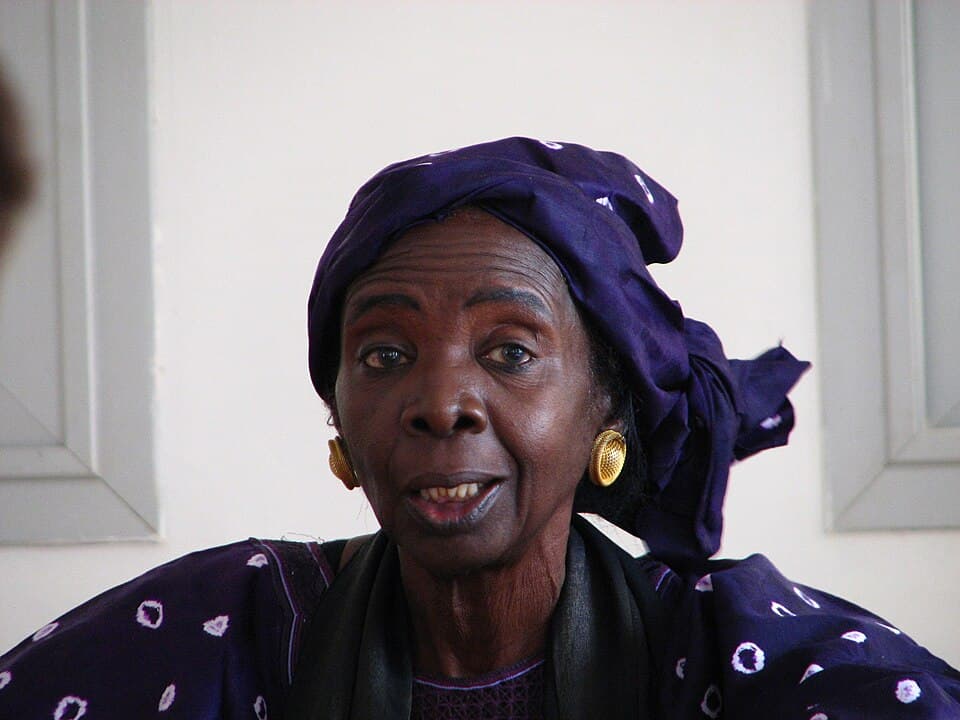
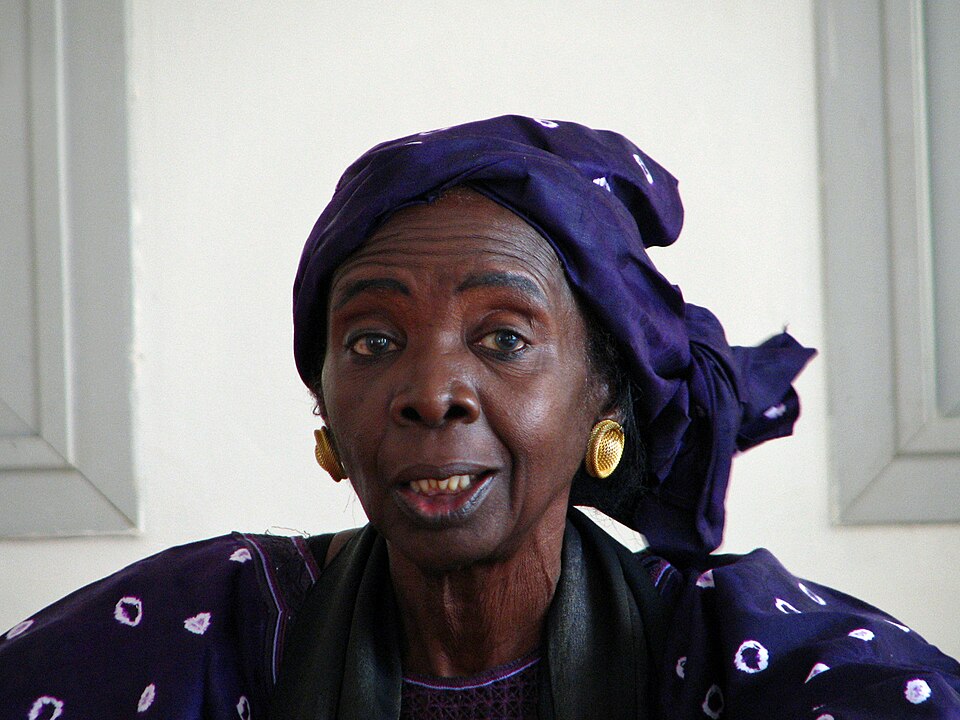
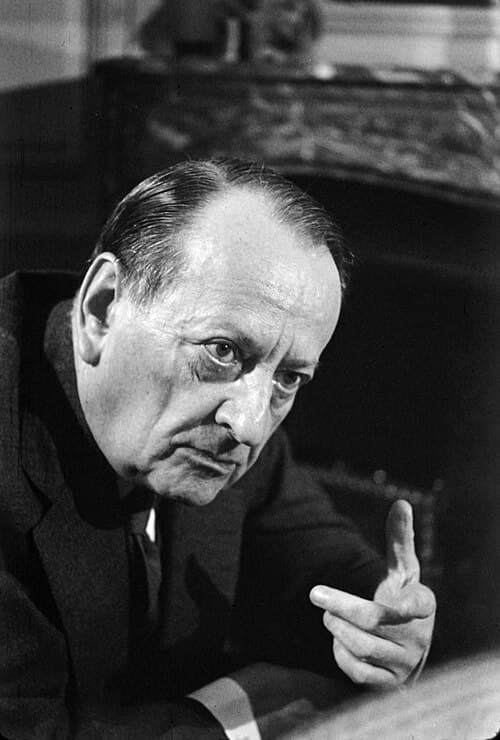
It is in Dakar, in the coolness of an inner courtyard where the ataya tea slowly steeps, that Léopold Sédar Senghor meets Aminata Sow Fall at the end of 1998. The poet-president, back in the country for a few weeks, has known this novelist since the years when she served the cultural institutions he himself had shaped. A fading light glides over the manuscripts piled near the typewriter; between the elder of Négritude and the first great female voice of the Senegalese novel, the conversation seeks less a formal interview than the continuation of an old dialogue on language, culture, and the place of the African writer.
—Dear Aminata, when you published The Return in 1976, with Nouvelles Éditions Africaines, did you know you were entering a house where almost no woman had yet spoken?
I knew it, and I think I knew it too well not to hesitate. Around me, the African novel was a men's affair — your friends, your juniors, all male voices speaking of Africa. I wrote The Return first because Bakar haunted me: this man who stakes everything on appearances, on clothes and money spent, until he loses himself. But by publishing it here, in Dakar, I also measured that I was opening a door. I never liked the word pioneer; it smells of solitary effort. Let's say I pushed through a breach, and other women rushed in after me. You who have so sung the African woman, you understand that one of us had to stop being sung in order to finally start writing.
One of us had to stop being sung in order to finally start writing.
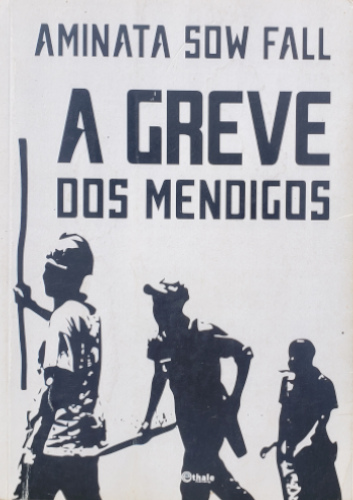
—I've heard that The Beggars' Strike was shortlisted for the Goncourt in 1979. Tell me: how did the idea of a beggars' strike come to you?
From the street, quite simply. In Dakar, the bàttu, those who have been chased away, are everywhere, and yet we don't see them — until the day we need them. Because in our Muslim society, giving alms is not charity, it's a duty: the sadaqa, the gesture that cleanses you. So I asked myself: what if the beggars withdrew? If the bowl emptied? The powerful could no longer fulfill their pious duty and would find themselves naked before their own conscience. This reversal made me laugh at first, then think. The Goncourt selection honored me, but I confess the real prize was seeing the book translated, read, debated, even into languages I don't speak.
What if the beggars withdrew? If the bowl emptied?
—You use irony against the urban elites. Were you not afraid of being accused of mocking our people's piety?
I never mocked piety; I mocked its instrumentalization. There is a huge difference between the man who gives because his heart commands him and the one who gives to buy paradise like one buys a front-row seat. My Mour, in the novel, wants to get rid of the beggars to beautify the city, then calls them back as soon as he needs their prayers. It's that hypocrisy I target, not faith. The rosary, the tasbih, can be a true prayer or a mere accessory of respectability. My role as a writer is not to judge souls — I leave that to higher powers. My role is to hold up the mirror and let each person recognize themselves, if they dare.
I never mocked piety; I mocked its instrumentalization.
—In The Call of the Arenas, your young Nalla prefers the tam-tams and wrestling to the school notebook. Isn't that the tragedy of our entire generation?
It is the tragedy, yes, but I refuse to resolve it too quickly. Nalla doesn't like school as it is imposed on him; he loves the arenas, the songs, the clamor of wrestling — everything his parents want him to forget in the name of modernity. Should we condemn school for that? No. Should we sanctify tradition? Not either. What fascinates me is the torn child, forced to choose between two worlds that each claim to save him. The griot's voice and the colonial notebook vie for the same boy. You built your entire work on this tension between Hellenic reason and Black emotion; I place it in a teenager running toward the arena while his mother calls him. No lesson at the end — only an open question.
The griot's voice and the colonial notebook vie for the same boy.
—When you once welcomed me among your literary friends, you said that writing begins with looking. Is that still your method, Aminata?
Always, and even more with age. Writing, for me, is first and foremost observing — I watch my society, its contradictions, its hypocrisies, and I try to bring them to light without judging. I get up early, before the heat of Dakar sets in, and I write in the calm of the morning, when the street is still quiet. The afternoon belongs to others: formerly the ministry, teaching, the manuscripts entrusted to me. But the real work is this slow gathering of gestures, words heard at the market, silences in families. In the evening, around the large shared dish, I listen more than I speak. A novelist is a patient watcher. I don't create my characters from nothing: I catch them, already alive, in the coming and going of a Dakar courtyard.
A novelist is a patient watcher.
—In The Ex-Father of the Nation, you portray a deposed president imprisoned by his close associates. Were you not afraid I might recognize myself a little?
What I feared most was that people would look for overly precise resemblances, when it is a fable. My man is no real man; he is the figure of the disillusionment that awaits any power when it cuts itself off from those it was meant to serve. You, you knew how to step down — that is an exception that honors you, and you know I sincerely think so. But around us, how many of our brothers have confused the nation with their own person, until they were betrayed by the allies they had nurtured? Postcolonial disillusionment is not an abstraction: it has faces, palaces, cells. I write this not out of spite, but because complicit silence seems the worst cowardice for one who wields the pen.
Postcolonial disillusionment is not an abstraction: it has faces, palaces, cells.
—In 1991, you founded Éditions Khoudia, right here in Dakar. Why did you want to publish Africa without going through Paris?
Because a literature that depends entirely on others to exist is not entirely free. I was published in Paris, I studied literature there, I love this French language we share — you know that better than anyone. But loving a language does not mean letting someone else decide which African books deserve to live. With Khoudia, I wanted the book to be produced, printed, distributed on the continent, in the hands of our readers. The physical book, for me, is a tool of sovereignty as much as an object of pleasure. You built institutions, festivals, a cultural policy; in my own modest way, I wanted to build a book chain. That our children one day hold books from our own presses — that is my ambition.
The physical book, for me, is a tool of sovereignty as much as an object of pleasure.
—You fight, they say, for African literature to enter schools. Is that, in your view, the real battle?
It is the battle that will decide all others. I have taught French, I have seen children recite landscapes and seasons that were not theirs, while their own world remained absent from textbooks. How can you love reading when no story speaks of you? I have always fought for our students to encounter, on school benches, stories born from their land, their language, their shared thiéboudienne and their common courtyards. It is not about chasing away the great French texts — it is about no longer making the African child a stranger in their own reading. School is where dignity is transmitted. If African literature truly enters it, then all the rest of my work will have served.
How can you love reading when no story speaks of you?
—We have debated so much, you and I, about French as a language of writing. Is the Wolof in your novels a response to my old theses?
A response, no; an extension, perhaps. I write in French, like you, and I do not deny it: it is the language in which my sentences find their breath. But I let Wolof surface everywhere — a bàttu, a word thrown out, the name of a dish, a mother's call. These words are not exotic ornaments; they anchor the text in the flesh of Dakar. The French language, in my work, must smell of market fish and street dust. You spoke of cultural métissage, of a give-and-take rendezvous; I do it sentence by sentence, forcing French to welcome my city. It is not a theory I defend; it is an ear I lend to what is truly spoken around me.
The French language, in my work, must smell of market fish and street dust.
—With Douceurs du bercail, very recently, you speak of exile and return. What is the 'bercail' (home) for a woman who has never left the country for long?
You don't have to leave to understand the longing of those who do. My Asta left everything for a better life in Europe, and she returns expelled, humiliated, with a fresh look at her own land. 'Bercail' is those smells, those familiar faces that call to her endlessly — dignity regained in what she thought she had left forever. I have seen so many of our people cross the sea, return broken, or never return, that I could not stay silent. Belonging is not a prison; it is a breath. I wanted to tell these children of the continent that return is not a failure, that you can hold your head high at home. You who have lived so much between two shores, you know what that word, 'bercail', can weigh in a life.
Belonging is not a prison; it is a breath.

This imaginary interview was generated by artificial intelligence from sources documented in Aminata Sow Fall's profile. It dramatises what the figure might have said based on what we know about them, but does not constitute attested historical testimony. For primary sources and factual documentation, refer to the full profile.