Kids interview Aminata Sow Fall
by Charactorium · Aminata Sow Fall (1941 — ?) · Literature · Culture · 5 min read
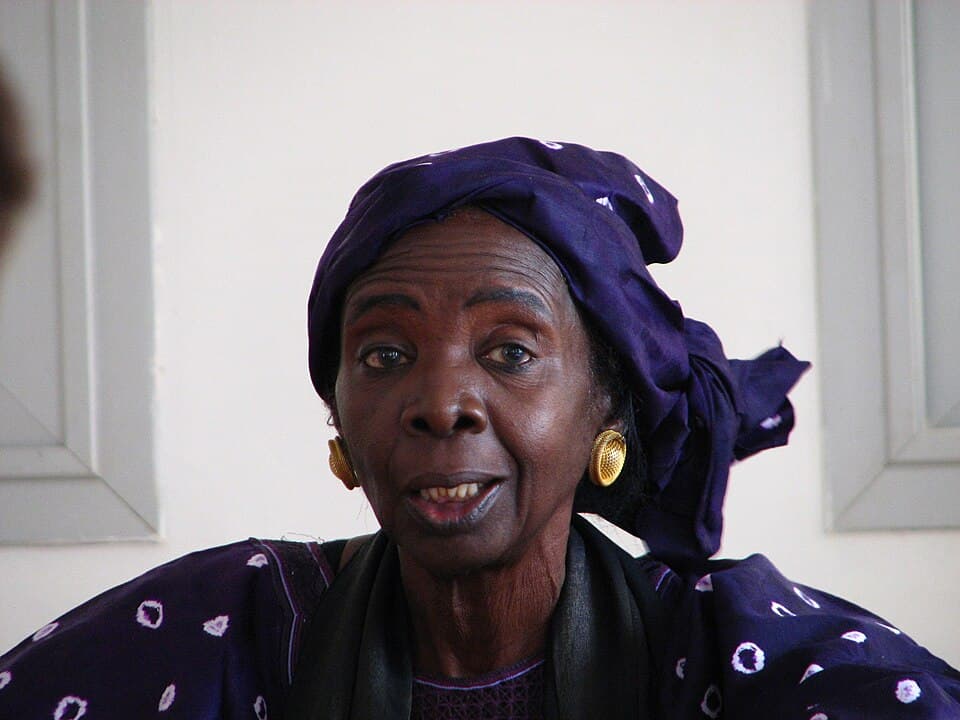
Two fifth-grade students visit a library in Dakar for their discovery class. An elegant lady in a boubou awaits them, a notebook beside her. It is Aminata Sow Fall, and she has agreed to answer all their questions, even the most surprising ones.
—Where were you born, and what was that city like when you were little?
I was born in 1941 in Saint-Louis, way up north of Senegal. You know, it was a strange city. Once, it was the capital of all French West Africa, what they called the AOF. So imagine: on the same street, you'd hear the Wolof of market women, the Arabic of prayers, and the French of school. Bridges, water everywhere, houses with colorful shutters. As a little girl, I watched everything. I listened to everything. I think it was there, between those two worlds that brushed past each other without understanding, that I learned to observe. And observing, my child, is already beginning to write.
Observing is already beginning to write.
—When you write, do you make everything up in your head, or do you copy real life?
Neither, you know! Writing, for me, is first about looking at my society, its contradictions, its little hypocrisies. I bring them to light, but without judging people. Imagine you sit on a bench at the market in Dakar for a whole morning. You see a rich lady give a coin to a beggar while looking away. You see a child laugh. I keep all that in my head, like in a big basket. In the evening, early in the morning especially, before the heat sets in, I take out my notebook and turn that basket into a story. Real life is already full of novels; you just have to open your eyes.
—Was it hard being a woman who writes novels in your time?
Oh yes, my child. In 1976, when my first novel Le Revenant came out, African literature was almost entirely written by men. A woman publishing a book? It surprised, it disturbed a bit. Imagine you walk into a room where everyone is talking, and no one expected your voice. It takes courage to say: 'I too have stories.' In Le Revenant, I tell about a young man, Bakar, who bets everything on appearances, on fine clothes, on money spent. I wanted to show that a woman could also look society straight in the eye.
I too had stories to tell.
—Do you remember what you felt when your first book came out?
I remember it as if it were yesterday. I was a little scared, I won't hide it. Publishing is like opening the door of your house to strangers. Le Revenant came out with Nouvelles Éditions Africaines, in Dakar. That meant a lot to me: my book was printed in Africa, for African readers first. I wanted a child here to hold a novel in their hands and say: 'this story speaks of my own world.' Do you understand? It wasn't just my book. It was a small door opening for other women after me.
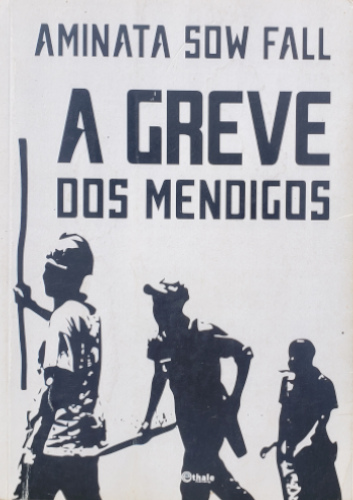
—Is it true you wrote a book about a beggars' strike? Why?
It's true! It's called La Grève des Bàttu, from 1979. The 'bàttu', in Wolof, are the beggars, those who have been chased away. So imagine: in my story, all the beggars of Dakar go on strike. They disappear from the streets. You might think: so what? Well, in our culture, giving alms is a very important religious duty. Without beggars, the rich can no longer give, nor feel generous. Suddenly, it's they who are lost! I turned things inside out like a glove. This novel was even chosen for the prestigious Prix Goncourt in France, a first for an African woman.
Without the beggars, it was the rich who were lost.
—Is there an important object in that book? Something you could touch?
Yes, the little calabash! It's called the sébile. It's the vessel that beggars hold out to receive alms, a coin, a bit of rice. Imagine a hollow bowl, very simple, worn by thousands of hands. In my novel, when the beggars go on strike, these sébiles remain empty and placed on the ground. And that emptiness, you see, makes more noise than all the speeches. It says: 'we exist, and you need us.' I love simple objects, my child. An empty calabash sometimes tells injustice better than a long sermon.
—Before writing, were you a schoolteacher? Did you like it?
Yes, I taught French, and I also worked at the Ministry of Culture in Dakar. I loved school, but something bothered me. African children mostly read stories from elsewhere, landscapes they had never seen. So I fought all my life for African literature to enter the classroom. Imagine you were only allowed to read stories from a faraway country, never your own. Wouldn't you miss it? A child must be able to open a book and recognize their market, their grandfather, their language. That's how you learn to love yourself.
A child must be able to recognize themselves in the books they read.
—You wrote about a boy who preferred wrestling to school? Tell us!
Ah, you're thinking of L'Appel des arènes, published in 1982! My hero is named Nalla. He doesn't like school as it is imposed on him. What he loves are the arenas, traditional wrestling, drums, songs. Everything his parents want him to forget so he can become 'modern.' Imagine being asked to choose between your village games and a gray notebook. It's not so simple, is it? I wanted to show that you can learn at school without despising what our grandparents passed down to us. The two worlds can hold hands, instead of turning their backs on each other.
—Why did you create your own publishing house? What is it exactly?
A publishing house is what makes books: it selects texts, prints them, sells them. For a long time, to be published, African writers had to go through Paris, far away. That saddened me. So in 1991, with others, I founded Éditions Khoudia, here in Dakar. Imagine you cultivate your own garden, but you're forced to sell your vegetables far away, at the neighbor's. One day you say: 'no, I sell here, at home!' That was my idea. That Africa publishes its own stories, with its own hands. It's not just business. It's dignity.
Let Africa publish its own stories, with its own hands.
—For you, is a book just pages? Or is it more than that?
Oh, it's much more, my child! A book made and read here, on the continent, is a small victory. You know, you can be free in your country and still depend on others to tell who you are. I believe that a people who print their own books hold a part of their freedom in their hands. Imagine a library full of African stories, written, printed, read in Africa. For me, each of those books is like a brick. Stack them one on top of another, patiently, and you build a house where the children here finally feel at home.
—If we came to spend a morning at your place, what would we see?
You would see me up very early, before the heat of Dakar sets in. That's my favorite hour. The street is still quiet, the house silent. I sit down with my manuscripts and I reread, I correct, I cross out. Writing is not a magic wand: I rework each sentence dozens of times. You would also see my library, at the heart of the house, full of books. And maybe a teapot for ataya, that very sweet mint tea served in three glasses. In the morning, I shape my stories; in the afternoon, I read those of others. A life entirely turned toward words.
This imaginary interview was generated by artificial intelligence from sources documented in Aminata Sow Fall's profile. It dramatises what the figure might have said based on what we know about them, but does not constitute attested historical testimony. For primary sources and factual documentation, refer to the full profile.