Kids interview Anandamayi Ma
by Charactorium · Anandamayi Ma (1896 — 1982) · Spirituality · 5 min read
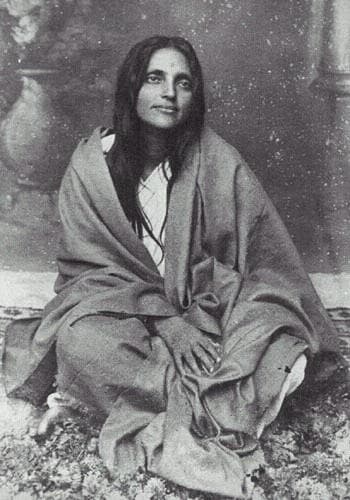
Two 12-year-old students, on a discovery trip, sit cross-legged before a woman in a white sari, covered in flower garlands. She smiles without saying anything, for a long time. Then, softly, she invites them to ask all their questions.
—How old were you when you got married?
I was about thirteen, my child, barely older than you. In my time, in Bengal, girls were married very young, it was the custom. My husband's name was Bholanath. Imagine a husband who, instead of commanding his wife, begins to respect her as one respects a master. Every time he approached me, a great peace seized me, a state we call bhava, a kind of trance of joy. So he understood something astonishing: he was not to be my ordinary husband, but my disciple. We lived like two souls turned toward the divine, side by side.
My husband became my disciple, and I his path.
—Who taught you everything you knew?
No one, my little one. I hardly went to school, I could barely read. When people asked me “who is your guru, your master?”, I answered that it was myself, or that the whole universe was my teacher. In 1922, I performed my own diksha, my initiation, alone, without any man guiding me. Imagine a child learning to swim without anyone showing him, just by listening to the water. This greatly surprised the people around me. But you see, the knowledge I sought is not learned from books. It awakens within, like a lamp being lit.
My master was myself, and the whole world.
—Why were you called the mother of joy?
Because I often smiled, even when my body became still with happiness! I was named Anandamayi Ma, which means “the mother filled with joy”. When we sang the name of the divine, what we call kirtan, a chant repeated together, something would pass through me. My body could freeze, tremble, or radiate for hours. Imagine hearing music so beautiful that you forget to move, to eat, almost to breathe. That was it. My close ones sometimes had to feed me by hand, gently, because I wouldn't come back from that joy on my own.
Joy carried me so far that I had to be hand-fed.
—How long did those moments when you stopped moving last?
Sometimes a few minutes, sometimes whole hours, my child. In the evenings, in the ashrams, they would light the small oil lamps for the arati ceremony, where a flame is waved before the divine. Drums beat, the harmonium played, that little bellows organ. And I would absent myself from the world. Imagine your body sitting still, upright, but you have gone far away, into a tranquil light. My close ones watched over me, patient, waiting for me to return. They were not afraid: they knew these silences were not an illness, but a visit from the divine.
—Where did you actually live? Did you have a house of your own?
No, I never owned a house of my own, and I didn't miss it. I was born in a small village, Kheora, then I lived in Dhaka. But in 1932, I left Bengal to walk toward the mountains of the Himalayas. My disciples built ashrams, those houses of prayer, and I would move from one to another without ever staying long. Imagine a bird that alights one day here, another day there, and always flies on. I slept at some people's houses, at others', welcomed everywhere. Refusing to possess, refusing to stay: that was my way of being free.
I had no home: the whole world was my dwelling.
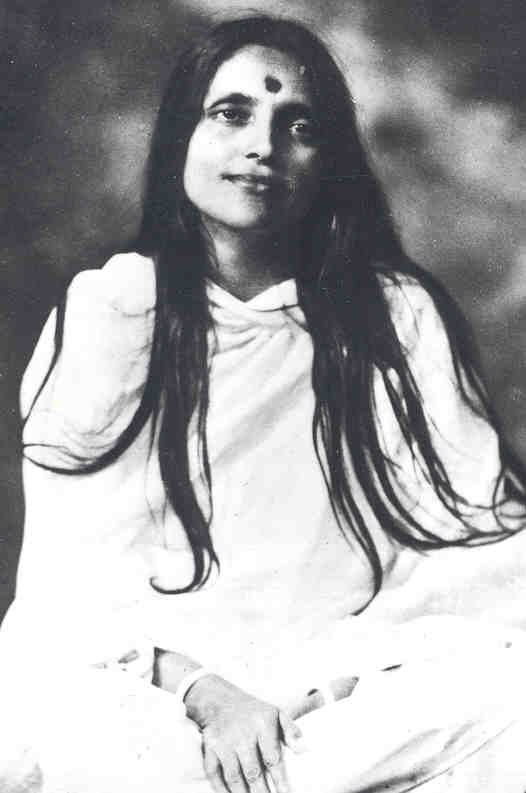
—What did you eat, and did you eat a lot?
Oh, I ate very little, my child, it amazed everyone! Only vegetarian food, without meat or fish, as our tradition dictates. Sometimes, when I was immersed in the joy of the divine, I completely forgot to eat, and my close ones had to bring food to my lips. Imagine someone so absorbed by a wonderful dream that they forget their plate. In the morning, even before sunrise, we were already singing in the ashram. The body, you see, I hardly thought about it. It was like a light garment I wore without paying attention.
—Is it true that very important people came to see you?
Yes, my child, but before me, all were alike: hearts seeking peace. The leader of the new India, Nehru, came, and his daughter Indira too. They would sit on the floor, like you now. I made no distinction between a minister and a peasant. Imagine a door open to all, without a guard, without a queue for the rich. What they came to seek was what we call darshan: simply to see me, to stay a moment in my presence, as one warms oneself by a fire. Title or money, that stayed outside, on the threshold.
Before the divine, a minister and a peasant sit on the same ground.
—How did people far from India hear about you?
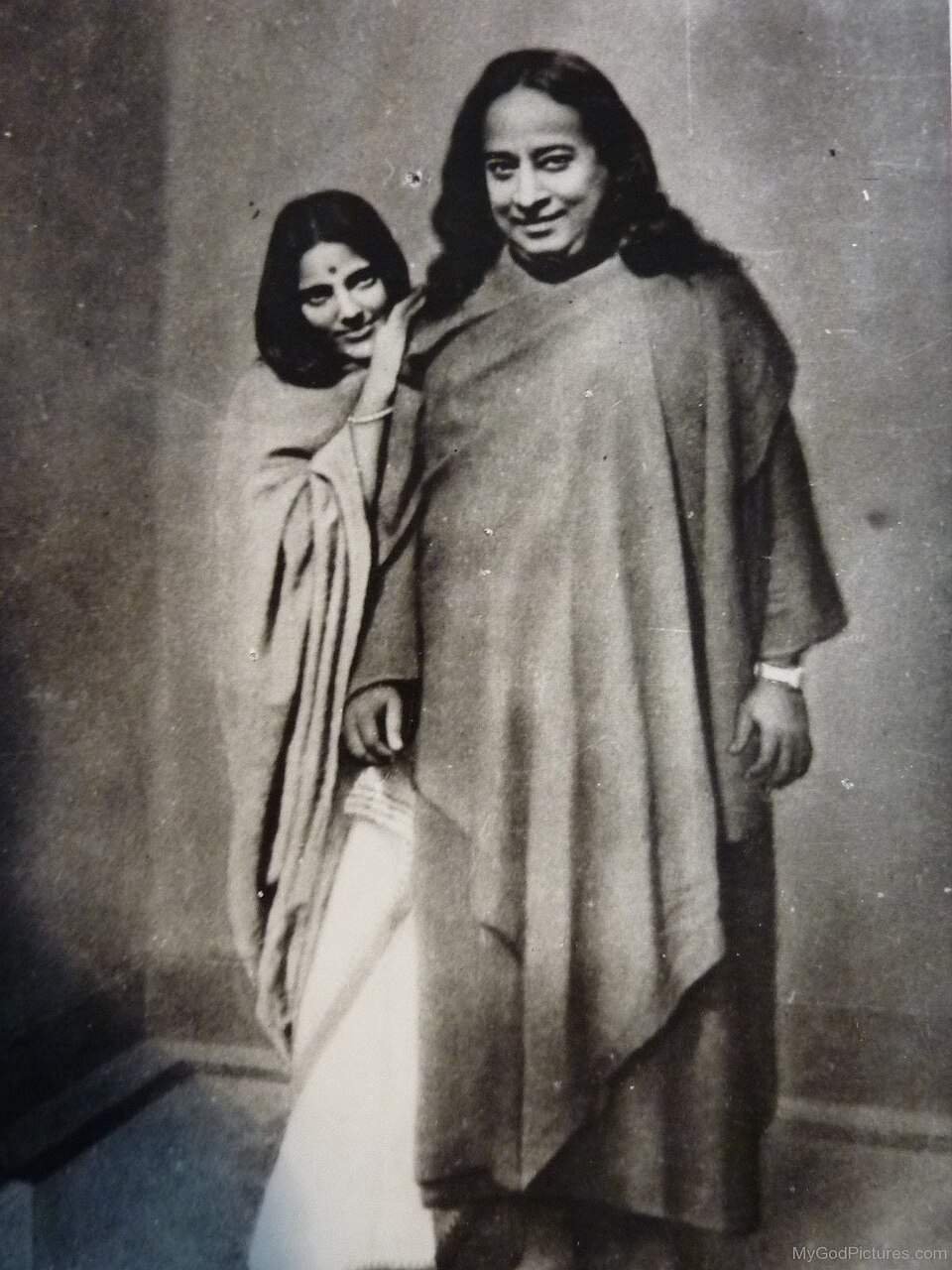
Thanks to a book, my child! A sage named Yogananda wrote his life story in 1946, and he devoted a whole chapter to me. He called me “the joy-permeated mother”, in English this time. That book traveled much farther than I did, all the way to the Western countries I never saw. Imagine a letter that crosses oceans and speaks of you to strangers. Then foreign visitors began to come to my ashrams, curious. You see, I never sought to be known. It was others who carried my name far away.
—What is the most important thing you wanted to tell people?
A very simple thing, my child. Everything that appears and disappears does not last: toys, beauty, even this body. But there is in you something that never changes, a calm light. That is what you must seek. My words were gathered by my disciples in collections, the Matri Vani, “the words of the Mother”. I would say: seek That which always remains, for that is your true nature. Imagine a river that flows without ceasing: what matters is not the passing water, but the source that never dries up.
What appears and disappears is not real; seek what remains.
—What remains of you today, after so long?
I left in 1982, in Dehradun, at the foot of the mountains I loved so much. My samadhi, my tomb, was raised in Kankhal, close to the sacred river, the Ganges. But you know, I once said that even as a little girl, “I was the same” as today. What I truly am is not born and does not die. The ashrams are still there, they still sing, they gather every year. Imagine a flame passed from one candle to another: the first goes out, but the light continues. That is my legacy: a joy that passes from hand to hand.
A flame goes out, but the light passes from hand to hand.
This imaginary interview was generated by artificial intelligence from sources documented in Anandamayi Ma's profile. It dramatises what the figure might have said based on what we know about them, but does not constitute attested historical testimony. For primary sources and factual documentation, refer to the full profile.