Imaginary interview with Anandamayi Ma
by Charactorium · Anandamayi Ma (1896 — 1982) · Spirituality · 5 min read
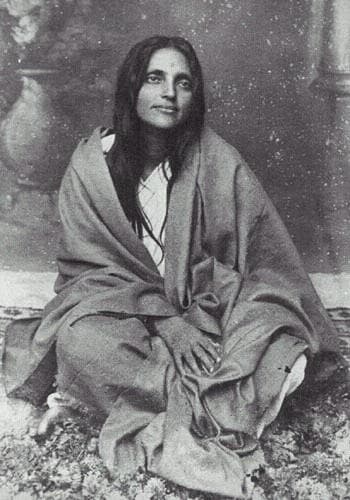
Winter dawn at Kankhal, on a bank of the Ganges veiled in mist. Seated on a simple mat, a white sari falling over her shoulders, she whom they call the Joy-Permeated Mother answers between two songs, her voice soft, often laughing. She speaks of this body in the third person, as if of a borrowed garment.
—They say you were married very young. How did that marriage turn into something else?
This body was thirteen when it was given to Ramani Mohan Cakravarti, the one called Bholanath. It was the custom in Bengal; nothing was asked of the child. But as soon as he approached, something rose, a wave not of this world, and this body would become still, absorbed. At first he thought it was an illness, then he understood. A husband expects a wife; he encountered something else. Little by little, he was the one who sat at my feet, he who received initiation from me. You see, there was never any reversal, for nothing was ever possessed. Human marriage binds two bodies; here, two souls simply recognized each other on the same path.
A husband expects a wife; he encountered something else.
—Bholanath followed you until his death in 1950. What did his presence mean to you?
He was the guardian of this body when this body could no longer guard itself. In the days at Bajitpur, around 1918, when the states would take me and my mouth no longer knew to ask for food, it was he who watched, patient, without understanding and without fleeing. A worldly man would have demanded his due; he accepted being stripped of everything a husband thinks he deserves. His death in 1950 was not a separation, for what united us did not begin with this marriage and could not end with a pyre. He had renounced without even uttering the word sannyasa: that is the most beautiful form of renunciation, the one not put on display.
He accepted being stripped of everything a husband thinks he deserves.
—When asked who your master was, what do you reply?
They always press me to name a guru, as if truth were bought at a counter and one had to show its provenance. But this body followed no one. In 1922, at Bajitpur, it was this body itself that performed its own diksha, the initiation, the gestures coming of themselves, like a river that knows its slope without being taught. To those who insist, I reply that my master is myself; or rather, the entire universe instructs me, every leaf, every face. This shocks, I know. They want a lineage, a chain of venerable names. But the One we seek has never needed an intermediary to be known in you.
Truth is not bought at a counter where one shows its provenance.
—Without studying texts or going to school, where did the words that your disciples collected come from?
This body barely knew the village school, and never studied the great books. The words later gathered in the Matri Vani were not thought and then spoken: they arose at the moment of questioning, and fell back into silence immediately after. I tell those who listen to seek the One who abides, the unchanging, and to let go of all that appears and disappears, for that is not real. These are not my ideas; I have none. A flute does not compose the melody; the air passes through it. My disciples noted the breath; they called it teaching.
A flute does not compose the melody; the air passes through it.
—Your close ones describe extraordinary states during devotional singing. What was happening within you?
The kirtan would begin, the harmonium would send out its plaint, the drums and cymbals would take up the rhythm, and the name of the divine would start to whirl in the air. Then this body ceased to belong to me. It could stiffen, tremble, or remain motionless for hours with a smile, while the devotees still sang. This is what they call bhava, and it was they, seeing this, who gave me the name Joy-Permeated Mother. There was no effort or seeking on my part: when the Name fills everything, there is no room left for the listener. They think I was absent. I was never more present than in those hours.
When the Name fills everything, there is no room left for the listener.
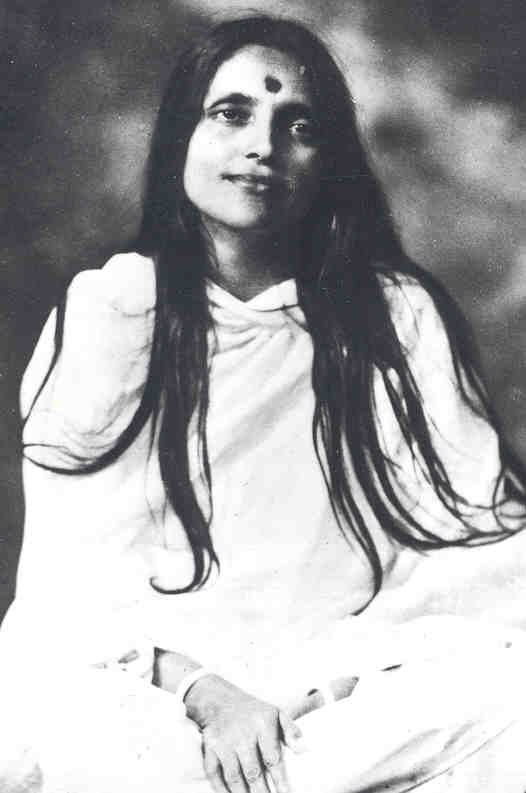
—They say you had to be hand-fed during those periods. How did you experience that bodily destitution?
This body ate very little, and sometimes nothing at all: then a loved one's hand would bring food to my mouth as one feeds a tiny child. This was not an ordeal I imposed on myself, understand; the body simply forgot to ask, occupied elsewhere. I never kept a fast to conquer myself — there was no one to conquer. The white cotton sari, a little rice when the body consented, that was all this life needed. People marvel or worry at so little. But when one has tasted the other food, that which is not chewed, the rest becomes a courtesy paid to the body.
The body forgot to ask, occupied elsewhere.
—You left Bengal and never stopped traveling. Why this refusal to settle?
In 1932, this body left Bengal and took the northern road, toward the heights of the Himalayas. Since then, it has never halted long anywhere. My disciples built ashrams, from Dehradun to Varanasi on the Ganges, and I passed through like water passes through a bed dug for it. They want me to choose a dwelling, a temple of my own. But to possess a place is already to be possessed by it. The bird does not ask which tree is its own. This itinerant life was not a discipline: it was the natural movement of one who no longer has a house to defend.
To possess a place is already to be possessed by it.
—At Kankhal today stands your samadhi. What meaning do you give to these places kept after a being?
The word samadhi first designates deep absorption, that state where the meditator and the One sought are no longer two. Then men gave the same name to the tomb of saints — here, at Kankhal, near Haridwar, on the bank of the Ganges. This makes me smile gently. They think they keep someone under a stone, when they could never keep anything alive. Let the faithful come to sing there, to light the lamp of the arati; that is good for their hearts, and I do not refuse them. But do not seek the Mother in a monument. What abides forever is your true nature; the rest is but an address left for those who love.
They think they keep someone under a stone, when they could never keep anything alive.
—Men of power like Nehru, and his daughter Indira, came to sit before you. What were you seeking in each other?
They came, yes, Jawaharlal Nehru and his daughter Indira, and many others whom the world deemed great. But before this body, a head of state and a beggar sit on the same mat, and I make no distinction, for I do not see their titles; I see the One who dwells in each. They sought, I believe, a moment when nothing is asked of them, when they are neither flattered nor feared. Darshan is not coming to see a personage; it is letting oneself be seen as one is, stripped. To the most powerful as to the humblest, I had only one thing to offer: the reminder that nothing they possessed belonged to them.
A head of state and a beggar sit on the same mat.
—A yogi named Yogananda made you known even in the West. What do you think of this distant fame?
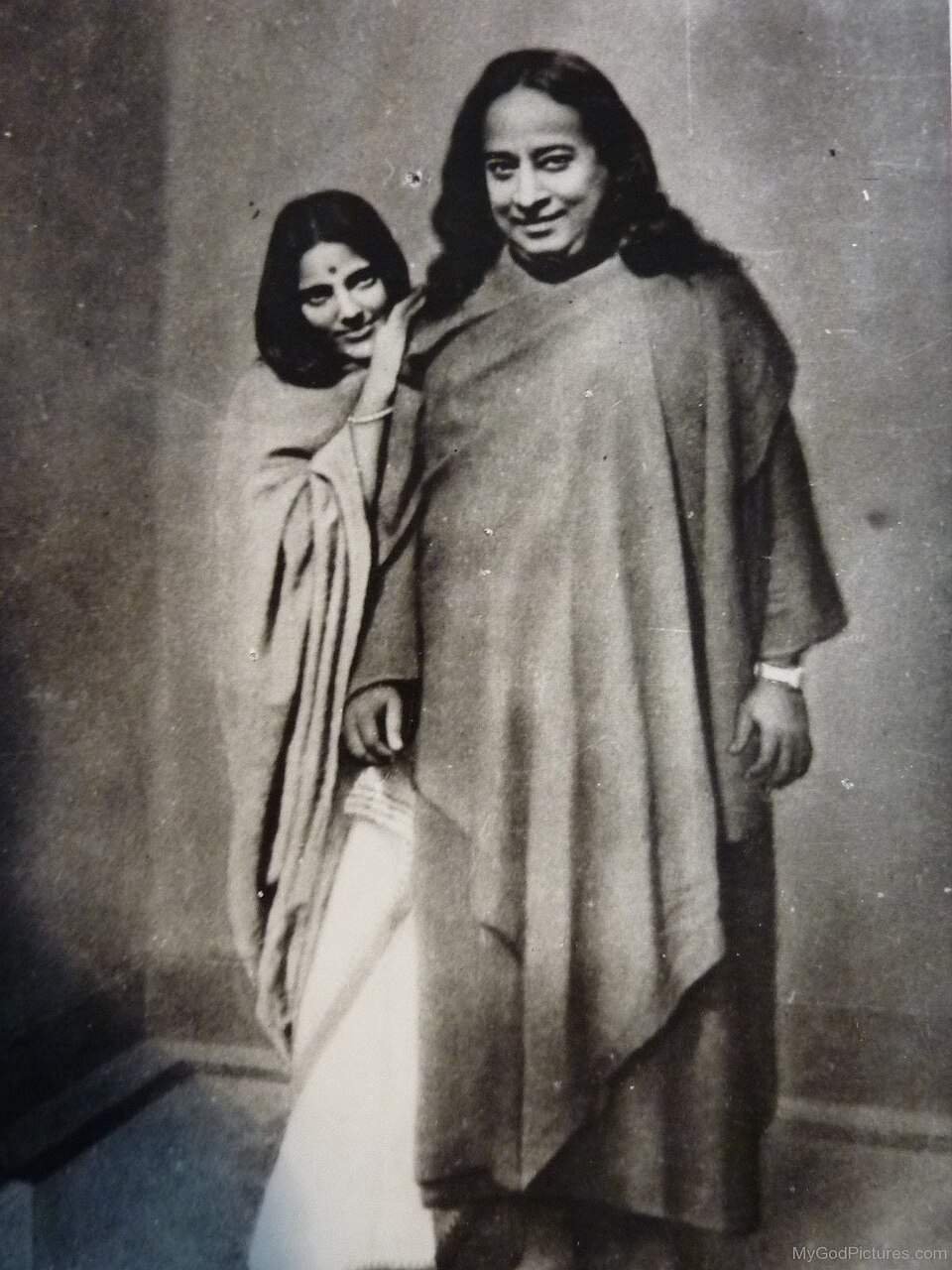
In 1946, Paramahansa Yogananda wrote a few pages about this body in his book, the Autobiography of a Yogi, and named me the Joy-Permeated Mother; they say this made me known in countries whose names I could not trace. He asked me that day to speak of myself. I replied that there was very little to say: that this consciousness had never been bound to this passing body, that as a little girl I was the same, and that before coming to this earth, I was the same. That is my whole biography. That strangers come today from the ends of the earth, as after 1972, changes nothing: the Name travels alone, it does not need my legs.
As a little girl I was the same; before coming to this earth, I was the same.
This imaginary interview was generated by artificial intelligence from sources documented in Anandamayi Ma's profile. It dramatises what the figure might have said based on what we know about them, but does not constitute attested historical testimony. For primary sources and factual documentation, refer to the full profile.