Imaginary interview with Andreas Vesalius
by Charactorium · Andreas Vesalius (1515 — 1564) · Sciences · 5 min read
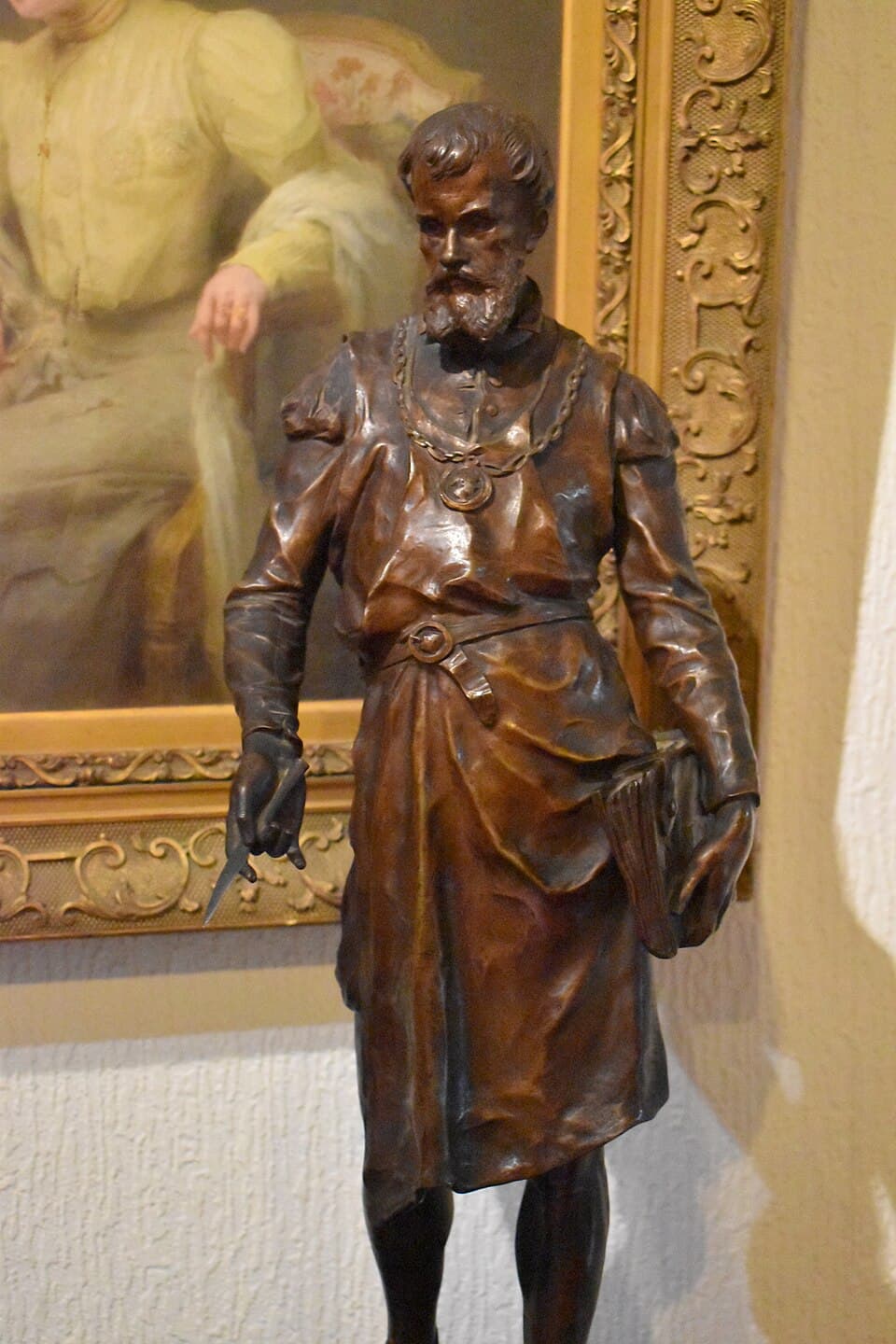
Padua, a winter evening in 1543. The candles still smoke above the table of the anatomical theater, where a body lies under a sheet. Andreas Vesalius, barely twenty-eight, has just closed the proofs of a book that will change the way men look at their own flesh; he agrees to answer, the scalpel still resting near the inkwell.
—How did you come to go down among the corpses yourself, when custom had the professor remain seated?
In Padua, I saw it done a hundred times: the master sat enthroned in his chair, reading Galen aloud, while a barber wielded the blade below, and a third pointed at the organs with a stick. Three men to never look. I took the scalpel into my own hand. I wanted to feel the resistance of the muscle, follow the nerve to its end, verify with my fingers what the text claimed. They found me presumptuous: a young Fleming who claimed to correct Antiquity. But direct observation is not insolence; it is honesty. The body does not lie; copyists, on the other hand, have been lying for a thousand years.
Three men to never look: the master read, the barber cut, and no one dared to touch the truth.
—What did you discover by confronting the body directly with Galen's pages?
That Galen, that Greek physician venerated like an oracle, had probably never opened a human. His descriptions fit the monkey, the pig, the dog perfectly—everything but us. The liver he describes with five lobes, the sternum he makes of seven pieces: these are beasts he saw, and he lodged them in our chest. The whole Galenism rested on this confusion, passed from manuscript to manuscript without any hand to refute it. I understood then that my duty was not to despise the ancients, who were great observers in their time, but to repeat their gesture, not to recite their conclusions. To question nature rather than books: that is my entire method.
The liver with five lobes is a monkey that Galen lodged in our chest.
—Your great book appears this year. What does De Humani Corporis Fabrica mean to you?
A workshop—that is the word I chose, for the body is a workshop, an assembly of bones, strings, and bellows where each part has its function. I conceived it as a building one enters through the walls, that is, the skeleton, before reaching the inner chambers. At twenty-eight, I judged it my duty to correct received errors and to found anatomy on what the eye sees and the hand touches, rather than blindly following ancient texts. Seven books, hundreds of plates, sleepless nights in Padua. I do not know if I will still be read in a century, but I wanted no student to be forced to believe on authority.
The body is a workshop, an assembly of bones and bellows where each part has its function.
—Why did you devote so much care to the illustrations in the work?
Because a description, however accurate, evaporates as soon as one closes the book, while a true image remains in the eye. So I entrusted the engravings to hands from the workshop of Titian in Venice, so that science might wed art: over seven hundred figures where the flayed figure stands in a landscape, almost alive, showing his own muscles as one holds out a garment. These are not ornaments. Every shadow, every tendon attachment corrects an inherited error—more than two hundred, I believe, which I noted one by one. The engraved plate is my true theater: it opens the body for those who can never enter the dissection hall.
—It is said you obtained bodies by unorthodox means. What did your quest for corpses cost you?
Fresh flesh is rare, and the anatomist is a hungry man. The corpses granted to me were most often those of executed criminals, hanged on gibbets or beheaded on the scaffold, and I had to seize them before corruption blurred everything. I watched for executions, negotiated, sometimes took by night what was refused me by day, at the risk of scandal and the tribunal. They will call me obsessed; I tell myself only that dissection requires an intact subject, and that the truth of the body yields only to one who dares to look at it cold, open, without averting his eyes. Empiricism has this price: one does not read nature in comfort.
Fresh flesh is rare, and the anatomist is a hungry man.
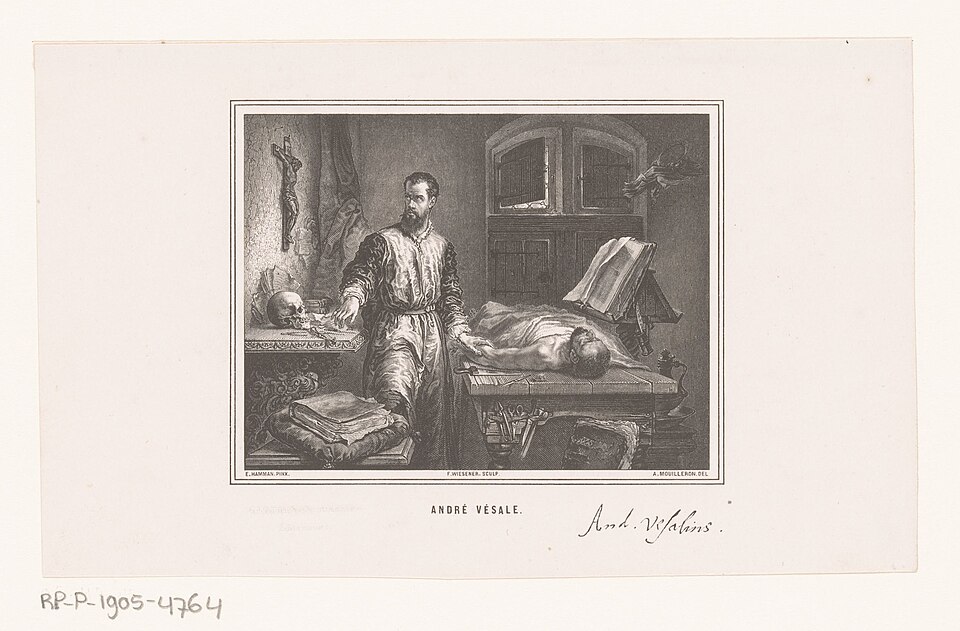
—What happens in the theater when you conduct a public demonstration?
The anatomical theater of Padua fills up to the high galleries: students, physicians, curious onlookers, sometimes magistrates come to ensure nothing is profaned. In the center, the table; on it, the subject; and I, sleeves rolled up, talking while cutting, which had hardly been seen before. I show, I make them touch, I let the skeptic plunge his finger where Galen errs. The warmth of living bodies pressed around the dead body, the smell, the silence when I open the cavity—all this teaches better than a bound volume. For anatomy is not learned by listening: it is learned by seeing nature reveal its secrets to one who takes the trouble to question it with his own hands.
—Your methods earned you strong enmities. Why did you eventually leave teaching?
Because one is not forgiven for disturbing the revered dead. The adherents of Galenism—former masters, even my own teacher at times—could not bear that a young man should overthrow a thousand years of authority. I was called an impostor, it was insinuated that I had opened living people, a baseless slander but one that kills a reputation. Tired of these traditionalist physicians who preferred their books to the truth, I burned some of my papers and left the chair. In 1543, I entered the service of Emperor Charles V as his personal physician. The court offered me what the university refused: protection and the silence of the envious.
One is not forgiven for disturbing the revered dead.
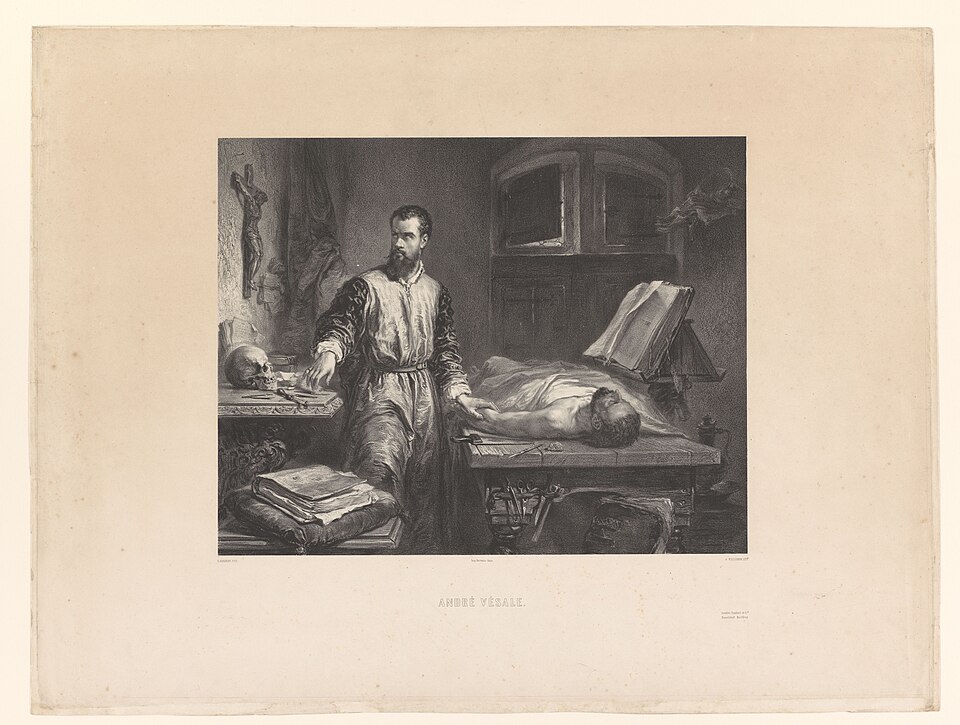
—What became of your life as a scholar once you entered the service of the Habsburgs?
Something else, and less free. At the court of Charles V, then with his son Philip II after the emperor's abdication in 1556, I am no longer the anatomist who cuts, but the physician who watches over gouty men and melancholy princes. One treats royal humors, concocts potions, and discusses China root—I even wrote about it. The dissection table I miss, I confess, as the sailor misses the open sea. But this imperial protection was the price of my survival: without it, my adversaries might have silenced me before the Fabrica had found its readers across Europe.
—You devised tools to teach differently. What are they?
A simple idea, born from the beginner's difficulty: how to see inside without destroying everything? I had figures engraved whose parts can be cut out and superimposed—you lift the muscle to find the bone, you raise the organ to reach the next. The student assembles these sheets himself, and his finger travels over a paper body as it would travel over mine on the table. They are only detachable plates, but they fix in the memory what a single corpse, quickly corrupted, shows only for an hour. I have always thought that teaching equals observation: transmitting the gesture matters as much as performing it. A well-designed engraved illustration dissects a thousand times without ever spoiling.
The student travels over a paper body as he would travel over mine on the table.
—You also published an abridged version of your great treatise. For whom did you design it?
For those whom the great book intimidates. The Fabrica is heavy, learned, written for physicians; but the barber-surgeon, the apprentice, the painter curious about the body have neither the time nor the Latin. So I produced the Epitome, an illustrated summary, slimmer, where the essentials are seen at a glance. I was determined that my discoveries should not remain locked in a few libraries of Italy, but travel through the cities and workshops of Europe, carried by that marvel of our century, printing. Knowledge that is not shared is mere vanity. I opened bodies all my life; I also had to open the book to the greatest number.
Knowledge that is not shared is mere vanity.
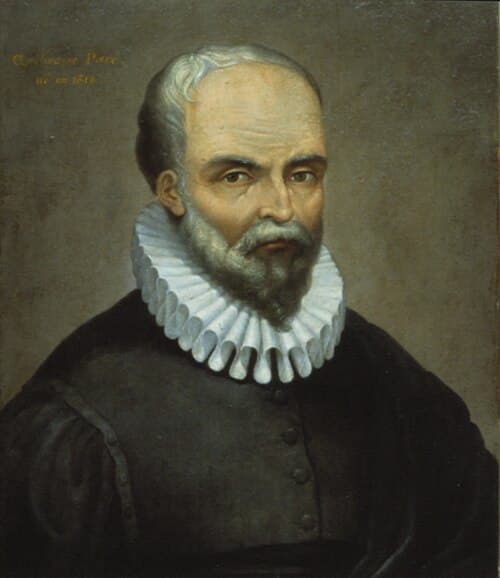
This imaginary interview was generated by artificial intelligence from sources documented in Andreas Vesalius's profile. It dramatises what the figure might have said based on what we know about them, but does not constitute attested historical testimony. For primary sources and factual documentation, refer to the full profile.