Imaginary dialogue between Charles Quint and Andreas Vesalius
by Charactorium · Andreas Vesalius (1515 — 1564) · Sciences · 6 min read
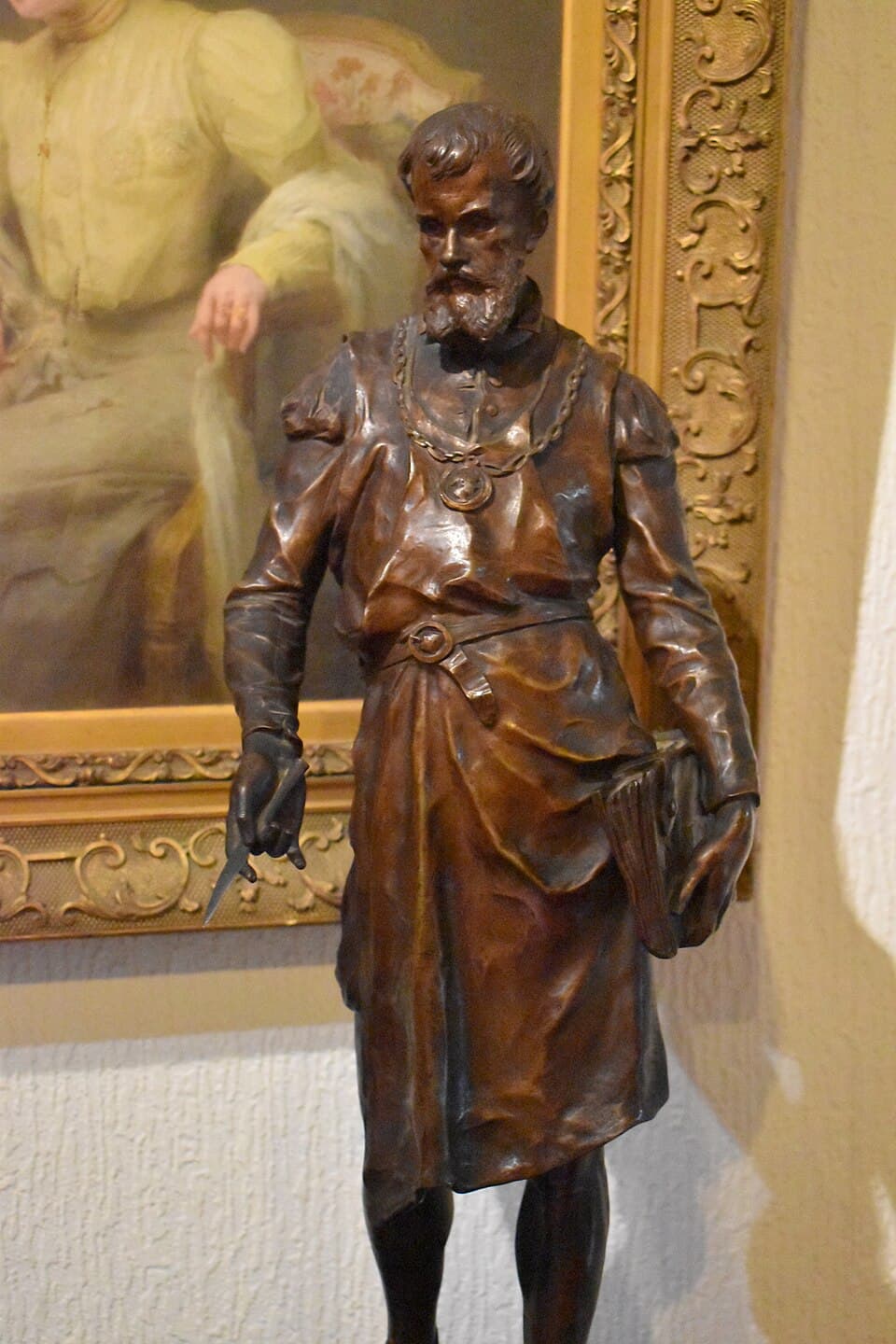
It is in a room hung with tapestries of the Coudenberg Palace in Brussels that Emperor Charles V receives his physician Andreas Vesalius in this winter of 1555. A brazier warms the sovereign's gouty feet; he has placed his swollen leg on a cushion while snow beats against the stained-glass windows. It has been four years since the Fleming left his chair in Padua to care for the master of the Habsburgs; they now know each other well enough to speak bluntly. That evening, the emperor wants less his remedy than the story of the man who opens bodies.
—It has been four winters since you left your chair in Padua to treat my gout, Master Andreas. Do you miss the lecture hall at my bedside?
Sire, I would lie if I said the smell of the dissection room does not escape me some mornings. In Padua, since 1537, I was master of my knife and my dead; here, I am master of your leg alone, and it resists me more than any corpse. But do not think I have traded science for the court. Treating your body is still reading a body—yours confirms to me every day what dissection taught me. And when you called me to your service, you offered me what no university could: a roof where my enemies can no longer pursue me. I did not leave anatomy; I sheltered it under your wing.
I did not leave anatomy; I sheltered it under your wing.
—I have heard that in Padua you went down among the corpses yourself, instead of leaving a servant to cut. Why this boldness?
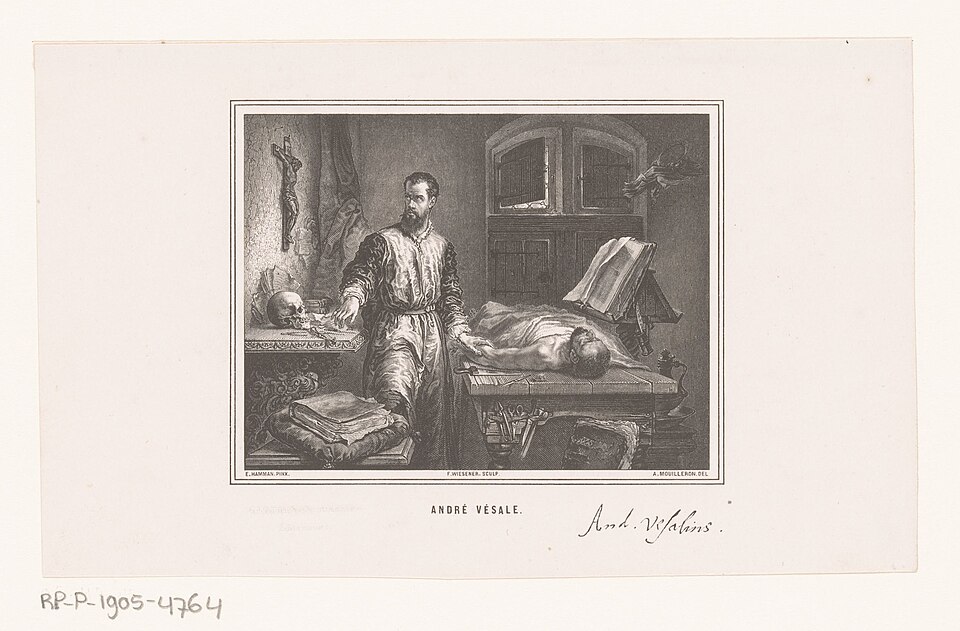
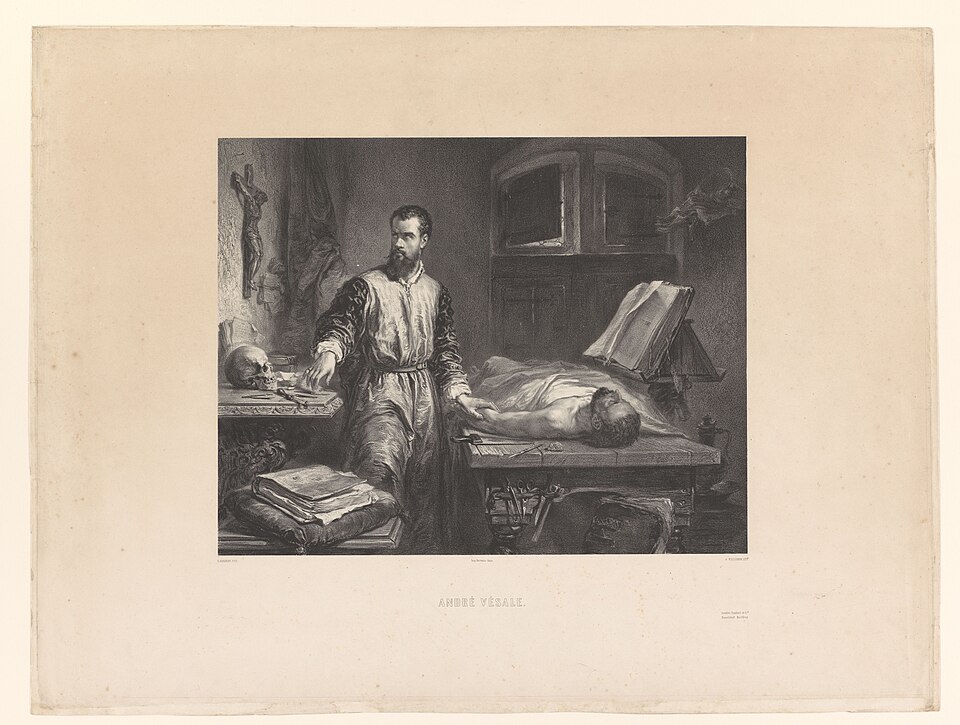
Because the custom, Sire, was a farce. The professor sat enthroned in the chair, reading Galen aloud, while an ignorant barber cut into the flesh and a demonstrator pointed with a stick at what they pretended to see. Three men, and not one who truly looked. I deemed this unworthy. I took the knife myself, stepped down from the platform, put my hands into the belly. Only thus does nature consent to speak—to the one who questions her directly, not to the one who recites. My students crowded around the table, and for the first time they saw bone, muscle, nerve, and not the words of a dead man thirteen centuries old. Knowledge is not read over another's shoulder; it is touched.
Knowledge is not read over another's shoulder; it is touched.
—You speak of Galen as an adversary. Do you truly dare to correct the one all Christendom holds as the prince of physicians?
I do not attack him out of pride, Sire—I respect him enough to verify him. The trouble is simple: Galen never opened a human. He dissected monkeys, pigs, dogs, and transposed onto us what he found there. Where the human body contradicts him, he was mistaken, and we have repeated his errors for thirteen centuries like a gospel. While preparing the De Humani Corporis Fabrica, I noted more than two hundred of these faults—a bone, a vessel, a septum of the heart that he believed perforated and is not. My duty was not to flatter his memory, but to establish anatomy on what my eyes see, not on what an ancient guessed from a beast.
Galen never opened a human: he dissected beasts and bequeathed us their entrails.
—Two hundred faults, you say... Does it not frighten you to overturn what is taught in all the faculties?
What would frighten me more, Sire, is to remain silent knowing. Look at the septum of the heart: Galen claimed that blood passed from one ventricle to the other through invisible pores. I searched for those pores, again and again, knife in hand—they do not exist. What was I to do? Invent holes to save the authority of a Greek? I wrote what I saw, and too bad for the doctors who still teach the opposite to their credulous students. Medicine will progress only at this price: preferring the body itself to the book that claims to describe it. The old masters of Louvain and Paris hate me for this. But the corpse never lies; it is the only judge I accept.
The corpse never lies; it is the only judge I accept.
—To open so many bodies, you needed many. Where did you get these dead that you dissected night after night?
There, Sire, I must confess things a court physician should keep quiet. Intact corpses are rare, and the law counts them. I took those of executed criminals, freshly hanged or beheaded, sometimes lowered from the gibbet before the crows got to them. I struck up friendships with lenient judges who timed executions to suit my study needs. Yes, I risked scandal and worse, for disturbing the dead frightens pious souls. But how to know the framework of man without man himself? A fresh bone teaches me what a thousand pages never will. I did it out of thirst for truth, not impiety—and if I was reproached, your protection, my emperor, has stifled many rumors.
I took the bodies of the executed: a fresh bone teaches me what a thousand pages never will.
—I have leafed through your great book of 1543: these plates are of a beauty befitting a prince's cabinet. Who engraved them for you?
You touch there, Sire, my fondest pride. A treatise on anatomy without figures is but a fog of words; I wanted my De Humani Corporis Fabrica to show, not only describe. So I sought the best hands in Venice, those of the great Titian's workshop, to cut into wood more than seven hundred engravings. See these flayed men standing in a landscape, pointing to their own bared muscles—they are not corpses, they are men teaching. Printing did the rest: what I saw in Padua, a physician in Bologna or Paris can now see faithfully, without opening anything. Never had science and art worked so closely with the same knife.
They are not corpses: they are men teaching.
—I have also been shown curious sheets to cut out and layer. What game is this for scholars?
No game, Sire, but an instrument. I had figures engraved whose sheets can be detached and assembled layer by layer: first the skin, then the muscles, then the viscera, down to the bone. The student who has no corpse at hand can thus descend into the body with his own fingers, stage by stage, as if dissecting. It is a portable school, carried from town to town. I have always thought that one retains better what the hand has done than what the ear has heard. These plates cost the engraver infinite care, but they are worth ten recited lessons. Teaching, you see, is not pouring knowledge into an empty head; it is putting the tool in the student's hands and letting him open himself.
A portable school carried from town to town.
—Describe to me this lecture hall you speak of with such fire. What did one see on those afternoons of dissection?
Imagine, Sire, a room with wooden tiers, rising in a circle around a low table where the dead lies. Light from high windows falls on the flesh; below, I work, sleeves rolled up, scalpel in one hand, sponge in the other. Above, packed row upon row, students, physicians, sometimes simple onlookers, all leaning forward to miss nothing. A dissection lasted hours, and one had to work quickly, for only the winter cold preserved the body. I named each part aloud, showed it, had it touched. The smell was harsh, I admit, but no one left their bench. It is there, Sire, in this theater of flesh, that a medicine is being formed that believes its eyes rather than its books.
In this theater of flesh, a medicine is formed that believes its eyes rather than its books.
—You spoke earlier of enemies. When I took you into my service, were you already fleeing those doctors who hate you?
In part, Sire, I owe you the truth. My dissections and my criticisms of Galen had made me as many enemies as disciples. The old masters do not forgive a twenty-eight-year-old overturning what they have taught for forty. There was murmuring against me; I was called reckless, impious, enemy of the Ancients. Entering your court was for me a rampart as much as an honor: under the emperor's livery, who would still dare drag me before the faculties? You gave me something more precious than gold—the leisure to pursue my work without fear of the pack. I am not unaware, Sire, that you also keep me for your gout; but the man who treats you today owes his peace to your protection alone.
Under the emperor's livery, who would still dare drag me before the faculties?
—At the end of it all, Master Andreas, what do you want to remain of your knife when you no longer open bodies?
Not my name, Sire—the flesh I have cut will rot like all flesh. What I would like to remain is the method: that a physician, tomorrow, accept no authority without verifying it with his own hands. I built the Fabrica as one builds a house, bone by bone, muscle by muscle, so that anatomy might finally rest on the body itself and not on the memory of an Ancient. If my successors one day correct me in turn, dissecting better than I, I will not be humiliated: I will be avenged. For that would be proof that they understood me. The truth of the body is not received from a master; it is earned, knife in hand, generation after generation.
If they one day correct me by dissecting better than I, I will not be humiliated: I will be avenged.

This imaginary interview was generated by artificial intelligence from sources documented in Andreas Vesalius's profile. It dramatises what the figure might have said based on what we know about them, but does not constitute attested historical testimony. For primary sources and factual documentation, refer to the full profile.