Kids interview Andreas Vesalius
by Charactorium · Andreas Vesalius (1515 — 1564) · Sciences · 5 min read
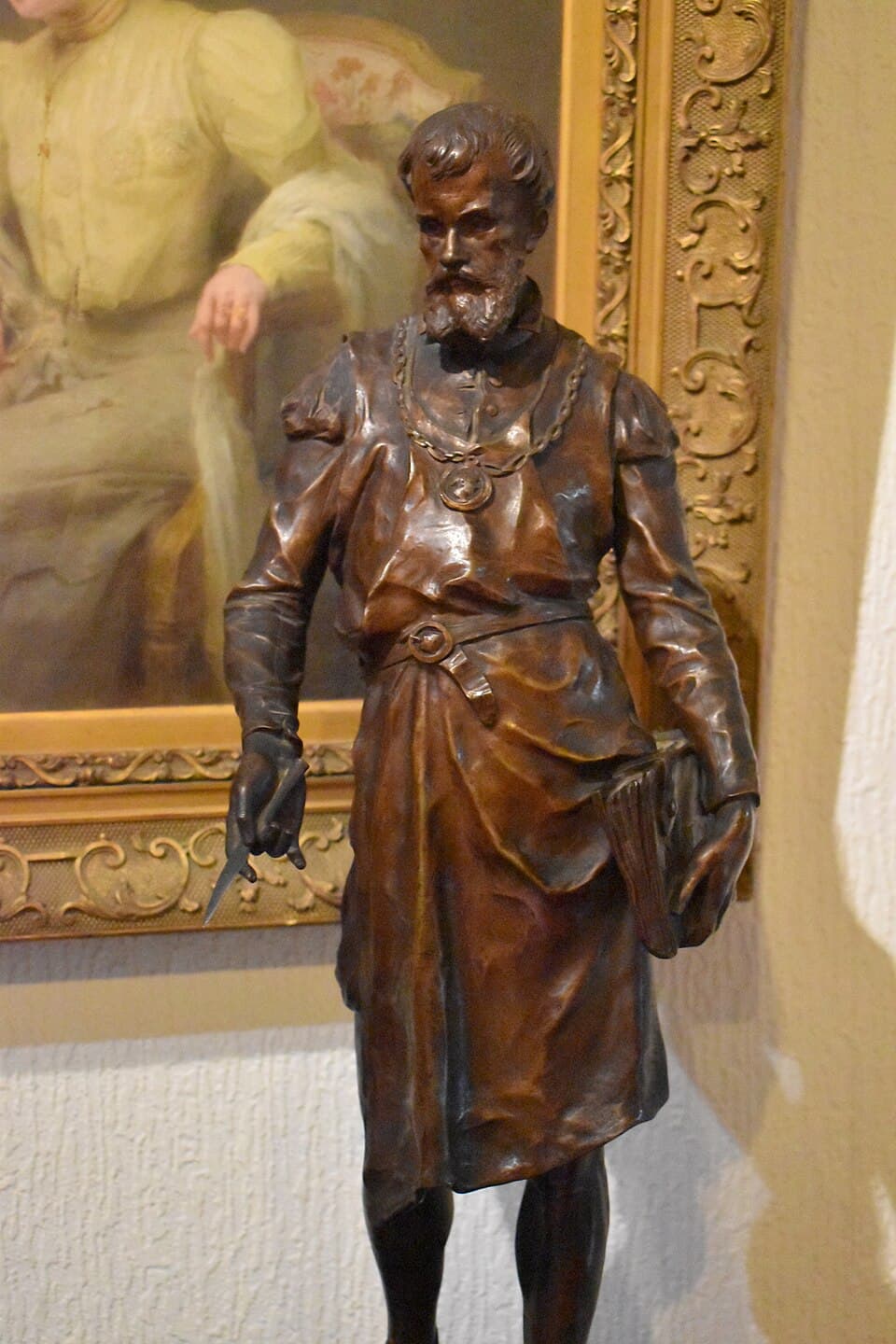
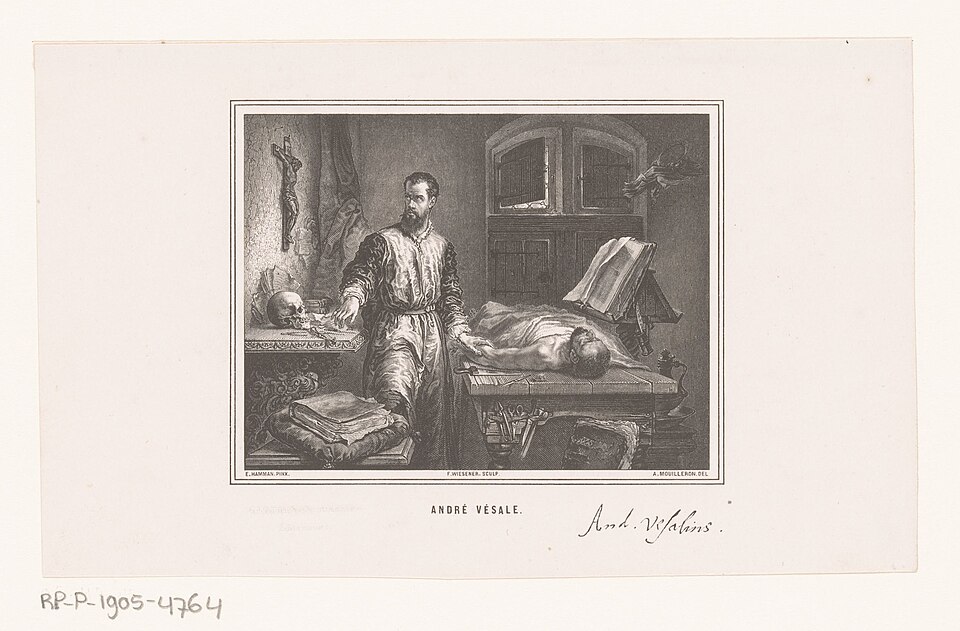
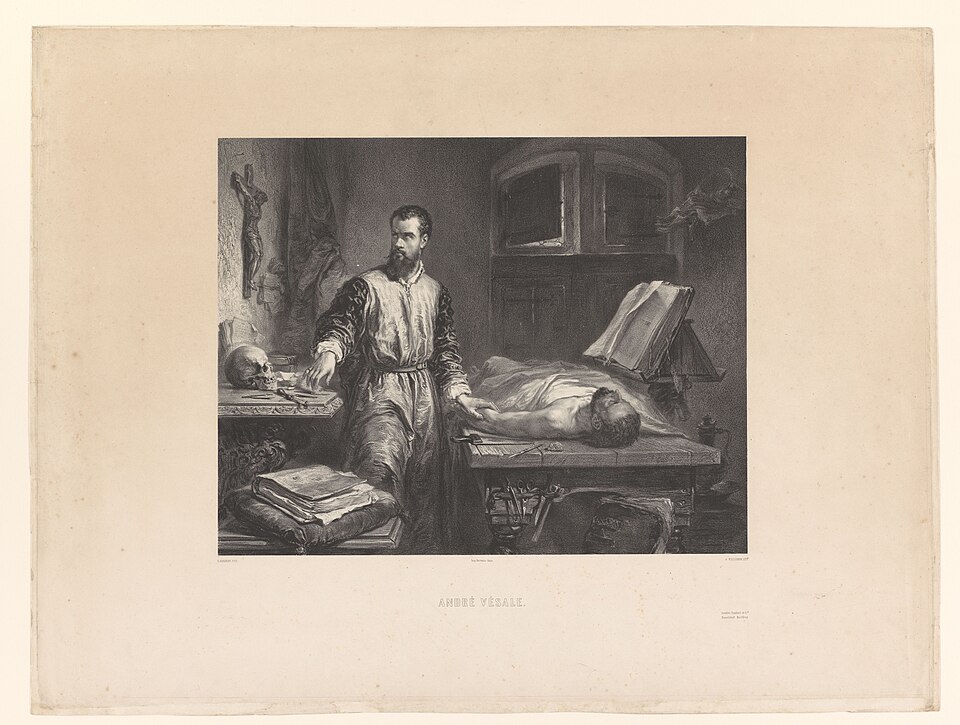
Two twelve-year-old visitors push open the door of a Padua lecture hall, where a smell of wood and wax lingers. A man in a long university robe awaits them, a scalpel lying next to a large open book. He smiles at them: it is rare for children to come and listen to him.
—How old were you when you started cutting up bodies on your own?
I was young, just out of my studies at Padua. You see, in my time, things were done strangely. An old professor would read a book from the top of the amphitheater. Below, a barber would cut up the body. And no one really looked! That annoyed me. I took the scalpel in my hand and went down. Imagine a child being told about a fruit without being allowed to taste it: eventually they bite into it themselves. That's what I did. I wanted to see with my own eyes, touch with my own fingers. It was frowned upon. But how can you know the body without truly looking at it?
You don't know a fruit by listening to someone describe it: you have to bite into it.
—Who is this Galen you're always correcting?
Ah, Galen! A very old Greek physician, dead more than a thousand years before me. All that time, no one dared to contradict him. People learned his books by heart, like sacred truth. But by dissecting, I discovered a secret: Galen had never opened a human body! He had studied monkeys, pigs, and thought they were the same as us. So he was wrong hundreds of times. Can you imagine? For a thousand years, people repeated his mistakes. I felt it was my duty to correct them, rather than follow the ancients blindly.
For a thousand years, people repeated the mistakes of a man who had never opened a human body.
—Is it true you went to steal dead bodies? Weren't you scared?
Yes... and I'm a bit ashamed to tell you. In my time, it was very hard to get cadavers for study. It was dangerous, sometimes forbidden. So at night, I would go get the bodies of executed criminals near the gallows. Heart pounding, in the dark, I was afraid of being caught. Imagine a street with no light, just the moon and the sound of your steps on the cobblestones. But you see, I thought of one thing: nature only reveals its secrets to those who take the trouble to question it closely. Without those bodies, I would have learned nothing. Knowledge made me a bit reckless.
Nature only reveals its secrets to those who take the trouble to question it closely.
—Wasn't it too scary or disgusting to touch all that?
At first, my child, your heart sinks. My hands trembled a little. But very quickly, something stronger takes over: wonder. Imagine opening a clock for the first time and seeing all the gears moving together. The human body is a hundred times more beautiful! Every bone, every muscle has its exact place. With my scalpel and my compass to measure, I discovered this hidden order. Disgust disappears when admiration arrives. I no longer saw a dead body: I saw the most perfect of works. And I wanted to make it known to everyone.
The human body is like an open clock: a hundred gears each in their exact place.
—Why did you put so many drawings in your book?
Because words are not enough, you see! In 1543, I published my great book, De Humani Corporis Fabrica. It contained more than seven hundred woodcut engravings, made by the best artists, near the workshop of the great painter Titian. Why so many images? Because a precise drawing shows in an instant what an entire page cannot explain. You can describe a hand for hours... or draw it and understand everything at once. I wanted the images to be faithful to what I had seen with my own eyes. That's my rule: show the real, not the imagined.
A precise drawing shows in an instant what an entire page cannot explain.
—What did you do to help students learn better?
I invented a very serious little game! I drew anatomical plates that students could cut out and assemble themselves. Imagine sheets with body parts that you layer to reconstruct a skeleton or muscles, layer by layer. By handling them with their hands, my students remembered much better. Alongside my big book, I also made a simpler summary, the Epitome, for beginners. You see, I didn't write only for great scholars. I wanted even a young apprentice to understand. Learning with hands and eyes—that's what stays engraved in your mind.
Learning with hands and eyes—that's what stays engraved in your mind.
—Why did you leave the university to go to the emperor?
Let's say I didn't have much choice, my child. My dissections and my criticisms of Galen angered many old physicians. They couldn't stand a young man daring to say they were wrong. It became tiresome, and even dangerous. So when Emperor Charles V asked me to become his physician, I accepted. It was precious protection, and a great honor. Imagine: going from the amphitheater, where I was booed, to the court of the most powerful sovereign in Europe! I treated the emperor, then his son Philip. But deep down, I missed the amphitheater and the smell of wood a little.
They couldn't stand a young man daring to say they were wrong.
—Where did you die in the end? Was it far from home?
Very far, alas. In 1564, I left on a journey to the Holy Land, a long pilgrimage by sea. On the way back, my ship had trouble, and I ended up on a small Greek island, Zante. That's where I died, at about forty-nine years old, alone, far from Brussels where I was born, far from Padua where I had discovered everything. Imagine ending your days on an island you never meant to see, under a foreign sun. It's sad, yes. But you know what? My great book kept traveling all over Europe. You can die far away and remain present through what you have written.
You can die far from home and remain present through what you have written.
—Were there other important things happening while you were writing your book?
Oh yes, and it's fascinating! The same year as my book, in 1543, a scholar named Copernicus published his. He said the Earth revolves around the Sun, not the other way around. Can you imagine? The same year, one looked at the sky, the other—me—looked inside the body. And both of us were saying the same thing deep down: stop believing the ancients on their word, observe for yourselves! That was the spirit of my time, called humanism. A great desire to verify everything with your eyes. Imagine a morning when the whole world decides to open its eyes wide. That was my era.
One looked at the sky, the other inside the body: observe for yourselves!
—If you had to give one piece of advice to children like us, what would it be?
The same one I followed all my life: do not believe something just because an adult or an old book tells you. Go see for yourself. Touch, look, measure, compare. I was taught Galen as absolute truth. By opening bodies, I discovered more than two hundred of his errors. If I had kept my eyes closed, I would have found nothing. Imagine a treasure buried right under your feet: you have to dig to see it. Knowledge is the same. Be curious, be brave, verify. And never be afraid to ask a question, even if everyone else says the opposite.
Do not believe something because you are told it: go see for yourself.
This imaginary interview was generated by artificial intelligence from sources documented in Andreas Vesalius's profile. It dramatises what the figure might have said based on what we know about them, but does not constitute attested historical testimony. For primary sources and factual documentation, refer to the full profile.