Imaginary dialogue between Catharine MacKinnon and Andrea Dworkin
by Charactorium · Andrea Dworkin (1946 — 2005) · Society · Philosophy · Literature · 6 min read
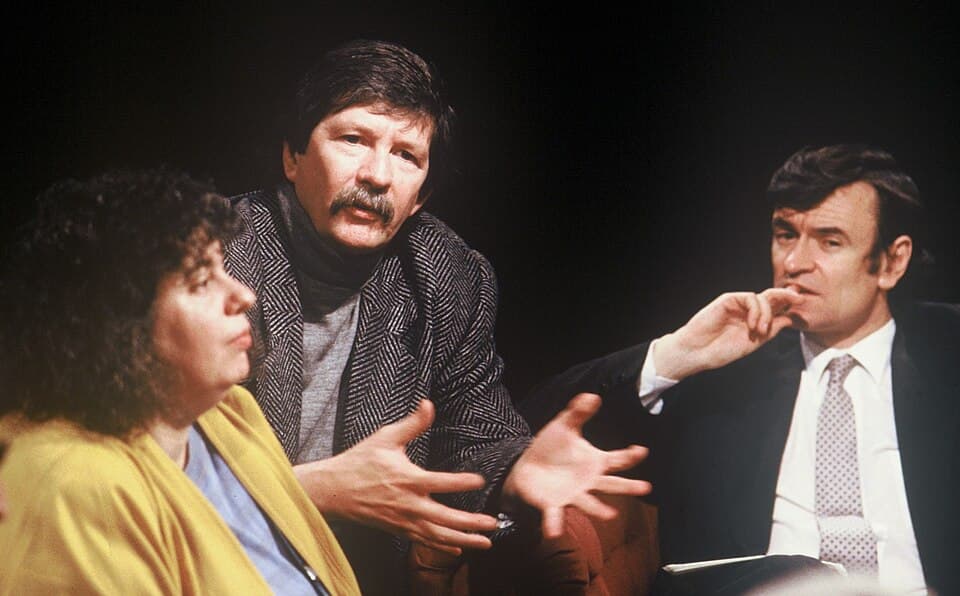
It is in the small New York apartment that Andrea Dworkin shares with John Stoltenberg that Catharine MacKinnon finds her one afternoon in 1990. The Minneapolis files are still sleeping in a crate near the tall table where Andrea writes standing up, and the smell of cold coffee mingles with that of paper covered in cross-outs. The two women have carried a legal battle together; Catharine comes today not to plead, but to get the woman she knows by heart to speak. She knows where to press.
—Andrea, before our battles, there was Amsterdam. You mentioned it to me once, briefly. What did that city teach you?
Amsterdam taught me what I never unlearned, Catharine. I arrived there young, in love, and I left in 1971 with a body that had served as a target. My husband beat me as one beats a thing, methodically, and no one wanted to see it. I knew hunger, I knew prostitution that isn't chosen. It wasn't women from theory who saved me, it was real women, who gave money, a door, a ticket. Everything I later wrote about male violence, I didn't find in books. I carried it first in my flesh, then I named it.
Everything I wrote about violence, I carried it first in my flesh, then I named it.
—You were eighteen when you were arrested in front of the United Nations. What happened in detention—was that already the beginning of everything?
It was 1965, I was protesting the Vietnam War, a kid convinced she could change the world. And the state answered me with a forced gynecological exam, two doctors who tore me apart under the pretext of procedure. I was still bleeding days later. I did what no one expected from a girl my age: I spoke, publicly, I said what they had done to my body. They called me hysterical. But I had understood something I never let go of: violence against women is not an outburst of sick men, it is organized, institutional, protected by uniforms and official walls. That day, my anger became a method.
That day, my anger became a method.
—We wrote the Minneapolis ordinance together in 1983. Explain to me again why you refused to talk about morality.
Because morality, Catharine, is the enemy's terrain. For ages, we discuss pornography as a question of taste, obscenity, offended modesty—and while we debate politely, women are used, hurt, thrown away. You, the jurist, gave me the tool I was looking for: what if we defined it as a violation of civil rights? No longer 'is it indecent?' but 'who is crushed?' In pornography, power is entirely on one side, submission and injury on the other. Our ordinance finally allowed an injured woman to sue herself. They blocked us twice, the mayor, the courts. But we had shifted the ground under their feet: the question was no longer sin, it was harm.
The question was no longer sin, it was harm.
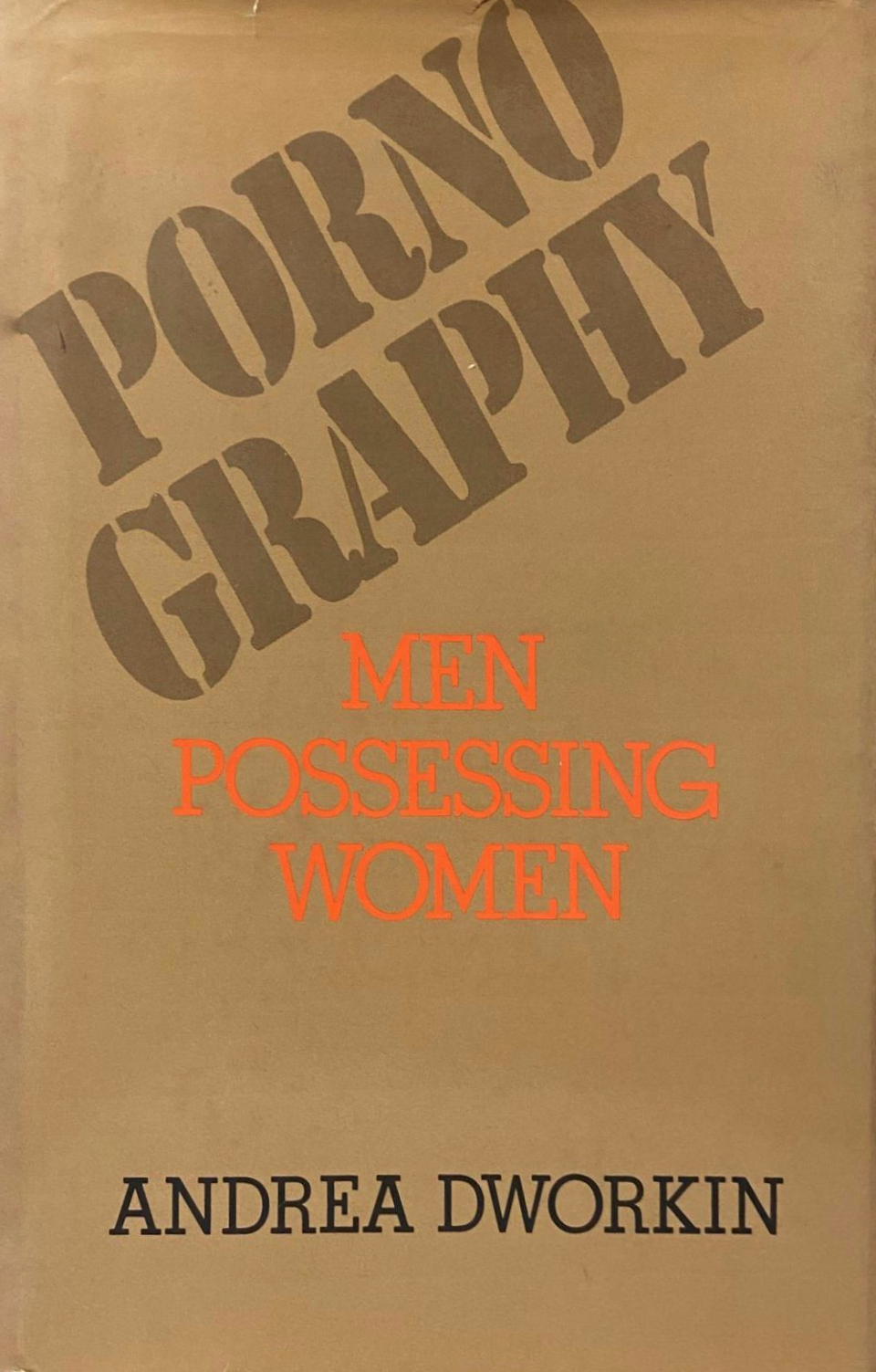
—Your 1981 book, Pornography: Men Possessing Women, caused a scandal long before us. Do you sometimes regret being so misunderstood?
Understood by whom? The men who buy those images don't want to understand, they want to continue. In Pornography I simply showed the system: women are defined as objects to dominate, use, hurt, throw away. It is a theory of hatred, staged and sold. They repeated everywhere that I said 'porn is the theory, and rape is the practice' as if it were a hysterical slogan—but look around you, Catharine, and tell me that's not exactly what happens. They caricatured me as a censor, a puritan. I do not defend virtue. I defend concrete women, with names, who were hurt in front of a camera for a man's pleasure.
I do not defend virtue. I defend concrete women who were hurt in front of a camera.
—In 1986, before the Meese Commission, you made men cry who were moved by nothing. What exactly did you tell them?
I didn't give them a lecture, I put reality before their eyes. I told them what you know as well as I do: I had not come to debate the First Amendment, I had come because women in this country were being hurt by pornography. Then I described, precisely, clinically, what is inflicted on bodies in this industry—the objects, the blows, the words. No rhetoric, facts. Some commission members cried because they were finally forced to see what they spent their lives not looking at. Reagan had appointed them to monitor public morality; I spoke to them of blood. The measure of our oppression is that we are not believed about our own lives.
The measure of our oppression is that we are not believed about our own lives.
—I've seen you write standing up, at that too-tall table, for hours. Where does this way of working with a tense body come from?
Because writing is not comfort, it's physical effort. Sitting, I fall asleep in my own sentences; standing, I stay in urgency. I write like one digs, at night mostly, until the ideas stop flowing—and as long as they flow, I have no right to stop. Look at my manuscripts: covered in cross-outs, pencil additions, illegible to anyone but me. Thought does not come to me clean, it builds itself there, directly on paper, in struggle. People imagine a cold theorist. I am an exhausted woman who refuses to lie about what she sees. Each book costs me body, and that is fine: I don't trust ideas that cost nothing.
I don't trust ideas that cost nothing.
—You often say you don't write to be loved. So for whom, or for what, do you hold on like this to the point of exhaustion?
For the women who cannot write, Catharine. Those from Amsterdam who got me out, those who came to speak to me after my lectures trembling, those who think they are alone in having suffered what they suffered. I hold on because silence is already occupied—occupied by those who have an interest in nothing being said. If I stop, a sentence is missing, and a missing sentence is sometimes a woman who is not believed. I do not write for beauty of style or to please the faculties that invite me hoping for a little polite scandal. I write like one testifies under oath. The rest—reputation, prizes, niceness—I leave to those who have time to think about it.
A missing sentence is sometimes a woman who is not believed.
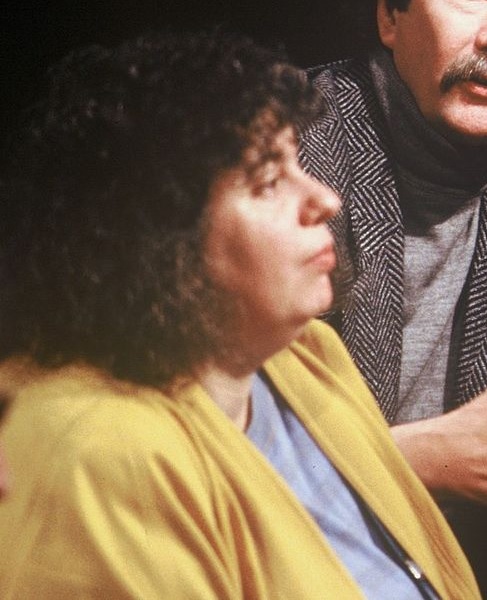
—People recognize you by your denim overalls before they even know you. Is it really a political choice, or just comfort?
Both, and one cannot go without the other. I chose overalls because I refuse to prepare my body for the male gaze every morning. The femininity imposed on us—makeup, heels, tight waist—is invisible labor, a submission called coquetry. I dress to walk, to write, to fight, not to be looked at. They tell me it's provocative, that a woman should make an effort. But effort is exactly what is demanded of us and never of them. My body is not an ornament, it is not a display window. Denim is my way of saying it without opening my mouth: I am not here to please, I am here to work.
I am not here to please, I am here to work.
—In Mercy, you give your own first name to your heroine. Why mix your life and your theory to this extent?
Because the separation between the two is a man's lie. We were taught that serious thought must be cold, disembodied, above experience—as if the wounded body disqualified testimony instead of grounding it. In Mercy, that woman named Andrea goes through the violence I went through, and I do not apologize for this closeness. The personal is political: it is not a slogan, it is my method. My theory on patriarchy has value only because it is paid for with my skin, from Amsterdam to those courts where we fought. The women who read me feel it: I do not speak from above. I speak from beside them, from the same place, the one assigned to us and which we turn into a battleground.
My theory has value only because it is paid for with my skin.
—After so many years, so many lost trials and anger, where do you still find the strength not to stay silent?
In anger, precisely. They would like me to tire, to become reasonable, to soften with age. But every week a woman dies under the blows of a man she loved, every week images of us are sold like cattle, and I am told I should be measured? The war against women continues, it has not signed an armistice. You and I lost in Minneapolis, yes, but we forced the law to look elsewhere than it ever had before. That is my strength: I know that nothing is won and nothing is in vain. I prefer to die angry and lucid than to grow old quiet and look away. Silence, I leave to those who sleep well.
I prefer to die angry and lucid than to grow old quiet and look away.


This imaginary interview was generated by artificial intelligence from sources documented in Andrea Dworkin's profile. It dramatises what the figure might have said based on what we know about them, but does not constitute attested historical testimony. For primary sources and factual documentation, refer to the full profile.