Imaginary interview with Andrea Dworkin
by Charactorium · Andrea Dworkin (1946 — 2005) · Society · Philosophy · Literature · 6 min read
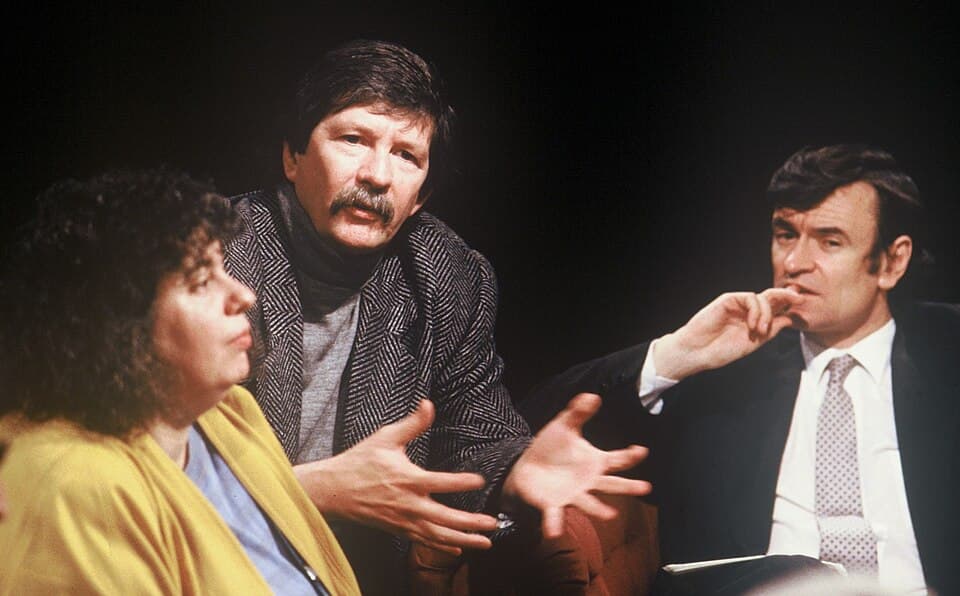
New York, an afternoon in the late 1990s. Andrea Dworkin receives in an apartment cluttered with files, scratched manuscripts, and stacks of books where Nietzsche sits next to police reports. Dressed in her denim overalls, she speaks standing, leaning against a high work table, her voice low and her eye sharp.
—Do you remember the precise moment when your commitment shifted from student activism to something more radical?
1965. I was eighteen, and I was protesting the Vietnam War in front of the United Nations in New York. I was arrested, thrown into a cell, and then two prison doctors subjected me to an internal exam so brutal I had no words for it — I bled for days. This was no accident, you understand: it was the State teaching my body its worth. I told this story publicly, and the first lesson was that no one believed me. It took me years to understand that this silence was the real subject of all my work. Institutional violence doesn't just leave marks: it teaches you that your voice doesn't count.
It was the State teaching my body its worth.
—How did this youthful experience fuel your theory of violence against women?
Everything started from there, and later from Amsterdam, where I fled a husband who beat me, where I knew poverty and forced prostitution. When I wrote Life and Death, I dared to state it simply: 'The measure of women's oppression is that we are not believed about our own lives.' We tell what happens to us, and we are not believed. I never theorized from a clean university chair; I theorized from what my own body had endured. The feminists gathered in those small consciousness-raising circles already knew: the personal is political because private pain obeys public laws. My anger was never a flaw in method. It was the method.
I never theorized from a clean chair; I theorized from what my body had endured.
—What drove you, in 1983, to translate your critique of pornography into a legal text with Catharine MacKinnon?
Anger alone frees no one; an instrument was needed. In Minneapolis, in 1983, Catharine MacKinnon and I drafted a municipal ordinance that spoke neither of morality nor obscenity — those old words of censors that never protected a single woman. We said something else: that pornography is a practice of power, a violation of women's civil rights, and that an injured woman should be able to sue. This was unprecedented, and it caused scandal precisely because it was no longer a matter of good taste, but of real harm. The city council passed it twice; twice the mayor and the courts buried it. We asked the law to recognize a wrong it preferred not to see.
We asked the law to recognize a wrong it preferred not to see.
—Many have accused you of wanting to censor. What do you say to those who brandish the First Amendment against you?
In Pornography: Men Possessing Women, in 1981, I had already written what I thought of the decor: 'In pornography, women are defined as objects to be dominated, used, hurt, and discarded.' This is not an opinion about images; it is a description of a system where power is entirely on one side, injury on the other. When the First Amendment is invoked against me, I always hear the same thing: the freedom of some to use the bodies of others. Our ordinance censored nothing: it gave a civil remedy to those who had been coerced, filmed, sold. The debate was never 'free speech versus modesty.' It was always: do the women broken in this industry have the right to exist before a court?
The freedom of some to use the bodies of others — that's what they invoke against me.
—In 1986, you testified for an hour before the Meese Commission. What did you want those commissioners to hear?
I came to Washington without a single doctrinal argument. I told them straight away: 'We are not here to argue about the First Amendment. We are here about the fact that women are being hurt.' Then I described, for an hour, with the coldness of an autopsy report, what real women endure — the beatings, the filmed rapes, the rented bodies. Some commissioners were crying. Not because I was eloquent, but because I forced them to look at what the whole society organizes to avoid seeing. Later I was criticized for serving Reagan's conservatives. I replied that I served no one: I bore the words of those who were never listened to, no matter what power was in front of me.
They cried because I forced them to look at what society organizes to avoid seeing.
—How do you live with being, as you say, constantly misquoted and misunderstood?
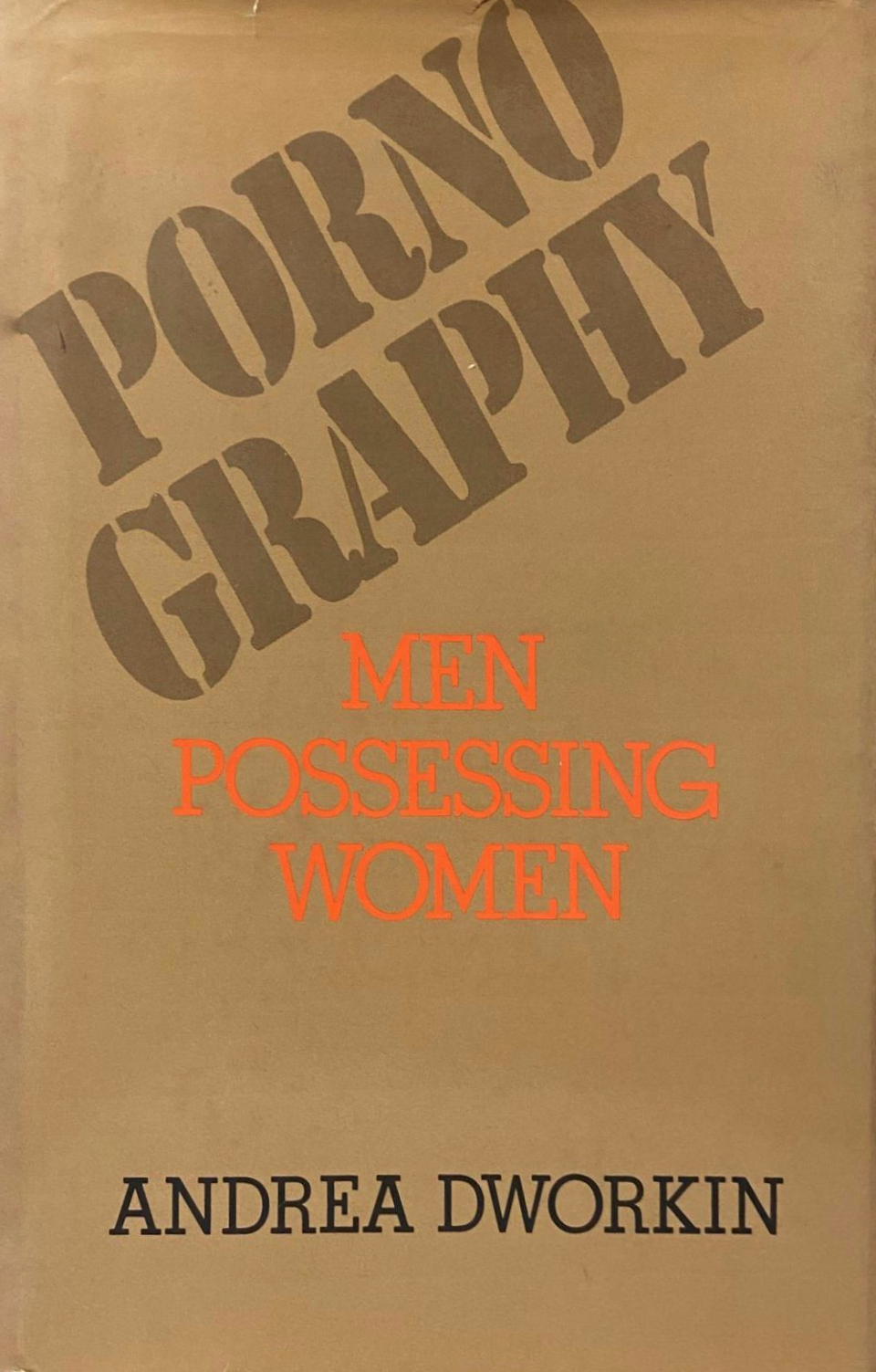
Intercourse, published in 1987, is the book I have been most reproached for without being read. It was claimed I wrote that all heterosexual intercourse is rape — I never wrote that. I analyzed how, in a patriarchal world, the act itself can be charged with domination, cell by cell. The distortion is not a carelessness of hurried readers: it is a strategy. One caricatures a woman to avoid answering what she really says. I have spent my life seeing my sentences turned inside out, at the podium of a thousand universities, in newspapers, in courts. So I learned to write so clearly that no twist could hold — and yet they still twisted.
One caricatures a woman to avoid answering what she really says.
—It's said that you wrote standing up, in a kind of trance. Tell us what it's like to write in your way?
I write standing, at a high table, often at night, when the city of New York finally falls silent. I don't stop as long as ideas flow; I stay there for hours, until my legs give out before my mind. My manuscripts come out covered in pencil scratches and additions, because I don't think before writing — I think while writing, the sentence builds on paper like digging a tunnel. It's not comfortable, it's not meant to be. An essay like Woman Hating didn't come from a well-ordered plan, but from that stubborn standing posture where body and mind together refuse to sit down until the truth is spoken.
I think while writing, the sentence builds on paper like digging a tunnel.
—Why does this physical discipline of writing matter so much to you?
Because I distrust thoughts that have not cost the body. All my life I have said that theory must account for the flesh — the beatings in Amsterdam, the forced exam in my cell in 1965 — so I could not write sitting down, comfortable, cut off from what I was writing. Standing for entire nights, surrounded by files and police reports, was keeping my writing at the level of the pain it described. I lived simply, in modest apartments, barely eating, because nothing mattered beside this work. A sentence, for me, had to come out like a forced confession, not like a drawing-room elegance. The comfort of writing has always seemed to me a form of lying.
I distrust thoughts that have not cost the body.
—Your denim overalls have become your signature. Why this garment, always the same?
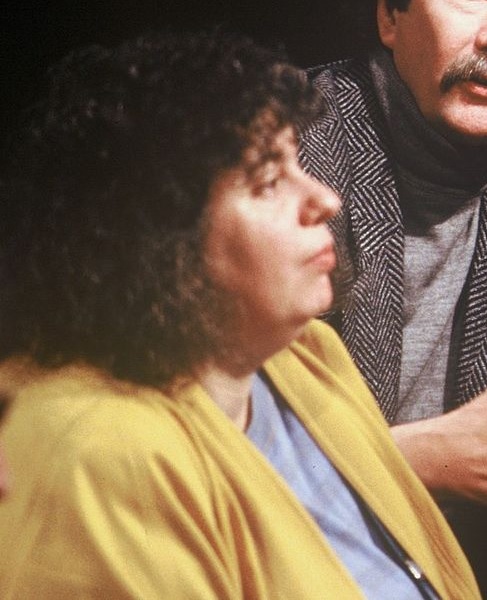
Look at me: denim overalls, a t-shirt, flat shoes. For years I've worn almost nothing else, and this is not neglect, it's a statement. Women are taught that their body is an ornament for the male gaze — heels, corsets, all that theater that makes you visible and vulnerable at once. I refused to play that role. This work garment says I am not here to be looked at but to work, write, fight. Some saw it as provocation, others as renunciation. I see it as consistency: you cannot denounce the objectification of women by day and dress as an object by night. The overalls are my shortest manifesto.
You cannot denounce the objectification of women by day and dress as an object by night.
—What would you say to those who find your rejection of feminine codes too absolute, almost punitive?
I ask no woman to wear denim. That would be replacing one prescription with another, and I have spent my life fighting prescriptions made on women's bodies. But I refuse to be told that my choice is self-hatred. In Right-Wing Women, I tried to understand why so many women embrace the rules that oppress them — not out of stupidity, but as a survival strategy in a hostile world. Imposed femininity is often that: a bargain where one trades freedom for a bit of security. My overalls are not a reproach to other women; they are my personal refusal to pay that price. Each woman negotiates with patriarchy as she can. I have chosen not to negotiate that ground.
Imposed femininity is a bargain where one trades freedom for a bit of security.
—If you had to sum up the thread that runs through all your work, from your early essays to your memoirs, what would it be?
One thing: believe women. From Woman Hating in 1974, where I wrote that 'porn is the theory, and rape is the practice,' to Heartbreak written three years before my death, I have done nothing else — take seriously what women say about their own lives, and carry it where they refused to hear it: courts, commissions, universities. I was called an extremist. But I never asked for anything extreme. I asked that a beaten, raped, sold woman be able to tell what happened to her and be believed. That's all. If that is considered radical, then the measure of our oppression is there, entirely, in that very astonishment.
I never asked for anything extreme: that a woman be able to tell what happened to her and be believed.


This imaginary interview was generated by artificial intelligence from sources documented in Andrea Dworkin's profile. It dramatises what the figure might have said based on what we know about them, but does not constitute attested historical testimony. For primary sources and factual documentation, refer to the full profile.