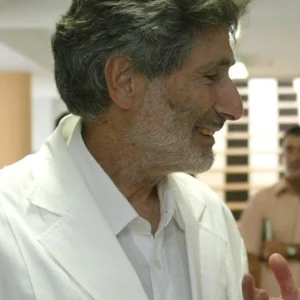

Edward Said (1935-2003) was a Palestinian-American academic, literary theorist, and critic. A professor at Columbia University, he was one of the founders of postcolonial studies with his major work *Orientalism* (1978). He was also an influential spokesman for the Palestinian cause.
Edward Said(1935 — 2003)
Edward Said
États-Unis, Palestine mandataire
6 min read
Frequently asked questions
Key Facts
- Born in 1935 in Jerusalem (Palestine under the British Mandate), died in 2003 in New York
- Published *Orientalism* in 1978, a foundational work of postcolonial studies
- Professor of comparative literature at Columbia University from 1963
- Member of the Palestinian National Council from 1977 to 1991
- Published *Culture and Imperialism* in 1993, an extension of his reflection on Orientalism
Works & Achievements
Founding essay of postcolonial studies analyzing the Western fabrication of an imaginary “Orient” serving the purposes of domination.
A book presenting the Palestinian perspective on the Israeli-Palestinian conflict to a Western audience.
An analysis of how Western media represent and caricature the Muslim world.
A sequel to “Orientalism” examining the connections between great European literature and colonial expansion.
A reflection on the role of the intellectual as a critical and independent voice in the face of power.
An autobiography revisiting his childhood between Jerusalem, Cairo, and the United States, and his search for identity.
An orchestra co-founded with Daniel Barenboim bringing together young Israeli and Arab musicians, a project of dialogue through music.
Anecdotes
Edward Saïd was born in Jerusalem in 1935 into a well-off family of Arab Christians, but he grew up between Cairo, Lebanon, and the United States. All his life, he felt torn between several identities: an Arab with an English first name (“Edward,” chosen by his mother in tribute to the Prince of Wales), a Christian in a Muslim world, a Palestinian in America.
Saïd was an accomplished pianist and a passionate lover of classical music. For many years he wrote music criticism, and in 1999 he co-founded, together with the Israeli conductor Daniel Barenboim, the West-Eastern Divan Orchestra, an ensemble bringing together young Israeli and Arab musicians to play together across the divides of conflict.
In 1978, his book *Orientalism* caused a scandal and became one of the most debated academic works of the century. In it, Saïd shows how Western scholars and artists invented a fantasized “Orient,” exotic and backward, the better to justify colonial domination.
In July 2000, during a visit to the southern border of Lebanon after the Israeli withdrawal, Saïd was photographed throwing a stone toward a border post. The photo sparked controversy: his critics saw it as an act of violence, while he replied that it was merely a symbolic gesture of joy shared with his son.
Diagnosed with leukemia in 1991, Saïd continued to teach, write, and campaign for twelve years despite his illness. During this period he wrote his memoir, *Out of Place* (1999), in which he looks back on his childhood and his quest for identity.
Primary Sources
The Orient was almost a European invention, and had been since antiquity a place of romance, exotic beings, haunting memories and landscapes, remarkable experiences.
With the passage of time I have come to cherish the feeling of not being quite right and out of place everywhere. Edward, a foolishly English name yoked to the unmistakably Arabic family name Said, was an uncomfortable identity that took me years to accept.
None of us is completely free from the struggle over geography. That struggle is complex and interesting because it is not only about soldiers and cannons but also about ideas, about forms, about images and imaginings.
Palestine is a land heavily laden with spiritual investment, a land that belonged to a people, the Palestinians, whose continuous presence there is well attested.
Key Places
Said's birthplace in 1935, then under British Mandate; the heart of his attachment to the Palestinian land.
The city in Egypt where Said spent much of his childhood and adolescence in English-language schools.
The institution where Said taught comparative literature for nearly forty years and wrote his major works.
The institution where Said earned his doctorate in literature in 1963.
The university where Said completed his undergraduate studies before Harvard.
Typical Objects
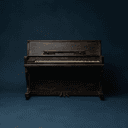
An instrument Said played with passion; classical music held a central place in his life and his thinking.

The working tools of the essayist and critic, who wrote dozens of scholarly books and articles.

A 1978 work that became a classic of the humanities, translated into dozens of languages.

A familiar accessory of the scholar, associated with his image as an intellectual and a professor.

From the podium of Columbia's lecture halls, Said trained generations of students in comparative literature.

A traditional scarf that became a symbol of the Palestinian cause, which Said defended his whole life as a spokesman.
School Curriculum
Vocabulary & Tags
Key Vocabulary
Tags
Daily Life
Morning
A New York academic, Said often began his days reading the international press and writing, his most productive time. He devoted his mornings to composing his essays and preparing his lectures.
Afternoon
His afternoons were structured around comparative literature classes and seminars at Columbia, where he engaged with his students. He also received visitors, journalists, and activists who came to discuss the Palestinian cause.
Evening
In the evening, Said gave himself over to his great passion, music: he played the piano, listened to records, or went to concerts. He often carried on his reading and correspondence late into the night.
Food
Living between the United States and the Arab world, Said loved the Mediterranean and Levantine cuisine of his childhood — mezze, hummus, dishes made with olive oil — while also sharing the everyday eating habits of an American academic.
Clothing
Said took care with his appearance and gladly wore elegant suits, tweed jackets, and ties, the very image of the refined intellectual, often recognizable by his glasses.
Housing
He lived in an apartment on Manhattan's Upper West Side, near Columbia, surrounded by books, records, and his piano — at once a family home and a place of work.
Historical Timeline
Period Vocabulary
Liens externes & ressources
Références
Œuvres
L'Orientalisme. L'Orient créé par l'Occident
1978
La Question de Palestine
1979
Couvrir l'islam (Covering Islam)
1981
Culture et impérialisme
1993
Des intellectuels et du pouvoir (Representations of the Intellectual)
1994
À contre-voie. Mémoires (Out of Place)
1999
West-Eastern Divan Orchestra
1999