Imaginary dialogue between George Jackson and Angela Davis
by Charactorium · Angela Davis (1944 — ?) · Literature · Politics · Society · 5 min read
It was in the screened visiting room of Marin County Jail one spring morning in 1971 that George Jackson finally got to speak to Angela Davis. Between them, a metal table, the acrid smell of bleach, and the hum of a tired fluorescent light. From San Quentin, he had been writing to her for months — two comrades in struggle separated by a few miles of barbed wire, each in their cell. He came as a brother-in-arms, not a visitor, to ask her what kept them both standing behind the walls.
—Angela, before the cells and the courtrooms, there was Birmingham. You who grew up in what they called Bombingham, when did you understand what world you were born into?
You who knew prison so young, George, know that a child learns injustice before they know its name. In Birmingham, I wasn't told I was separated from whites: I breathed it in every water fountain, every bus, every glance. We lived on what was called Dynamite Hill, where the homes of Black families were bombed as soon as they dared cross the line. The Jim Crow laws were no abstraction to me; they were the city map. Very early, my mother taught me that this order was not natural, that it had been built and could therefore be undone. It was there, under segregation, that I knew my life would be a refusal.
A child learns injustice before they know its name.
—And 1963, comrade — the 16th Street church, the bomb, the four little girls. Some were your friends. How does one carry such grief?
That Sunday cut my life in two. Those young girls, I knew them; our families had known each other forever; one of them was the little sister of a classmate. When the bomb exploded in that Baptist church, it wasn't just four children they killed; it was the idea that a place of worship could protect our own. I was far away, already abroad, and I lived that grief in powerless rage. You understand that, George, you who have seen your own fall. That day taught me that Southern racism was not disordered hatred: it was a strategy of terror, methodical, meant to make us bow our heads. I have never bowed mine since.
That Sunday cut my life in two.
—Do you remember our first letters, when I wrote to you from San Quentin? You had just been driven from UCLA by Reagan. Tell me how one gets fired for a Party card.
I remember, comrade — your words reached me like embers. At UCLA, I had just been appointed professor of philosophy, a position I had earned through my studies with Marcuse and Adorno. Then the FBI whispered to Governor Reagan that I was a member of the Communist Party, and I was dismissed on the spot, before I had even taught a class. They didn't fault my teaching: they faulted my convictions. The courts reinstated me, because even their laws forbade firing someone for political opinion. But the message was clear: a Black woman, a communist, who thinks out loud, they want to silence her. I chose to speak louder.
They didn't fault my teaching: they faulted my convictions.
—We both know that eyes are on us. How long have you felt that FBI file weighing on your neck, that COINTELPRO whose name is whispered?
Long before I was arrested. The program they call COINTELPRO is no secret to those it targets: infiltrate, divide, smear, break. They did it to the Black Panther Party, they do it to you and the Soledad brothers, and they did it to me. My FBI file thickened with every speech, every meeting, every political prisoner defense committee I joined. They monitor my mail — including, I suppose, what goes to you. But you see, this surveillance is an admission: a state that must spy on professors and poets is a state afraid of the truth. Their fear is our measure.
A state that must spy on professors and poets is a state afraid of the truth.
—My brother Jonathan died at the Marin courthouse, and the guns bore your name. Angela, I must ask you as a brother: how did you hold on, hunted and then thrown in here?
George, there is not a day I do not think of Jonathan. Your brother was seventeen and had a courage few men achieve; his death is a wound I will always carry. That guns bought in my name were used that day was enough to put me at the top of the FBI's Most Wanted list. I fled, not out of guilt, but because I knew they didn't want me alive at the bar; they wanted me destroyed. When they finally locked me in this jail, I discovered that the cage does not extinguish thought. They accuse me of murder and kidnapping; in truth, they judge me for what I represent.
The cage does not extinguish thought.
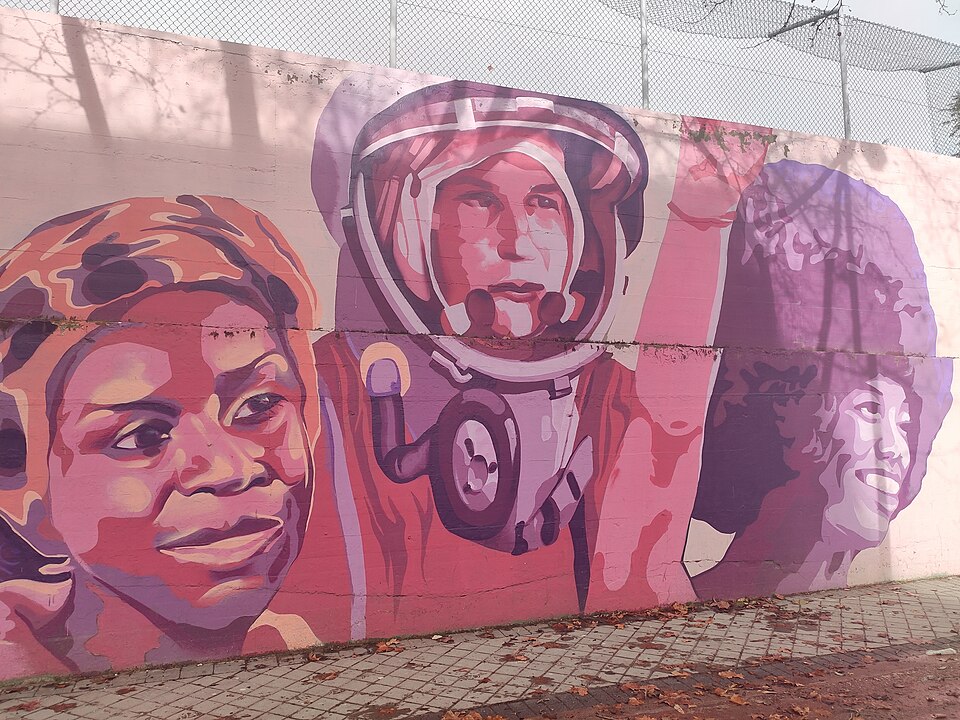
—Outside, they shout Free Angela on every continent, and you receive letters by the thousands. What does that clamor do to you, alone in your cell?
Those letters are my oxygen, comrade. They come from everywhere — from Paris, from Moscow, from villages whose names I didn't know, from children, from working women, from old activists. Each one reminds me that my cell is not a tomb but a platform. You who write from yours know that a letter crosses walls better than any body. The slogan they chant, Free Angela, I turn over in my mind: it's not just about freeing me, but about understanding how many anonymous people rot here without a single cry raised for them. My fame is an accident; I want it to serve to illuminate the invisible.
My cell is not a tomb but a platform.
—We both live in the belly of the beast, these concrete cages. Reforming prison, making it humane — do you still believe in that, or must we aim further?
Further, George, much further. For a long time, people talked to me about reforming prison, softening sentences, repainting the walls. But since I live inside, I see that reform only strengthens the beast. This institution has not failed: it accomplishes exactly what it was built for, disciplining the poor and imprisoning Blacks as slavery did yesterday. You don't reform a machine that crushes; you dismantle it. I am beginning to think that the real question is not how to make prisons better, but how to build a society that no longer needs them — schools, healthcare, work, dignity. That seems utopian from this visiting room. But every freedom first seemed impossible.
You don't reform a machine that crushes; you dismantle it.
—They say prison pays, that it feeds interests. You who read Marx like no one else, what cog do you see behind these bars?
The cog is money and color intertwined, comrade. Look who fills these cells: Blacks, Mexicans, the poor, almost never the sons of the powerful. It's no accident; it's a system where the state, industries, and fear of disorder feed each other. They build prisons like they build factories, and they have to fill them to turn a profit. Marx taught me never to separate racial oppression from economic exploitation: capitalism needs a disposable mass, and prison is the warehouse for that mass. As long as we talk about criminals without talking about profits, we will understand nothing. My cell is a link in an accounting chain.
They build prisons like they build factories, and they have to fill them.
—In the movement, some brothers find you too attached to women, and some white feminists find you too Black. How do you hold these threads together, sister?
I hold them together because they have never been separate, except in the minds of those who want to divide us. A Black woman cannot choose between her race, her sex, and her class: she lives them as one block, every morning. Feminists who forget color speak for the wives of the bourgeoisie; nationalists who forget women reproduce the domination they claim to fight. Look at our grandmothers, slaves then maids: they were exploited as workers, despised as Blacks, crushed as women, all at once. My task as a theorist is to show how these oppressions reinforce each other, how they interlock. You do not free half a people. There is no partial freedom.
A Black woman cannot choose between her race, her sex, and her class: she lives them as one block.
—In your letters, you urged me to be at the vanguard. But tell me, what would the struggle look like if Black women truly held the helm?
It would finally be complete, George. Too often we are asked to carry banners and make coffee, never to write strategy. Yet it is Black women who keep families standing when men are in prison, who organize committees, who write the letters that reach you. If we took the helm, the struggle would no longer separate the private from the political: childcare, wages, domestic dignity would become revolutionary questions. A feminism born of our experience would leave no one by the wayside — not the worker, not the prisoner, not the mother. You who urge me to the vanguard, remember: a vanguard that forgets half its people marches with a limp.
A vanguard that forgets half its people marches with a limp.

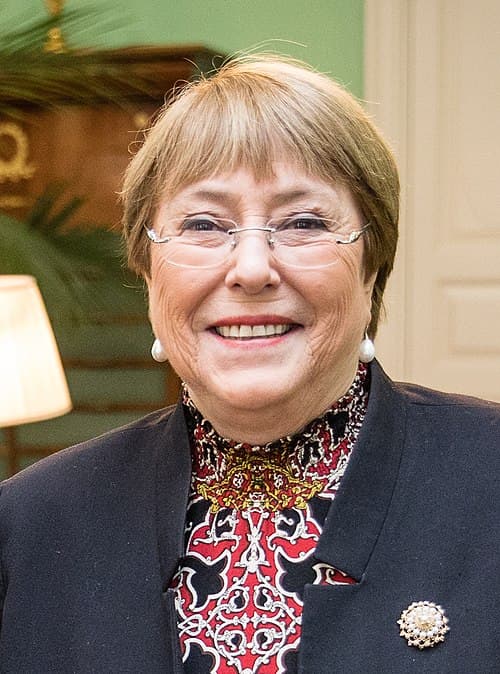
This imaginary interview was generated by artificial intelligence from sources documented in Angela Davis's profile. It dramatises what the figure might have said based on what we know about them, but does not constitute attested historical testimony. For primary sources and factual documentation, refer to the full profile.