Kids interview Angela Davis
by Charactorium · Angela Davis (1944 — ?) · Literature · Politics · Society · 5 min read
Two middle-school students, on a field trip about civil rights, get the chance to meet Angela Davis. A little intimidated, they open their notebook of questions. She smiles and invites them to sit close by.
—What was it like growing up in your city when you were little?
You know, I was born in Birmingham, Alabama, in 1944. At home, we called the city 'Bombingham.' Imagine a neighborhood where, on some nights, you'd hear explosions: white people planting bombs outside Black families' homes. There were laws called Jim Crow. They separated everything: Black people on one side, white people on the other. Not the same schools, not the same water fountains, not the same buses. As a little girl, I found it unfair, but everyone acted like it was normal. And deep inside me, I knew it wasn't normal at all.
They called my city 'Bombingham,' because the nights were dangerous.
—Did you lose friends when you were young? How did it happen?
Yes, my child, and it's a wound I still carry. In 1963, men planted a bomb in a Birmingham church, the 16th Street Baptist Church. It was a Sunday morning. Four little Black girls died that day. And among them were friends of mine. Imagine: children going to pray, in their nice Sunday dresses, who never come home. I was nineteen. That day, I understood that racism wasn't just mean words. It could kill children. I think my life as an activist was born from that grief.
Racism isn't just mean words: that day, it killed my friends.
—Why were you fired from the university? What did you do wrong?
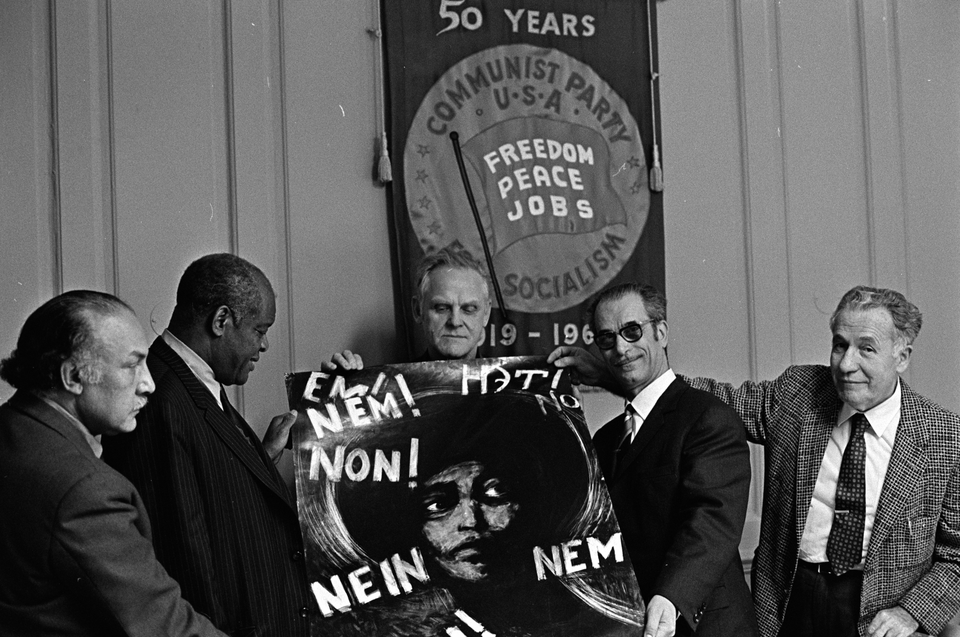
Nothing wrong, believe it or not! In 1969, I was teaching philosophy at UCLA in Los Angeles. I loved it. But I had joined the Communist Party. At the time, in the United States, being a Communist was almost considered a crime. The governor of California was Ronald Reagan. As soon as he found out, he had me fired. In my book, I wrote a simple sentence: 'I was a Communist, and I was proud of it.' The police even had a file on me. Imagine people watching you, noting who you meet, what you say, just because of your ideas.
You can be fired not for what you did, but for what you think.
—Is it true the FBI was looking for you everywhere? Were you scared?
Yes, and it was terrifying. In 1970, a young man took hostages in a courthouse to try to free Black prisoners. It went badly, people died. And guns registered in my name were found there. So I was accused, even though I wasn't there. The FBI put me on the country's Most Wanted list. Imagine your face plastered everywhere, with the word 'dangerous.' I had to hide for a while. Yes, I was scared. But all over the world, people were shouting 'Free Angela.' That gave me courage.
My face was everywhere, with the word 'dangerous' — and yet I was innocent.
—Were you in prison for a long time? What was it like in there?
I was there for sixteen months, at the Marin County jail in California, even before being tried. Sixteen months locked up for a crime I didn't commit! But you know what kept me going? The mail. I received thousands of letters from all over the world, even from people I would never meet. A fellow activist, George Jackson, also wrote to me from his prison. At the trial in 1972, I said it wasn't a real trial, but a political persecution to silence those who fight. And an all-white jury found me not guilty of everything. Justice sometimes wins in the end.
What kept me going in prison were thousands of letters from strangers.
—You wrote a very famous book. What was it about exactly?
Yes, it's called Women, Race & Class, published in 1981. The title means 'Women, Race and Class.' You see, at the time, people often talked about one problem at a time: either racism, or injustice toward women, or poverty. I wanted to show something: these injustices are tied together, like the threads of the same rope. A poor Black woman suffers all three at once! We call that intersectionality. It's a big word, but the idea is simple: to understand someone, you have to look at their whole life at once, not just one piece.
Injustices are tied together, like the threads of the same rope.
—Do you really want to abolish all prisons? But where would we put people then?
Good question, and many people ask me that! In my book Are Prisons Obsolete?, from 2003, I ask: do prisons really make the world better? I noticed that in the United States, they lock up a huge number of poor and Black people. That's no accident. I call it the prison-industrial complex: a system where locking people up makes money. So no, I'm not saying 'open the doors tomorrow morning.' I'm saying: let's imagine schools, healthcare, jobs instead, so people don't need to be locked up. Repair before punishing.
Repair before punishing: what if we no longer needed prisons?
—How did it feel knowing you were being spied on all the time?
It's a strange feeling, my child, a bit like having a shadow always behind you. The FBI had a secret program called COINTELPRO. Its goal was to monitor and break up activist movements, especially Black ones. They built a thick file on me from my early years of activism. Imagine someone reading your letters, noting your friends, listening to your speeches, hoping to bring you down. It could be scary, and sometimes it was. But it also taught me something: if a state spends so much energy watching you, it means your ideas matter. Silence doesn't bother anyone.
If a state spends so much watching you, it means your ideas matter.
—You always wear the same hairstyle! Why is that hairstyle important to you?
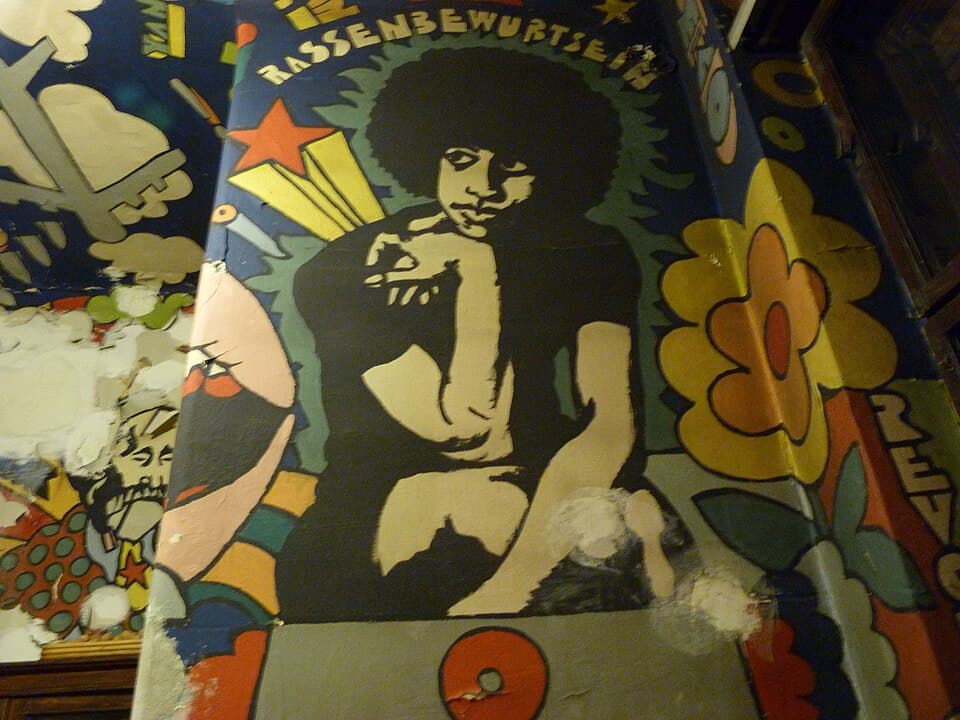
Ah, you noticed my hair! My afro, those big natural curls. In my time, little Black girls were taught that their kinky hair was 'unkempt,' that they had to hide it or straighten it to look like white girls. So when I let my hair be itself, it was more than a hairstyle. It was saying: I am Black, and I am proud. Many young people recognized themselves in that image. You see, sometimes something as simple as your body can become a message for thousands of people. Being yourself can be an act of courage.
Being yourself, simply, can become an act of courage.
—If you had one piece of advice for us young people, what would it be?
I would tell you this, from the bottom of my heart. I was afraid, I was locked up, I was watched, and yet I keep fighting today. In one of my recent books, I connected the old civil rights struggles to the battles of today's youth against racism. Because a fight for justice is never over: each generation picks up the torch. Never tell yourself 'I'm too small, I can't change anything.' The four little girls of Birmingham didn't get to grow up. It's for them, and for you, that we move forward. Freedom is a daily struggle.
Freedom is never won: it's a daily struggle.
This imaginary interview was generated by artificial intelligence from sources documented in Angela Davis's profile. It dramatises what the figure might have said based on what we know about them, but does not constitute attested historical testimony. For primary sources and factual documentation, refer to the full profile.