Imaginary interview with Angela Davis
by Charactorium · Angela Davis (1944 — ?) · Literature · Politics · Society · 7 min read
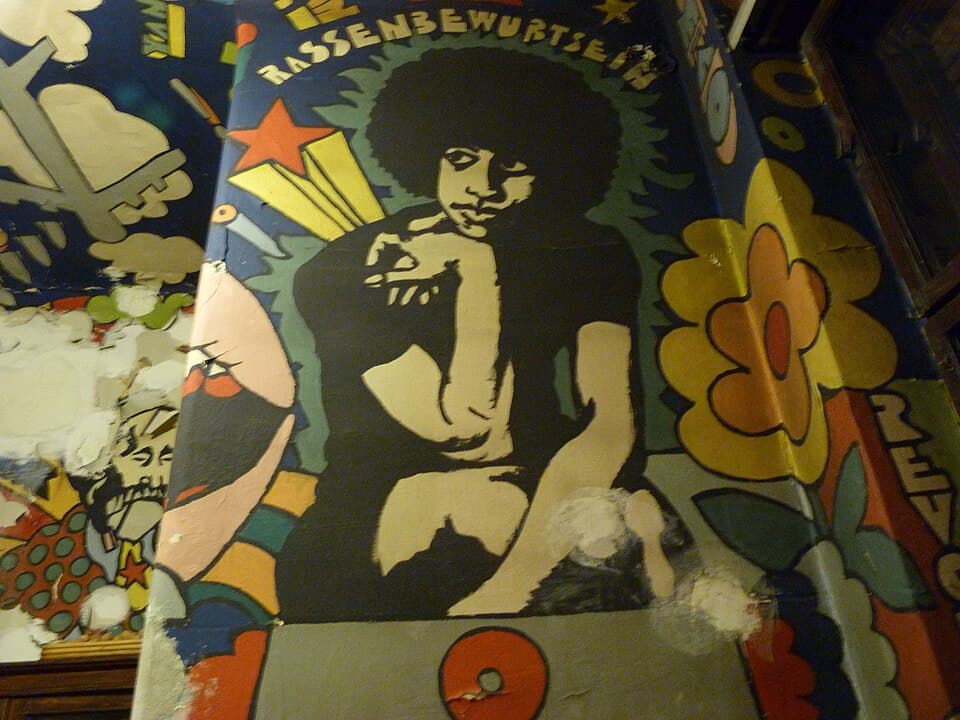
A late summer afternoon in Oakland, in a room where bookshelves sag under the weight of Marx's bindings and collections of African American poetry. Angela Davis receives us without ceremony, a cup of tea growing cold, the measured voice of someone who has spent her life transforming anger into thought. She speaks slowly, as if every word must hold up in court.
—You grew up in Birmingham, a city some called by another name. What remains of those years in your memory?
We called it Bombingham. That wasn't a metaphor: in my neighborhood, we counted explosions the way others count thunderstorms. In September 1963, a bomb ripped through the Sixteenth Street Baptist Church and killed four little girls I knew, girls I had played with. I remember the stunned silence of the adults, and then the cold certainty that this silence was complicit. Segregation wasn't just a law; it was an atmosphere, a way of breathing fear from morning until night. I understood then, very young, that racial hatred in the South was methodical, organized, almost administrative. You don't get over a childhood spent measuring your life by the distance of an explosion. But you can decide never to let it go unanswered.
In my neighborhood, we counted explosions the way others count thunderstorms.
—How did your time at Goethe University Frankfurt shape your way of thinking?
I had left a country where Black children were killed for a German classroom where Herbert Marcuse and Theodor Adorno dissected domination like a mechanism. Critical Theory gave me tools, not consolations. Marcuse, especially, taught me that you could be a rigorous philosopher and a man who takes to the streets — that thought is only worth something if it is willing to get its hands dirty. In Frankfurt, I read Marx and Engels in the morning and thought about Birmingham in the afternoon; the two never contradicted each other. Europe gave me distance, but that distance made American racism even more obscene, more indefensible. I came back convinced that the analysis of capital and the struggle of Black Americans were one and the same battle, seen from two angles.
—In 1969, the University of California hired you and then fired you. What really happened?
I taught philosophy at UCLA, and that would have been fine as long as I stayed quiet. But I never hid my card. In my autobiography, I wrote a sentence I still stand by word for word: “I was a Communist, and I was proud of it.” As soon as Governor Reagan and the FBI found out, I was driven from my professorship — not for what I taught, but for what I believed. The court ordered my reinstatement; they found another pretext to start over. What few people saw was that my name was already in a thick FBI file, kept under COINTELPRO, that secret program that surveilled, infiltrated, and broke Black activists. They weren't accusing me of a crime. They were accusing me of a conscience.
They weren't accusing me of a crime. They were accusing me of a conscience.
—Do you remember the moment your name appeared at the top of the FBI's Most Wanted list?
August 1970. The young Jonathan Jackson, George's brother, had tried to free Black prisoners at the Marin County courthouse; the affair ended in bloodshed. Weapons registered in my name were found at the scene, and that was enough. Overnight, I was no longer a professor or an activist: I was a fugitive plastered on post office walls across the country, alongside America's most wanted criminals. I spent weeks in hiding, changing refuges, measuring how much a state can unleash against a single Black woman. What saved me was not the law — it was the immense global outcry, the cry “Free Angela” rising from Paris, Moscow, Berlin. I discovered that solidarity could be a material force.
I discovered that solidarity could be a material force.
—After sixteen months in detention, an all-white jury acquitted you. What did you say to that court?
Sixteen months locked up in Marin County Jail, waiting for a trial that should never have existed. Before the jurors, I didn't plead; I accused: “This trial is a political persecution designed to silence those who fight for the liberation of Black people.” I believed it then, and I still believe it. I was not being tried for an act; I was being tried for a commitment. That twelve white Californians finally acquitted me on all counts — murder, kidnapping, conspiracy — remains for me less a personal victory than a proof: when popular pressure is strong enough, even a machine built to convict can jam. I received thousands of letters in my cell, even from the Soviet Union. I never felt alone behind those bars.
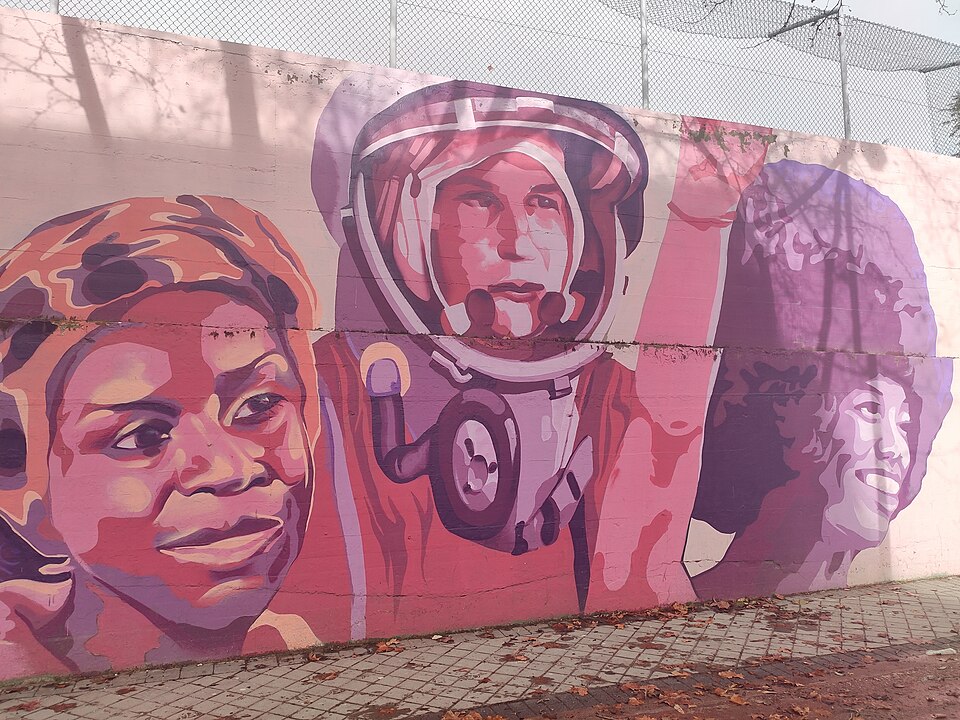
—With Women, Race & Class, you refuse to separate struggles. Why did this intertwining seem so essential to you?
Because for too long I was asked to choose: woman or Black, worker or activist, as if my existence could be sliced into pieces. In Women, Race & Class, in 1981, I wanted to show that racism, sexism, and capitalism are not three separate problems but a single knot that tightens. Take women's suffrage: for white suffragists, it was a goal; for Black women, it was only a means toward economic and social equality, never an end in itself. That is why white feminism alone could not contain me, and why the civil rights movement, dominated by men, could not either. We had to think from the exact point where all these oppressions intersect — from the bodies of Black women.
For too long I was asked to choose: woman or Black, as if my existence could be sliced into pieces.
—How did your experience of prison nourish this analysis of women, race, and class?
Prison is a concentration. Behind the bars of Marin, I saw a parade of women — poor, Black, and Latina in the overwhelming majority — punished not for their acts but for their place in the social order. They don't lock up chance; they lock up a segregation that has simply changed its walls. This observation I carried into my books and lectures. The Black feminism I defend does not come from a university seminar; it comes from what I saw with my own eyes, between two searches. Grand theories, if they do not explain the life of the most destitute woman, are worthless. That is why I refuse academic comfort: my thought must answer to those whom society has decided to forget behind a fence.
—You don't talk about reforming prisons, but abolishing them. Isn't that a utopia?
I was told exactly the same thing about the abolition of slavery. In Are Prisons Obsolete?, in 2003, I wrote a sentence I gladly repeat: “The prison industrial complex is not a conspiracy to keep Black people enslaved. It is the predictable result of a set of social and economic priorities.” So it's not a conspiracy; it's worse: it's a social choice, methodical and profitable. The prison-industrial complex locks up the poor and Black people because their well-being has never been among its priorities. Reform would be painting the walls; abolition is asking why those walls exist. California's Three Strikes law in 1994 filled prisons with people whose only fault was being born on the wrong side. Abolition is not a tender dream: it is the only logical response to a system that has failed at everything.
Reform would be painting the walls; abolition is asking why those walls exist.
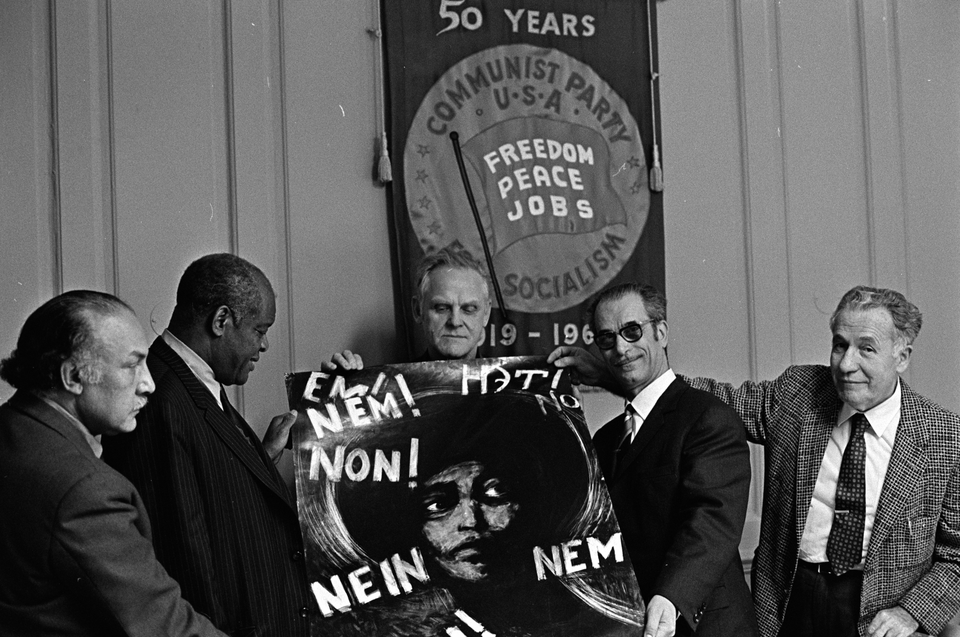
—When you link slavery, democracy, and the prison system in a book like Abolition Democracy, what exactly are you thinking of?
I am thinking of an unfinished democracy. In 1865, America abolished slavery on paper, but the Thirteenth Amendment itself carved out an exception: servitude remains permissible as punishment for a crime. In other words, they closed the plantation and left the prison door ajar. In Abolition Democracy, in 2005, I wanted to extend this history: as long as this prison complex persists, American democracy remains a half-kept promise. W. E. B. Du Bois already spoke of an 'abolition-democracy,' the idea that abolishing is not enough — you have to build the institutions that make equality real: schools, healthcare, dignified work. That is penal abolitionism: not opening the doors and leaving, but building a world where the cage would have no function. You only truly abolish by replacing.
—In 1980 and then 1984, you ran for Vice President of the United States. What were you seeking in a candidacy that many considered hopeless?
No one, least of all me, believed we would enter the White House alongside Gus Hall. But a candidacy is not just a vote count; it is a platform. Running as a Black woman and a Communist, twice, was to assert that these words had a place in American debate, at a time when they were treated as insults. Faithful to my party card, I refused to be erased from the political landscape after being driven out of UCLA. Every rally was an opportunity to talk about prisons, Black unemployment, the arms race. You don't measure the influence of an idea by an election; you measure it by its persistence. These symbolic campaigns left a mark: that of a voice that refused to be silent in the very system that claims everything can be said.
—After all these decades of struggle, what keeps you going today?
The conviction, deep in my bones, that nothing is fixed. I saw legal segregation fall, which people thought was eternal; I saw an all-white jury acquit me against all odds; I saw the cry “Free Angela” make a state apparatus back down. So I distrust all those who declare a system too strong to be brought down — that is exactly what they said about chains. What keeps me going are the younger generations who take up the torch, who connect yesterday's struggles to today's injustices without tiring. Freedom is not a state you reach and keep; it is an effort you must renew every morning, like the reading of newspapers and philosophical texts with which I have always begun my days. As long as there is a cage, there is work to do.
Freedom is not a state you reach and keep; it is an effort you must renew every morning.

This imaginary interview was generated by artificial intelligence from sources documented in Angela Davis's profile. It dramatises what the figure might have said based on what we know about them, but does not constitute attested historical testimony. For primary sources and factual documentation, refer to the full profile.