Imaginary dialogue between Frère Arnold (Frère A.) and Angela of Foligno
by Charactorium · Angela of Foligno (1248 — 1309) · Spirituality · Literature · 4 min read
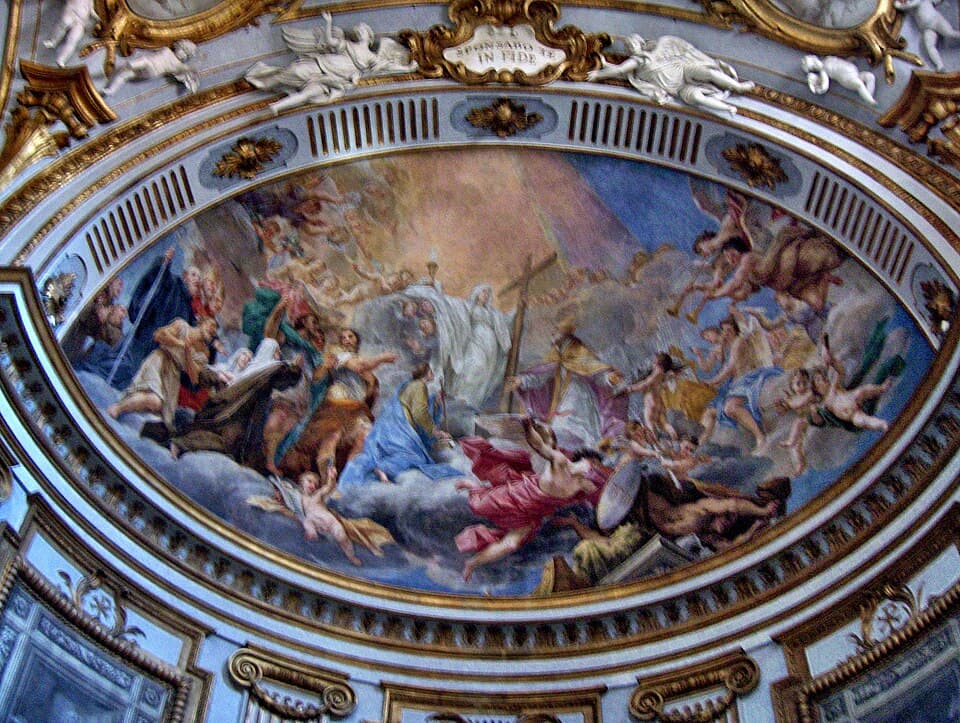
It is in the cool shadow of the Church of Sant'Angelo, in Foligno, that one afternoon in the year 1298, Brother Arnold sits down near Angela, his parchment on his knees and his pen already sharpened. The light falls obliquely on the crucifix before which she prays each day; in the distance, the bells of Vespers can be heard. They have known each other since the pilgrimage to Assisi, where he was first scandalized by her cries, then won over to the point of becoming the faithful scribe of her visions. Today, he comes to gather not only the dictated words, but the memory of what caused her to be born to God.
—Angela, before I knew you, you had lost everything in a few years — your mother, your husband, your children. What did you see in this triple bereavement?
Brother Arnold, you who have heard me say it so many times without daring to write it: I did not weep as a despoiled woman weeps. I first lived in comfort, wife of a merchant, my soul asleep in the goods and vanities of this world. Then death came and took my loved ones one after another. Where others saw a misfortune, I received a call: God was loosening my hands so that I would hold nothing but Him. I distributed all that I possessed, I put on the habit of the Third Order, and I walked naked toward the Cross. What the world calls ruin was my beginning.
Where others saw a misfortune, I received a call: God was loosening my hands.
—You know I was there, on the road to Assisi, when you cried out before the Portiuncula. I was so troubled that I wanted to leave. What was happening to you that day?
I know it, my brother, and I have never held it against you — how could you have understood? Before Santa Maria degli Angeli, the little chapel of Francis, a sweetness so violent seized me that my body no longer obeyed me. I began to cry out, to roll on the ground, for the soul, when it touches the immense, can no longer dwell within the measures of the body. You were ashamed of me, and you thought of leaving. But God held you back, and your shame was changed into your charge: holding the pen. That ecstasy was not a scandal; it was the threshold of everything.
The soul, when it touches the immense, can no longer dwell within the measures of the body.
—You say that my shame became my charge. How did you know, that day at Assisi, that I would be the one to write?
I did not know it, Arnold — I received it. You came to find me, displeased, to ask me to account for my disorder. And behold, in that very question, God showed me your office: he who doubts and wants to understand is precisely the one who will listen enough to transcribe. A man won over in advance would have flattered my words; you weigh them, you correct me, you force me to speak truth. That is why I entrust to you what I would say to no other. Your initial mistrust was the pledge of your fidelity.
He who doubts and wants to understand is precisely the one who will listen enough to transcribe.
—There is one thing you dictated to me that my hand trembled to write: that darkness in which you say you see God. Explain it to me again, for I understand it poorly.
You understand it poorly because it is not understood, my brother — it is suffered. I saw something so obscure that I no longer remembered any work of God, nor the Trinity, nor anything of the world; and in that darkness, I saw the Trinity. It is not the darkness of night that lacks light: it is the excess of light that blinds. Every image I made of Him, I had to break; every word I said of Him fell far short of the truth. There, I was no longer anything, and I was filled. Write it as is, without polishing: the reader will stumble over it as I stumbled over it.
It is not the darkness that lacks light: it is the excess of light that blinds.
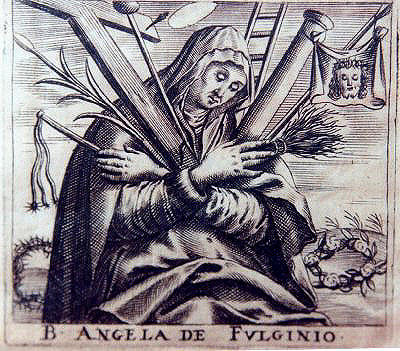
—Some in Foligno murmur that your via negativa borders on pride, as if no one could say anything of God anymore. What do you answer them?
Let them be reassured: it is the opposite of pride. The proud man believes he holds God in his words; I confess that every word falls from my hands. The soul that contemplates cannot in any way speak of Him, for everything said of Him remains below the truth. It is not to despise words, Arnold — it is to hold them for what they are, steps, not the summit. The doctors build beautiful ladders of reasons; I only say where the ladder stops and where the abyss begins. Silence is not my knowledge; it is my admission.
Silence is not my knowledge; it is my admission.
—For years I have been recording your visions on this parchment. You, whom they call the 'mistress of theologians,' why entrust your soul to my pen alone?
Because a woman does not go up into the pulpit, my brother, and God willed that my word should pass through your hand. What you collect in the Liber is not a doctrine that I have built: it is a Memoriale, the memory of the steps by which God made me climb, degree after degree, up to Him. I dictate, you write, and often you reread to me to verify that you have added nothing of your own — that is right, for I fear being embellished more than being contradicted. This nickname they give me makes me tremble: I do not teach, I bear witness. The master here is He of whom I am but the hoarse voice.
I am but the hoarse voice of Him who alone teaches.
—When you dictate to me and I reread to you, you sometimes say that my words betray yours. Is it so difficult to set your visions down on parchment?
Difficult? It is almost impossible, and you see it better than anyone. Very often you read to me what you have written, and I say to you: no, that is not it, it is much less, it is almost the opposite. Not that you write poorly, but because the thing seen overflows all human language. What I experience in ecstasy is full; what I dictate to you is its shadow; what your pen retains is the shadow of the shadow. And yet we must write, for without this impoverished remainder, my disciples would have nothing. We both work to save a few crumbs of a feast that surpasses us.
What I experience is full; what I dictate is its shadow; what your pen retains is the shadow of the shadow.
—I see you fast to the point of exhaustion, keep vigil entire nights in the cold. Tell me, Angela, why impose such rigor on your body?
Because this body, once, loved itself too much, Arnold. It wore fine robes, tasted rich tables, slept in softness. Today it often knows only bread and water, and on days of grace, the Eucharist suffices for all nourishment — I have gone days without anything else, and I felt no hunger. I do not hate my flesh; I bring it back to its measure, as one holds a beast by the rope. The gray habit I wear, worn and patched, tells the world that I expect nothing more from it. It is not suffering I seek: it is the Cross, and on the Cross, a Spouse.
I do not hate my flesh; I bring it back to its measure, as one holds a beast by the rope.
—In the evening, after Compline, I leave you in prayer and sometimes find you in the morning, in the same place. Where do you go during those long vigils?
Nowhere, and yet farther than any journey. When you leave me in the evening, my brother, I remain before the crucifix, and I contemplate that suffering body until my own forgets itself. Hours no longer count; cold no longer touches me; I no longer know if night passes. I do not ascend — that would be too much to say — it is He who descends and holds me. You find me in the morning as you left me, but I am not the same: something in me has been burned and washed. These vigils are my true labor, whose fruit no one sees, except you who guess my face at dawn.
I do not ascend — that would be too much to say — it is He who descends and holds me.


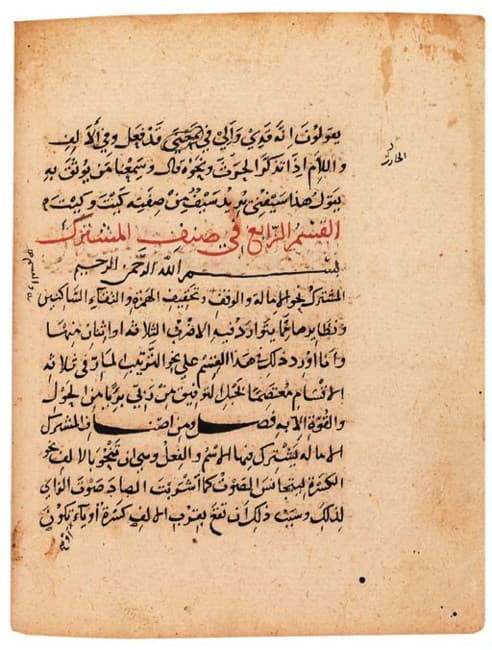
This imaginary interview was generated by artificial intelligence from sources documented in Angela of Foligno's profile. It dramatises what the figure might have said based on what we know about them, but does not constitute attested historical testimony. For primary sources and factual documentation, refer to the full profile.