Kids interview Anish Kapoor
by Charactorium · Anish Kapoor (1954 — ?) · Visual Arts · 5 min read
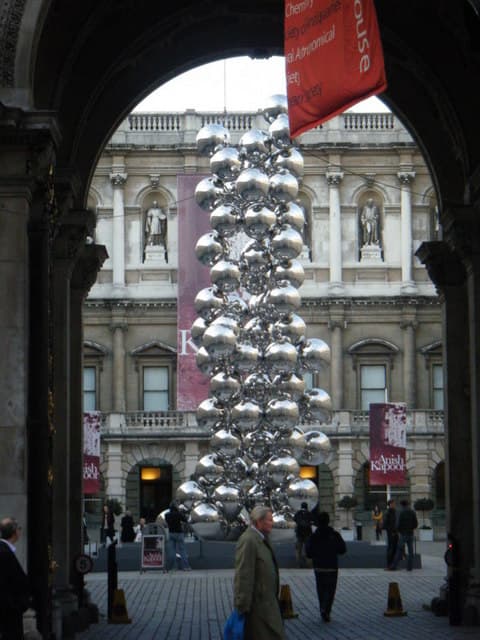
That morning, two twelve-year-old visitors pushed open the door of a huge London studio, between giant models and splashes of red pigment. A gray-haired man greeted them with a smile: Anish Kapoor, the sculptor of mirrors and the void. A little intimidated, they pulled out their notebooks full of questions.
—How old were you the first time you used all those colored powders?
You know, I was around 25 when I went back to India in 1979. I was born in Bombay, but I grew up far away. There, I saw markets filled with colored powders: red, yellow, blue piles, right on the ground. It overwhelmed me. Back in London, I placed my first sculptures on the floor and covered them with those pure pigments. I called that series 1000 Names. Pigment is just a simple colored powder. But in large quantities, it becomes almost alive. Imagine a small mountain of red that seems to glow all by itself, without a lamp.
—Why do you love red so much?
Ah, red… That's my color, the one that has followed me forever. One day, I said something I truly believe: “Color has a physical presence. Red is not just a color, it is a material, almost a flesh.” Do you understand? For me, red is not just pretty. It is alive, like the blood under your skin. In 2002, at the Tate Modern in London, I stretched an immense red membrane over 150 meters long in a giant hall. I called it Marsyas, after a Greek character flayed alive. When you walked inside, it was like walking inside a body.
—What is that huge bean-shaped sculpture in Chicago?
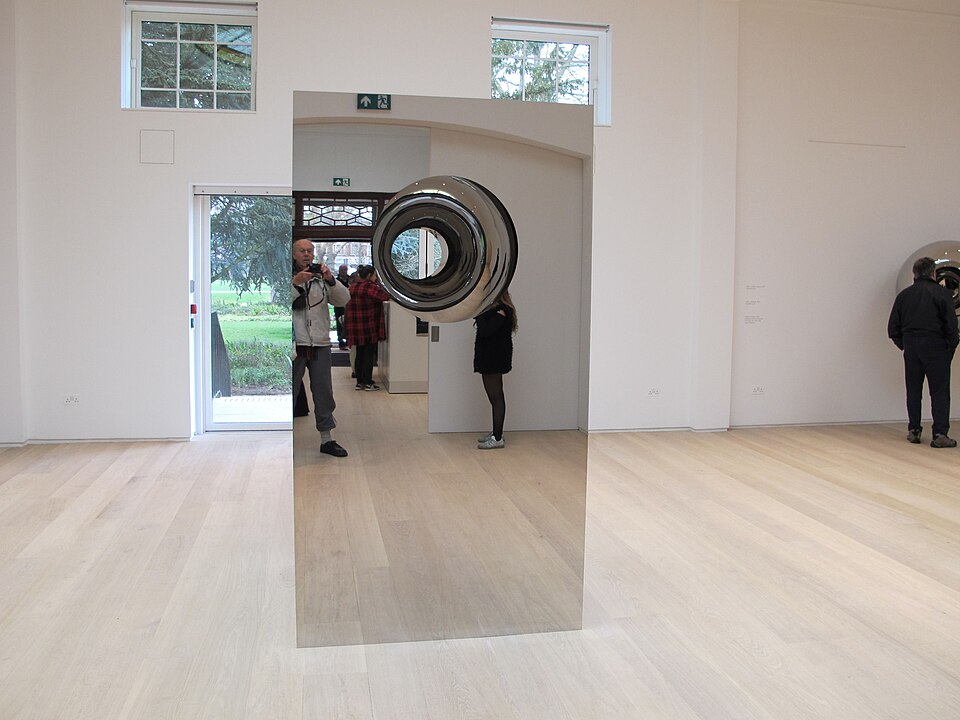
Ha! You're talking about Cloud Gate in Chicago. People nicknamed it The Bean because of its shape. I had something else in mind. I'll tell you what I really wanted: “something that seems immaterial, as if the sky came down to us and we could walk beneath it.” It's polished mirror-like steel. When you walk under it, since 2006, you see the sky, the clouds, and your own distorted silhouette. A huge object, heavy metal, but looking light. That's what makes me happy.
A huge object, heavy metal, but looking light as a cloud.
—What does it feel like to see yourself all twisted in it?
It's a game, you see. In front of Cloud Gate, no one stays serious. People raise their arms, make faces, look for themselves in the reflection. Polished stainless steel is a metal that you buff until it becomes a perfect mirror. It catches the whole city around it and gives it back to you curved, stretched. And I love that my work is not finished without you. Without a passerby in front, there's nothing to see: just cold metal. With you moving in front, it comes alive. You complete it, in a way, every time you approach.
—How do you build things that huge?
Good question! An artist alone in his corner with a brush isn't enough for that. In the morning, in my London studio, I meet a whole team: assistants, engineers, fabricators. We draw, calculate, make models. For the ArcelorMittal Orbit tower, in 2012, I worked with an engineer, Cecil Balmond. It's 114 meters high, all red steel! Without him, it would have fallen. Imagine a huge construction site, with cranes, welders, noise everywhere. Making a giant sculpture is a bit like conducting an orchestra.
Making a giant sculpture is like conducting an orchestra: everyone plays their part.
—What was that giant purple thing you put in Paris?
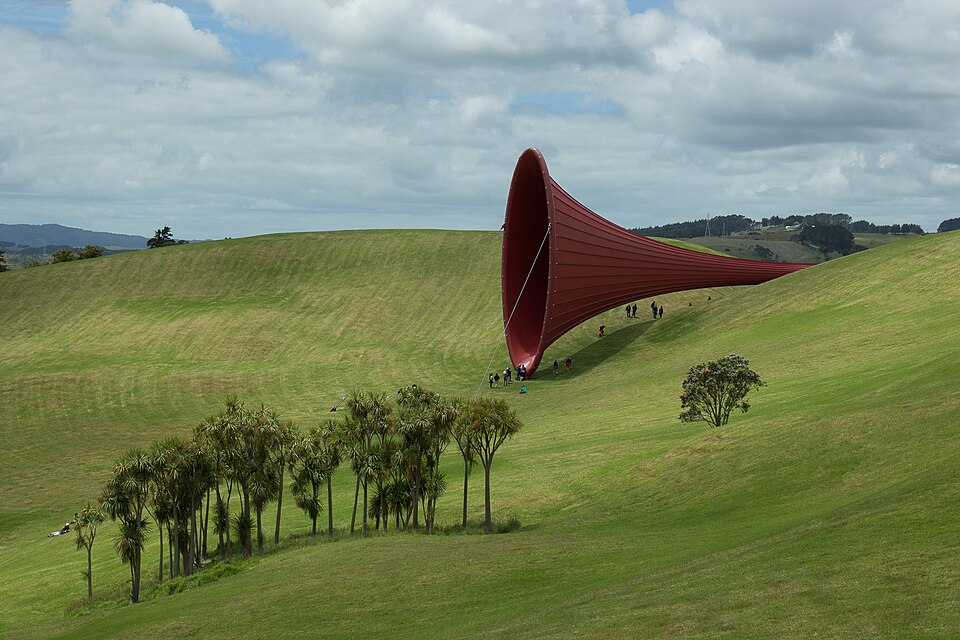
Ah, Leviathan! In 2011, in Paris, I was given the immense nave of the Grand Palais for a big art event called Monumenta. I installed a huge inflatable structure, very dark purple. Three large balls connected together, much taller than a house. You could go inside: daylight came through the flexible skin and everything turned red-violet around you. You felt very small, as if swallowed by a giant belly. The title comes from a monster in old stories. I wanted you to feel something in your body, before even thinking.
—Is it true you have the blackest color in the world?
Yes, almost! In 2014, I obtained the right to use, just for my art, an incredible material: Vantablack. It's the deepest black ever made. It absorbs almost all light, up to 99.9%. When you look at a shape painted with it, you no longer see the relief, the hollow: just a hole. As if a piece of the world had disappeared before you. It fascinated me, because I've always loved the void, absence, that nothingness you almost feel you can touch. Imagine an object whose edges you can no longer see: your eye doesn't know where to rest. It's dizzying.
The deepest black is a piece of the world that has disappeared.
—Were other artists angry that you kept that black for yourself?
Oh yes, many! Keeping that color just for myself made some people angry. One artist, Stuart Semple, got revenge in a funny way. He created the pinkest pink in the world… and banned it to one person on Earth: me! I couldn't buy it. It was a battle of colors, a kind of war for fun. But it raised a real question: can an artist own a color? I'll leave you to think about it. I think such an extraordinary material was worth a little fight.
—Why did your sculpture anger people so much at Versailles?
Ah, Versailles… In 2015, I was invited to exhibit in the palace gardens, that magnificent place of the French kings. I placed Dirty Corner there, a huge sculpture of steel and stones, dark and twisted, in the middle of those perfect paths. Many people were shocked: they thought a modern object had no place among so much history. There were arguments, articles, anger. You know, today's art often disturbs at first. Putting something new right next to something very old forces you to see both differently. And it's okay to be surprised.
Art often disturbs at first: being surprised is not a problem.
—What would you like people to remember about you, later on?
What a beautiful question to end with. If I had to tell you one thing… One day, I confessed this: “I don't want to make a sculpture that talks about form. I want to make a sculpture that talks about belief, or passion, or experience.” That's my secret. I don't care if you know whether it's beautiful or well-made. I want you, in front of Cloud Gate or Marsyas, to feel something strong, in your gut, in your heart. An emotion you won't forget. If one day you pass near one of my works and your heart beats faster, then I will have succeeded.
I don't want you to know if it's beautiful; I want you to feel something.

This imaginary interview was generated by artificial intelligence from sources documented in Anish Kapoor's profile. It dramatises what the figure might have said based on what we know about them, but does not constitute attested historical testimony. For primary sources and factual documentation, refer to the full profile.