Imaginary interview with Anna May Wong
by Charactorium · Anna May Wong (1904 — 1961) · Performing Arts · Society · 5 min read
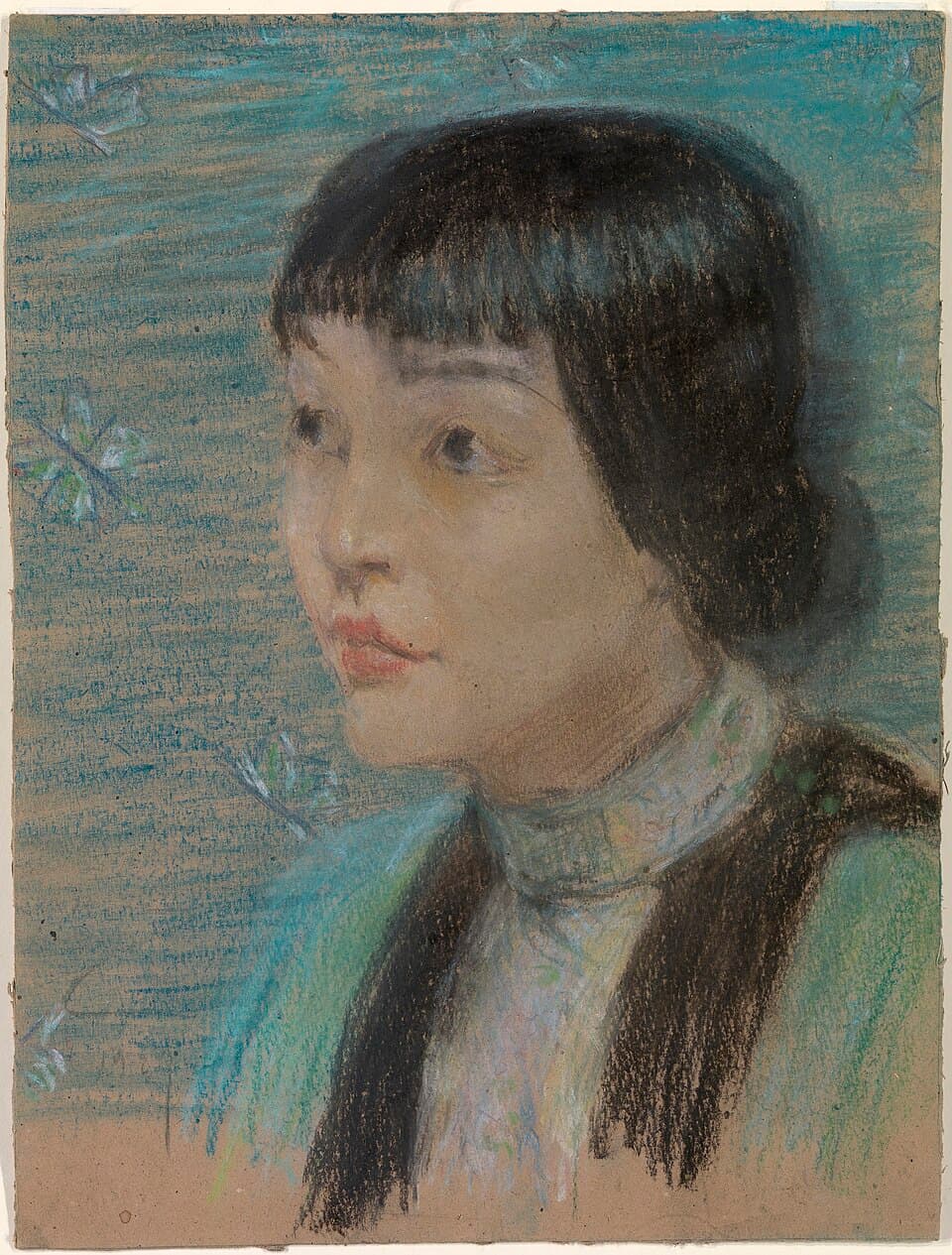
Santa Monica, an afternoon in the late 1950s. In a bright house open to the Pacific, Anna May Wong receives casually, a steaming cup of tea in hand, a dark silk qipao draped over her shoulders. The star acclaimed from Los Angeles to Berlin speaks in a measured voice, irony flickering beneath the fatigue.
—How did a little girl from Chinatown come to dream of cinema?
I was named Wong Liu Tsong — "Cold Jade Moon." As a child, I ran after my father between the vats of his laundry in Los Angeles, and I escaped whenever I could to watch film crews shoot in our Chinatown streets. I saved nickels, one at a time, to sit in the dark of a theater and disappear into those flickering images. At fourteen, I got my first extra role, a silhouette among others. I had nothing but this stubborn certainty: that luminous rectangle would be my life, no matter the cost. My mother thought it indecent for a Chinese girl. I saw it as the only door no one had yet thought to close on me.
It was the only door no one had yet thought to close on me.
—Why did Hollywood insist so much on making you a figure of menace?
Look at Daughter of the Dragon: I am the daughter of the sinister Dr. Fu Manchu, a creature of vengeance and poison. I was offered a hundred variations of the same woman—the spy, the traitor, the seductress who leads the white man to his doom. I finally said it out loud to a London magazine in 1933: "I am condemned to be tragic, always playing the villainous Oriental woman. I don't want to be the wicked dragon lady forever. There seems to be no way out." This Orientalism, this taste for the threatening exotic, they called it entertainment. I knew that each such role dug a little deeper the gap between what I was and what they thought they saw when they looked at me.
—What did you go looking for in Europe, in 1928, far from the American studios?
In 1928, I packed my bags for Europe. Hollywood was suffocating me; I was only an exotic backdrop placed in the background. In London, they finally gave me Shosho in Piccadilly — a restaurant dishwasher who goes on stage and becomes the nightclub's attraction. For the first time, my character had her own desire, ambition, inner shadow. They watched me act, not just appear. The British press treated me as an actress, not a curiosity from elsewhere. I think that's where, under the English lights, I understood what Hollywood had stolen from me: not fame, I had that, but the possibility of being a complete human being before the lens.
—What did Berlin represent for you at that turning point in the 1930s?
In Berlin, in that quivering Weimar Republic, I learned German and mingled with a world of artists who didn't ask where I came from. I met up with Marlene Dietrich, with whom I filmed Shanghai Express in 1932, directed by Josef von Sternberg. I play Hui Fei, a woman with a tragic past—another broken destiny, yes, but nuanced, restrained, adult. The talkies had just turned everything upside down, and many trembled for their voice; I, who spoke English, Cantonese, Mandarin, French, and German, did not have that fear. Europe gave me a few years of breathing room, before even darker shadows rose over that city I loved.
—Do you remember the reception you received during your trip to China in 1936?
In 1936, I finally left for China, that country whose face I bore without knowing its streets. I imagined a reunion; I found a trial. The nationalist press reproached me for my roles as venal women, accusing me of tarnishing China's image before the world. To a New York Times reporter, I had confided my hope: "It is a shame that Chinese always have to be the bad man in the movies. I am hoping that someday a picture will be made that will tell the truth about the Chinese." But over there, they only saw the dragon lady. In Shanghai, in Beijing, I was the American; in America, the Chinese woman.
In Shanghai, in Beijing, I was the American; in America, the Chinese woman.
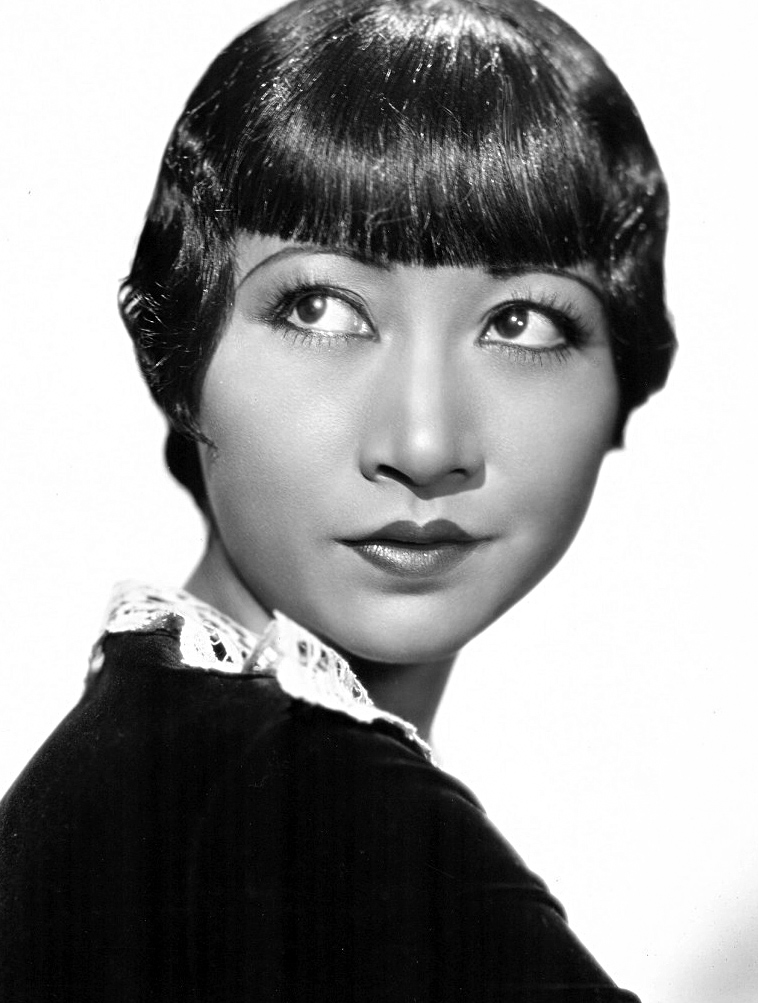
—What were you really seeking, deep down, by crossing the ocean to the land of your ancestors?
I didn't go only as an actress. I wanted to hear Mandarin in the mouths of merchants, to find again, beyond the greasy spoons of Chinatown, the Cantonese cuisine of my childhood—the rice, the fish, the soups that steamed on my father's table. He belonged to a generation already born far from the ancestral land; I even more so. All my life, I was expected to be "authentically" Chinese on screen, draped in fantasies; and now the real China found me too American, my gestures too free, my speech too rounded. This trip taught me one bitter thing: the authenticity they demanded of me existed nowhere, except in the imagination of those who judged me.
—How did you experience the refusal of the role of O-Lan in The Good Earth?
1937. MGM was adapting The Good Earth, Pearl Buck's novel, and the great role—O-Lan, a Chinese peasant woman—seemed written for me. I was then the most famous Chinese-American actress in the world. They gave it to Luise Rainer, an Austrian, who was made up in yellowface to look Asian. The reason? The anti-miscegenation laws forbade an Asian actress from playing love scenes opposite a white actor. As consolation, I was offered the role of a courtesan—a villain, once again. I refused. That a white woman played the only worthy Chinese peasant, while the real Chinese woman was only allowed vice: that sums up the absurdity of my career.
They gave a white woman the only worthy Chinese, and the real Chinese woman, vice.
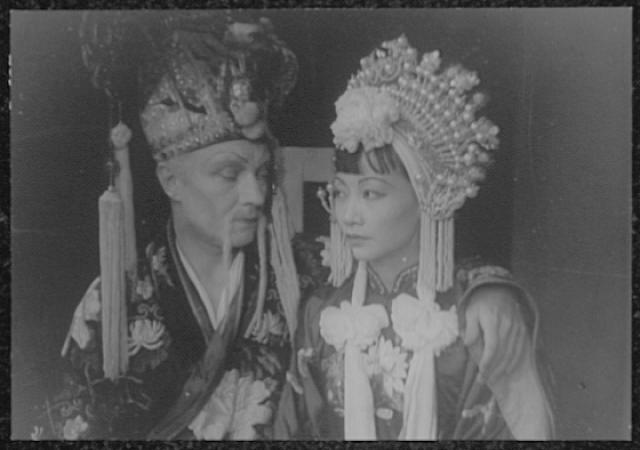
—Did these prohibitions weigh only on screen, or did they spill into your life?
These same anti-miscegenation laws governed not only my roles: they governed my life. In many states, I could not freely marry the man I might have loved, if he were not of my "race." The Hays Code, from 1930 onward, had carved into Hollywood's stone the same ban on interracial kissing. Understand: they built me a prison where the leading role was denied me both on screen and off. I ended up living alone, in this house in Santa Monica. People sometimes ask why I never married. I answer that my country's law had already decided for me, long before my heart had a say.
—What did it mean to you to appear so often dressed in the qipao?
The qipao—what Westerners call cheongsam—became my signature, on screen and in salons. The couturiers of Paris and London dressed me; I was listed among the best-dressed women in the world; but when I wore the straight dress of my ancestors, it was not a costume, it was a flag. At a time when everything from Asia was caricatured, when white women painted themselves in yellowface, I unabashedly displayed the silk and high collar of China. Every time I appeared like that, I silently said: this is where I come from, and I am not ashamed. Elegance, for a woman like me, was also a way to fight back.
The straight dress of my ancestors was not a costume, it was a flag.
—In the end, how would you like to be remembered?
In 1951, I finally landed the lead role in an American television series, The Gallery of Madame Liu-Tsong—a New York art dealer involved in espionage stories. A modern, dignified heroine, a world away from the villainesses the big screen had forced on me. It was late and brief, but I knew what it meant. One day in 1938, bitter, I whispered to a magazine what my epitaph should be: "She died as she had always lived — on the wrong side of the camera." Perhaps. But if I am to be remembered, let it be for having refused, again and again, to be only the menacing shadow they wanted to project onto my people.
This imaginary interview was generated by artificial intelligence from sources documented in Anna May Wong's profile. It dramatises what the figure might have said based on what we know about them, but does not constitute attested historical testimony. For primary sources and factual documentation, refer to the full profile.