Kids interview Anna May Wong
by Charactorium · Anna May Wong (1904 — 1961) · Performing Arts · Society · 5 min read
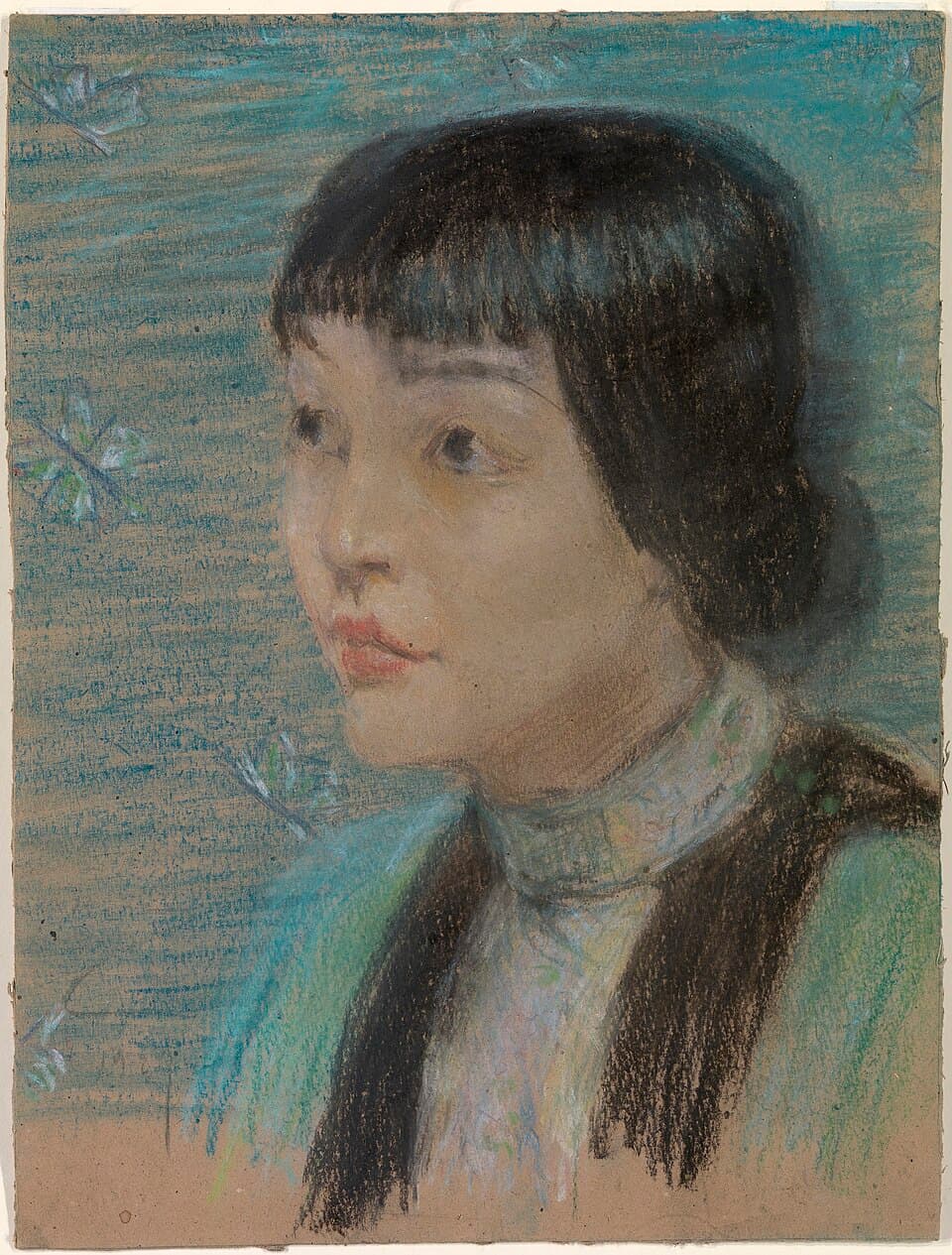
Two twelve-year-old visitors, on a school trip about film history, push open the door of a studio dressing room. Sitting in front of a mirror surrounded by light bulbs, an elegant lady in a Chinese dress turns to them with a smile. It's Anna May Wong, Hollywood's first great Chinese-American star — and she has a thousand things to tell them.
—How old were you for your first big role? What movie was it?
You know, my child, I was seventeen. My first big role was The Toll of the Sea, in 1922. Imagine: it was one of the very first color films in history! People had never seen anything like it. I played a young Chinese woman abandoned by an American she loved. A sad story, very sad. And already, at that time, I didn't know it yet, but I had been chosen to cry, to suffer on screen. The little Asian victim. I was so proud to be there… and yet I was already being boxed in. It's strange, isn't it? To succeed and be trapped at the same time.
I was chosen to cry on screen, never to be loved.
—Why were you always given roles as a villain or a traitor?
Ah, that made me sad, you know. In Hollywood, the Chinese woman was always the traitor, the dangerous woman. They called it the dragon lady. I even played the daughter of the terrible Dr. Fu Manchu, and a tragic adventuress in Shanghai Express. One day, to a journalist, I said a simple thing: why is the Chinese on screen always the villain? Why so sneaky, so cruel? We are not like that! Our civilization is one of the most beautiful in the world. Imagine always being drawn as a monster, when you just want to show who you really are. That's what I experienced, every day, on the sets.
—Why did you often wear a Chinese dress in public?
Good question! This dress is called the qipao, or cheongsam. A long fitted dress from China, the land of my ancestors. Many told me to hide it, to dress 'like everyone else.' But I wore it proudly, on the street, at grand dinners. You see, in my time, people often mocked Asians, caricatured us. So my dress was my answer. A way to say, without shouting: this is where I come from, and I am not ashamed. A garment can be much more than a garment. It can be a flag you wear on yourself.
My dress was not a garment, it was a flag I wore on myself.
—Is it true they said you were one of the best-dressed women in the world?
Yes, they said that, and it made me smile! I loved mixing beautiful fabrics from Paris and London with my Chinese dresses. Great couturiers made outfits for me. But listen carefully: for me, elegance was not just about pretty fabrics. When an Asian actress was mocked everywhere, showing oneself beautiful, dignified, head held high, was already a struggle. Imagine the whole world expecting you to lower your eyes, and you walk into the room smiling, magnificent. There. Each outfit was a small silent victory against those who despised me.
—Why did you leave to live in Europe? Were you angry at Hollywood?
Angry, yes, and especially tired, my child. In 1928, I packed my bags for Europe. In Hollywood, I was denied good roles because of my skin, my eyes. So I went to breathe elsewhere: London, Berlin. And there, what a difference! I was welcomed as a true artist. Newspapers praised me. I even learned German! For the first time, I was given rich, complex roles, not just villains. Imagine being thirsty for years, and finally drinking from a fresh spring. That's exactly what Europe offered me: the freedom to act, at last, as a real actress.
In America I was suffocating; in Europe, for the first time, I could breathe.
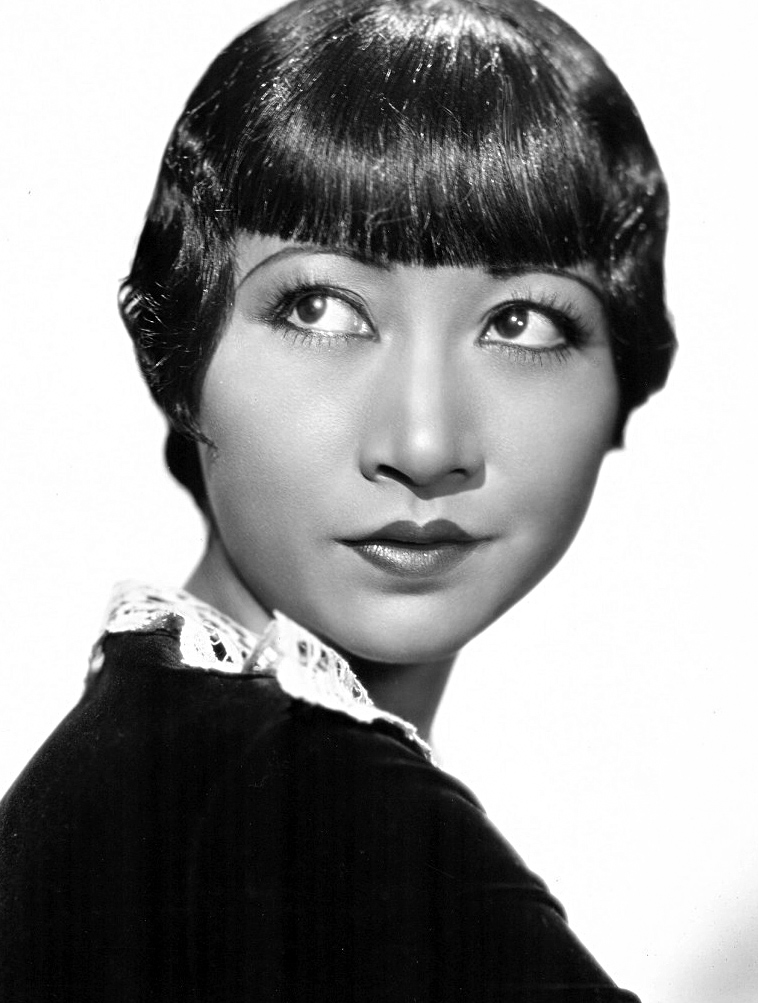
—What was your best movie memory in Europe?
Ah, there are two! First, Piccadilly, an English film from 1929. I played Shosho, a little dishwasher who becomes a star dancer. Finally a real role, central, not a caricature! Many say it's my best silent film. And then there was my friend Marlene Dietrich. We filmed Shanghai Express together in 1932. A wonderful woman, funny, free. We talked for entire nights. You know, feeling respected by the greatest artists, after so many humiliations, warms the heart for a long time. Those years, I felt alive.
—Is it true you were denied a role that was given to a white actress in makeup?
Yes… and that was the wound of my life. In 1937, a big studio, MGM, was adapting a beautiful novel about a Chinese peasant woman named O-Lan. I was the most famous Chinese-American actress in the world. That role was mine, don't you think? Well, no. They gave it to an Austrian actress, who was made up to look Asian. They call that yellowface: painting a white actor's face to imitate a Chinese person. Imagine being told: 'this role of yourself, you won't have it, we prefer a fake version of you.' That's what I experienced that day.
They refused to let me play a Chinese woman and gave it to a fake Chinese woman.
—But why did they do that? Was it forbidden for an Asian to play the lead?
It's more complicated, my child, and even more unfair. In my time, there were laws called 'anti-miscegenation' laws. They forbade people of different skin colors from marrying, and even from kissing on screen. So if the hero of the film was a white actor, I, an Asian actress, was not allowed to play his lover. Can you imagine the absurdity? They preferred to make up a white woman rather than let me hold hands with a partner on screen. These laws weighed on my entire life, not just my films. They decided whom I had the right to love.
—Did you ever go to China? How did it feel to see your parents' country?
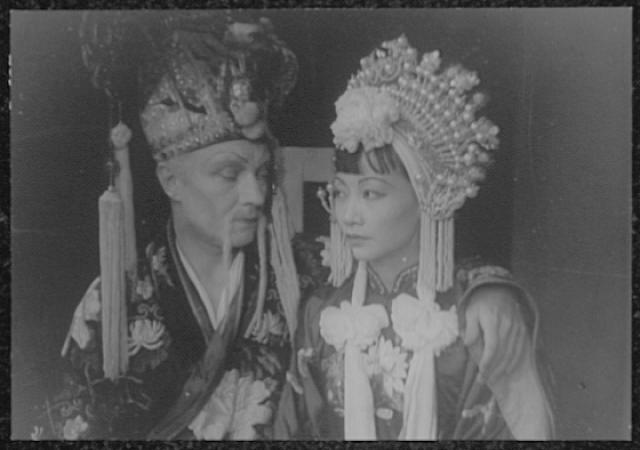
Yes, in 1936, I made a long trip to China. I saw Shanghai, Beijing. I dreamed of finding my roots, the land of my grandparents. My heart beat fast. But you know what? The reception was icy. Chinese newspapers harshly criticized me. They blamed me for all those villain roles I had played in Hollywood — as if it were my fault! As if I had a choice. I came back devastated. Imagine taking a very long journey to finally feel at home, and being told: 'you are not one of us.' That day, I understood a bitter truth about my life.
—So, did you feel more American or more Chinese?
Ah, my child, that is the most painful question. In America, I was always treated as a foreigner: 'the Chinese woman.' Yet I was born in Los Angeles, in Chinatown, above my father's laundry. I was American! But in China, they said I wasn't Chinese enough. You see the trap? Neither one side nor the other. Like someone knocking on two doors, and no one opens. It's very lonely, you know. So I decided one thing: since no country fully wanted me, I would build a place for myself, through my work and my dignity.
I knocked on two doors, and neither America nor China opened for me.
—And what did you hope for Asian actresses after you?
All my life, I hoped for one simple thing, my child. During my trip to China, I told a journalist that it was a shame that the Chinese was always the villain in movies. And that I dreamed that one day, a film would finally tell the truth about us. In 1951, a small step: I was the first Asian actress to hold the lead role in a series, where I played an elegant art gallery owner, a modern heroine. Not a villain! I won't see the rest of the path. But you will. Remember: when someone opens a closed door, even just a crack, all those who come after can pass through.
When you open a closed door, all those after you will be able to pass.
This imaginary interview was generated by artificial intelligence from sources documented in Anna May Wong's profile. It dramatises what the figure might have said based on what we know about them, but does not constitute attested historical testimony. For primary sources and factual documentation, refer to the full profile.