Imaginary dialogue between Dennis Tito and Anousheh Ansari
by Charactorium · Anousheh Ansari (1966 — ?) · Exploration · Technology · Society · 6 min read
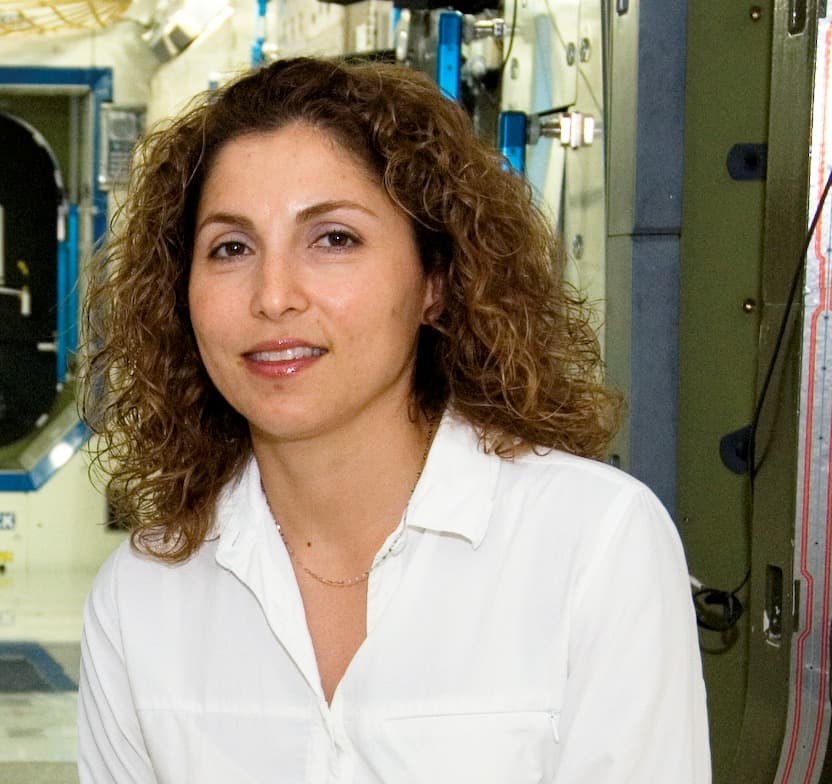
It is in a cozy lounge at the Baikonur Cosmodrome, a few days before a launch, that Dennis Tito meets Anousheh Ansari at the end of 2006. Through the window, the Kazakh steppe stretches gray and endless, while an orange Sokol suit dries on a nearby rack. They know each other as two members of a tiny club — that of civilians who paid for their own ticket to orbit; Tito, the very first in 2001, comes to listen to the one who followed in his footsteps five years later. He approaches her with the curiosity of an elder who recognizes his own madness in her.
—Anousheh, you and I signed the same outrageous check, about twenty million. When the Sokol closed around you at Baikonur, what did you feel?
You who have been through it before me, Dennis, you know that number loses all meaning once the hatch is closed. On that September 18, 2006, strapped into the Soyuz TMA-9, I mostly thought about the six months at Star City — the simulators, the survival exercises, the Russian doctors monitoring my sleep. The Sokol weighs on your shoulders, you sweat, you wait. Then the engines ignite beneath you and your body becomes a crushed feather. I wasn't afraid: I had dreamed of that moment since childhood. Twenty million dollars for eight days? They called me crazy. But you understand: you don't buy a ticket — you buy the right to keep your own promise.
You don't buy a ticket — you buy the right to keep your own promise.
—You almost didn't go. It was Enomoto's medical disqualification that moved you from backup to prime. How did you experience that wait?
It's the cruelest and most beautiful story at once. I trained as the backup for Daisuke Enomoto, telling myself every day that I would probably never fly. You learn to master everything without knowing if it will ever be used — it's a strange discipline, almost monastic. Then, a few weeks before departure, his medical condition disqualified him. I moved from shadow to light with a single phone call. I didn't rejoice in his misfortune, believe me; I simply understood that preparation, even without guarantee, always pays off in the end. You, Dennis, were first turned away by the Americans before the Russians welcomed you. We both know that a space dream is won through persistence, never through comfort.
You learn to master everything without knowing if it will ever be used — it's an almost monastic discipline.
—Up there, I mostly looked out the window. You wrote. A blog, in three languages, from orbit. Why this urge to tell the story live?
Because I didn't want to keep this gift to myself, Dennis. From the ISS, with a simple laptop and a satellite link, I wrote every day in Persian, French, and English. Millions of people read me — Iranian children, readers in Paris, American engineers. What I wanted to convey boiled down to one image: from above, all borders disappear, leaving only this blue planet we all share. Writing was about making space habitable in the imagination of people on the ground. You opened the door; I wanted to invite the whole world to look through the window with me. A civilian speaking from orbit, in real time — that didn't exist before.
From above, all borders disappear — leaving only the blue planet we all share.
—Three languages is a rare choice. French alongside Persian. What did that trio say about the woman you had become?
It told my entire journey, Dennis. Persian is Mashhad, my mother tongue, the language of the stars I watched as a child. French is a part of culture that has always accompanied me, an elegance I love. English is America, which welcomed me and allowed me to build. By writing in those three voices from orbit, I was reuniting the pieces of a life shattered by exile. A little girl from Mashhad was not supposed to flee a revolution, start companies, or fly into space — and yet. Each post was a way of telling those like me: your origin is not a boundary, it's a starting point. Words, like microgravity, erase the weight.
Your origin is not a boundary, it's a starting point.
—You took an Iranian flag up there. That was not an insignificant gesture for a woman born in Mashhad. What did it represent?
It was my tribute, Dennis, and a silent statement. I left Iran as a child, after the 1979 revolution, never imagining I would return except in thought. Taking that flag aboard the ISS was symbolically bringing my country back to the stars I used to gaze at from the family courtyard in Mashhad. For the Iranian diaspora, for the girls there who dream of science under skies that tell them it's not for them, that piece of fabric said: look, one of yours made it. I have never renounced any of my identities. Iranian, American, citizen of this blue planet — I am all three at once, and space confirmed it for me.
Symbolically bringing my country back to the stars I used to gaze at from the courtyard in Mashhad.
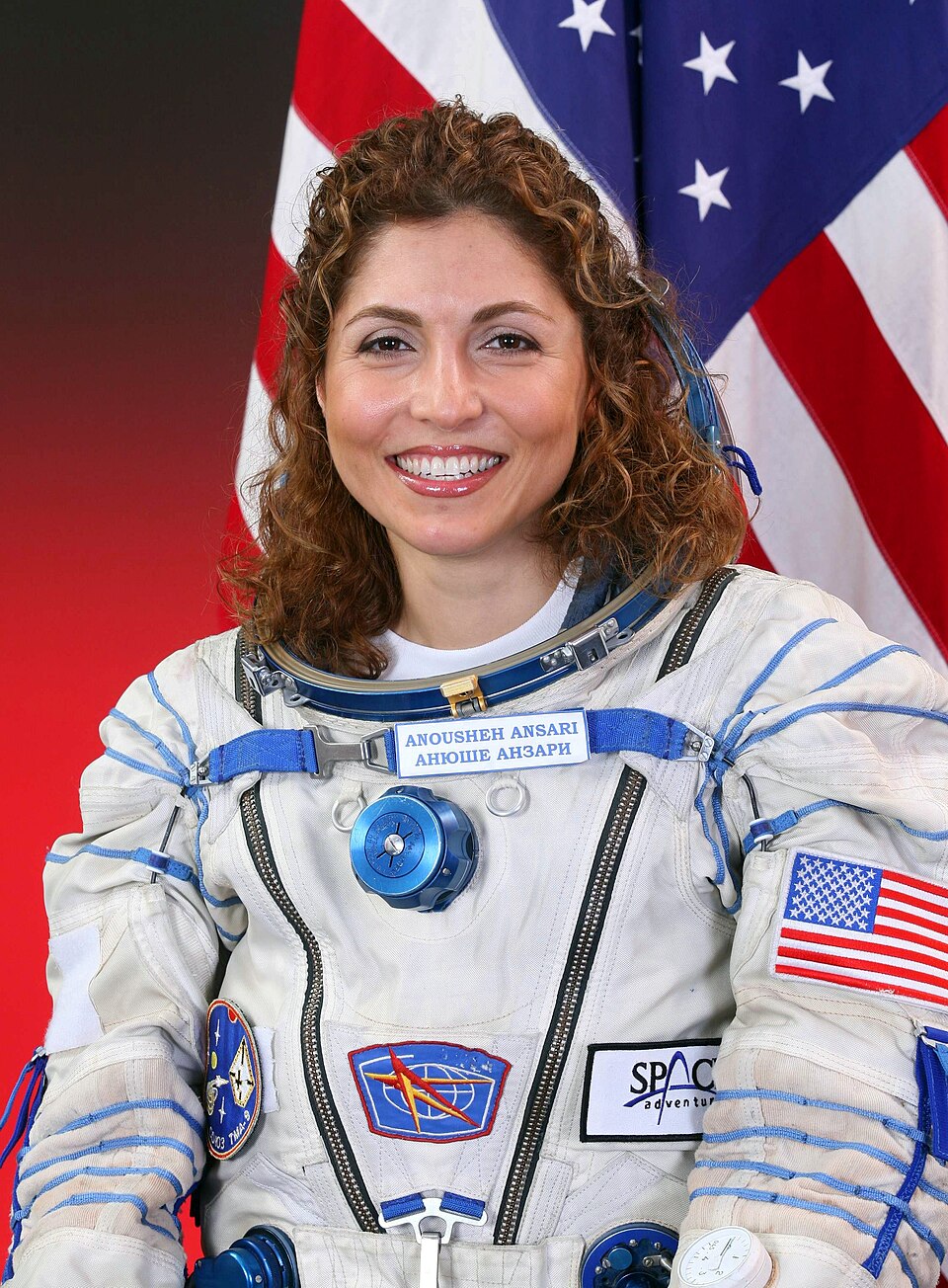
—As a child in Mashhad, you looked at the sky. No one destined you for this. What survived of that little girl all the way to orbit?
Everything, Dennis, absolutely everything. That child lying in the courtyard, eyes lost in the constellations — no one told her that touching the stars was impossible for a girl from Mashhad, so she believed it. When I told that story in my book, My Dream of Stars, I wanted every little girl to understand that the dream has no passport and no gender. Exile, learning a new language, building companies in Texas: none of that extinguished the flame. On the contrary. From the window of the ISS, watching the Earth go by, I found exactly the same gaze as that kid. Nothing had changed except the distance. The dream was the same — I had simply crossed space to meet it.
The dream has no passport and no gender.
—Your name is attached to a prize that changed everything: the Ansari X Prize. Your family funded those ten million. Why bet on such an uncertain gamble?
Because someone had to, Dennis. In 2004, the idea that a private team could send a man to 100 kilometers altitude, twice in two weeks, was almost science fiction. Our family sponsored it, inspired by the great aviation prizes of the early 20th century — those that pushed pioneers across the Atlantic. When SpaceShipOne won the prize, I knew we had just lit a fuse. Those ten million were not an expense; they were a lever — they unlocked hundreds of millions in private investment. Space tourism, the entire NewSpace movement, you and I know they began that day. We didn't buy a victory — we opened a door that no one can close again.
Those ten million were not an expense; they were a lever — a fuse we lit.
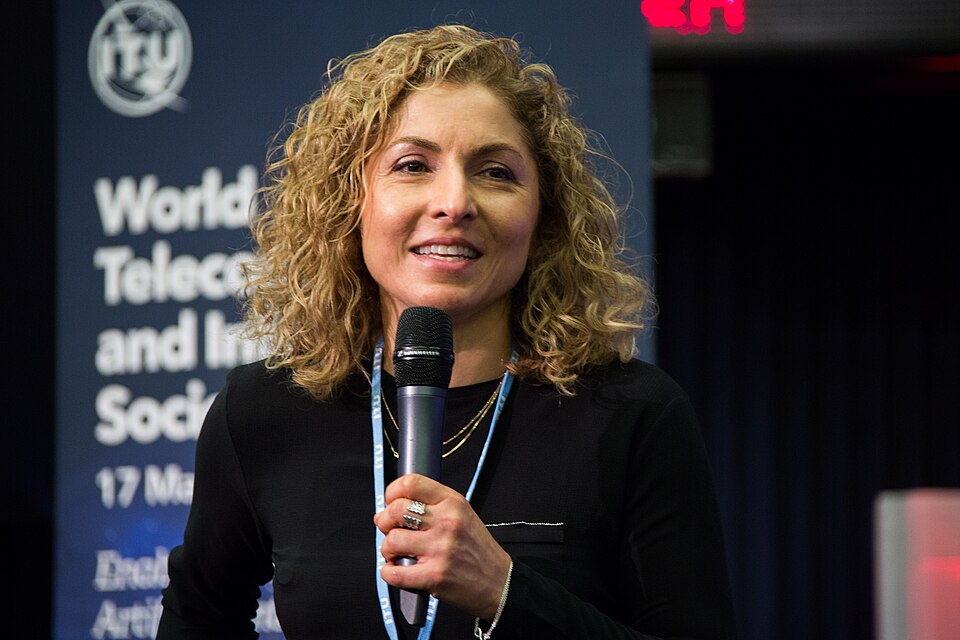
—You and I are often dismissed as wealthy tourists. Does that label bother you, when you think about what your prize actually triggered?
It annoyed me for a long time, I admit. 'Tourist' — the word reduces everything to a rich person's whim. But you, Dennis, know better than anyone what it cost us to open that path — the rejections, the six months of training, the skeptical looks. We didn't go sightseeing: we were the first passengers on a train that didn't exist yet, and our money paid for part of the tracks. The Ansari X Prize proved that space could move beyond government hands. Today, entire companies are built on that conviction. So call me a tourist if you like — I prefer to think we were pathfinders, and pathfinders always walk ahead without a map.
We were the first passengers on a train that didn't exist yet.
—Before the stars, there were business deals. Telecom Technologies, sold for three-quarters of a billion. Without that fortune, no flight. How do you connect those two lives?
They are just one life, Dennis. In 1993, with my husband Hamid and my brother-in-law Amir, we founded Telecom Technologies from nothing, in Plano, Texas. Its sale in 2000 for $750 million gave us the means for our dreams — the X Prize, then my ticket to orbit. But entrepreneurship and exploration come from the same impulse: identifying the impossible and refusing to accept it. Later, I founded Prodea Systems for connected objects, because I don't know how to stop. Money was never the goal; it was only fuel. You build a company like you prepare a mission: with obsession, discipline, and the idea that failure is just a misunderstood step.
Money was never the goal — it was only fuel.
—Roscosmos calls you a 'flight participant', not a cosmonaut. Yet you conducted real experiments up there. Do you think that status is fair?
That official term from Roscosmos distinguishes our status from professionals, and I understand it — I didn't have their years of training. But it says nothing about what I actually did on board. During those eight days, I conducted experiments on stem cells and the effects of microgravity, despite the space sickness that hit me the first few days. The mission report confirms it: I completed the entire planned scientific program. That sets my stay apart from a simple visit. You and I didn't go up there to pose by a window, Dennis. Participant, yes — but an active participant. In space, no one carries you: everyone does their part, or the whole crew is endangered.
In space, no one carries you — everyone does their part.
This imaginary interview was generated by artificial intelligence from sources documented in Anousheh Ansari's profile. It dramatises what the figure might have said based on what we know about them, but does not constitute attested historical testimony. For primary sources and factual documentation, refer to the full profile.