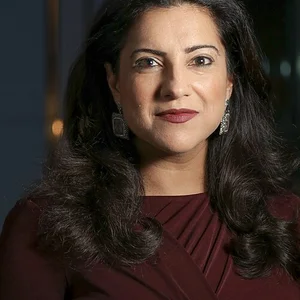

First Iranian woman and first private space tourist to travel to space in 2006. An Iranian-American businesswoman, she funded the Ansari X Prize to encourage space tourism.
Frequently asked questions
Key Facts
- 2006: first spaceflight aboard Soyuz TMA-9, stay aboard the ISS
- First Iranian woman to travel to space
- Co-founder of Telecom Technologies Inc., sold for $750 million
- Lead donor of the Ansari X Prize ($10 million) for private space tourism
- Kept a space diary read by millions of people
Works & Achievements
Telecommunications company co-founded with her husband Hamid and brother-in-law Amir Ansari. Sold for $750 million in 2000, it generated the fortune that enabled the family to fund the X Prize and her spaceflight.
A major donation from the Ansari family to fund the $10 million prize awarded to the first private reusable spacecraft. This initiative had a lasting impact on the development of commercial space tourism.
A historic eight-day spaceflight during which Ansari became the first self-funded woman in space and conducted scientific experiments on stem cells. She simultaneously broke barriers of gender, ethnicity, and access to space.
A logbook written in Persian, French, and English from the ISS, read by millions of internet users. The first real-time civilian account from Earth orbit, it brought the space experience closer to the general public.
Technology company co-founded by Ansari, specializing in connected home services and the Internet of Things. It reflects her ability to reinvent herself as an entrepreneur in emerging technologies.
An autobiography translated into several languages in which Ansari recounts her childhood in Iran, her immigration to the United States, the founding of her companies, and her journey into space. An inspiring book for young readers, particularly girls drawn to science.
Anecdotes
In September 2006, Anousheh Ansari launched from the Baikonur Cosmodrome aboard Soyuz TMA-9, becoming the first Iranian woman and the first self-funded space tourist to travel to the International Space Station. She paid around $20 million for this dream trip, which required six months of training in Russia.
Ansari was selected as the primary passenger after the original candidate, Japanese businessman Daisuke Enomoto, had to withdraw from the flight for medical reasons just weeks before launch. She had agreed to train simultaneously as his backup, ready to seize the opportunity if it arose.
From the International Space Station, Anousheh Ansari kept a real-time blog, writing posts in Persian, French, and English. This space diary was accessible to millions of internet users and was one of the first instances of direct communication between a civilian in space and the general public.
The Ansari family had financially contributed to the X Prize (Ansari X Prize), a $10 million award designed to encourage the development of the first reusable private spacecraft. It was Scaled Composites and their SpaceShipOne that won the prize in 2004, paving the way for the era of commercial space tourism.
During her eight-day stay aboard the ISS, Ansari participated in scientific experiments studying the effects of microgravity on stem cells and motion sickness. Despite experiencing space sickness in her first few days, she fully committed to the scientific program planned for her.
Primary Sources
I finally made it to space! Looking at Earth from up here, all borders disappear. I can see no boundaries, no conflicts — only the beautiful blue planet we all share.
When I was a child in Iran, I used to lie on my back in our courtyard and stare at the stars, dreaming of one day touching them. Nobody told me that was impossible for a girl from Mashhad.
The Ansari family's generous sponsorship ensures that the $10 million Ansari X Prize will reward the first privately funded team to build and launch a spacecraft capable of carrying three people to 100 kilometers above the Earth's surface, twice within two weeks.
Flight participant Anousheh Ansari completed the full planned scientific program, including experiments on microgravity and space motion sickness, during her eight-day stay aboard the International Space Station.
Key Places
Anousheh Ansari's hometown, Iran's second-largest city and a major Shia pilgrimage site. It was here that she spent her childhood, gazing at the stars from the family courtyard before fleeing the Islamic Revolution.
The Russian cosmonaut training center located near Moscow, where Ansari underwent six months of intensive preparation — Soyuz simulators, water survival training, microgravity adaptation — before her flight to the ISS.
The world's oldest space launch facility, from which Ansari lifted off on September 18, 2006, aboard Soyuz TMA-9. It was from this same cosmodrome that Gagarin had been launched in 1961.
The multinational orbital laboratory where Ansari spent eight days in September–October 2006. There she conducted scientific experiments and wrote the first blog ever posted from space.
A suburb of Dallas where Ansari settled after immigrating to the United States, and where she co-founded her telecommunications companies. It was the birthplace of the entrepreneurial empire that allowed her to fund her dream of reaching space.
The university where Ansari earned her master's degree in electrical engineering before launching her career in telecommunications. Her strong scientific background was a decisive factor in her being accepted as a participant in a space mission.
Typical Objects

Pressurized orange suit worn by all Soyuz crew members during launch and landing. Ansari had to learn how to put it on and check its airtight seal during her months of training at Star City in Russia.

Russian-Soviet spacecraft used to transport crews to and from the ISS. Ansari flew aboard its modernized TMA-9 version, redesigned to be more ergonomic for taller astronauts or those with different builds.

The tool that allowed Ansari to maintain her blog from space and stay in touch with her loved ones. These messages marked a milestone in the democratization of space communication.

Ansari brought an Iranian flag into space as a tribute to her heritage, becoming a powerful symbol for Iranians around the world — and especially for women aspiring to careers in science.

Instruments used for experiments on stem cells and the effects of microgravity that her mission assigned to her. Her participation in the scientific work set her journey apart from a mere tourist stay.

A symbol of Ansari's entrepreneurial activity in telecommunications, the sector in which she made her fortune before funding her space adventures. Her company TTI specialized in this type of technology.
School Curriculum
Vocabulary & Tags
Key Vocabulary
Tags
Daily Life
Morning
On board the ISS, the day begins with an alarm at 6:00 UTC. Ansari and her crewmates wriggle out of sleeping bags strapped to the wall — necessary to keep from floating away — then freshen up with wet wipes and a toothbrush connected to a miniature vacuum, since water turns into unruly floating spheres in weightlessness.
Afternoon
Afternoons are devoted to scientific experiments: Ansari handles stem cell samples in sealed containers, takes measurements, and records her observations. Crewmates take turns at the portholes to photograph Earth, and Ansari seizes every spare minute to write her blog posts, watching continents and clouds scroll past at 28,000 km/h.
Evening
Dinner consists of freeze-dried or pouched foods — soup, mashed potatoes, chunks of meat — that the astronauts rehydrate with hot water. Ansari especially cherishes this convivial moment with her Russian and American crewmates, when language and cultural barriers seem to fade away. Before sleep, she gazes through the porthole at the nocturnal panorama of the illuminated Earth, a sight she describes as an unforgettable spiritual experience.
Food
During her training in Russia, Ansari followed a diet monitored by physicians from the Russian space medicine institute, high in protein and low in salt to prepare her body for the effects of microgravity. On board the ISS, meals are prepared in advance and freeze-dried; she was nonetheless able to bring a few traditional Iranian foods approved by the mission's nutritionists.
Clothing
During training at Star City, Ansari wore practical, casual clothing and flight suits during simulations. In space, she donned a mandatory Sokol pressure suit during flight phases aboard the Soyuz, and lightweight cotton clothes (t-shirt and trousers) during her stay on the station, where the temperature is kept at around 22°C.
Housing
During her six months of training, Ansari lived in the functional apartments made available to cosmonauts at Zvyozdny Gorodok, a small closed town surrounded by forests. On board the ISS, her personal space shrank to a cabin the size of a phone booth, a sleeping bag, and a few storage compartments — a relative luxury compared to the earliest space missions, but a far cry from the comfort of her Texas home.
Historical Timeline
Period Vocabulary
Liens externes & ressources
Références
Œuvres
Telecom Technologies, Inc. (TTI)
1993
Parrainage de l'Ansari X Prize
2004
Mission Soyouz TMA-9 — Séjour à bord de l'ISS
Septembre-octobre 2006
Blog depuis l'espace
Septembre 2006
Prodea Systems
2006
My Dream of Stars: From Daughter of Iran to Space Pioneer
2010