Imaginary interview with Anousheh Ansari
by Charactorium · Anousheh Ansari (1966 — ?) · Exploration · Technology · Society · 6 min read
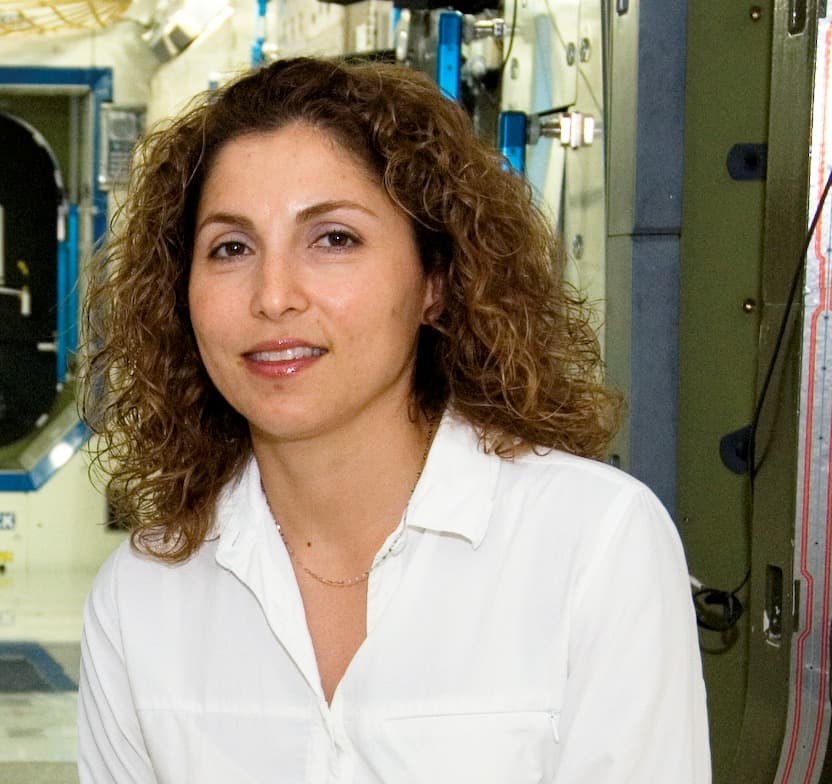
A quiet lounge in a Dallas hotel, late afternoon. Anousheh Ansari places a small folded Iranian flag on the table — the very one that accompanied her into orbit. Beyond the window, the Texas sky turns orange; she looks at it like one meeting an old accomplice.
—When did you understand, as a child, that the stars were calling you?
In Mashhad, in the courtyard of the family home. In summer, we slept outside because of the heat, and I would lie on my back staring at the sky. No one around me could have imagined that a girl from that pilgrimage city would one day touch what she was looking at. Then came 1979, the revolution, and a few years later the departure for America. I arrived as a teenager, not speaking a word of English, with that obsession still intact. People often think exile extinguishes childhood dreams; for me, it hardened them like tempering steel. Every time I hit a closed door, I told myself that the courtyard of Mashhad was waiting for me somewhere, up there.
People often think exile extinguishes childhood dreams; for me, it hardened them like tempering steel.
—How did a penniless immigrant become rich enough to buy a trip to space?
Through hard work, and a bet on a technology that few understood. In 1993, with my husband Hamid and my brother-in-law Amir, we founded Telecom Technologies in Plano, a Dallas suburb. We believed in network convergence when it was still engineer jargon. I had my master's in electrical engineering, a stubborn faith, and endless sleepless nights. Seven years later, the company was sold for nearly 750 million dollars. People see the number and think of luck. I see the bills we were afraid to open at the start. That money wasn't an end — it was the fuel for a dream I had carried since the courtyard of Mashhad. Without it, no X Prize, no twenty-million-dollar ticket.
People see the number and think of luck. I see the bills we were afraid to open at the start.
—Why did you give away a fortune to fund a prize instead of keeping it?
Because space should not remain the monopoly of three government agencies. In 2004, our family sponsored what became the Ansari X Prize: ten million dollars promised to the first private team able to send a reusable spacecraft to an altitude of one hundred kilometers, twice in two weeks. The idea wasn't new — it was inspired by the great aviation prizes of the early 20th century, those that pushed a Lindbergh to cross the Atlantic. That same year, Scaled Composites' SpaceShipOne won it. Ten million offered, but hundreds of millions invested by competitors trying their luck: that was the real lever. Three years earlier, Dennis Tito had opened the breach as the first tourist; we wanted to widen the door for all those who would come after.
Space should not remain the monopoly of three government agencies.
—Do you remember the moment you went from backup to primary passenger?
I had trained for six months at Star City, near Moscow, knowing I might only be a backup. The primary, the Japanese Daisuke Enomoto, was supposed to fly; I learned the Soyuz simulators, survival procedures in case of splashdown, the art of putting on the Sokol suit without catching a finger — just in case. Then, a few weeks before launch, a medical issue removed him. I was told the seat was mine. I felt a strange vertigo: wild joy, and immediately the weight of everything left to master in so little time. I understood that day that you must prepare thoroughly for dreams even when you are only the second choice — because life sometimes calls you without warning.
You must prepare thoroughly for dreams even when you are only the second choice.
—What remains with you from the launch at Baikonur?
On September 18, 2006, strapped into the Soyuz TMA-9 at the Baikonur Cosmodrome, I thought of Gagarin, who left from the same Kazakh soil in 1961. You don't "get into" a rocket; you lie down, knees bent, compressed in the orange Sokol suit. Then comes the rumble, that thrust that crushes your chest like a giant hand, and suddenly the silence of weightlessness. Six months of training had taught me the moves, but nothing prepares you for that moment when your body becomes a feather. I had slipped into my belongings an Iranian flag, for all the girls of Mashhad and elsewhere who look at the sky believing they are condemned to stay on the ground. That piece of cloth weighed more than the entire rocket.
You don't get into a rocket; you lie down, compressed, and suddenly the silence of weightlessness.
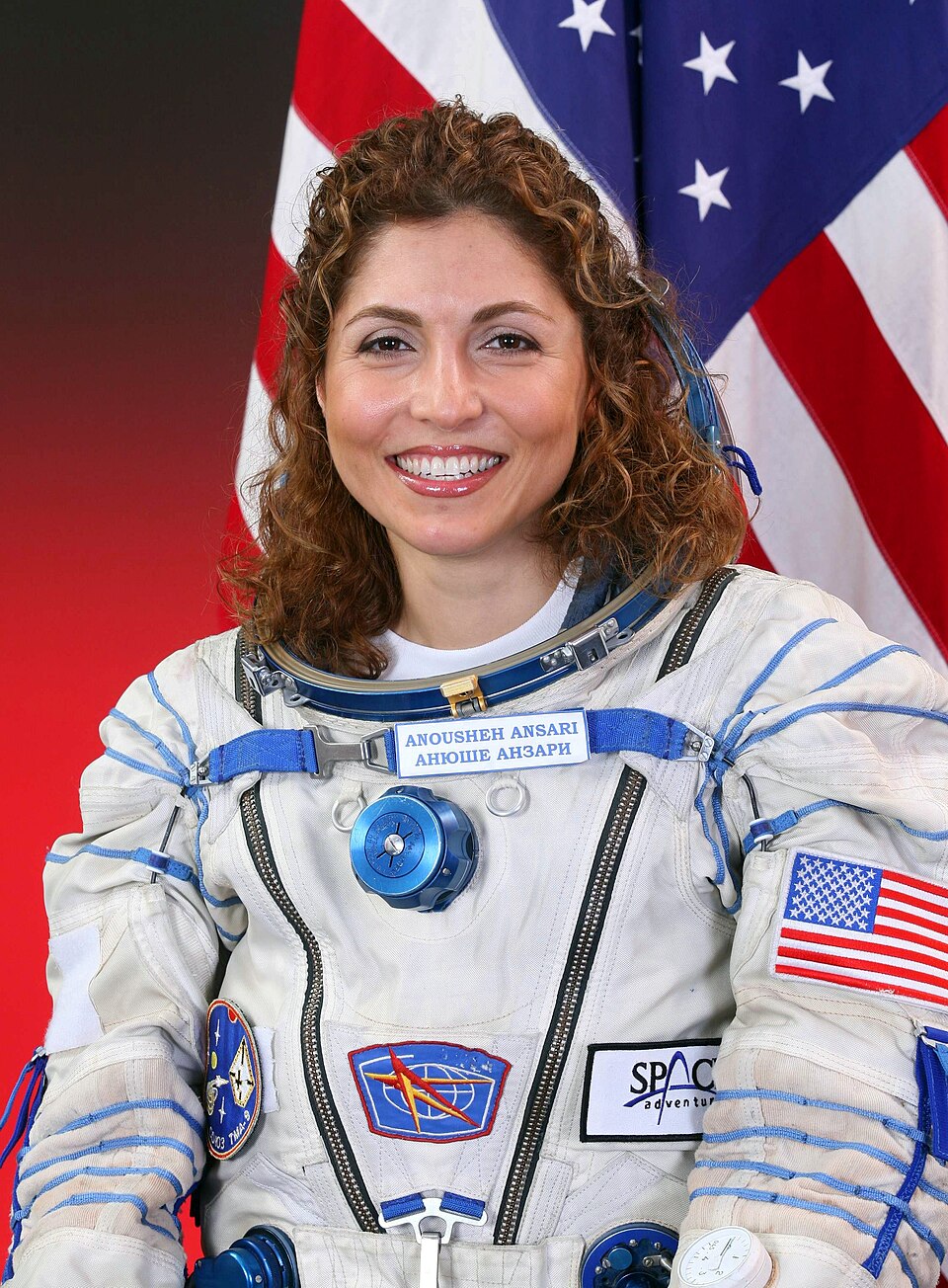
—We imagine the space tourist as a simple awestruck passenger. What were your days really like on board?
Nothing like a vacation. Wake-up was at 6:00 UTC; I would wriggle out of a sleeping bag strapped to the wall to avoid drifting in my sleep. Washing was with wet wipes, the toothbrush connected to a mini-vacuum, because water here gathers into capricious spheres that go where they please. In the afternoon, I would sit at my sealed boxes to handle stem cell samples and measure the effects of microgravity — a real scientific program entrusted by the mission. In the evening, we rehydrated soups and freeze-dried purees, and there, among Russian and American crewmates, language barriers melted over a food pouch. It wasn't tourism: it was eight days of work, discipline, and constant learning.
It wasn't tourism: it was eight days of work, discipline, and constant learning.
—Space sickness hit you as soon as you arrived. How did you cope?
The first days, my body rebelled. It's called space sickness: the head doesn't know which way is up, the stomach protests, everything sways without ground. Ironic — part of my experiments were about motion sickness in weightlessness, so I became my own guinea pig. I could have taken rest; no one would have blamed me; I had paid for my seat. But I had promised to complete the entire scientific program, and I stuck to it, nausea and all. Watching the Earth pass at 28,000 kilometers per hour through the porthole was enough to set me right. You quickly forget your stomach when you see an entire continent slide beneath your feet in minutes.
Part of my experiments were about motion sickness — I became my own guinea pig.
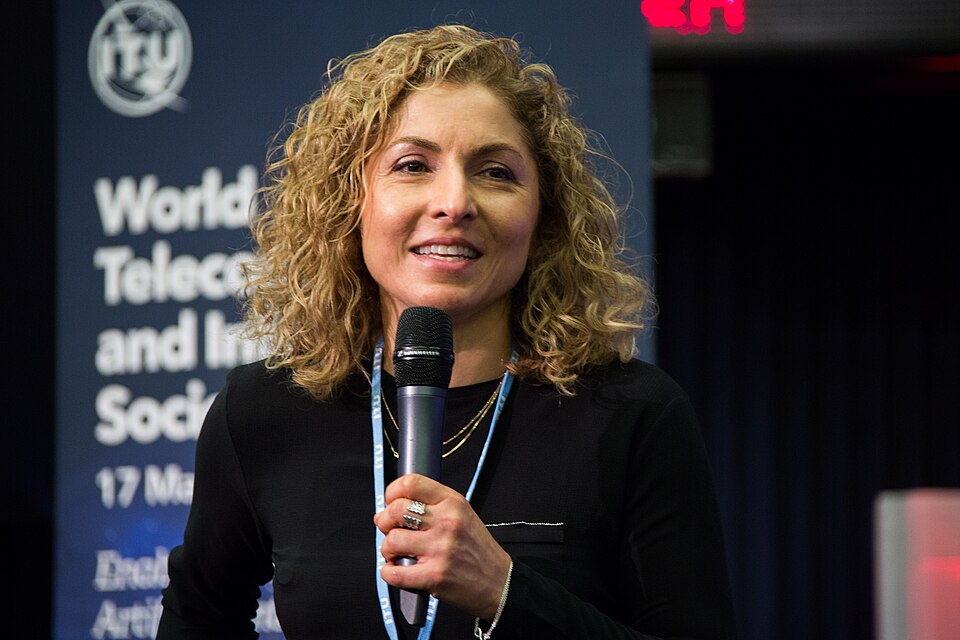
—You kept a blog from orbit. Why was it important to write up there?
Because space belongs to everyone, and too few people tell it in simple words. From the ISS, on a laptop connected by satellite, I wrote every day in Persian, French, and English — three languages to reach as many as possible. Millions of internet users read me almost in real time, something no civilian had ever done. I didn't describe equations: I told the sensation of floating, the strange taste of meals, the emotion of seeing the Sahara pass beneath the porthole. One evening, I noted that from up there, all borders disappear — no boundaries, no conflicts, only this blue planet we share. That blog was my way of bringing a little bit of space into the yard of those who, like me as a child, would never have believed it.
From up there, all borders disappear — only this blue planet we share.
—What did you hope to leave to those who read you, especially young girls?
Permission. Permission to dream big when everything around you whispers that it's not for you. I later told this in my autobiography, My Dream of Stars: the child of Mashhad lying in the courtyard, to whom no one said the stars were forbidden to girls — or rather, some did, and she didn't listen. By taking the Iranian flag and writing in Persian from orbit, I wanted every little girl in the Iranian diaspora, and elsewhere, to think: if she did it, why not me? Role models are not decreed; they are shown. I simply wanted to be living proof that a path exists, even when you have to carve it yourself through exile and doubt.
Role models are not decreed; they are shown.
—After such a journey, how do you continue? What becomes of a dream once realized?
You look for another, inevitably. Upon my return, in 2006, I co-founded Prodea Systems, in connected home services and what was beginning to be called the Internet of Things. Going from orbit to home networks may seem a leap, but it's the same engine: connecting people, making accessible what seemed reserved for a few. My flight was not an end; it was a demonstration — proof that the door to space could open to the private sector. The movement that would be called NewSpace, those companies dreaming of taking us further, was fueled by milestones like the Ansari X Prize. I was lucky to lay a stone. The real vertigo now is imagining all those who will build upon it.
My flight was not an end; it was a demonstration.
This imaginary interview was generated by artificial intelligence from sources documented in Anousheh Ansari's profile. It dramatises what the figure might have said based on what we know about them, but does not constitute attested historical testimony. For primary sources and factual documentation, refer to the full profile.