Kids interview Antoine de Lavoisier
by Charactorium · Antoine de Lavoisier (1743 — 1794) · Sciences · 5 min read
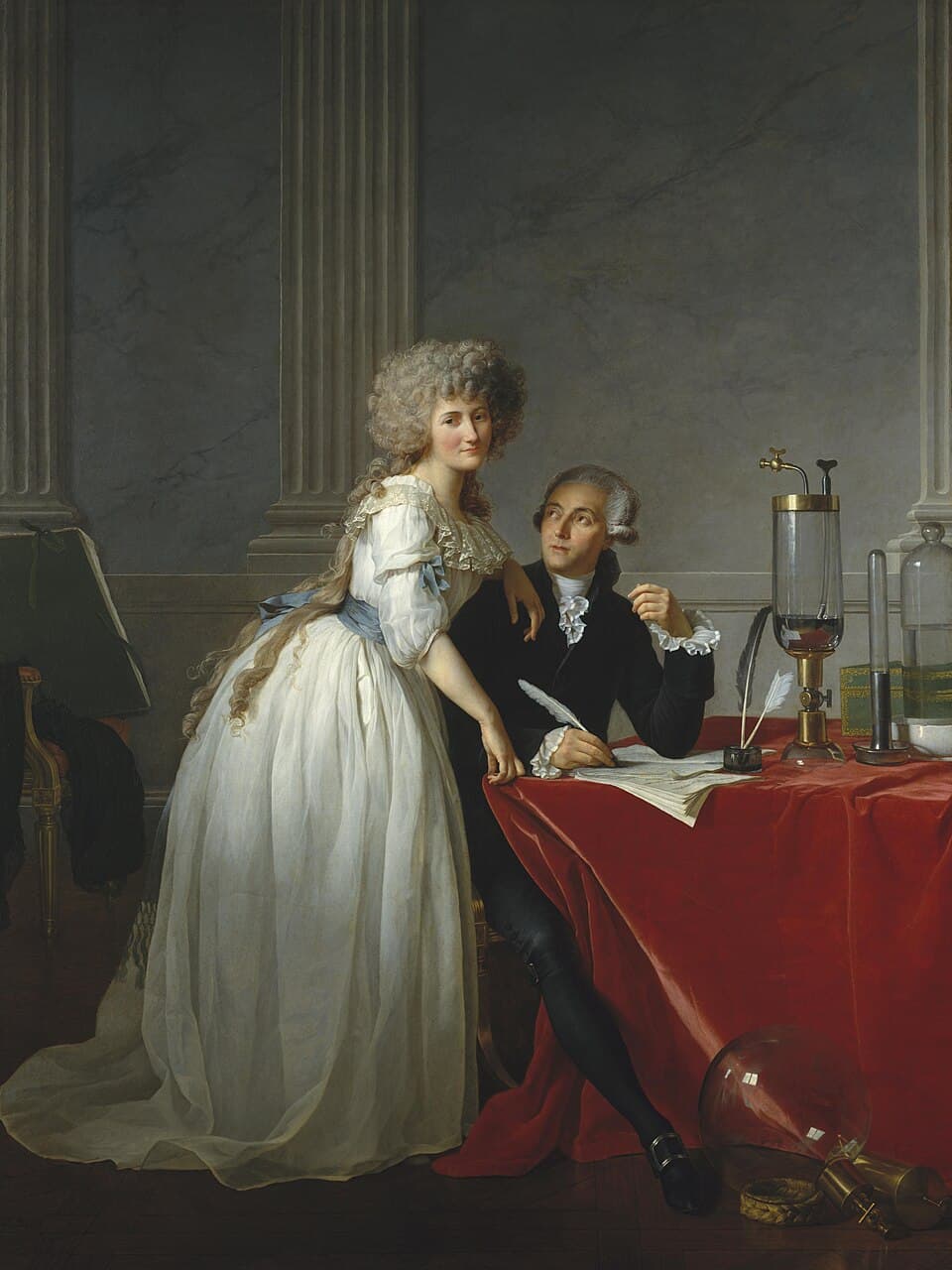
Two fifth-graders on a field trip push open the door of a long-ago laboratory. Amid glass retorts and copper balances, a man in an 18th-century coat greets them with a smile. This is Antoine Lavoisier, and he has all the time in the world to answer their questions.
—What's the most precious object in your laboratory?
You see this balance on my table? It's my treasure. It's so precise it can weigh to the nearest grain — a grain is barely heavier than an eyelash, about 0.05 grams. Imagine being able to weigh a tear! Thanks to it, I was able to verify something huge. When I burn or mix something, I weigh everything before, then everything after. And the weight never really changes. Matter transforms, but it doesn't disappear. My whole life as a chemist rests on these two little copper pans. Without exact measurement, my child, chemistry is just chatter.
—They say you wrote 'nothing is lost.' What does that mean?
Ah, you remembered well! In my Elementary Treatise on Chemistry, in 1789, I wrote that there is an equal quantity of matter before and after the operation. More simply: nothing is lost, nothing is created, everything is transformed. Imagine a burning candle. You think it disappears? No. It becomes invisible gases and a bit of soot. If you could weigh everything, the tally would come out even. That's my big idea: nature loses nothing along the way. It just rearranges its pieces. And you know what? That little sentence has lasted much longer than I have.
Nothing is lost, nothing is created, everything is transformed.
—What was the phlogiston that scientists talked about before you?
Phlogiston! What a funny word, isn't it? For a hundred years, chemists believed in an invisible matter hidden in everything that burns. According to them, when something burned, it 'released' this phlogiston into the air. Nice story... but false! I heated metals, then weighed them. Surprise: instead of losing weight, they gained it. A metal that rusts becomes heavier, not lighter. So it doesn't lose anything — it catches something from the air. In my Memoir on Combustion, in 1777, I showed that this something was oxygen. Goodbye phlogiston.
—So how did you discover oxygen?
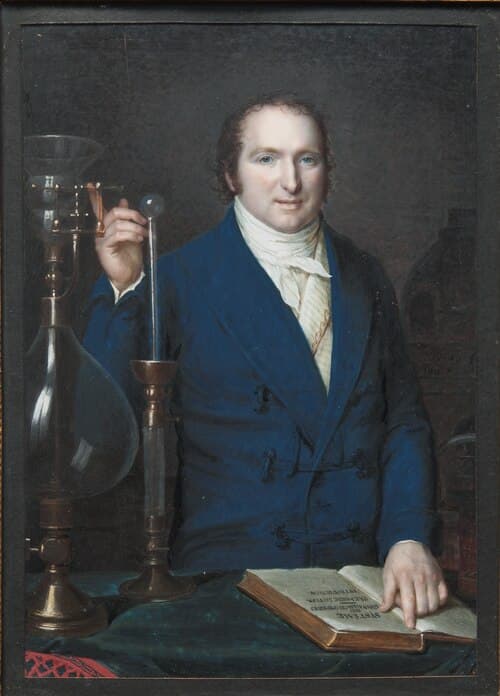
I must be honest with you, my child: I didn't discover it alone. In 1774, an English scientist, Priestley, isolated a strange gas. He called it 'dephlogisticated air' — that awful word again! He saw the gas well enough, but he didn't understand what he had. I understood. This gas feeds fire and makes animals breathe. I renamed it oxygen. You see, understanding isn't just noticing something new. It's knowing how to give it its true place. Priestley had the right stone in his hand; I saw the building you could build with it.
—Is it true you proved that water is not an element?
Yes indeed, and in my time, saying that was almost scandalous! Since the ancient Greeks, people thought water was one of the four basic elements, along with earth, air, and fire. No one dared touch it. In my laboratory, I broke water into two gases: hydrogen and oxygen. Then — and this is the best part — I mixed those two gases and made water again! If you can take something apart and then put it back together, you understand what it's made of. So water was not an element, but a compound. The four elements of the Ancients had just fallen.
If you can take something apart and then put it back together, you have understood it.
—Did you demonstrate that in front of everyone?
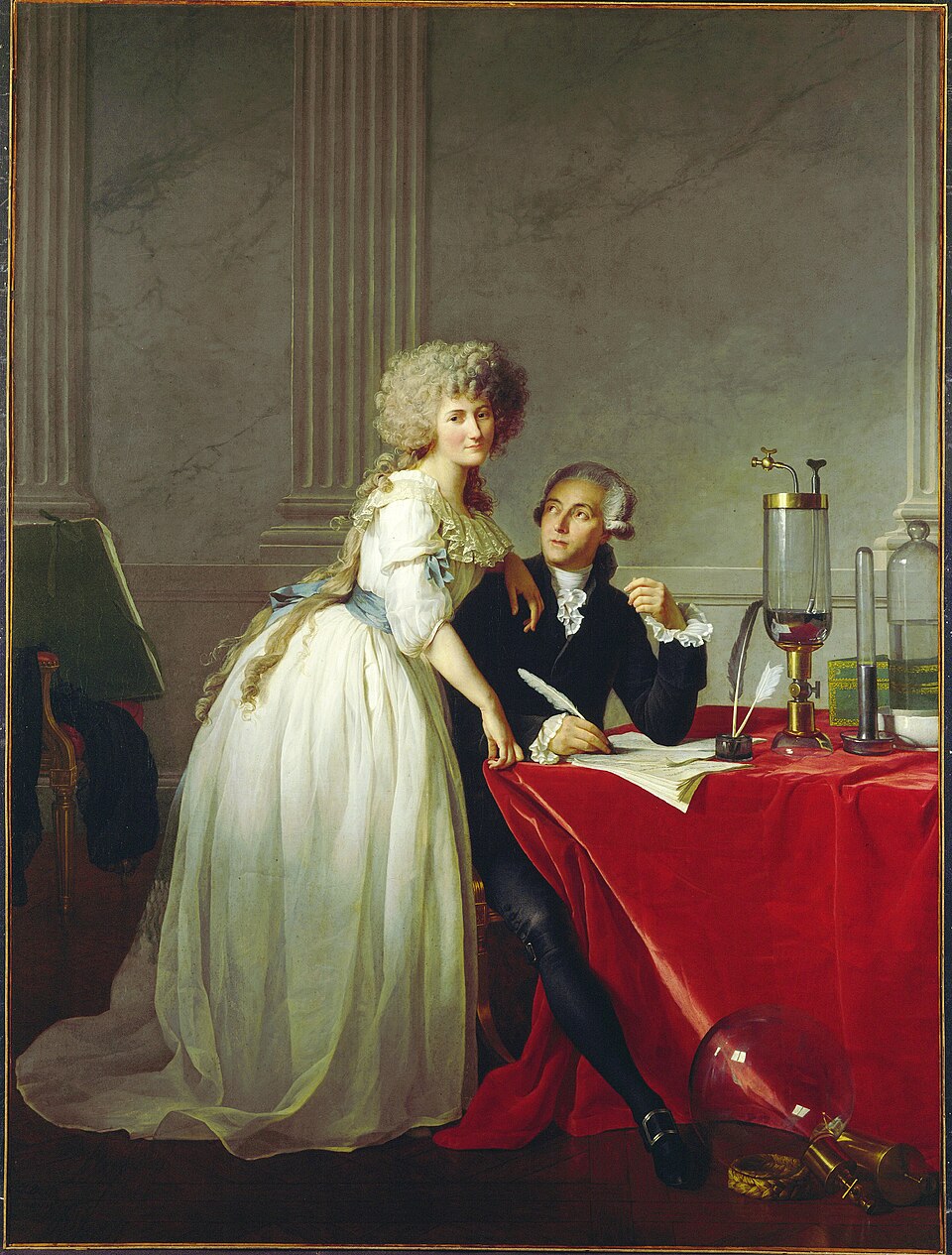
Yes! In 1785, I performed this experiment before the Royal Academy of Sciences, in my laboratory at the Arsenal in Paris. Picture the scene: scientists in powdered wigs, crowded around my table, holding their breath. I decompose water, collect the gases under glass bells, weigh them... everything fits. Then I recompose water before their eyes. A long silence, then murmurs. That day, a belief two thousand years old collapsed in a tiny drop of water. You know, I never liked fine speeches. I liked proofs you could show, weigh, and repeat in front of witnesses.
—Who helped you in this great laboratory?
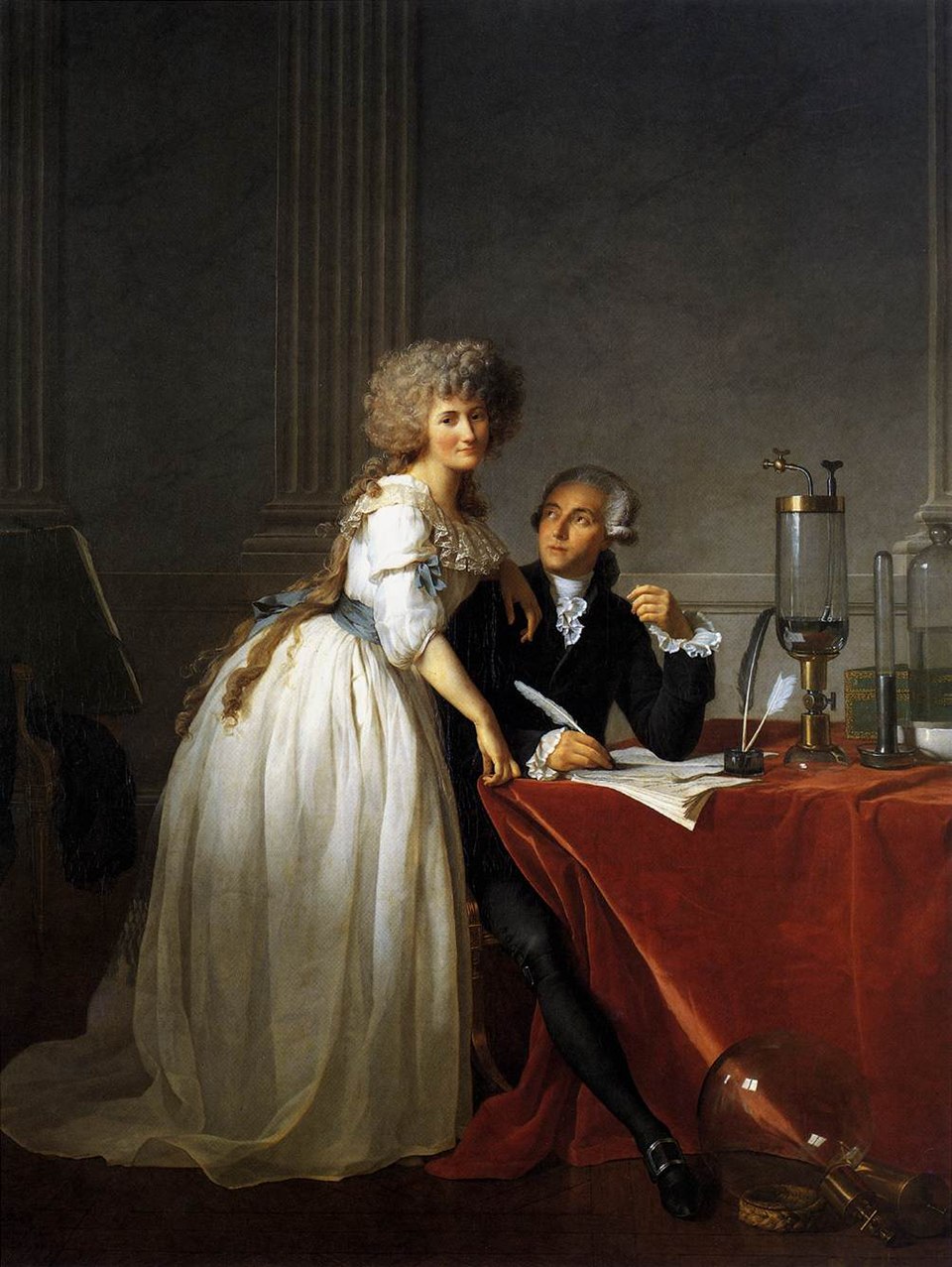
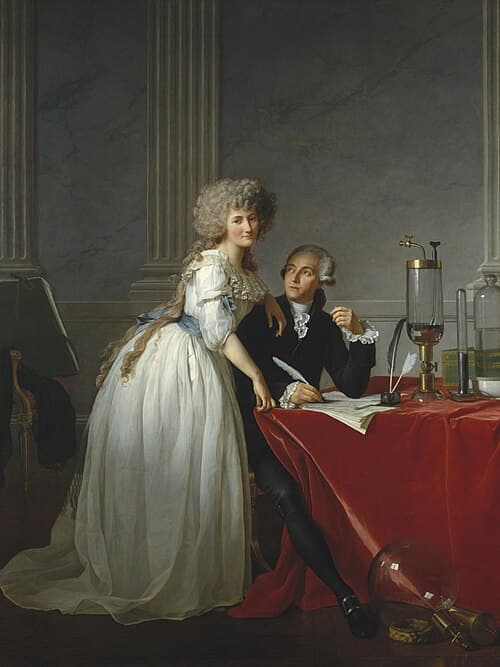
My wife, Marie-Anne. And what help she was! I married her when she was very young, but she quickly became my most precious collaborator. She learned Latin and English — on purpose — to translate the works of foreign scientists for me. Without her, I would have been locked in my own language. In the evenings, at the laboratory, she took notes while I handled my retorts. She also drew my apparatuses, with an artist's precision. You see, people often imagine the scientist alone in his corner; that's wrong. Science is done by many hands. Mine would not have been enough without hers.
—What were your evenings at the laboratory like?
Oh, I loved those evenings! I got up very early, around five o'clock, and the day flew by with my boring duties. But in the evening, I returned to my experiments, light-hearted. Picture the room: hundreds of copper and glass instruments gleaming in the candlelight. The smell of heated metal, the mercury glowing at the bottom of the tanks. Marie-Anne wrote beside me. Sometimes scientists would stop by to discuss until late. My laboratory at the Arsenal was, they said, the best equipped in Europe. For me, it wasn't work. It was the place where the world finally became clear. You forgot the time there.
—Why did a great scientist like you collect taxes?
Good question, and it twists my heart a little. My research cost a lot: my balance, my gasometer, all those precision machines... it took a lot of money. So I was also a farmer-general: a financier in charge of collecting certain taxes for the king, on salt or tobacco. It was very lucrative, but the people hated the farmers-general. Thanks to that money, I was able to buy the best instruments in Europe. Only, that role also became my downfall. When the Revolution came, I wasn't judged for my chemistry. I was judged for my taxes. The scientist and the tax collector lived in the same man.
—Were you afraid during the Revolution?
I won't lie to you: yes, I was afraid. In 1793, the former farmers-general were arrested. They even closed the Academy of Sciences, my dear home. On May 8, 1794, I was taken to the Place de la Révolution, with twenty-seven others. They said the Republic had no need of scientists. How sad. My friend the mathematician Lagrange said the next day: 'It took only an instant to cut off that head, and a hundred years may not be enough to produce another like it.' But don't be too sad for me. My ideas have no head to cut off. They still live in your schoolbooks.
My ideas have no head to cut off: they still live.
Read further
This imaginary interview was generated by artificial intelligence from sources documented in Antoine de Lavoisier's profile. It dramatises what the figure might have said based on what we know about them, but does not constitute attested historical testimony. For primary sources and factual documentation, refer to the full profile.