Kids interview Antoine de Saint-Exupéry
by Charactorium · Antoine de Saint-Exupéry (1900 — 1944) · Literature · 5 min read
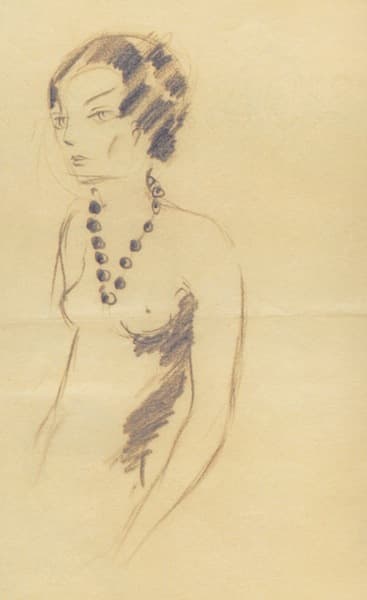
Two twelve-year-old visitors, on a school field trip, have an appointment with a tall gentleman with a laughing gaze. He has laid his pilot jacket on a chair. On the table lie sheets covered with little drawings.
—What was your first real job as a pilot like?
You know, I was barely twenty-six. In 1926, I joined the Latécoère company, soon to be called Aéropostale. It was a company that carried mail by plane, letters, across the sea and desert. I took off from Toulouse, from a field called Montaudran. Imagine a small open plane, with nothing to keep you warm. We said 'fly the line': always follow the same route, fair weather or storm. I was scared, yes. But carrying a letter to the other end meant carrying a bit of people's lives.
Flying the line meant carrying a bit of people's lives.
—Did you really live all alone at the edge of the desert?
Almost, my child. In 1927, I was appointed station chief at Cape Juby, on the edge of the Sahara, in Morocco. A stopover is a stopping point where the plane lands to refuel and change pilots. Mine was in the middle of nowhere. I slept in a simple shack, and I watched the sun rise over the sand. Sometimes pilots were captured by the desert nomads, called the Moors. So I had to discuss with them, patiently, to free them. The desert taught me silence.
The desert taught me silence.
—Did you really almost die of thirst one day?
Yes, and I still think about it. In December 1935, I attempted a long flight, a raid, from Paris to Saigon, with my mechanic André Prévot. A raid is a very long-distance flight, almost non-stop. And we crashed in the middle of the Libyan desert. Not a drop of water left. For days we walked, and the sun plays tricks on you: you think you see lakes, palm trees… mirages. We were about to die when a Bedouin found and saved us. That thirst, I never forgot it. It later flowed into my books.
The sun shows you lakes that don't exist: those are mirages.
—Did that horrible adventure help you write later?
A lot, you know. When you've known real thirst, you understand what matters. Later, in The Little Prince, my hero also breaks down in the desert and looks for water. That's no coincidence. In another book, Wind, Sand and Stars, I wrote that the earth teaches us more than books, because it resists us. It's by bumping into an obstacle that we discover ourselves. The desert almost killed me, but it showed me man: fragile, and capable of holding on.
We discover ourselves when we measure ourselves against the obstacle.
—Did you invent the little blond fellow for the book?
Oh no, he existed long before! You know, I drew all the time. On my notebooks, on scraps of paper, sometimes on restaurant tablecloths, much to the waiters' despair. And I often scribbled this little blond character, standing, looking dreamy. My friends recognized him, they'd say: 'There, your little fellow again.' He had been living in my hands for years. Only one day did I give him a story, a planet, and a rose. Before being a book, The Little Prince was a doodle.
Before being a book, the Little Prince was a doodle.
—Where did you write that famous book?
Far from France, my child. During the war, from 1941 to 1943, I lived in exile in New York, in an apartment near a big park. France was occupied, and my heart was heavy. That's where I wrote The Little Prince, in 1943, and painted it myself, in watercolor — you know, those colors you dilute in water. At night, I covered my desk with sheets. I was homesick. So I invented a little planet where one could be happy. One sees clearly only with the heart.
One sees clearly only with the heart.
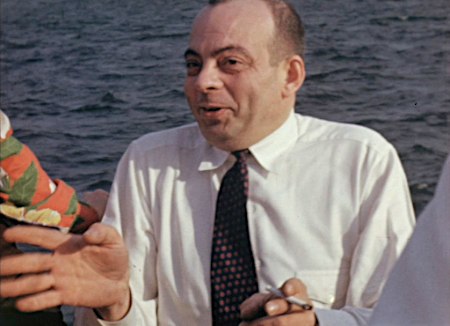
—What was your favorite time to write?
Night, always night. During the day, I flew or saw people. But when everything fell silent, I'd sit down with my typewriter and work until very late. Imagine a table covered with crumpled sheets, because I started over endlessly. A sentence, I could rewrite it twenty times. I had begun a very big book, Citadel, a long reverie. I never managed to finish it: it was published after my death, in 1948. Writing, you see, is not finding words. It's removing the ones that are too many.
Writing is not finding words, it's removing the ones that are too many.
—You wrote about happiness, but were you sometimes sad?
Often, yes. The war weighed on me terribly. In a letter, in 1943, I wrote that I hated my era with all my strength, because people no longer knew how to live together. That's hard to hear, I know. But know this: I wrote about friendship and the rose precisely because I lacked them. We talk most about what we miss most. My books were not dreams of a happy man. They were lights I lit in the dark, for myself and for others.
We talk most about what we miss most.
—Is it true you did magic tricks for the pilots?
Ha! Who told you that? It's absolutely true. At stopovers in Africa or South America, the evenings were long and harsh. So I'd take out my deck of cards. I'd make a coin disappear, guess a card, and my pilot comrades would stare wide-eyed. We'd laugh. You know, when you've been scared all day in the sky, a burst of laughter in the evening is worth gold. A good card trick isn't about fooling people. It's about giving them a moment of wonder.
A good card trick is giving a moment of wonder.

—I heard you invented machines, is that true?
Yes, does that surprise you? I wasn't just a dreamer. I liked understanding how things work. I filed several patents — a patent is an official paper that says 'this invention is mine.' I had imagined a system to help planes land, and a device to better navigate the sky. And there again, I drew: technical sketches on restaurant tablecloths, arrows, numbers everywhere. Flying, writing, inventing… for me, it was the same thing. Always looking for a path no one had taken before.
Flying, writing, inventing: always looking for a path no one has taken.
—What did you eat when you were lost in the desert?
Not much, believe me! In the desert, we lived on little: canned food, a few dates, and scalding mint tea, shared sitting in the sand with the desert men. It was frugal, meaning very simple, almost nothing. Yet that shared tea was worth more than a great feast. Later, in New York, I found good French restaurants again, and I had a weakness for hot chocolate. But you know what? The meal I remember best is that tea under the stars. Sharing gives flavor to everything.
Sharing gives flavor to everything.
—What would you like people to remember about you?
What a beautiful question to end with. Not my records, nor my planes. I'd like you to remember this: take care of what you love. In The Little Prince, I wrote that it's the time you wasted on your rose that makes your rose important. A rose can be a friend, a book, a dream. If you give it time, it becomes precious. I disappeared one day in 1944, over the sea, on a mission. But my words, they remained. That's real magic: a book outlives the one who wrote it.
It's the time you give to your rose that makes it precious.
This imaginary interview was generated by artificial intelligence from sources documented in Antoine de Saint-Exupéry's profile. It dramatises what the figure might have said based on what we know about them, but does not constitute attested historical testimony. For primary sources and factual documentation, refer to the full profile.