Imaginary interview with Antoine de Saint-Exupéry
by Charactorium · Antoine de Saint-Exupéry (1900 — 1944) · Literature · 6 min read
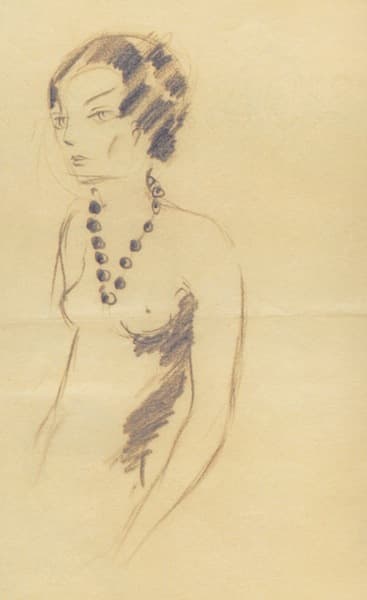
Summer 1944, on an Allied airbase in the Mediterranean. Between two reconnaissance missions, a tall man struggles to extract himself from a cockpit, his face gaunt, his gaze already back in the sky. He agrees to set down his helmet for a moment to talk about the Line, the desert, and a little blond character — an imaginary conversation with Antoine de Saint-Exupéry.
—How did you become an airmail pilot?
It all began in Toulouse, at the Montaudran airfield, in 1926. The Latécoère company — soon to be called Aéropostale — was looking for men to carry the mail to Dakar. They entrusted us with the mailbags as a sacred mission: the letter had to get through, even if it meant losing your cockpit. I learned there that flying was not a circus act but a profession, with its veterans, its breakdowns, its makeshift airfields lost in the sand. Mermoz, Guillaumet — they were my brothers of the line. They, far more than books, taught me what a man is.
—Do you remember your post at Cap Juby?
I was appointed station chief in 1927, on the edge of the Sahara, in a shack untouched by any comfort. Cap Juby — Tarfaya, today — was a speck of a planet between Spanish sand and emptiness. I watched the sunrise, I negotiated with the Moors for the release of comrades who had broken down beyond the lawless zone, we shared mint tea under the tent. It was in that solitude that I wrote Southern Mail. The desert gives nothing, yet it teaches everything: it strips you down until only the essential remains.
—What would you say about the moment when literature caught up with you?
Night Flight was published in 1931, with a preface by André Gide, and won me the Prix Femina. Suddenly I was seen as a writer, I who felt only like a pilot holding a pencil. The book tells of those night flights of Aéropostale over South America, and the figure of Rivière, that chief who sends his crews into the dark: 'Rivière, at his window, gazed at the night. It no longer seemed empty to him, it no longer made him dizzy. He had launched his crews into the night like a stubborn shepherd.' I knew that man, that weight of decisions that kill or save. Literary glory, for its part, always seemed to me an unmarked terrain.
—What happened during your crash in the Libyan Desert?
December 1935. We were attempting the Paris-Saigon raid, Prévot and I, to win a prize — we had to go fast, too fast. At dawn, in the heart of Libya, the aircraft hit the ground at full speed; miraculously we got out of the wreckage unharmed. But we were in the middle of nowhere, without water, or almost. For three days we walked, sucked dew from rags, saw mirages of oases and white cities dance before us. A Bedouin on his camel pulled us from death, a man whose name I never knew and to whom I owe everything. Thirst teaches you the value of a human face.
Thirst teaches you the value of a human face.
—How did this ordeal nourish your work?
Everything came from there. Wind, Sand and Stars was born from that sand, from that brotherhood tested to the extreme. I wrote there that 'the earth teaches us more about ourselves than all the books. Because it resists us. Man discovers himself when he measures himself against the obstacle.' And when, years later, I imagined a little fellow fallen from the sky in the middle of the dunes, it was still that desert coming back, mine, the desert of thirst and the well you search for. You only tell well what you have nearly died from. My aviator repairs his engine in the Sahara: I didn't need to invent it.
—Where does that little blond character everyone knows today come from?
He had been haunting me for a long time, that little fellow. I drew him everywhere — on the back of a letter, on a restaurant tablecloth, in the margins of my sketchbooks where flight calculations and watercolors mingled. My friends knew him before he had a name: a blond silhouette, standing on a cloud or a stone, looking as if he came from elsewhere. A publisher in New York once asked me: 'What if you made a book out of it?' I didn't invent The Little Prince, I let him come down.
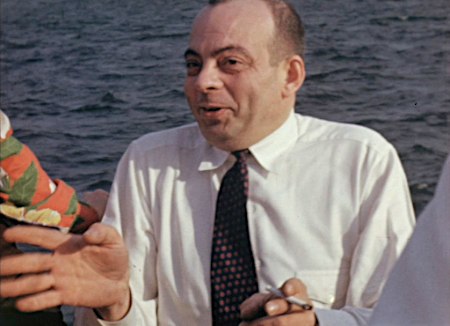
—How did you work on this book during your American exile?
Those years of exile, from 1941 to 1943, I spent in an apartment on Central Park South, far from a France I carried like an open wound. I wrote at night, surrounded by crumpled pages, smoking too much, starting over endlessly. And I painted — I, who am not a painter — those clumsy and tender watercolors whose execution I would have entrusted to no one. The fox, the rose, the baobabs: the hand that had traced the words also had to hold the brush. The Little Prince is probably the book where I hid myself the most and showed myself the most at the same time.
—They say you were also a conjurer. Where did that taste come from?
Ah, my card tricks! Ask any comrade from the stopovers in Africa or South America. In those lost posts where we waited for the mail by scanning the sky, I would take out my deck of cards and make a coin disappear, guess a queen of hearts. It seems trivial, and yet, in the anxiety of a night departure, making a man laugh whose plane might not return is almost an act of brotherhood. I have always thought that we hold men together as much by small magic as by great speeches.
We hold men together as much by small magic as by great speeches.
—What were your evenings like, far from the cockpits?
My real days began when others' ended. I always wrote at night, late, in cigarette smoke and the disorder of pages I endlessly crossed out. But before the page, there were friends: a café in Paris, a French restaurant in New York, a table where I captivated my crowd with my stories and card tricks. I also doodled invention sketches on tablecloths — a machine, a landing system — I even filed a few patents, you know. The waiters cursed me. But how can you think without scribbling? The night, the table, the pencil: that is my true cockpit.

—Why was your book Flight to Arras banned?
Flight to Arras was published in New York in 1942. I tell of an absurd, suicidal reconnaissance mission over Arras during the 1940 debacle — flying over roads clogged with refugees to bring back images no one would look at. Vichy banned it, the occupier too: a book that tells of defeat without renouncing it upsets everyone. I was not trying to accuse, but to understand why a crew accepts death for an already lost cause. You die only for what you feel responsible for. That, I believe, is the only thing the war truly taught me.
You die only for what you feel responsible for.
—Why insist on re-enlisting when you were judged too old?
They say I'm too old, too broken by my accidents — I'm past forty and a body that cracks everywhere. But how can I stay pontificating in salons when my comrades are flying? I begged to join a reconnaissance squadron, to find a cockpit again, even if it was a P-38 Lightning, that beautiful American bird too modern for my old hands. They mounted cameras on it instead of cannons. Photographing the Rhône valley, my own land, from ten thousand meters: a strange way to come home. I prefer that a thousand times to the exile of words.
—What would you like people to remember about you, if they were to read you long after?
If I could imagine being read a century from now, I would not want to be classified among children's storytellers. The little prince asks the aviator to draw him a sheep, but what he seeks is a bond. 'One sees clearly only with the heart. What is essential is invisible to the eye. It is the time you have wasted for your rose that makes your rose so important. ' That is all the desert, the Line, and my lost comrades taught me. The rest — the prizes, the records, the planes — is only a stopover. What matters is what you tame.
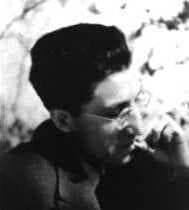
This imaginary interview was generated by artificial intelligence from sources documented in Antoine de Saint-Exupéry's profile. It dramatises what the figure might have said based on what we know about them, but does not constitute attested historical testimony. For primary sources and factual documentation, refer to the full profile.