Imaginary dialogue between Consuelo Suncín de Saint-Exupéry and Antoine de Saint-Exupéry
by Charactorium · Antoine de Saint-Exupéry (1900 — 1944) · Literature · 6 min read
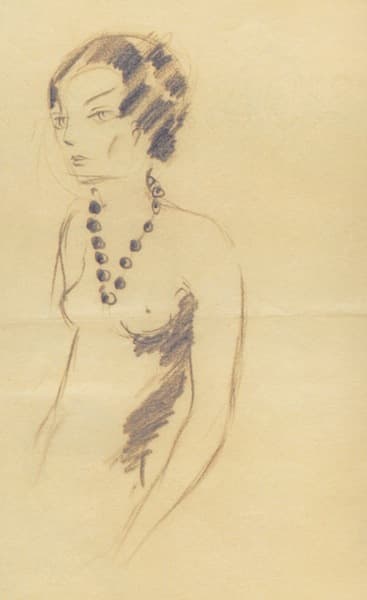
It is in the apartment on Central Park South, in New York, that Consuelo joins Antoine this spring 1943, a few days after the publication of The Little Prince. The oblique light falls on the crumpled sheets, the watercolors, and the crushed cigarette butts that litter the work table. They met in Buenos Aires thirteen years earlier, have loved and torn each other apart since, and Consuelo comes this evening not for the public, but to find the man behind the pilot. Outside, a siren recalls the war that Tonnio burns to rejoin.
—Tonnio, do you remember Buenos Aires, when you ran the Aeroposta and took me flying at night? What were you really looking for on those lines?
How could I forget, Consuelo? Behind me I had Toulouse, the Montaudran airfield, from which Latécoère launched us onto the line as one throws men into the sea, to see who can swim. Flying the line wasn't about carrying mail: it was about connecting men across desert and mountain range. When I took you in the cockpit over the Río de la Plata, I wanted to show you what I had seen alone for years — that the earth, seen from above, becomes one and fraternal again. The trade had taught me that long before the books. A pilot who has struggled on his line knows that what matters is not measured in kilometers traveled, but in bonds woven.
—And that night in 1935, in the Libyan desert, when you crashed with Prévot? I thought I would never see you again.
Three days without a drop of water, Consuelo. With Prévot, we walked through mirages — we saw lakes, cities, caravans that didn't exist. Thirst makes you hallucinate; the body demands, but it is the mind that strays. We were about to die when a Bedouin appeared, as if from nowhere, and handed us water in a tin basin. That nameless man saved us: a stranger, and all of humanity was in his gesture. I understood then that water is not only necessary for the body — it is good for the heart. The desert gives nothing, yet it reveals everything. What I saw in those sands, I have never stopped trying to write since.
Thirst makes you hallucinate; the body demands, but it is the mind that strays.
—Before me, there was the Sahara. At Cape Juby, that remote outpost, what were you seeking among the Moors and the sand?
A plank shack wedged between the ocean and the desert, Consuelo — that was Cape Juby. I was station chief there, the only Frenchman for hundreds of miles, taming the silence. My job was to wait for planes, repair them, and sometimes negotiate with the Moors for the release of comrades they held prisoner in the dunes. I learned there their language of glances, their infinite patience. It was in that solitude that I wrote Southern Mail: at night, I had only my papers and the stars. The desert made me. It taught me that man only discovers himself by measuring himself against what resists him. Without those two years of sand, I think I would never have had anything to say.
—You were writing Night Flight when I met you, Tonnio. Why did the night inspire you and your crews launched into the dark so much?
At night, Consuelo, the pilot is alone with his instruments and the sky — nothing distracts him from the essential. Night Flight, which Gide kindly prefaced, was born from those crossings where you send crews into the dark like a stubborn shepherd drives his flock. I put Rivière in it, that leader who sacrifices men's happiness to the greatness of the work — and I still don't know if he is right. You often reproached me for writing until dawn, surrounded by crumpled sheets, a cigarette always lit. But it is at night that words come, when the world falls silent. By day, you act; by night, you understand what you have done. The Prix Femina gave me readers, but it was the night flight that had given me something to tell them.
—With Wind, Sand and Stars, the Academy crowned you. You, the pilot, now a philosopher — how did aviation teach you about men?
The airplane is only a tool, Consuelo, but a tool that takes us away from cities and returns us to the essential. Flying over the mountains, sands, and seas, I understood that the earth teaches us more about ourselves than all the books — because it resists us. Wind, Sand and Stars, crowned by the Académie française, tells that: my lost comrades, Guillaumet who returns from the Andes by walking for days, because no beast would have done what he did. Fraternity is not a fine word in speeches; it is a man who risks his skin to go fetch another. The grand prize flattered me, but the true honor I owe to those with whom I flew the line. You do not become brothers in comfort, but in shared ordeal.
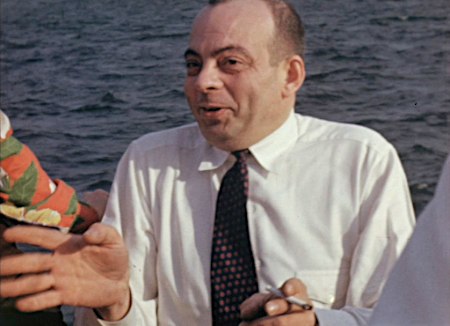
—That little blond fellow you've been doodling everywhere for years, on tablecloths, in letters — who did he finally become, Tonnio?
You saw him born long before anyone else, Consuelo — in the margins of my letters, on restaurant tablecloths, to the great dismay of the waiters. That little character had kept me company for years; I didn't yet know he carried a story. It was here, in New York, in this exile that weighs on me, that I finally wrote and painted him in watercolor. He comes from another planet, he left his flower, and he questions the grown-ups who have forgotten what is essential. I drew his scarf, his sword, his hair like wheat a hundred times. This is not a children's book, you see: it is a letter to the adults we have ceased to be. I wrote it so as not to despair entirely of my time.
This is not a children's book: it is a letter to the adults we have ceased to be.
—It's whispered that his rose, capricious and fragile under its globe, is me. Do you recognize it, Tonnio? What did you want to tell me?
You ask the only question I dreaded, Consuelo. The rose is proud, she coughs, she complains, she demands to be sheltered from the wind — and the little prince leaves her, thinking to escape her whims, before understanding that he will remain responsible for her forever. You, who are well placed to know, I have often left you: for the line, for the war, for my silences. But you become responsible for what you have tamed. What I couldn't say to your face, I slipped into this tale — for it is the time lost for his rose that makes that rose unique in the world. Never believe that my absences were worth more than you. If the rose is you, then this book is the apology I never dared to make you in person.
If the rose is you, then this book is the apology I never dared to make you in person.

—Flight to Arras is banned in France by Vichy. Here, in New York, exile eats away at you. Why does this book cost you so much?
Flight to Arras, Consuelo, is the account of an absurd mission over Arras, in the rout of 1940, when we were sent to photograph a France already lost. Vichy banned it, the occupier too — a book that disturbs both sides has probably said something true. Here, I am like an uprooted tree: I am congratulated at dinners while my country bleeds. Exile is not a rest, it is a gentle shame that never lets you go. My compatriots tear each other apart from afar, hurling slogans at each other, and I wish they would stop judging and go fight. I hate this era where man dies of thirst for lack of learning to live together. You don't save a country with speeches: you save it by dying in it if necessary.
—You no longer have the age or the body for cockpits, Tonnio, and you dream of taking the controls again. Why do you want to go back to fight?
Because I cannot tell men to fight while sitting at my table, Consuelo. My body is broken — all my old crash fractures make me an armor of scrap metal, I know it. But what right would I have to speak of the community of men if I refuse to take my place in the ranks? Past forty, these new planes are too fast for me, I am told constantly. I don't care. I want to rejoin my squadron, the weight of the stick, the smell of gasoline, the camaraderie of those who take off at dawn without knowing if they will return. Bearing witness no longer suffices. If I am to be of any use in this war, it will not be through my books, but up there, among my own. It is surely unreasonable. But reason has never saved anyone.
—When you go back there and I remain alone here, Tonnio, what do you want me to keep of you?
Keep the little prince, Consuelo. When you open the book, you will see that he always returns to his flower, even at the cost of his life. And look at the sky, at night: you will know that on one of those stars, someone is thinking of you and laughing. That is my way of never truly leaving. Grown-ups believe that what matters is seen and counted; but one sees clearly only with the heart, and what is essential remains invisible to the eyes. Do not cry over my absences: instead think of what we have tamed in each other, which does not come undone. If I did not return from one of those missions, it would not be an end — only a body too heavy that I would have left somewhere, as the little prince left his in the sand.
This imaginary interview was generated by artificial intelligence from sources documented in Antoine de Saint-Exupéry's profile. It dramatises what the figure might have said based on what we know about them, but does not constitute attested historical testimony. For primary sources and factual documentation, refer to the full profile.