Imaginary interview with Arlette
by Charactorium · Arlette (1010 — 1050) · Society · Politics · 5 min read
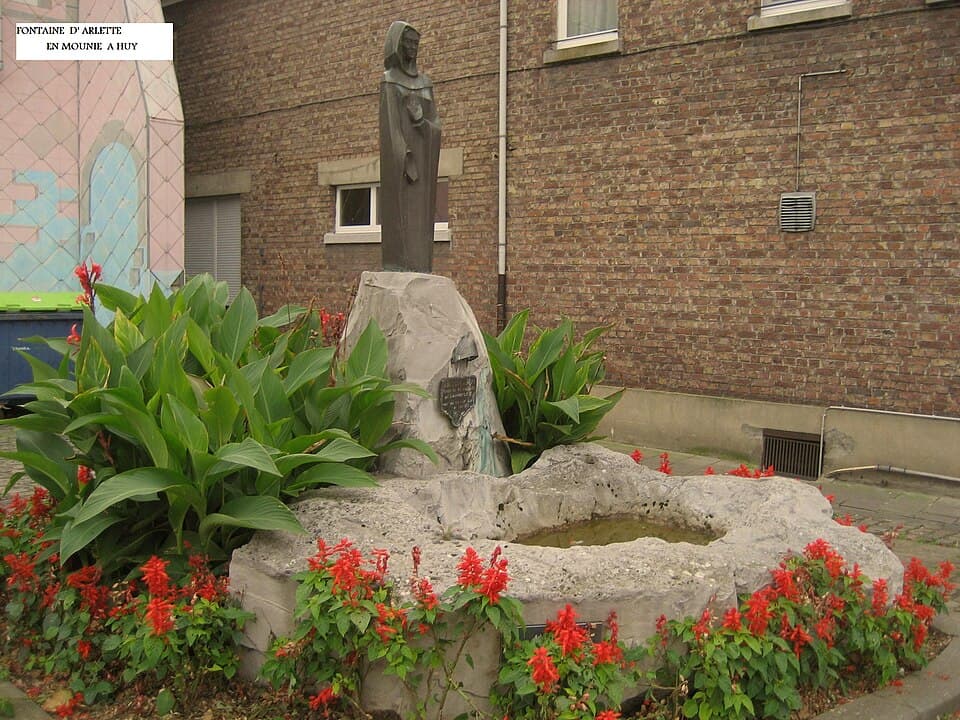
Falaise, sometime in the mid-11th century. Beneath the stone keep that dominates the town, a woman with hands still marked by tan receives her visitor near the fire. She is said to be a tanner's daughter, a duke's concubine, mother of a child some already call a bastard. She speaks low, with the caution of one who has known two worlds.
—Tell us where you come from, before all that is said about you.
I was born in Falaise, in my father's house, with walls of wattle and daub and a beaten earth floor. My father worked hides: he soaked them in tanning baths, and the smell of that trade never left his hands or ours. They say the tanner is necessary but unclean, at the very bottom of the world's ladder, and I have never forgotten that. As a child, I got up before dawn to carry water and help in the workshop, for light was costly and we did not waste candles. Bread was rye, porridge was barley, beans and cabbages from the garden; meat we saw rarely. That was my beginning, sir: mud and leather, not silk.
The smell of tan never left my father's hands or ours.
—How did Duke Robert notice you, a common girl?
They say Duke Robert saw me from the top of the castle, while I was by the water with my laundry tub. Others say I was dancing. I leave you these stories as they were told to me, for a great lord does not explain his desires to a tanner's daughter. What I know is that he summoned me, and one does not refuse to be summoned by him who holds Falaise and all Normandy in his hand. The stone keep above our roofs was not a backdrop: it was power itself, looking down and choosing. I went up to him. From that meeting, a son was born.
A great lord does not explain his desires to a tanner's daughter.
—Why were you never the duke's wife, only his concubine?
Because such is the custom of our people, sir. It is called the Danish marriage, in the manner of our ancestors from the North: a union that Normans recognize, that the law of men honors, but that the Church never blessed. So I was his concubine, not his lady before God. I did not complain, for who am I to demand the altar of a duke? But the truth must be told: without the sacrament, my son carried in his cradle a shadow his enemies would not forget. Custom gave the inheritance; it did not give peace.
Custom gave the inheritance; it did not give peace.
—How do you feel when your son William is called 'the Bastard'?
The word wounds me like a stone thrown without concealment. Bastard, in the mouths of his enemies, means the child born outside marriage blessed by the Church, not a flaw in his heart or his arm. Those who throw it at him would have him lower his eyes; he does not. I sometimes think the world judges mothers before sons: they scrutinize my bed before looking at his sword. Yet at Val-ès-Dunes, when he crushed his rebel barons with the support of the King of France, no one asked who had borne him. A man makes himself; a birth is not chosen.
They scrutinize my bed before looking at his sword.
—It is reported that while pregnant, you had a strange dream. Do you remember it?
It is told, and I will not deny it. While carrying the child, I dreamed that an immense tree came out of my body, a tree whose branches spread over all Normandy, then beyond the sea. When I woke, I saw only the dream of a pregnant woman, the kind that fatigue brings at night. It was the clerics and chroniclers who later read a prophecy into it — as if they had always known. It is easy to foresee the future when it has already passed. I saw only a green shadow over my land, and I was afraid, for trees that grow too tall attract lightning.
It is easy to foresee the future when it has already passed.
—After the duke, your life changed. Tell us about Herluin.
The duke gave me in marriage to Herluin of Conteville, a viscount, that is, a man who rendered justice and administration in the name of a greater lord. That was a true marriage, with altar and blessing. At Conteville, I became a lady: I exchanged the woolen dress and simple linen veil for a wimple covering my hair, finer fabrics, a brooch to fasten my cloak. My days were no longer about carrying water, but managing the household and overseeing the servants. The dwelling was of stone, spacious and better guarded than my father's workshop. They called me lady; I remembered the tanner's daughter.
They called me lady; I remembered the tanner's daughter.
—From this marriage other sons were born. What do you expect of them?
From Herluin I had Odo and Robert. I wanted them to be men of their rank, neither ashamed of their mother nor drunk with their half-brother the duke. Odo is promised to the Church: he is already seen as a bishop, holding the crozier where others hold the sword. Robert will have lands and vassals, a fief to govern. I do not know what destiny awaits them beyond the sea, for no one reads the future; but I raise them in reverence of God and loyalty to their blood. A lady of Conteville has no greater task than to raise her sons straight, as one stakes a young tree before it bends.
To raise her sons straight, as one stakes a young tree before it bends.
—You, born in a tannery, have become mother of a line of lords. How do you bear this gap?
I bear it as one wears a garment too large: with fear of stumbling. Think of it, sir: my father soaked hides, and now my blood flows in the veins of a duke and lords destined for great lands. Such a lineage born from the people has hardly been seen, and I believe it is God's hand more than mine. I forget neither the distaff nor the spindle I turned like all girls, nor the smell of tan. The world likes to believe that blood determines everything; my life teaches otherwise. But I refrain from taking pride in it: he who climbs too high remembers poorly where he came from, and God punishes forgetfulness.
I bear this gap as one wears a garment too large: with fear of stumbling.
—You live in the shadow of this keep of Falaise. What does it represent for you?
This stone keep was the beginning of everything. As a child, I looked up to it as to something that did not concern me; it was the duke's residence, the fortress from which one governed and defended oneself. Then one day its walls leaned toward me, and my life was overturned. My son William was born in its shadow, at Falaise, on the same land where my father worked leather. I do not pass by without thinking that stone does not move, but those it shelters rise and fall at God's will. A fortress reassures the master; it does not stop the wheel of the world.
Stone does not move, but those it shelters rise and fall at God's will.
—If people remember you in a century, what would you fear they forget?
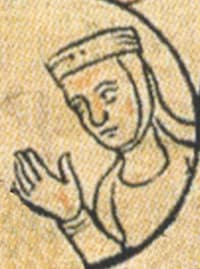
My very name, sir. I am called Herleva, Arlette, Arletta, Herleve, depending on who writes — for clerics poorly record the lives of common women, even mothers of kings. If I am read in a hundred years, I fear that nothing will remain of me but a scene by the water and a dream of a tree, prettily illuminated in some chronicle, and nothing of the real woman. They will remember the duke who saw me, the son who perhaps ruled beyond the sea; of me, the shadow in between. No matter, after all: it is the fate of tanners and their daughters to feed great stories without leaving their face.
It is the fate of tanners' daughters to feed great stories without leaving their face.
This imaginary interview was generated by artificial intelligence from sources documented in Arlette's profile. It dramatises what the figure might have said based on what we know about them, but does not constitute attested historical testimony. For primary sources and factual documentation, refer to the full profile.