Imaginary dialogue between Guillaume le Conquérant and Arlette
by Charactorium · Arlette (1010 — 1050) · Society · Politics · 4 min read
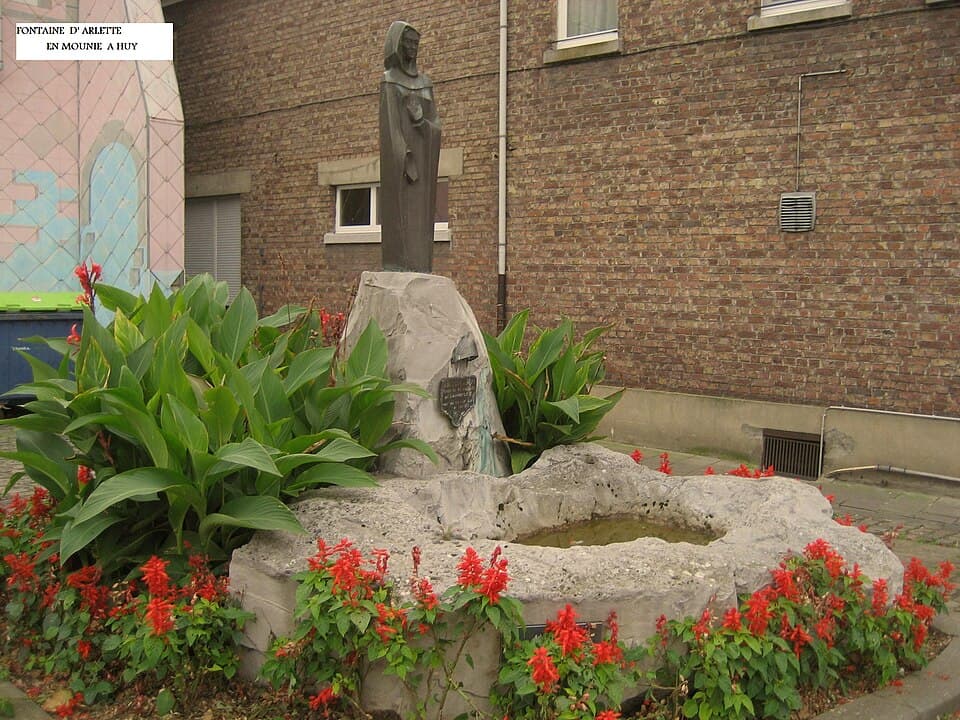
It is at Conteville, in the stone dwelling of Viscount Herluin, that the young Duke William comes to find his mother in this autumn of 1049. Two years after crushing his rebel barons at Val-ès-Dunes, he pushes open the door of the hall where the low fire lights a distaff placed on a chest. Arlette, aging, still spins with her hands of a former daughter of Falaise, and her son sits beside her, no longer as a duke but as a child who wants at last to know where he comes from. He calls her simply mother, and the wind from the estuary beats against the shutters.
—Mother, they still murmur at my court that your father soaked hides at Falaise. You who bore me, tell me truly from what house I came.
Do not lower your eyes in asking, my son. My father worked leather at Falaise, yes, and the smell of tanning clung to my hands when I was small. We lived near the workshop, in a wattle-and-daub house with a beaten earth floor, and I rose before dawn to carry water. That trade soiled the body but fed the town: without tanners, no saddles, no boots, no harness for your knights. You are duke, and yet half your blood comes from those stinking vats. Never forget it, for those who despise you will forget it for you.
You are duke, and yet half your blood comes from those stinking vats.
—They say my father Duke Robert saw you from the keep. What were you doing that day, at the foot of the castle?
I was washing laundry in the stream with the other girls, and we danced a little, as one does when the work is hard and one is young. I did not know that a man was watching me from the stone heights. Your father had been duke only a short time; he had the gaze of those who take what they want. They came for me that very evening. I was afraid, I will not hide it, but I did not bow my head before him. I believe that is what pleased him: a wash-tub girl who did not tremble.
I believe that is what pleased him: a wash-tub girl who did not tremble.
—Why were you never his wife? I carried throughout my childhood the weight of that union they call irregular.
Because a duke does not marry in church the daughter of a tanner, my son. We were united more danico, in the manner of our northern ancestors: a union that Norman custom recognizes and that priests refuse to bless. I was his concubine, not his lady, and that sufficed for you to be born of him and for him to acknowledge you as his blood. Do not blush at that word. Many lords of this duchy were born from the same bed as you. What matters is not the missing blessing, but the father who never disowned you.
What matters is not the missing blessing, but the father who never disowned you.
—My enemies hurl the name of bastard at my face even in sieges. Did you fear, while carrying me, that you would mark me thus forever?
I thought of it every time I felt you move within me. The word bastard denotes your birth, not your heart nor your arm — remember that when they shout it at you beneath the ramparts. Your father made his barons swear to acknowledge you as heir before he left for Jerusalem, and he died on the road. You were seven years old, and men wanted you dead. But you held firm, you triumphed at Val-ès-Dunes. Those who insult you today speak of my womb because they no longer dare speak of your sword. Let them. A name of insult wears out the mouth of him who repeats it.
They speak of my womb because they no longer dare speak of your sword.
—My nurse told me of a dream you had before my birth. Is it true, mother, or just a servant's tale?
I dreamed, yes, while I was carrying you. A huge tree sprang from my body and spread its shadow over all Normandy, then beyond the salt sea. When I woke I was drenched in sweat and my heart was pounding. The women around me saw it as an omen, though they could not say which. I dare not interpret it myself, for dreams deceive as much as they foretell. Perhaps it was only the fever of a girl frightened by what was growing within her. But when I see you today, a duke established, I sometimes wonder if that shadow has not already begun to spread.
A huge tree sprang from my body and spread its shadow beyond the salt sea.
—You who were born in a house of beaten earth, how did you find yourself one day a lady, between stone walls and servants?
Strangely, my son. One does not suddenly shed the child who carried water at dawn. For a long time I kept the gestures of the common folk: I watched over the bread myself, I spun when other ladies sat idle. Moving from a wool dress to a linen wimple and fibulae is not merely changing clothes; it is learning to be silent differently, to command without shouting. I was ashamed, sometimes, of my rough hands on fine fabrics. But I understood one thing: rank is worn like a new garment; it ends up taking the shape of the body. I made sure it took yours.
Rank is worn like a new garment: it ends up taking the shape of the body.
—After my father, you married Herluin, the viscount of this place. Were you given to him, or did you want this man who was not a duke?
I was given, as all women are given, but I did not complain. Herluin of Conteville is an upright man, a true lord, and he made me a lady where the duke had made me only a concubine. Here, in this stone dwelling, I had a home of my own, a household to manage, children born of a marriage that the Church, this time, blessed. Do not think that this took me away from you. Herluin always treated you as a son of his blood. This marriage did not take a mother from you: it gave you another family, and brothers to hold your flanks.
He made me a lady where the duke had made me only a concubine.
—My half-brothers Odo and Robert grow up under this roof. What would you have me do with them, mother, when you are no longer here to watch over them?
Keep them close to you, my son, and give them their place. Odo has a sharp mind and a taste for Church matters: make him a bishop when the time comes; he will serve you better than any vassal. Robert has strength and loyalty; he will never betray you. I bore them of Herluin as I bore you of the duke: they are of my womb as much as you. The blood I gave you all three is the same, that of a daughter of Falaise. Hold them tight around you, for a man alone, even a duke, is prey; three brothers bound together are a wall.
Three brothers bound together are a wall.
—When I watch you spin like this, so far from the keep where it all began, do you regret, mother, having danced that day by the water?
Regret? No, never. If I had not danced that day by the stream of Falaise, you would not be sitting near this fire questioning me. I was afraid, I was ashamed, I was mocked, and I buried more than one sorrow under this lady's wimple. But I had you, and I saw with my own eyes the child they called bastard stand up to an entire duchy. A common girl does not ask to be loved by chroniclers. She asks that her son live and reign. That fire, I obtained. The rest, leave it to the monks who write.
A common girl does not ask to be loved by chroniclers: she asks that her son reign.
This imaginary interview was generated by artificial intelligence from sources documented in Arlette's profile. It dramatises what the figure might have said based on what we know about them, but does not constitute attested historical testimony. For primary sources and factual documentation, refer to the full profile.