Kids interview Arlette
by Charactorium · Arlette (1010 — 1050) · Society · Politics · 5 min read
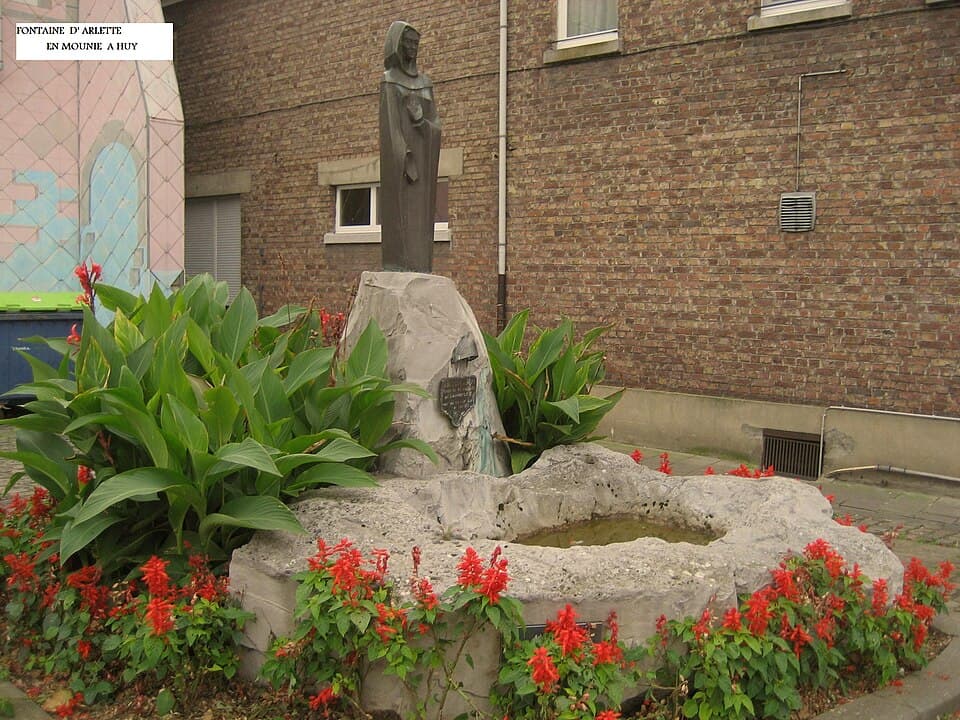
Two young visitors, aged twelve, arrive at the foot of the great keep of Falaise. There, a woman in a linen veil waits for them, her hands still rough like those of a tanner's daughter. She smiles: no one ever asks for her story, the mother of a king.
—Is it true that a duke saw you from up there, on his castle?
You know, my child, that's what the chroniclers say. I was down by the stream, washing laundry in my wooden tub. Duke Robert the Magnificent was watching from the great stone keep of Falaise, high above. Imagine an enormous tower that dominates the entire town, with walls as thick as three men. They say he caught sight of me there, and was struck by the sight of me. Old Wace, in his Roman de Rou, writes that the duke had me brought to him. Is it true word for word? No one knows. But from that meeting my son William was born.
He was washing a whole duchy with his eyes, and he saw me washing laundry.
—Were you afraid when they took you to the castle?
Oh yes, I was afraid, just as you would be. I was a common girl, and suddenly a lord summoned me. Imagine: you live in a little house with earthen walls, and suddenly you're taken up into the greatest fortress in the land. The stone corridors were cold, dark, lit by rare flames. They also say that, pregnant, I dreamed an immense tree grew out of my body and covered all of Normandy with its shade. At the time, just a dream, nothing more. Much later, the monks said it foretold the glory of my son.
They took me up into the tallest tower in the land, me who washed laundry down below.
—Why didn't you marry the duke, if he loved you?
That's a good question, and it's a delicate one. Among us Normans, there existed what was called Danish marriage, in Latin more danico. It was a union recognized by custom, but not by the Church. So they said I was his concubine: a woman who lives with a man without a religious marriage. The duke and I were therefore not married before God. This was common among great lords, you know. But the Church did not like it. That is why this story cast a shadow over my son later on.
I was recognized by custom, but not by the Church.
—Is that why they called your son 'the Bastard'? That's mean, isn't it?
Yes, my child, that is precisely why. A bastard, in my time, was simply a child born outside a marriage recognized by the Church. It was not an insult to his character, only to his birth. But his enemies used it as a weapon. They shouted 'William the Bastard' to hurt him, to say he was unworthy to rule. It pained him, I think. And yet, listen carefully: that little one they called a bastard became king of England. Words did not have the last word.
They called him bastard to put him down; he became king to answer them.
—Before all that, what did your family do for a living?
My father was a tanner, my child, or leather worker. Do you know what that is? You take animal skins and soak them for a long time in baths to make strong leather. It was a useful trade, but rough and very smelly. Imagine skins soaking in vats, an acrid odor that catches your throat from morning. We were at the very bottom of the ladder. Our house had walls of wattle and daub — earth mixed with straw — and a floor of beaten earth. I got up at dawn to help and fetch water. Nothing destined me to meet a duke.
My father's leather smelled bad, but it kept us alive.
—Afterwards, you became a lady? What changed in your life?
Yes! After the duke, I was married to a lord, Herluin de Conteville, a viscount — that is, an officer who dispensed justice on behalf of the duke. Then my life turned around. No more beaten earth floor: I lived in a stone dwelling, larger and better defended. I wore finer fabrics, a linen wimple covering my hair and neck, a sign of married women of my rank. On my table, there was meat, fish, wine — I who had mostly eaten rye bread and beans. But in my heart, I remained the tanner's daughter.
I changed my dress and my house, never my heart.
—Is it true that several of your sons went off to conquer England?
It is true, and I am both proud and overwhelmed by it. I had three sons who made history. First William, with Duke Robert. Then, with Herluin, Odo and Robert of Mortain. In 1066, all three crossed the sea to fight at the Battle of Hastings. Imagine: my boys, leaving from here, becoming masters of a kingdom across the water. Odo became bishop of Bayeux, one of the most powerful lords in England. They say he even commissioned the great tapestry that recounts the entire conquest. A mother who sees that cannot find words.
Three sons left Falaise, three sons became masters of a kingdom.
—Did you know your children would become so important?
No, my child, how could I have known? When they were little, at Conteville, I watched their games and quarrels like any mother. William lost his father very young: Duke Robert died in 1035, returning from a pilgrimage to Jerusalem, that long journey to the Holy Land. My boy remained an orphan, surrounded by dangers. Several of his protectors were murdered during his childhood. I was so afraid for him. So no, I did not dream of crowns. I only prayed that they would grow up alive. The rest, history wrote without warning me.
I did not dream of crowns; I prayed they would stay alive.
—It's strange, your name is written in many different ways. Why?
You have noticed well, and that touches me. According to the chronicles — those accounts written by monks, year after year — I am called Herleva, Arlette, Arletta, or Herleve. No one really agreed. Do you know why? Because I was a common woman. Even after becoming mother of kings, my life did not much interest those who held the pen. They carefully recorded the names of dukes and battles, but the name of a tanner's daughter, they wrote down somewhat at random. My name still floats, like a thing they did not take the trouble to fix firmly.
They noted every battle with care, and my name somewhat at random.
—So how do we know things about you, if it's so poorly recorded?
Thanks to a few monks who, long after, told my story. Orderic Vital, in his Ecclesiastical History, writes that I was given in marriage to Herluin de Conteville, and that I had Odo and Robert by him. Another, William of Malmesbury, says I was born the daughter of a craftsman of Falaise. You see, they mention me mainly because I am William's mother — almost never for myself. That is how the lives of simple women were known: through the famous men they had brought into the world. My story lives in the shadow of theirs.
I am remembered as a mother, almost never as a woman.
—In your little girl's house, what did it smell like in the morning?
Ah, what a funny question, and how I like it! In the morning, at our house, it smelled of leather and tan — that bark they crushed to soak the skins. A strong smell, almost sharp, mixed with the smoke from the wood fire. There was no noise of machines, you know, only the animals, the lapping of water, and the voices of neighbors. I got up in the dim light, because candles were too expensive to waste. I went to fetch water, then helped in the workshop. In the evening, we huddled around the fire, in the dark, and went to bed early. That was my little girl's life.
It smelled of leather and smoke: that was the smell of my childhood.
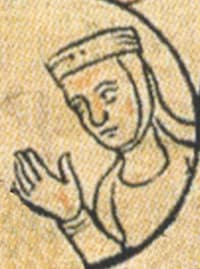
This imaginary interview was generated by artificial intelligence from sources documented in Arlette's profile. It dramatises what the figure might have said based on what we know about them, but does not constitute attested historical testimony. For primary sources and factual documentation, refer to the full profile.