Imaginary dialogue between Le père d'Assia Djebar (l'instituteur bilingue de Cherchell) and Assia Djebar
by Charactorium · Assia Djebar (1936 — 2015) · Literature · 6 min read
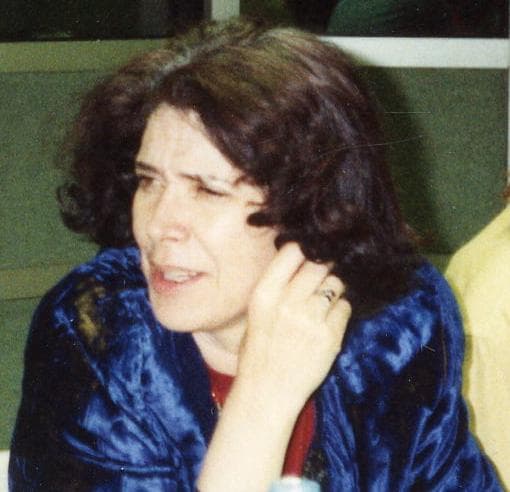
It is in Cherchell, in the white light of a late afternoon on the coast, that the schoolteacher finds his daughter, now a great voice of literature. On the low table, a folded haïk, a switched-off tape recorder, and the scent of mint tea. He who, every morning, led her by the hand to the village French school now questions Fatima-Zohra about the paths taken by this language he gave her. Between them floats the memory of alleyways, schoolbags, and a father who wanted for his daughter what tradition denied to girls.
—Fatima-Zohra, do you remember when I led you every morning to the village French school, under the gaze of the squatting fellahs? What did I put in your hand that day?
You who held my hand, my father, you did not know that you were giving me both a weapon and a wound. You opened a door for me that other little girls would never cross: that of the letter, of writing, of the outside world. But this French language, I long called it my stepmother tongue — neither fully mine nor fully foreign, inherited from those who had taken our land. It took me years to understand that I could turn it inside out. What you passed on to me without knowing it was the means to say what the women of our home kept silent. You led me to school; you led me to myself.
You led me to school; you led me to myself.
—I who taught you to read in two alphabets, tell me: how does one live, my daughter, between your mother's Arabic and the master's French?
One lives torn, my father, and it is from this tearing that everything I write is born. I sometimes think in Algiers Arabic, I dream in Berber, I read in English, and I write in this language that you and the school gave me. I call myself a daughter of two languages and two memories, and I refuse to choose: they both constitute me, in their very conflict. French does not erase the voice of my mother and aunts; it carries it, it makes it heard by those who would never have listened. This language of the other, I expose it every day to a foreign light. But it is in this light that your child learned to exist.
I call myself a daughter of two languages and two memories, and I refuse to choose.
—When you left for Sèvres in 1955, the first Algerian woman admitted, I was proud and worried. There, far from us, what became of your history studies?
I was studying history, my father, the history that textbooks wrote without us. And then the national war broke out at home, the war crossed the Mediterranean into our student rooms. My Algerian comrades and I went on strike; I dropped the agrégation you so hoped for. But those weeks of forced silence, I filled with writing. At twenty-one, I wrote a first novel, Thirst, published in 1957. I took the name Assia Djebar so as not to compromise you, who remained in the country. I was thirsty for myself, thirsty for the world. The strike closed a historian's door for me; it opened a novelist's door. Without it, perhaps, I would never have dared.
The strike closed a historian's door for me; it opened a novelist's door.
—Why did you hide your real name behind that pseudonym, my daughter? Were you ashamed to be the child of the Cherchell schoolteacher?
Never ashamed, my father — on the contrary, afraid for you. In 1957, publishing the name Imalayen in colonial France would have exposed my family still in Algeria, you first of all, a watched civil servant. So I chose a mask, two Arabic words to protect myself and protect you. But that mask became a face. Under this assumed name, I could say things that the schoolteacher's daughter would not have dared to write under the village's gaze. The pseudonym gave me a freedom that modesty denied me. Deep down, I remained your child from Cherchell; I only learned to speak from the shadows, where one finally dares.
The pseudonym gave me a freedom that modesty denied me.
—On this table, I see your tape recorder. You who grew up among our veiled neighbors, what did you go looking for with this machine, Fatima-Zohra?
Voices, my father, voices that are never written down. For Women of Algiers in Their Apartment, in 1980, I spent hours recording our women — those of the Casbah, those of the mountains — telling their sorrows and joys in everyday Arabic and Berber. You taught me writing; but it was they who reminded me of the power of orality, that speech that circulates behind walls, in patios, where men do not enter. My work was to build a bridge: to take this living orality and pour it into the written language, without betraying it. I am of the tribe of the voiceless, and yet it is my voice that resonates for them. The tape recorder was my true schoolbag as a woman.
I am of the tribe of the voiceless, and yet it is my voice that resonates for them.
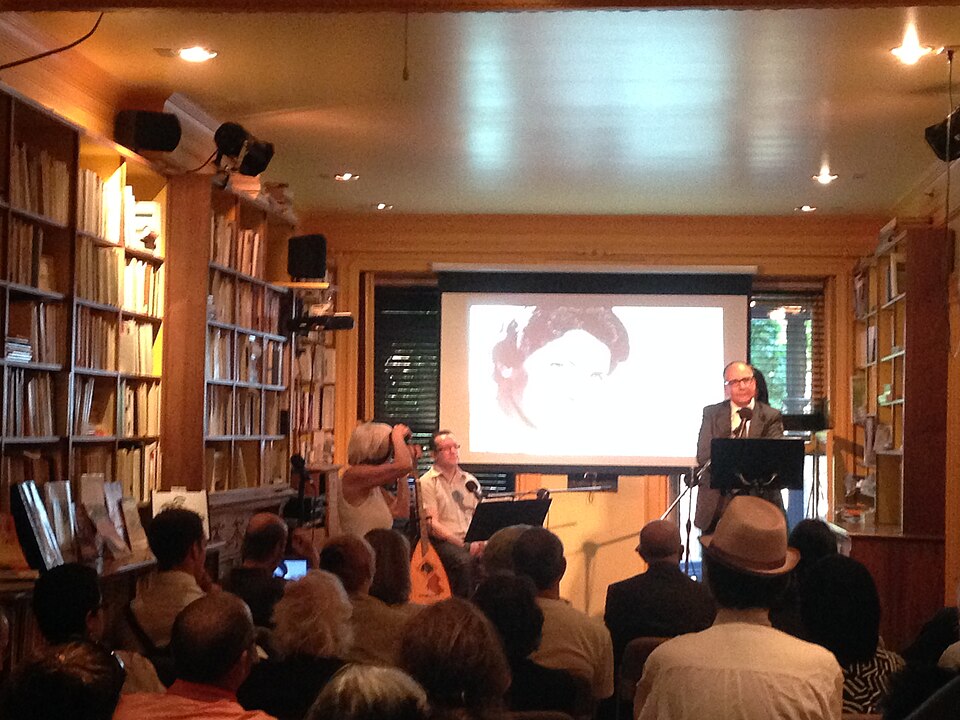
—These women of our home who hid under the white haïk, how did they agree to confide to you what they kept silent even from their husbands?
Because I was one of them, my father, a daughter of the land who returned among them. The haïk you see there, I long looked at it as a double object: it protects the woman and erases her, it envelops her and confines her. These women spoke to me because I did not come to judge them, but to listen. In women's gatherings, in the evening, voices are lowered, the unspeakable is said among themselves. I gathered this speech as one gathers water in cupped hands, trembling lest it spill. My role was not to invent, but to transmit faithfully. You who recorded the village deeds understand this vertigo: to write so that nothing of what was said is lost.
I gathered this speech as one gathers water in cupped hands.
—I was told you took a camera and climbed Mount Chenoua. Why leave the pen for the image, my daughter?
Because some voices, my father, do not pass through writing. In the seventies, after ten years of silence during which I doubted everything, I wanted to film rather than write. I went up to Mount Chenoua, in Berber country, where rural women keep the memory of ancient resistances. With my camera, in 1978, I shot The Nouba of the Women of Mount Chenoua, to give not only a voice but a face to those who had never been looked at. The film won a prize in Venice — the first time for a female director from our land. But the honor, you see, was not for me: it was for those peasant women whose image finally entered the world. The camera extended my pen; it restored what words alone could not show.
I went up to film those who had never been looked at.
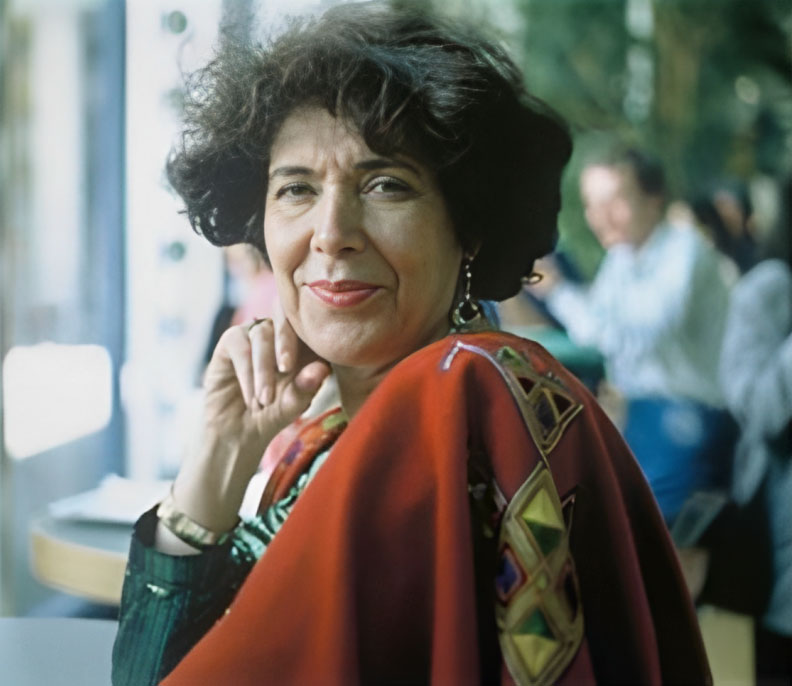
—You the historian, what did you go looking for in those Berber mountains, so far from the libraries where I imagined you?
True history, my father, the one that is not in the colonizer's archives. At the University of Algiers, I taught history from their books; but those books silenced our women, our resisters, our foremothers. On Mount Chenoua, I went to seek living memory, the one passed down through grandmothers' mouths by the fire. Those Kabyle mountains sheltered so many battles that were never recorded. I wanted to film that land as one reopens an erased grimoire. You taught me to read texts; up there, I learned to read silences, glances, mourning songs. The historian and the filmmaker within me made the same gesture: to restore to the erased their place in the common story.
You taught me to read texts; up there, I learned to read silences.
—There's a whisper in the village that you will sit in the great house of French letters, in Paris. You, my daughter from Cherchell, under their Dome?
Yes, my father, in 2005, they elected me to the Académie française, seat 5 — the first woman from the Maghreb to enter. Imagine: the little Algerian girl you led to the village school, received into the institution that guards the language of those who governed us. When I entered under the Dome, I did not enter alone. I carried with me all the veiled women of the Casbah, the peasant women of Chenoua, my mother, my aunts. I paid tribute to them before those gentlemen in green coats. This sword given to academicians, I received it as the saber of a battle fought with words. What I owe to your hand, that distant morning on the path to school, no speech could ever write.
When I entered under the Dome, I did not enter alone.
—Are you at peace, Fatima-Zohra, with this language of the colonizer that has honored you so much? Have you not betrayed a little of our people?
I have asked myself this question all my life, my father, and I have never stopped. Writing in French, when this language was imposed by arms, is walking on a ridge. But I did not serve this language: I turned it inside out, I appropriated it so that it might finally speak for our people. Betrayal would be to remain silent, to leave our women in the silence where they had been locked. By writing in the language of the other, I forced it to carry our memory, our history, our women's voices. You gave me this language as a tool; I made it an instrument of resistance and freedom. No, I have not betrayed: I brought Cherchell under the Dome, and that is my pride.
You gave me this language as a tool; I made it an instrument of resistance.
This imaginary interview was generated by artificial intelligence from sources documented in Assia Djebar's profile. It dramatises what the figure might have said based on what we know about them, but does not constitute attested historical testimony. For primary sources and factual documentation, refer to the full profile.