Imaginary interview with Assia Djebar
by Charactorium · Assia Djebar (1936 — 2015) · Literature · 6 min read
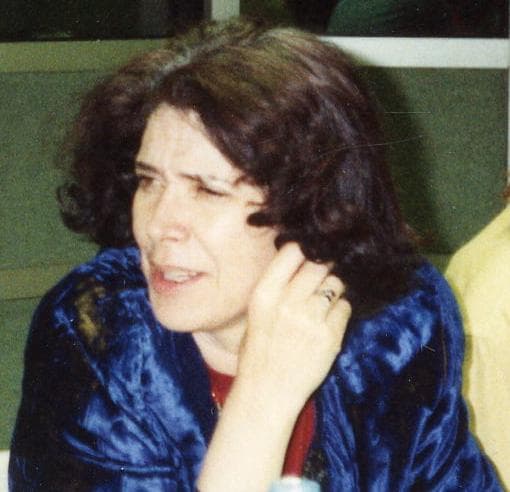
Manhattan, a winter morning, in a Greenwich Village apartment where shelves overflow with manuscripts and an old tape recorder still lingers. Assia Djebar receives us between two classes at the university, mint tea steaming on a pile of colonial archives. Her voice is calm, her gaze turned toward an Algeria she never stops inhabiting through words.
—How did a young girl from Cherchell become, in 1955, the first Algerian woman admitted to the École normale supérieure de Sèvres?
I was nineteen and felt I had crossed a forbidden frontier. My father was a bilingual schoolteacher in Cherchell, that ancient Roman city by the sea, and it was he who had given me, without knowing it, the key to a door that few girls from our region could push open. At Sèvres, I came to study history — the history of others, written by others. But 1955 was not a year for quiet libraries. The war had begun back home the previous autumn, and a nationalist student strike tore me away from my exam notes. I then did what I knew how to do most intimately: I wrote. It was from this interruption that Thirst was born, at twenty-one.
I came to study the history of others, written by others.
—Why did you publish that first novel under a pseudonym rather than your own name, Fatima-Zohra Imalayen?
Because writing, for a young Algerian woman in the midst of a colonial war, meant exposing oneself — and exposing one's family. Thirst appeared in 1957, the story of a bourgeois woman in search of herself, and I feared the scandal that my family name would have sparked in Cherchell. Assia Djebar was thus a veil I chose for myself, not to disappear but to be able to speak. It is paradoxical, isn't it? I who spent my life tearing women from silence began by masking myself. But that mask was a freedom. It taught me very early that literature is the art of telling the truth by taking a detour.
—You spent a long time recording women on a tape recorder. What were you seeking in those voices?
I was seeking what the archives had never recorded. For Women of Algiers in Their Apartment, in 1980, I spent hours, this small device placed between us, gathering stories in Arabic dialects and Berber — words from kitchens, mourning, hope. The female orality of my country was an immense river that nothing had ever held back, and I wanted to transfer a few drops of it into written French. I have always felt I belong to that tribe — I am of the tribe of the voiceless, and yet it is my voice that resounds in this language I have appropriated, turned inside out like a glove. The tape recorder was my oar to go against that current.
The female orality of my country was an immense river that nothing had ever held back.
—What would you say to those who think that transcribing oral speech is betraying it?
That they are not wrong, and that it is precisely where everything hinges. When a peasant woman confided her pain to me in Algerian Arabic and I set it down, that evening, in a French sentence, something was lost — the grain of the voice, the breath, the silence between two words. But something also was saved from oblivion. I have always worked on the edge of that loss. My afternoons in Alger, in women's gatherings, and then my nights of rewriting where I typed and retyped every line on the typewriter — all of it aimed at a single goal: that these erased existences leave a trace somewhere other than in the wind. Betrayal, sometimes, is the only possible fidelity.
Betrayal, sometimes, is the only possible fidelity.
—You called French your 'stepmother tongue.' Why such a harsh word for a language you mastered?
Because a stepmother tongue is neither entirely foreign nor entirely maternal. French came to me through school, therefore through the colonizer — remember that image that opens Love, Fantasia: a little Arab girl led by her father each morning to the French school in the village, under the gaze of squatting fellahs. That little girl was me, walking toward a light that was not mine and yet I would make my own. For a long time I felt this language as a foreign light in which my shadow stretched, distorted. But you don't really hate a stepmother who has fed you. You learn to turn her inside out, like a glove, until she fits your hand.
A stepmother tongue is neither entirely foreign nor entirely maternal.
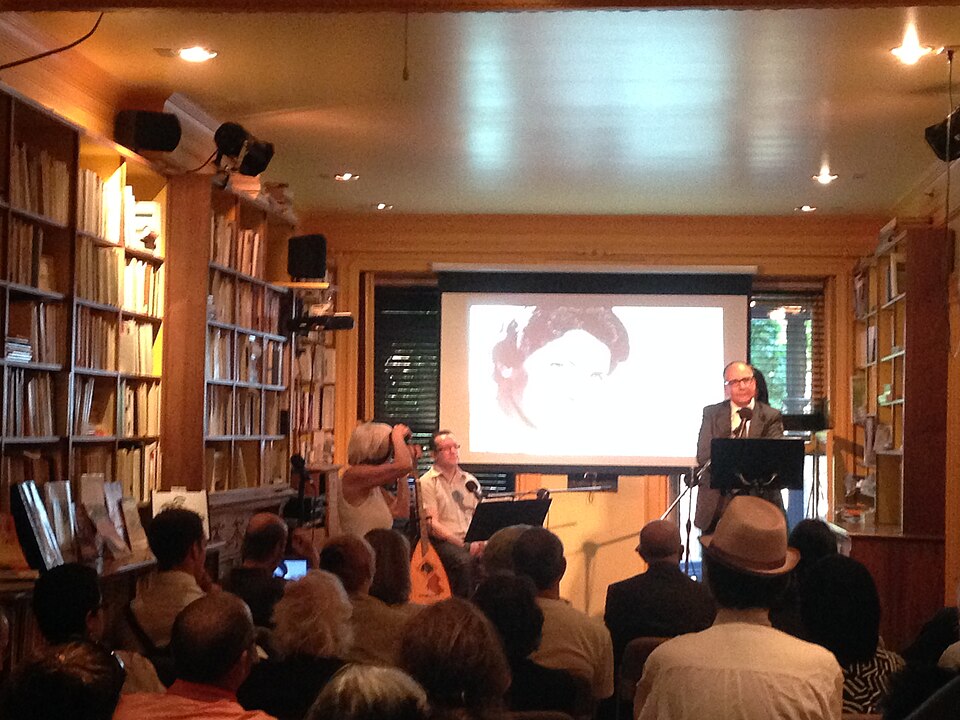
—How do you live, day to day, among Arabic, Berber, French, and English?
You live like in a house with several floors, where each language occupies a room. I sometimes thought in Algerian Arabic, wrote in French, read in English during my New York years, and the Berber of my childhood surfaced in songs. At New York University, where I taught Francophone literature, my American students were astonished by this inner polyphony. I answered them what I had said under the Dome: I am the daughter of two languages and two memories, and I do not choose between them. This conflict is not a wound to close, but a material to write with. Vast is the prison of languages, but it is within its very walls that one learns to sing.
I am the daughter of two languages and two memories, and I do not choose between them.
—In 1978, you traded the pen for the camera with The Nouba of the Women of Mount Chenoua. What were you seeking in those mountains?
I was seeking faces. After Children of the New World, I had gone through ten years of literary silence, and the camera gave me back speech in a different way. On Mount Chenoua, that Kabyle massif steeped in resistance, I filmed Berber peasant women whose men were dead or gone, and who alone bore the memory of the war. The film, The Nouba of the Women of Mount Chenoua, won the International Critics' Prize at the Venice Biennale — the first time an Algerian female director received such recognition. But the essential thing was not the prize: it was extending through images what I did with the tape recorder, giving a body and a gaze to voices that had never been looked at.
I was seeking faces, giving a gaze to voices that had never been looked at.
—Do you remember the moment you decided that cinema could say what books could not?
It came to me while listening, precisely. A recorded voice gives you the breath, but not the gesture of the hand kneading bread, not the light on a whitewashed wall, not the silence of a woman watching the sea from the top of Mount Chenoua. Written French could restore thought; it took the image to restore presence. So I took the camera as one takes another language — clumsily at first, then with passion. My documentary cinema of the seventies was never a parenthesis: it was the same quest as my novels, restoring erased voices, but adding the tremor of the visible.
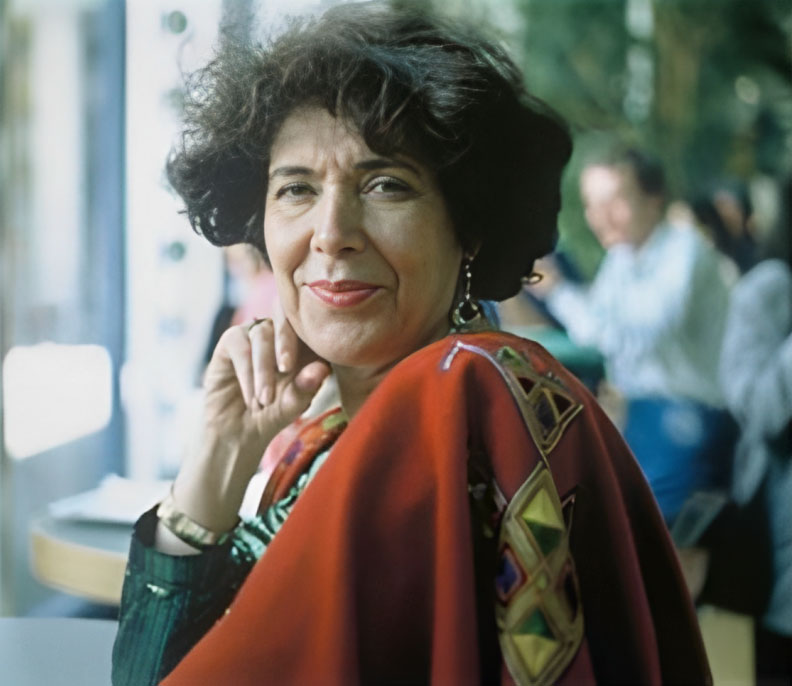
—In 2005, you became the first Maghrebi woman elected to the Académie française. What did you feel under the Dome?
A vertigo, and a responsibility. Receiving the engraved academician's sword, taking seat no. 5, entering this institution born in 1635 to watch over the French language — I, the Algerian woman formed then fractured by this language. I measured the irony of History: the little girl from Cherchell watched by fellahs walking toward the colonial school now sat under the Dome. But I did not enter alone. During my induction speech, I wanted these gilded halls to resonate with all the mute Algerian women whose spokesperson I had become. This sword, I received it in their name as much as in mine.
The little girl from Cherchell now sat under the Dome — but I did not enter alone.
—Didn't this Parisian consecration risk distancing you from the Algeria you carried within you?
On the contrary, it attached me to it all the more. Francophonie was always a tension for me, never a renunciation: writing in French while claiming an Algerian identity. Sitting down at the Académie française in 2005 was to introduce, at the very heart of the house of the former colonizer, the memory of the conquest of Algiers in 1830 that I had recounted in Love, Fantasia. I did not go to Paris to forget Cherchell; I carried Cherchell there. A Maghrebi academician under the Dome was a way to turn the stepmother tongue inside out one last time, publicly, to make the Arabic and Berber that beat beneath my French heard.
—At the end of this life shared between shores, what would you have wished to convey through your work?
The refusal of erasure. All my life, from the recordings in Alger to the classrooms of New York, I fought against the idea that a voice could disappear without leaving a trace. In No Place in My Father's House, my most intimate narrative, I delved into my childhood and that torn relationship with language, like a testament. If I were to be read in a century, I would like them to hear less the writer than the chorus of women of whom I was but the scribe. I wrote because writing was the only way to belong to myself — and, by belonging to myself, finally to belong to all those who had been condemned to silence.
I would like them to hear less the writer than the chorus of women of whom I was but the scribe.
This imaginary interview was generated by artificial intelligence from sources documented in Assia Djebar's profile. It dramatises what the figure might have said based on what we know about them, but does not constitute attested historical testimony. For primary sources and factual documentation, refer to the full profile.