Kids interview Audrey Hepburn
by Charactorium · Audrey Hepburn (1929 — 1993) · Performing Arts · 5 min read
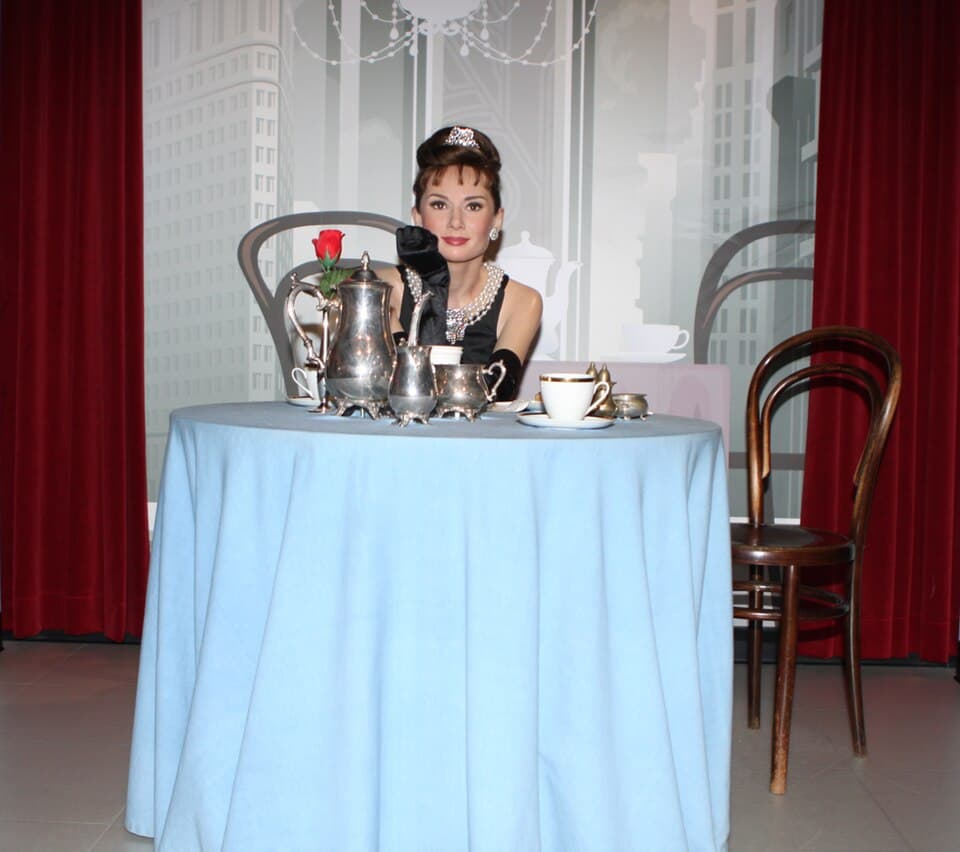
That morning, two twelve-year-old visitors push open the door of a Swiss country house. An elegant lady awaits them, a gentle smile on her lips. She seats them near the garden and prepares to answer all their questions.
—Is it true that one day, when you were little, you ate tulips?
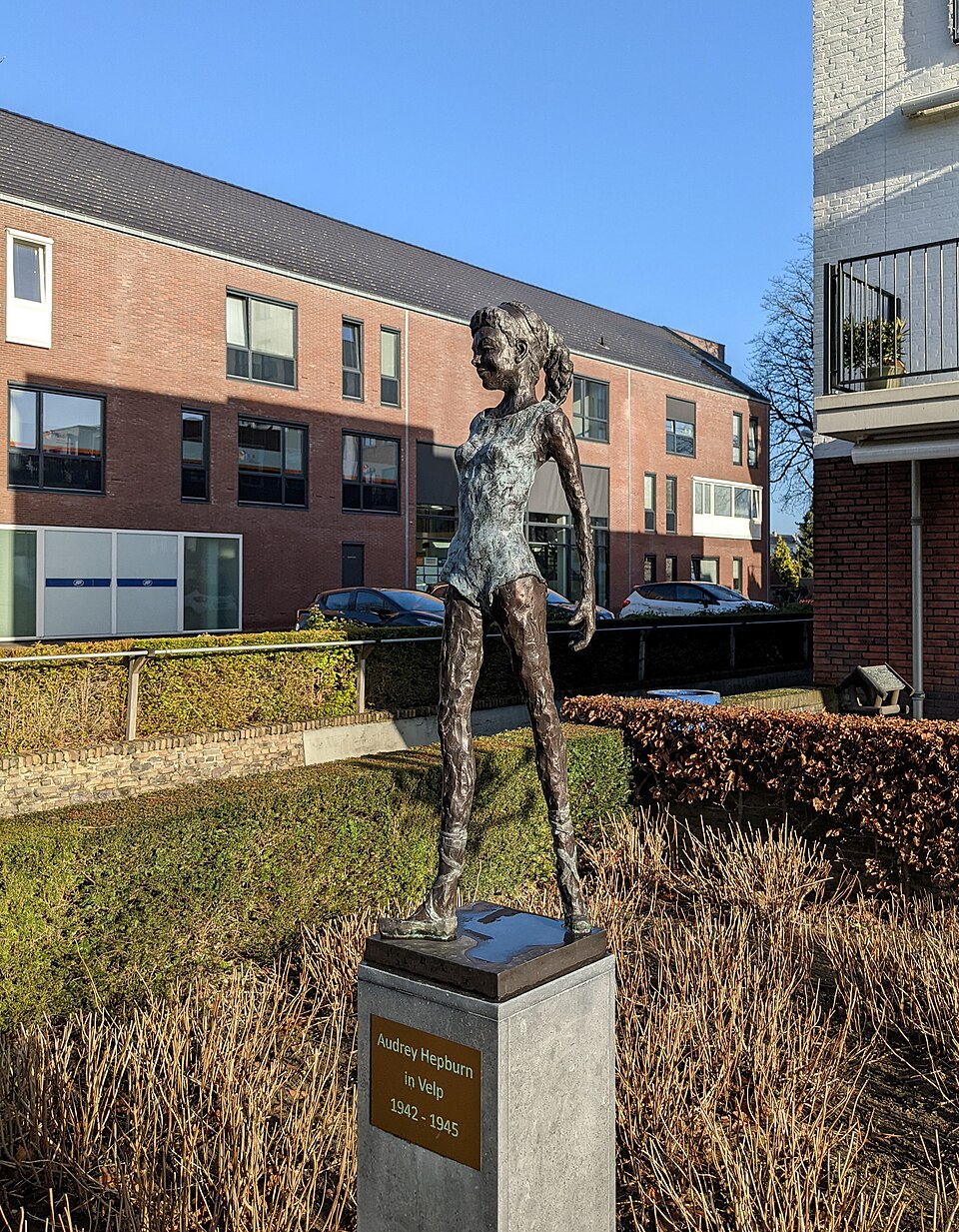
Yes, my child, it's quite true, even if it sounds crazy. I was fourteen, in Arnhem, Netherlands. The war was there, and the winter of 1944 was terrible. They called it the Hunger Winter. Imagine a whole city without bread, without milk, without anything to put on your plate. So we dug up tulip bulbs from the gardens. We cooked them, we ate them. It wasn't good, but it was that or nothing. You know, I never forgot that taste. "We ate tulips — the bulbs — because there was nothing else. I will never forget what it means to be hungry."
We ate tulip bulbs: it was that, or nothing.
—Were you afraid at night during the war?
Of course I was afraid, like all the children around me. Soldiers were everywhere, and you never knew what would happen tomorrow. My body was weakening from lack of food. In the end, I could barely walk. Then, in the spring of 1945, liberation came. People came to bring us food, to us hungry children. Imagine what it's like, when you're starving, to see hands full of milk and biscuits arriving. That day, something was planted in my heart forever. I promised myself I would never forget the children who are hungry.
Seeing hands full of milk arrive when you're starving — you never forget that.
—What was your first big film in Rome like?
Ah, Roman Holiday! It was in 1953, and I played a princess who runs away to discover the city on her own. Can you imagine? A young girl who drops her obligations just to laugh for a whole day. We shot in the real streets of Rome. There was the Trevi Fountain, and a stone mouth where you put your hand. The most fun was the scene on a Vespa, that little Italian scooter. We zipped through the alleys, hair blowing in the wind. For the first time, a camera really looked at me. And the most incredible thing: this first big role earned me an Academy Award. I couldn't believe it.
A princess who drops everything just to laugh for a whole day.
—Were you happy or stressed about winning the Oscar so quickly?
Both at once, my boy! You know, winning the Academy Award for Best Actress for your very first major role is very rare. I was afraid I didn't deserve it. In the film, they gave me a princess hairstyle: a beautiful updo, with a little tiara on top. Many young girls wanted to style their hair like that afterwards. But deep down, I was a shy dancer who had known war. So holding that golden statuette in my hands was like a dream a little too big for me. That day I understood that my life was going to change completely.
Holding that golden statuette was a dream a little too big for me.
—Why does everyone talk so much about your little black dress?
Ah, that dress! You mean the one from the film Breakfast at Tiffany's, in 1961. It was a simple little black dress, but elegant. It was designed by my couturier friend, Hubert de Givenchy. A couturier is someone who creates clothes by hand, just for you. We had met back in 1957, and since then, he dressed my films. You know, I believe a simple but well-cut garment is worth more than a thousand frills. "A woman's beauty is not in her clothes or her face. It lies in her eyes." That's what I really thought.
A simple but well-cut garment is worth a thousand frills.
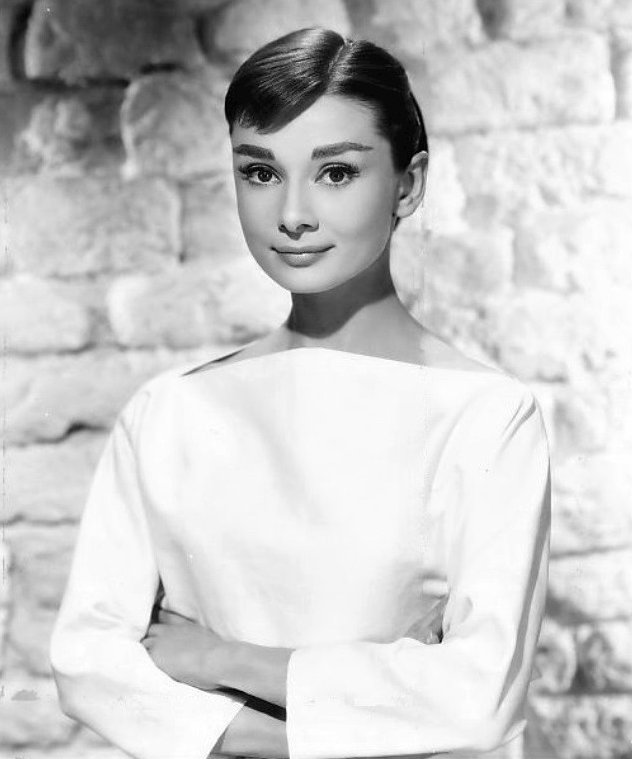
—And you, at home, did you dress elegantly too?
Oh no, not at all like in the movies! At home, I was very simple. I wore straight pants, a warm turtleneck, a white shirt. And above all, flat ballet flats, those shoes without heels. Do you know why? Because I had been a dancer when I was young, in London. So my feet liked to be free. The beautiful Givenchy dresses, I kept them for big occasions, ceremonies. But in my garden, I was just an ordinary lady in comfortable pants. Imagine: if you met me on the street, you might not even guess I made movies. I liked that discretion.
My dancer's feet liked to be free: always flat ballet flats.
—Why did you go to help children in Africa after cinema?
Because I never forgot my own hunger, my child. In 1988, I became an ambassador for UNICEF, an organization that protects children worldwide. My first major mission was in Ethiopia, after a terrible famine. I saw thin, hungry children, just like me during the war. Except that I had been saved. So I had to pay it back. I said in my letters: "I fight for children who have no voice, because hands and a voice were extended to me when I needed them, after the war." That became the true meaning of my life.
Hands had saved me as a child; I had to pay it back.
—What was it like seeing those children who were hungry like you before?
It was heartbreaking, my boy. Each time, I saw again the little girl from Arnhem that I had been. I knelt beside them, I held them in my arms. I noted everything in a little notebook, to forget nothing and tell the world. I went to very poor countries: Ethiopia, Bangladesh, Somalia, Vietnam. I stayed committed until a few weeks before my death, in 1993. I was even given a major humanitarian award in 1992. But I didn't care about awards. What mattered was that one more child would eat their fill that evening. Just one. That was already enormous.
Every hungry child was the little girl from Arnhem that I had been.
—Why did you go live in the countryside far from Hollywood?
Because cinema is beautiful, but very noisy, you know. From the 1960s, I chose a little house in Switzerland, in Tolochenaz. I called it La Paisible — the peaceful one, the one that gives peace. There was a garden full of flowers, calm, birds. Far from cameras and spotlights. In the evening, I didn't run from party to party. I cooked pasta or good Belgian dishes, I read books. Imagine: after being a big star, I preferred to quietly peel my vegetables. That's where I was truly myself. Happiness, for me, did not shine under the spotlights.
Happiness, for me, did not shine under the spotlights.
—What did you eat in the evening, in your house?
Very simple things, my child! After knowing hunger, I didn't like waste or grand feasts. I loved pasta, fresh vegetables from the garden, a little cheese. And I admit a little guilty pleasure: Belgian chocolate, from my birth country. In the evening, I preferred a quiet dinner with family or a few close friends, rather than fancy restaurants. We laughed, we talked, it was sweet. You see, I had played princesses and glamorous women on screen. But in real life, my greatest luxury was a plate of homemade pasta and the people I loved around the table.
My greatest luxury: homemade pasta and the people I loved around the table.
This imaginary interview was generated by artificial intelligence from sources documented in Audrey Hepburn's profile. It dramatises what the figure might have said based on what we know about them, but does not constitute attested historical testimony. For primary sources and factual documentation, refer to the full profile.