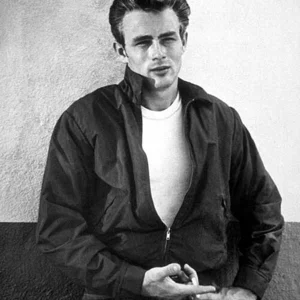
A major Soviet filmmaker of the 20th century, creator of a contemplative and spiritual body of work. His films such as Andrei Rublev, Solaris and Stalker left a profound mark on the history of auteur cinema.
Andrei Tarkovsky(1932 — 1986)
Andrei Arsenyevich Tarkovsky
6 min read
Frequently asked questions
Famous Quotes
« Cinema is a mosaic made of time.»
« To link art with God, that is the true function of the artist.»
Key Facts
- Born in 1932 in Zavrazhye (USSR), son of the poet Arseny Tarkovsky
- Released his first feature film Ivan's Childhood in 1962, winning the Golden Lion at Venice
- Directed Solaris (1972) and Stalker (1979), adaptations of philosophical science fiction
- Left the USSR in 1982 and published his theoretical essay Sculpting in Time
- Died in exile in Paris in 1986, after The Sacrifice, filmed in Sweden
Works & Achievements
First feature film, about a young scout during the Second World War. Winner of the Golden Lion at Venice, it immediately revealed Tarkovsky's talent.
An epic about an icon painter in medieval Russia, long censored in the USSR. Today it is considered a masterpiece of world cinema.
A science-fiction film in which a space station brings the astronauts' memories back to life. A poetic and deeply human response to the film *2001: A Space Odyssey*.
A highly personal film blending childhood memories, dreams and archival footage. Its free-flowing structure is disorienting yet fascinating.
The journey of three men toward a mysterious forbidden “Zone” where a wish is said to be granted. Legendary for the hardship of its shooting and a cult classic of science fiction.
Shot in Italy, this film about a Russian writer far from home expresses Tarkovsky's own homesickness.
His final film, shot in Sweden, about a man willing to give up everything to avert a global catastrophe. A spiritual testament.
A book in which Tarkovsky explains his vision of cinema, an art that “sculpts time.” A key reference for film students.
Anecdotes
Tarkovsky's father, Arseny Tarkovsky, was a great Russian poet. The filmmaker wove his father's poems, read aloud, into several of his films such as *Mirror*, *Stalker* and *Nostalghia*: it is his own family history that echoes on screen.
The shooting of *Stalker* (1979) was a nightmare: a large portion of the film stock, poorly developed in the lab, was lost, forcing the crew to reshoot almost everything. The scenes were filmed in Estonia near a chemical plant and a polluted river, and several crew members, including Tarkovsky himself, would fall gravely ill in the following years.
*Andrei Rublev* (1966), a film about an icon painter of the Russian Middle Ages, was deemed too dark and too religious by the Soviet authorities. It remained banned or shown only sparingly for several years before it could truly be released, which infuriated the director.
His very first feature film, *Ivan's Childhood* (1962), won the Golden Lion at the Venice Film Festival when he was only 30. This international award instantly made him a filmmaker recognized around the world.
In 1984, during a press conference in Milan, Tarkovsky announced that he would not return to the USSR and would remain in the West. This exile separated him from his young son, who was left stranded in the Soviet Union and whom he was able to reunite with only at the very end of his life, shortly before his death in Paris.
Primary Sources
For the first time in the history of the arts, man has found a way to capture time directly. The filmmaker, in a sense, sculpts in time as a sculptor carves in marble.
The purpose of art is to prepare man for death, to plough and sow his soul, to make it capable of turning toward the good.
I still don't know what cinema is. Perhaps a way to stop time, to hold it back, to keep it forever.
I declare that I will not return to the Soviet Union. I am now a man without a homeland, but I remain a Russian artist.
Key Places
Tarkovsky's native village, on the banks of the Volga, later partly submerged by a reservoir. The watery, rural landscapes of his childhood return again and again throughout his films.
It was in Moscow that Tarkovsky studied filmmaking at the VGIK, the great Soviet film school, and later worked at the Mosfilm studio. The heart of his Soviet career.
Site of the difficult shooting of Stalker, near old industrial installations and a polluted river. Its abandoned landscapes give the film its strange, haunting atmosphere.
An Italian spa village with steaming hot-water pools, the setting of the film Nostalghia. Here Tarkovsky filmed his homesickness, no longer able to return to Russia.
The city where Tarkovsky, suffering from cancer, spent his final months in exile and died in late 1986.
A cemetery near Paris where Tarkovsky rests, alongside many Russian émigrés. His epitaph describes him as “the man who saw the angel.”
Liens externes & ressources
Références
Œuvres
L'Enfance d'Ivan
1962