Imaginary dialogue between Hubert de Givenchy and Audrey Hepburn
by Charactorium · Audrey Hepburn (1929 — 1993) · Performing Arts · 6 min read
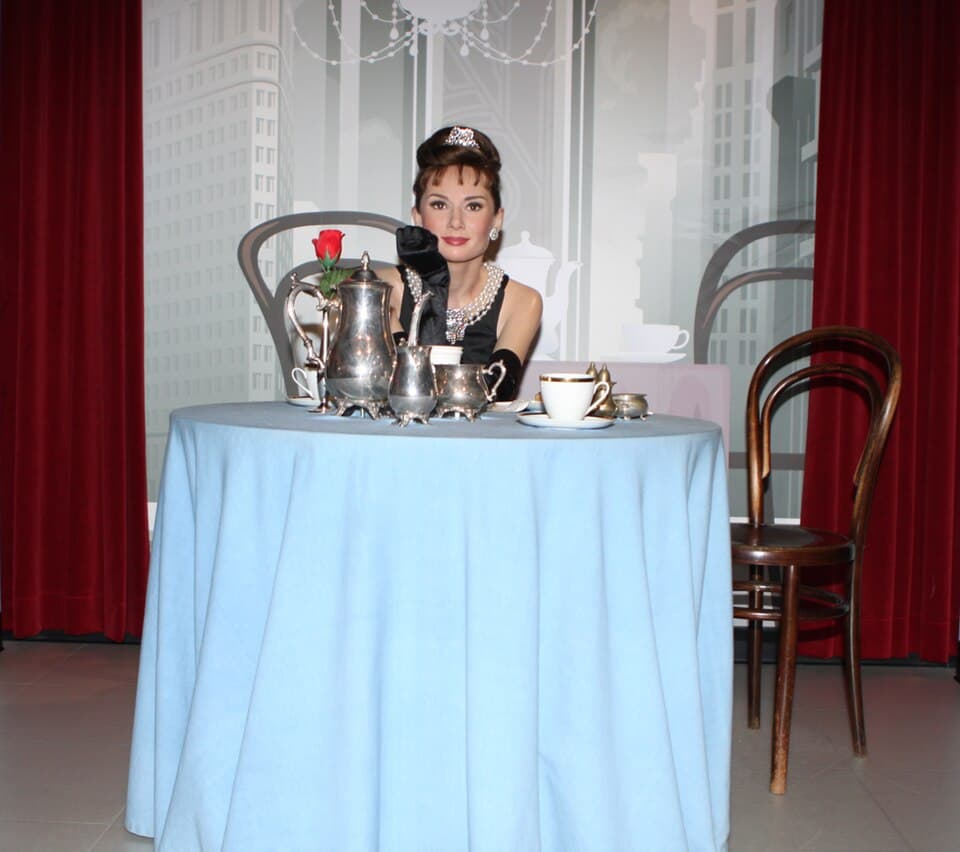
It is in the garden of La Paisible, her home in Tolochenaz by the lake, that Hubert de Givenchy meets Audrey this autumn 1992. The light falls on the rosebushes she prunes herself, secateurs in hand, an old sweater over her shoulders. They have known each other since 1954, since that first dress tried on in his Parisian atelier, and the couturier has not come to see the icon but the friend — the one who, between missions for children, finally returns to her patch of earth. He puts down his notebook, she smiles, and the conversation begins where it always stops between them: far from the spotlights.
—Audrey, you've so often told me about the hunger in Arnhem. What remains in you from that winter of 1944?
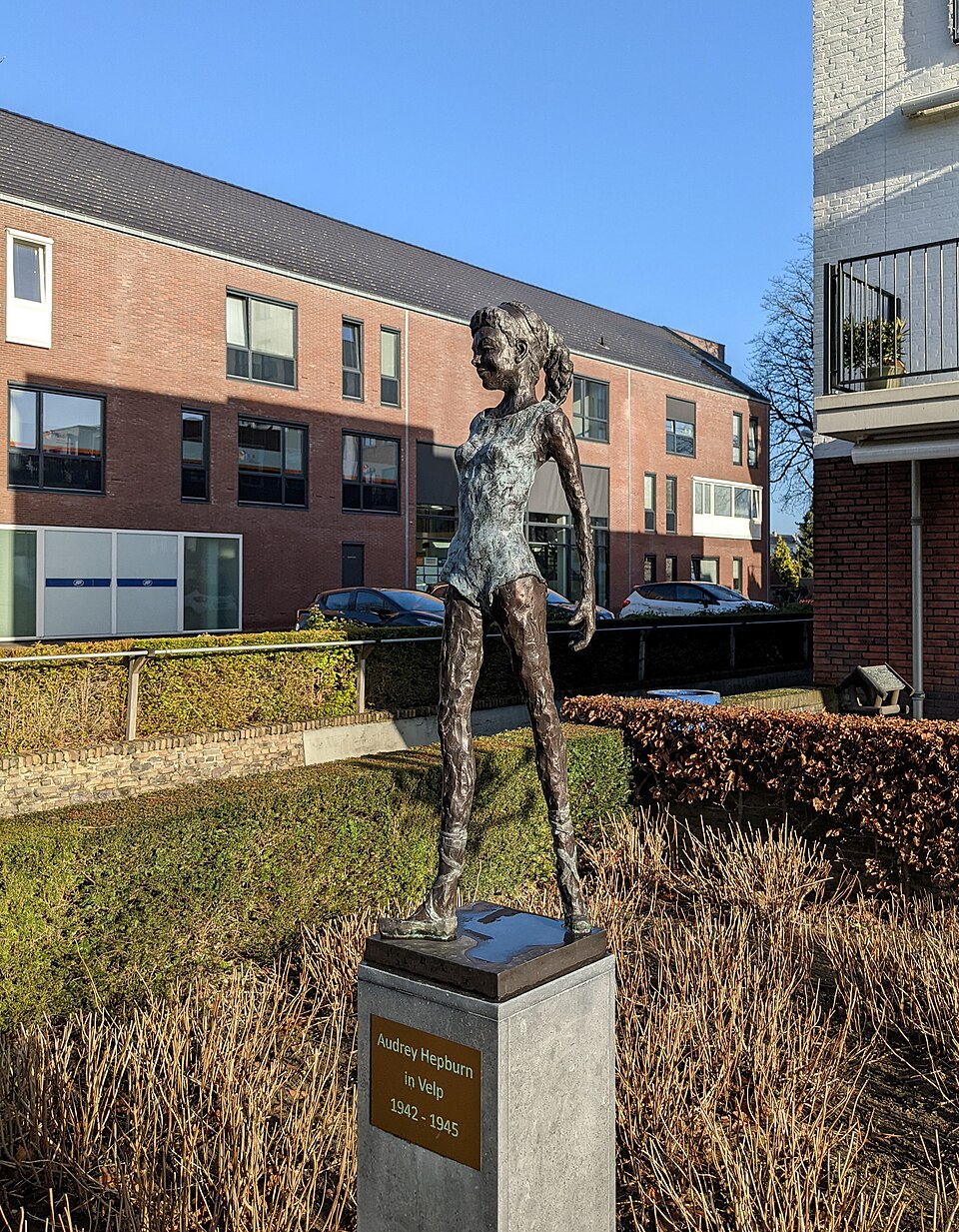
Everything, Hubert. One never truly gets rid of hunger; it inhabits you like a second skin. That winter in the Netherlands, there was nothing left: we ate tulip bulbs, can you imagine, those flowers we now give in shop windows. I spent entire days in bed to save my strength. I was fifteen, and my body stopped growing. People think it made me fragile; it's the opposite. It taught me what a piece of bread could mean to a child. When you see me eat so little, it's not model coquetry — it's simply that I never learned to waste again.
One never truly gets rid of hunger; it inhabits you like a second skin.
—Before our paths crossed, there was that princess on a Vespa. How did a first major role earn you the Oscar?
I didn't understand any of it, and perhaps that's what saved me. Roman Holiday was my first real film, in 1953, and William Wyler let me be clumsy, curious, alive. Rome did the rest — the Trevi Fountain, the Mouth of Truth, that scooter I clung to for real. That princess who escapes to live a day of freedom — it was a bit like me discovering a world after the war. When they handed me that Oscar, I was trembling so much I almost left the stage through the wrong door. I didn't feel I deserved it; I'd had the immense luck of being in the right place, in a Europe beginning to breathe again.
That princess who escapes to live a day of freedom — it was a bit like me after the war.
—You repeated your dance exercises at dawn. How did your classical training shape you even in your acting work?
Dance was my first dream, and my first heartbreak. In London, with Marie Rambert, I understood that war and malnutrition had stolen the body needed to be a prima ballerina. But nothing was lost. The barre in the morning, the discipline, that way of holding your back straight and counting every gesture — I brought it to the sets. They found me rigorous, almost too much: I arrived knowing every line, every movement. You, who saw me try on your dresses for hours without complaint, know where that comes from. A dancer doesn't argue with rehearsal. And if I love flat ballet shoes so much, it's not a fashion: they are the shoes of a girl who never stopped wanting to dance.
A dancer doesn't argue with rehearsal.
—Let's talk about us, if you will. Do you remember that first fitting in 1954, when you walked into my atelier?
How could I forget? You were expecting Katharine Hepburn, the great star, and a skinny girl in trousers pushed open your door! You were almost disappointed, admit it. And then we laughed, and something began that lasted my whole life. You understood before I did what I looked like: that straight silhouette, that neck, those slightly too prominent shoulders that needed to be dressed without hiding them. You didn't disguise me, you revealed me. Our clothes never shouted; they fell silent to let the wearer speak. That is your genius, and that's why I never wanted anyone else. You gave me armor that looked like simplicity.
You didn't disguise me, you revealed me.
—That little black dress from Breakfast at Tiffany's, in 1961 — did you know it would become such an emblem?
Absolutely not, and fortunately! A dress that knows it's important becomes ridiculous. We only wanted Holly Golightly to look like a young New York woman, a little lost, composing an elegance to give herself courage. The black, the long lines, those oversized sunglasses behind which you can cry without being seen — it was modesty, not glamour. The haute couture you gave me, I wore as protection. People remember the image of a self-assured woman in front of the jeweler's window; I see a fragile girl playing at being strong. Perhaps that's why the dress spoke so much to women: each recognized her own difficult morning.
The black and those oversized sunglasses — it was modesty, not glamour.
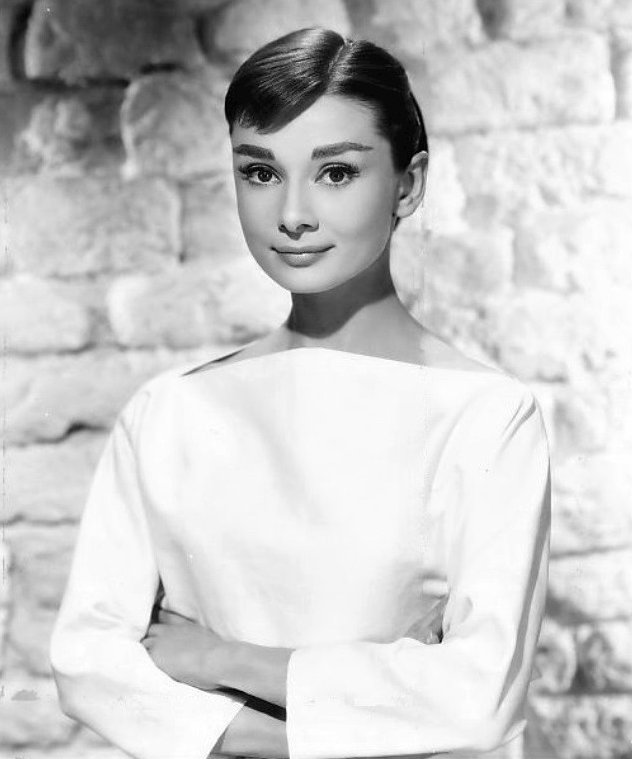
—Far from the cameras, here at La Paisible, how do you spend your days? It's hard to imagine you in an evening gown in this garden.
You know me: here, it's trousers, turtleneck, and boots full of dirt. I garden, I cook simple pasta, chocolate to finish, and I read a lot. In the evening, no galas or premieres: dinners with my sons, a few friends, you when you visit. I've always kept the two worlds separate — the woman dressed for the city and the one who truly lives. The star system wanted to own me day and night; I refused to give it my evenings. This house is my Arnhem found again, but happy this time: a garden, peace, enough to eat. I think everything I sought after the war was exactly this — a peaceful place where fear would never return.
This house is my Arnhem found again, but happy this time.
—Since 1988 you've been traveling tirelessly for UNICEF — Ethiopia, Somalia. What drives you, my friend?
A debt, Hubert. Nothing more, nothing less. After the war, hands and a voice from outside extended milk, food, blankets to us — that very organization, then called something else. I was one of those saved children. So when I was asked to be a voice for children who have none, I could not say no. In Ethiopia, I saw my own adolescent starving face in the eyes of those little ones. I am neither a doctor nor a politician; I only know how to tell what I see, so that the world does not look away. As long as my legs carry me, I will go. It's the only way I have to give back what was given to me.
A debt, Hubert. Nothing more, nothing less.
—The Academy has just awarded you the Jean Hersholt Humanitarian Award for this commitment. What does such recognition mean to you, who flee honors?
You know me well enough to know that statuettes no longer make me tremble like in 1953. But this one, I accept willingly, because it doesn't reward a film: it shines a light on children, and that light I steal with joy. Every time I'm talked about for UNICEF, people talk a little about Ethiopia, Bangladesh, Vietnam. So let them give me all the prizes they want, if it fills one more truck with food! True luxury is not being applauded; it's holding in your arms a child who weighs what they should weigh. The rest — glory, elegance — you know better than anyone how fragile and vain it is.
That light, the one shone on children — I steal it with joy.
—You were offered roles of queens and socialites, yet you said you preferred simple heroines. Why this loyalty?
Because I never felt like a great lady, despite your dresses! The characters I loved most were young girls becoming someone: the flower girl in My Fair Lady, the princess who runs away, later that blind woman hunted in Wait Until Dark. Beings who must find their strength without it being given at birth. I think I understood them from the inside, because I too had to reinvent myself after the war, without certainty of succeeding. The public sometimes wanted to make me a symbol of cold elegance; I was never that. I only tried to be true, a little clumsy, very human. That's what I wanted to leave on screen.
The characters I loved most were young girls becoming someone.
—One last friend's question: between the hungry little girl of Arnhem and the woman of today, what thread do you still hold?
The same thread, Hubert: gratitude. The child shivering from hunger and the woman pruning her roses in this garden are one person, and they made a promise: never to forget. I believe in the good in people — I must believe it, because I've seen too many terrible things to believe otherwise. That's what I will soon say, with simple words, to those who decide the fate of the world. Everything life has given me — cinema, your dresses, this house, my children — only has meaning if I give it back a little. The beauty you dress so well is worth nothing if the heart behind it remains closed. That is my only luxury: having kept an open heart.
I believe in the good in people — I've seen too many terrible things to believe otherwise.
This imaginary interview was generated by artificial intelligence from sources documented in Audrey Hepburn's profile. It dramatises what the figure might have said based on what we know about them, but does not constitute attested historical testimony. For primary sources and factual documentation, refer to the full profile.