Imaginary interview with Audrey Hepburn
by Charactorium · Audrey Hepburn (1929 — 1993) · Performing Arts · 6 min read
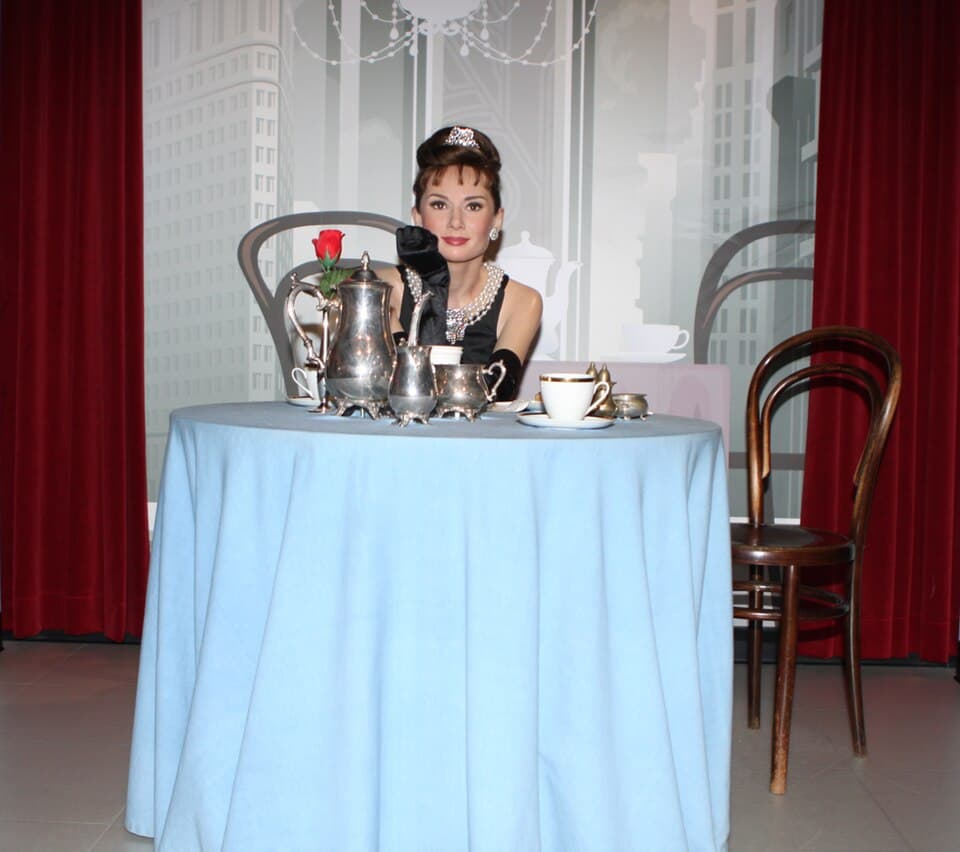
Tolochenaz, canton of Vaud, a late summer afternoon. In the garden of “La Paisible,” among the rosebushes and the smell of cooling bread, Audrey Hepburn welcomes us in cigarette pants and ballet flats, a small dog at her feet. She speaks softly, chooses her words like picking flowers, and laughs easily.
—Do you remember what the war left in your body and memory?
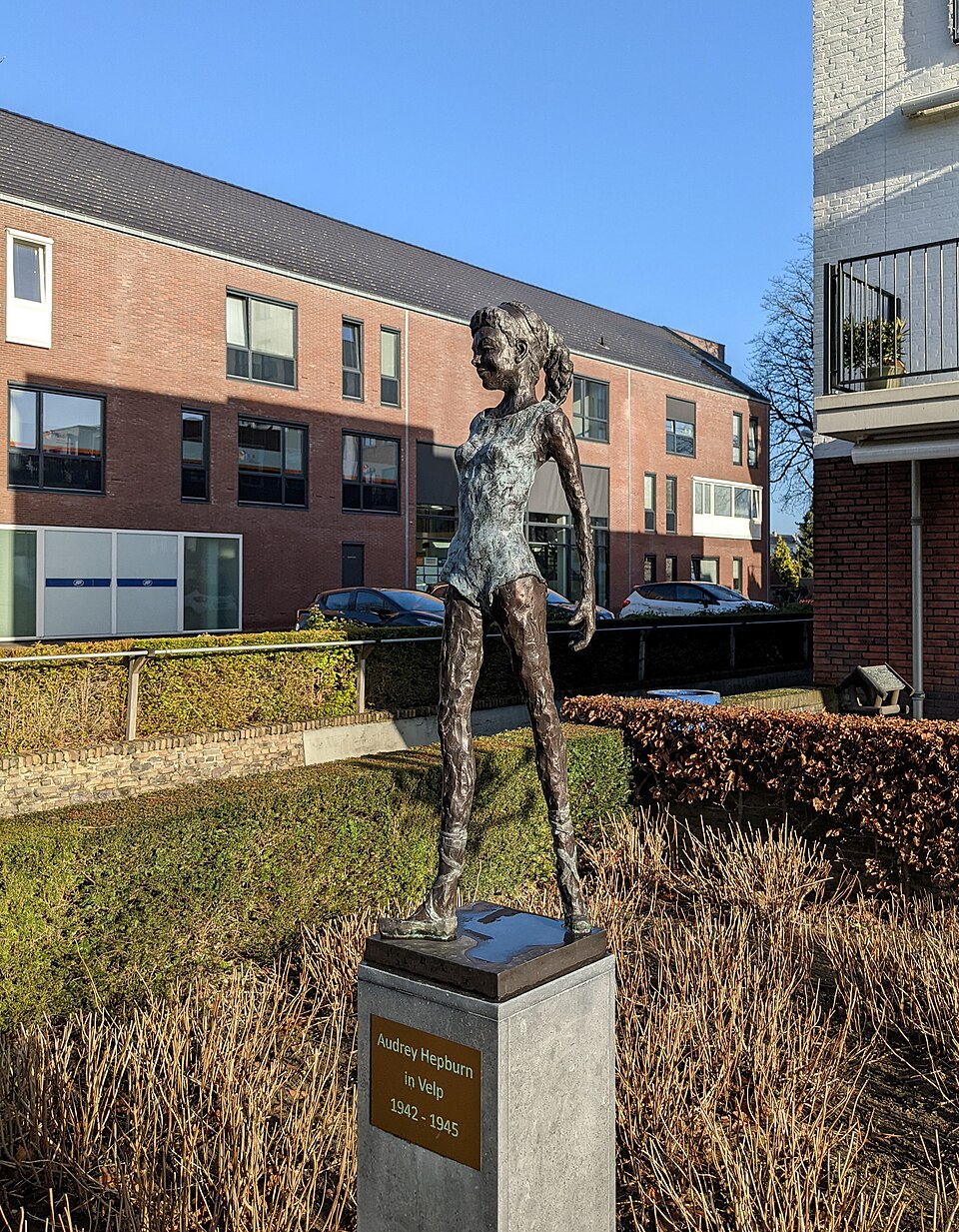
I remember above all the cold and the empty stomach. We were in Arnhem, my mother and I, in those occupied Netherlands where the winter of 1944 seemed never to end. It's called the Hongerwinter, the Hunger Winter, but a word doesn't say much when you have nothing to put in your mouth. As I later recounted: “We ate tulips — the bulbs — because there was nothing else. I will never forget what it means to be hungry.” We ground those bulbs into a sort of bitter flour. I was fifteen, and my body never quite forgot: all my life, I remained thin, fragile of nerve, unable to waste a single crumb of bread.
A word doesn't say much when you have nothing to put in your mouth.
—How did that teenage hunger shape the woman you became?
It taught me that nothing is guaranteed, and that the beauty of the world can collapse in a season. In the spring of 1945, after liberation, trucks arrived with food, milk, blankets — it was the predecessor of UNICEF feeding children like me. I stood in line, dirty and hungry, and a stranger's hand handed me something to live on. You can never thank those hands enough. That's why I never tolerated contempt for the hungry: I was one of them. Much later, in Hollywood, when people raved about my “elegant” figure, I smiled thinking that thinness was born of famine, not a diet.
A stranger's hand handed me something to live on. You can never thank those hands enough.
—What did that runaway princess who launched your career mean to you?
Roman Holiday, in 1953 — I felt like I was playing my own liberation. My character, a princess suffocated by protocol, escapes for a day in Rome: she cuts her hair, eats an ice cream on the steps, climbs behind a journalist on a Vespa and zooms between fountains. That scooter ride, the wind, the horns, the alleys flashing by — it was exactly the dizziness I felt myself, a young unknown suddenly entrusted with a big film. In the morning, they screwed a chignon and a little tiara onto my head for the princess; in the afternoon, I became again that kid who couldn't believe it. When the Oscar came for that very first role, I thought it was an office mistake.
—They say a famous novelist noticed you even before that film. How did it really begin?
Before Rome, there was Colette. I was shooting a bit of film on the Coast, and this magnificent old lady, confined to an armchair, pointed at me saying she had found her Gigi. That was in 1951, for Broadway. Imagine: I barely knew how to act, could hardly speak in front of an audience, and I was entrusted with the title role in New York on the sole intuition of a novelist. I was originally a dancer, trained in London with Marie Rambert, and I thought my body more gifted than my voice. Colette saw something else. Without that encounter, there would have been no princess, no Rome, no rest — I might have stayed in the corps de ballet, in the back row.
I thought my body more gifted than my voice. Colette saw something else.
—How was that little black dress born, becoming one of the century's fashion symbols?
It was born of friendship. As early as 1954, I had met Hubert de Givenchy — he was expecting another Hepburn, Katharine, and he came across me, that unknown string bean. We never left each other. For the opening of Breakfast at Tiffany's, in 1961, he designed that simple long black dress, which my character, Holly Golightly, wears at dawn in front of Tiffany's window, coffee in hand. Nothing flashy: a clean line, gloves, huge black sunglasses to hide from the world. That, to me, is the real haute couture — not dressing up, but finding the most fitting form. Hubert dressed my silhouette, but he also protected my shyness.
The real haute couture is not dressing up, but finding the most fitting form.
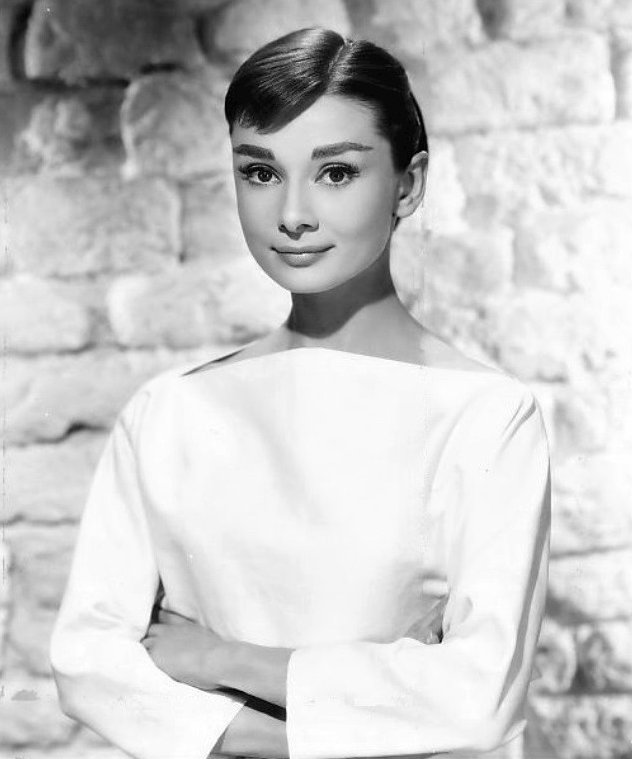
—You became a style icon at a time when image and advertising were gaining immense power. How did you experience that?
With a bit of mischief and a lot of wariness. We were in the midst of the consumer society: they sold glasses, chignons, “Hepburn” dresses, and I watched my own face multiply on posters as if it no longer belonged to me. It amused and worried me at the same time. I always thought, and I once told Paris Match: “A woman's beauty is not in her clothes or her face. It is in her eyes, for that is the door to her heart.” They could copy my ballet flats and black glasses; the gaze, however, cannot be copied. Off camera, moreover, I lived in turtlenecks and white shirts, very far from the glamour sold under my name.
—In 1988, you left everything for UNICEF. What drove you to those missions?
A debt, simply. As a hungry child, I received what these children cry out for today, and I could not sit in my Swiss garden pretending to ignore it. My first official mission took me to Ethiopia, in the aftermath of a terrible famine. There, facing those little bodies I recognized — because I had had that belly — something was sealed. I wrote to UNICEF: “I fight for children who have no voice, because hands and a voice were extended to me when I needed them, after the war.” I did not feel generous; I was repaying. Everywhere I took a notebook where I wrote down what I saw, so that the numbers remained faces.
I did not feel generous; I was repaying.
—After crossing so many camps and crisis zones, how did you keep faith in humanity?
I am often asked that, as if seeing the worst should kill hope. It's the opposite. From Bangladesh to Somalia, from Vietnam to Honduras, I saw mothers sharing their last handful of rice, teachers holding class under a tarp. Before the UN Council, in 1992, I said what I truly believe: “I believe in the goodness of people. I must believe it, because I have seen too many terrible things to believe otherwise.” That is not a platitude. When the Academy gave me the Jean Hersholt Humanitarian Award that year, I was already ill; it mattered less than a child who, somewhere, had eaten their fill thanks to a vaccine or a sack of flour.
—You retired very early from Hollywood to Switzerland. What were you seeking in Tolochenaz?
Silence, and a garden. From the sixties, I settled in Tolochenaz, in this house I called “La Paisible” — the name said it all. The American studio system once owned you body and image; they decided your roles, your hairstyle, almost your friendships. I wanted to plant my own tulips, the ones you look at instead of eat. In the evening, here, I don't entertain producers: I make pasta or a Belgian dish from my childhood, read late, listen to my sons. Happiness, for me, never wore the face of a gala premiere, but that of a simple table surrounded by people I love.
I wanted to plant my own tulips, the ones you look at instead of eat.
—Many imagine you as a dazzling woman of the world. What does an ordinary day look like for you, far from the cameras?
Very little, and that's the whole luxury. I get up early — old reflex from shooting mornings when they would make me up for hours — and often start with some dance exercises, that discipline I never left since London. Then the garden, the market, the kitchen. I dress in almost nothing: cigarette pants, a turtleneck, my ballet flats that were so criticized when all women teetered on heels. I kept, from the hunger of old, a frugal table: vegetables, a little cheese, Belgian chocolate as a reward. Glamour, you see, is a costume you take off in the evening with relief.
This imaginary interview was generated by artificial intelligence from sources documented in Audrey Hepburn's profile. It dramatises what the figure might have said based on what we know about them, but does not constitute attested historical testimony. For primary sources and factual documentation, refer to the full profile.