Imaginary dialogue between Christiaan Huygens and Baruch Spinoza
by Charactorium · Baruch Spinoza (1632 — 1677) · Philosophy · 5 min read
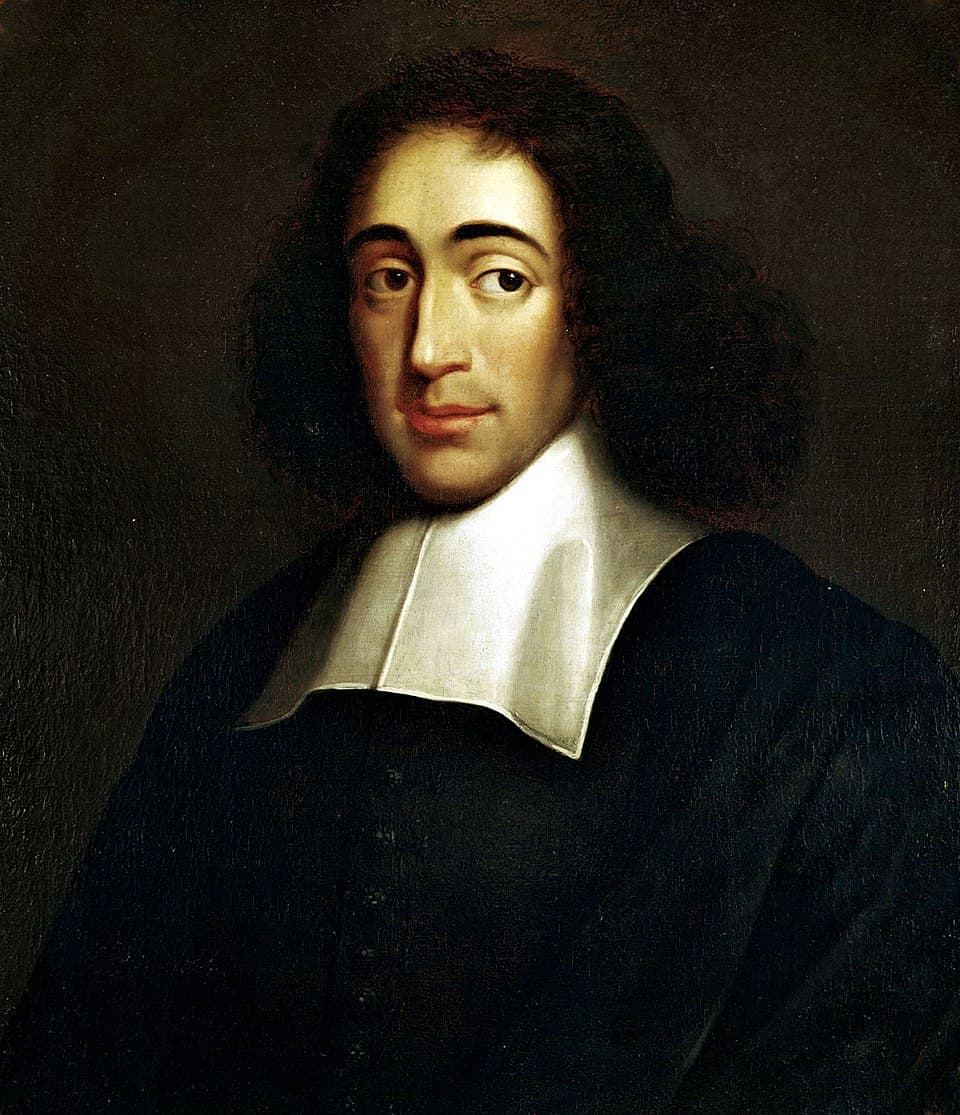
It is in a modest room on the Paviljoensgracht in The Hague that one autumn evening in 1676 Christiaan Huygens comes knocking on Baruch Spinoza's door. The scientist, having returned from Paris with failing health, climbs the narrow stairs to the workshop where the dust of glass and the smell of cold tobacco still linger. The two men have known each other for a long time: Spinoza had polished lenses for him that Huygens considered among the best in the Dutch Republic. This evening, the man of telescopes has not come for a lens, but to understand the man who, behind the polishing lathe, has built a system that the entire Republic whispers about.
—Mynheer Spinoza, you once delivered lenses to me that I consider the finest in the Dutch Republic. How did such a craftsman come to philosophy?
You flatter me, Huygens, you who scrutinize Saturn with my lenses and who would judge them better than anyone. But do not separate the one from the other: polishing a lens and polishing the understanding proceed from the same gesture. Both seek the right curve through which light passes without disturbance. I earn my bread at the lathe in the morning, I think in the afternoon, and I hardly distinguish between those hours. This trade gives me what no patron could offer: to depend on no one. A man who owes his bread to a master must also keep silent about what he thinks. I cough, certainly—this glass dust eats at my chest—but I breathe as a free man.
Polishing a lens and polishing the understanding proceed from the same gesture.
—They say Heidelberg offered you a chair in 1673, with complete freedom to philosophize. Why decline what another would have seized with both hands?
You know better than I, you who accepted Paris and its Academy, what a position demands in return. The Elector promised me the broadest freedom to philosophize—provided, it was added, that I not undermine the established religion. But what freedom is that, which stops where one begins to think truly? A chair would have bound me with duties, lessons, prudence. I preferred my lathe and my room. People think me poor; I think myself sovereign. You yourself, in your gardens at Voorburg, once saw me content with little. I have not changed: I want fewer possessions in order to have more thoughts.
People think me poor; I think myself sovereign.
—Allow a harsher question among scholars: at twenty-three, your community struck you with the herem. Did that curse ever leave you?
The text was more violent than you can imagine: they cursed me day and night, when I lay down and when I rose, and forbade anyone to approach me. I was twenty-three. Many expected me to beg, to return. I asked for nothing. Why seek the lifting of a sentence pronounced by fear? They took away a name, Baruch; I gave myself another, and I continued on my path. That rupture, believe me, was not a misfortune but a deliverance: it tore me away from received opinions and forced me to hold as true only what my reason demonstrated. A man banished from everything has nothing left but to think freely.
They took away a name; I gave myself another, and I continued on my path.
—Did you never feel the temptation of rancor toward those in Amsterdam who drove you out of the synagogue?
Hatred is not conquered by hatred, Huygens, but by understanding. Those who cursed me acted according to their nature and their fears, just as a stone falls according to its nature. To understand them is to cease hating them. I grew up among those Sephardic merchants who had fled the Iberian Inquisition; they knew the price of the stake and feared that one of their own might draw suspicion upon all. I do not excuse them, I explain them—and to explain a thing to myself is to free myself from it. Resentment is a sadness, and all sadness diminishes our power to act. I prefer the joy of understanding to the bitterness of complaining. That, I believe, is the only revenge that elevates the one who exercises it.
Hatred is not conquered by hatred, but by understanding.
—Let us come to that manuscript you keep under lock and key. It is whispered that you demonstrate God there in the manner of geometers. The scientist in me would like to understand.
You touch the heart, you who handle demonstration better than anyone. Yes, I wrote my Ethics more geometrico: definitions, axioms, propositions, demonstrations, as Euclid treated triangles. Why? Because the passions of men cloud everything as soon as one speaks of God and the soul, and only geometric rigor imposes silence on opinions. And what I demonstrate will surprise you: there exists only one substance, infinite, which you may call God or Nature—Deus sive Natura. Everything that is, is in it. Your Saturn, my lenses, your thought and mine are merely its modes. That is why I do not publish: they would cry 'atheist' at the one who sees God everywhere.
There exists only one substance, which you may call God or Nature.
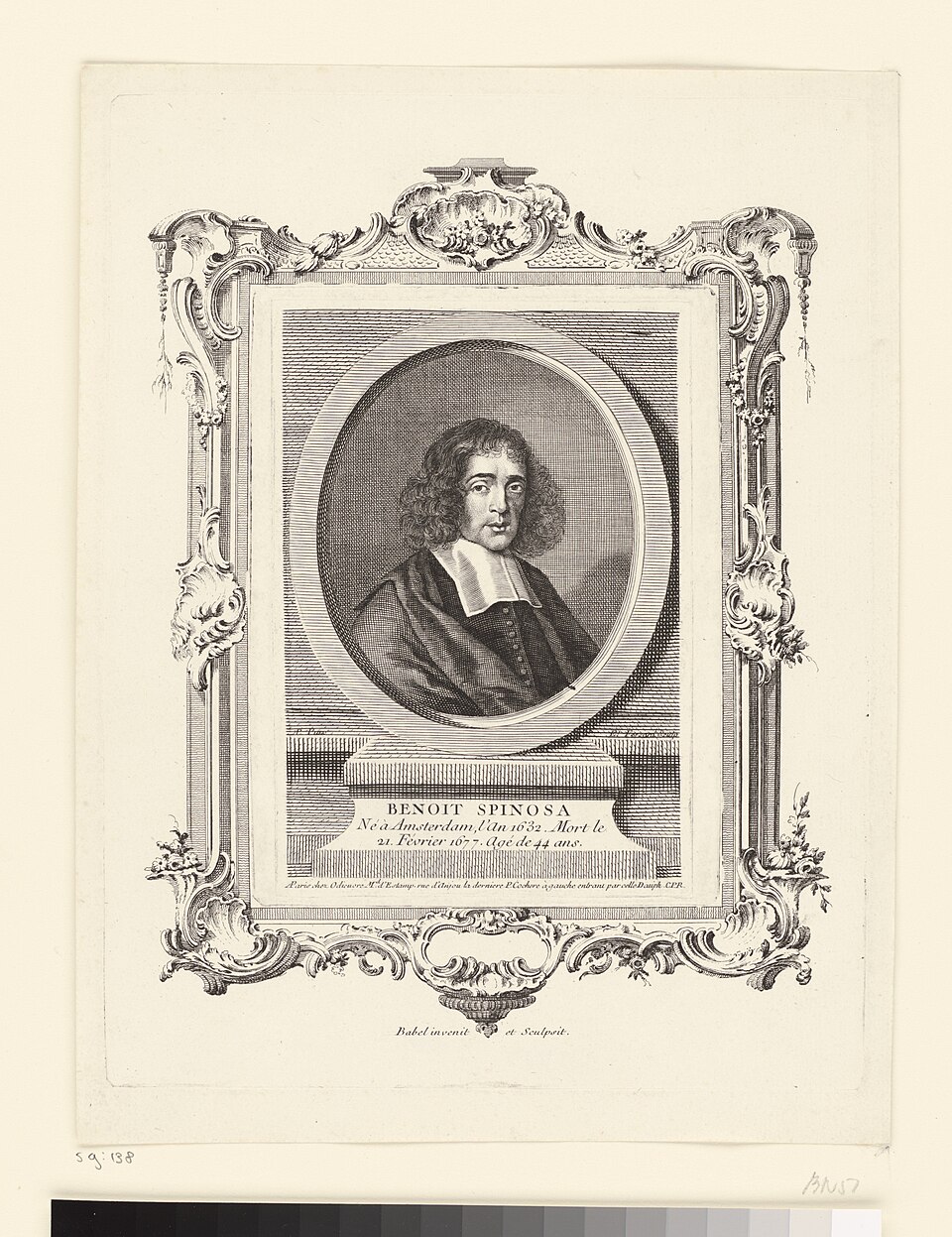
—If God is identical with Nature and its laws, what then remains of our freedom? Your lenses obey the laws of optics; is it the same with our souls?
An excellent objection from a geometer. Yes, man believes himself free because he is ignorant of the causes that determine him—just as a thrown stone would believe, if it thought, that it chose its flight. True freedom is not to escape necessity, but to understand it. The enslaved man is the one whose affects lead him without his knowledge: fear, hope, anger toss him about. The free man is the one who knows the causes of his passions and, by that very knowledge, ceases to suffer them. Each thing strives to persevere in its being—I call this striving the conatus. To understand this striving, to follow it according to reason, that is the only freedom granted to us. It does not break the laws; it embraces them.
True freedom is not to escape necessity, but to understand it.
—Your Tractatus Theologico-Politicus, published anonymously in 1670, was immediately banned. You knew the danger. Why take such a risk?
I knew it, and that is precisely why it had to be written. See where we are: people are imprisoned for an opinion, books are burned, piety is confused with blind obedience. I wanted to show that the end of the state is not to turn rational men into beasts or automata, but to allow them to use their free reason safely. Theology commands obedience, philosophy seeks truth: let them cease to be mixed, and peace will reign. I published anonymously, through a cautious bookseller—you see that prudence is not absent from my philosophy. But the book was condemned on all sides, by Calvinists as well as others. No matter: what is just always defends itself, in the long run.
Let the state not turn rational men into beasts or automata.
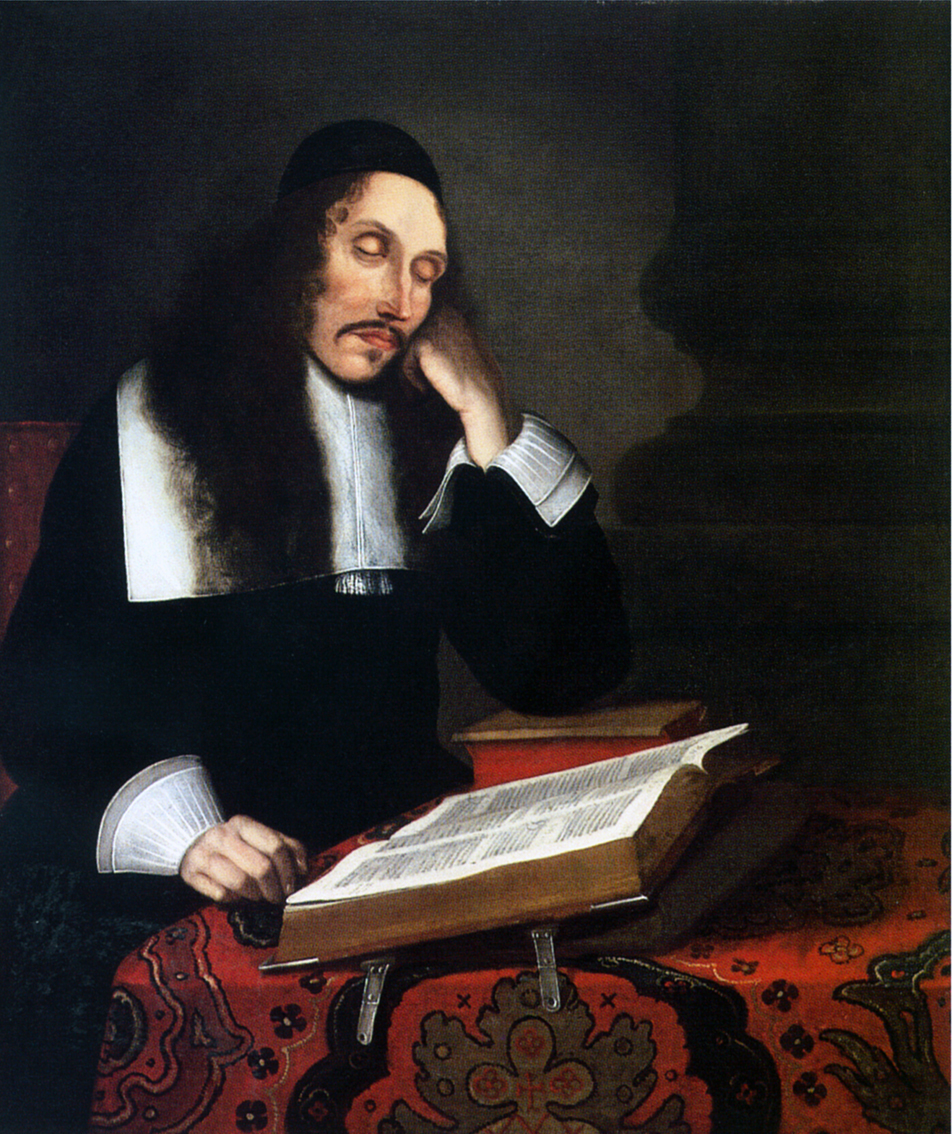
—You read the Scriptures as I would a theorem, you say. Is that not precisely what you are most harshly reproached for?
No doubt, and I accept it. I studied the Hebrew Bible from childhood, at the synagogue, before subjecting it to examination. But a text is read according to its history, its language, its authors and their time—not according to what we wish to find in it. Moses spoke to a people just out of servitude, in images they could understand. To seek physics or metaphysics there is to be mistaken. Scripture teaches obedience and charity, not the truth of natural things. That, I am poorly forgiven for, because many live from the contrary. But to give reason its domain and faith its own is to serve both. I do not destroy religion; I deliver it from the superstition that smothers it.
Scripture teaches obedience and charity, not the truth of natural things.
—In that fateful year of 1672, when the mob tore the De Witt brothers to pieces just steps from here, it is said that you wanted to go out and confront the murderers. Is that true?
So you have heard it even in Paris. Yes: that day, I lost more than a protector. Johan De Witt was the man of freedom and the Republic, and the Orangist mob tore him apart like an animal, him and his brother. I was beside myself. I wanted to go out and post a placard—Ultimi barbarorum, the last of the barbarians—at the very site of the carnage. My landlord, wiser than my anger, locked the door and kept me inside. He saved my life, for the mob would have torn me apart in turn. That was, I believe, the only moment when my reason entirely gave way to affect. Proof, my friend, that knowing one's passions does not always exempt one from feeling them.
That was the only moment when my reason entirely gave way to affect.
—The hour is late and your cough worries me. Before I leave, tell me: what are you seeking, at bottom, in all this labor of thought?
The same thing you seek at the end of your telescope, Huygens: a joy that does not pass. I once wrote that after experiencing how vain and fragile everything ordinarily pursued—wealth, honors, pleasures—is, I resolved to seek whether there existed a true good, capable of procuring a continuous and supreme joy. I believe I have found it: it is the knowledge of the union of the mind with the whole of Nature. To understand God, that is, Nature, is to love it; and that love depends on no fortune, no patron, no mob. My chest will soon betray me, I know. But what I have understood, no herem, no edict, no riot can take from me. That is my blessedness—and it suffices for me.
To understand Nature is to love it; and that love depends on no fortune.
This imaginary interview was generated by artificial intelligence from sources documented in Baruch Spinoza's profile. It dramatises what the figure might have said based on what we know about them, but does not constitute attested historical testimony. For primary sources and factual documentation, refer to the full profile.