Imaginary interview with Baruch Spinoza
by Charactorium · Baruch Spinoza (1632 — 1677) · Philosophy · 6 min read
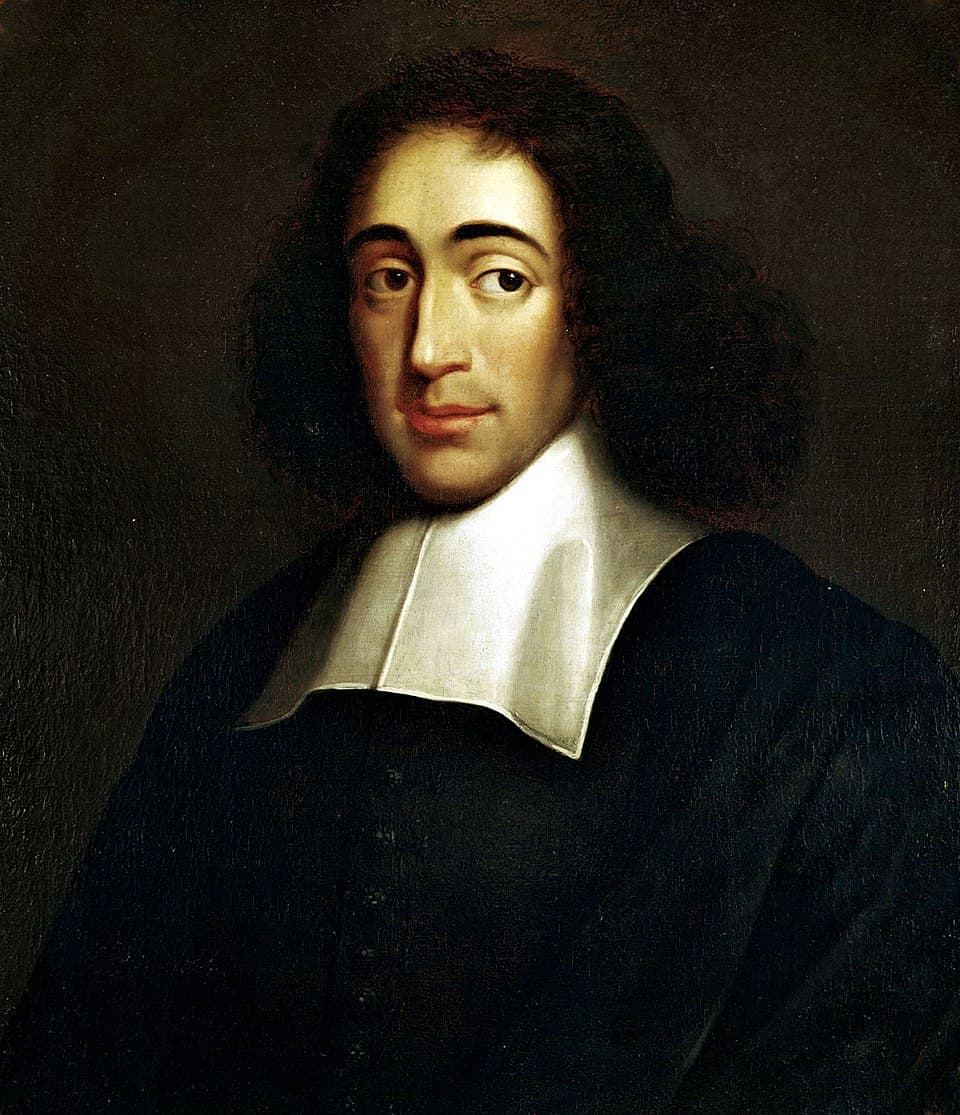
The Hague, winter 1676. In a rented room on the Paviljoensgracht, where the smell of polished glass mingles with that of tobacco, a thin man sets down his grinding lathe to receive us. He speaks quietly, choosing each word as one chooses an axiom, and never complains.
—How did you learn that your community was banishing you?
The sentence was read aloud to me in the Portuguese Synagogue of Amsterdam, that building where I had been taught Hebrew and the Scriptures. I was twenty-three years old. The text of the herem cursed me “by day and by night, at lying down and at rising up” — a formula of such violence that I never heard pronounced on another. My former fellows execrated me “by the judgment of the angels and the sentence of the saints.” I said nothing. I never asked for it to be lifted, nor sought to justify myself. A curse has power only over those who believe in it; I saw in it only the fear of men who confused their own tranquility with the truth of God.
A curse has power only over those who believe in it.
—What does one feel when, so young, one becomes an outcast from one's own people?
At first one thinks it is a loss, and then one discovers a deliverance. That day in July 1656, I ceased to be a merchant, an heir, a son of the Sephardic community; I became merely a man who thinks. My parents had fled the Inquisition of Spain, those marranos who prayed in secret to survive — and now their son was in turn cast out, not by Christians, but by Jews fearing Christians. I kept no bitterness. Sadness diminishes our power of acting; I had no intention of shutting myself up in it. I left Amsterdam for Rijnsburg, near Leyden, and began to write what I could no longer keep silent.
—Why would a philosopher choose to earn his living by polishing glass?
Because a man who depends on a salary also depends on the opinions of the one who pays him. My grinding lathe makes me free. Every afternoon I shape optical lenses for spectacles and microscopes; these are highly sought-after objects in our Provinces, and even Mr. Huygens has deigned to praise the clarity of mine. Manual work calms the mind and feeds the body without subjecting it. They tell me the glass dust I breathe is not good for my chest; perhaps. But I prefer an honest cough to gilded dependence. Polishing a lens, after all, is still seeking to see clearly.
I prefer an honest cough to gilded dependence.
—Yet you were offered a chair at the University of Heidelberg. Why refuse such an honor?
The Elector Palatine, Karl Ludwig, wrote to me in 1673 that I would be granted “the broadest freedom to philosophize.” The promise was fine, and the man sincere. But they added that I should refrain from disturbing the publicly established religion — and who will tell me how far that disturbance goes? A freedom that is hedged in is no longer freedom; it is a revocable permission. I politely declined. My lens workshop in The Hague dictates no program, forbids no thought, summons me to no examination. A professor teaches what is expected of him; I wanted to think what is true. These two tasks are less alike than one might think.
—At the heart of your Ethics, you identify God and Nature. What do you mean by that?
I mean that God is not a king seated outside the world, distributing favors and punishments according to his mood. In the Ethics, written more geometrico, in the manner of geometers, I define him thus: “a being absolutely infinite, that is, a substance consisting of an infinity of attributes, each of which expresses an eternal and infinite essence.” There exists only one substance — that which is in itself and is conceived through itself — and everything that is, is in it. Deus sive Natura: God, that is, Nature. We grasp only two of its attributes, Thought and Extension. To understand this is not to blaspheme; it is to cease loving a God in our own image in order to love the one that is.
Cease loving a God in our own image in order to love the one that is.
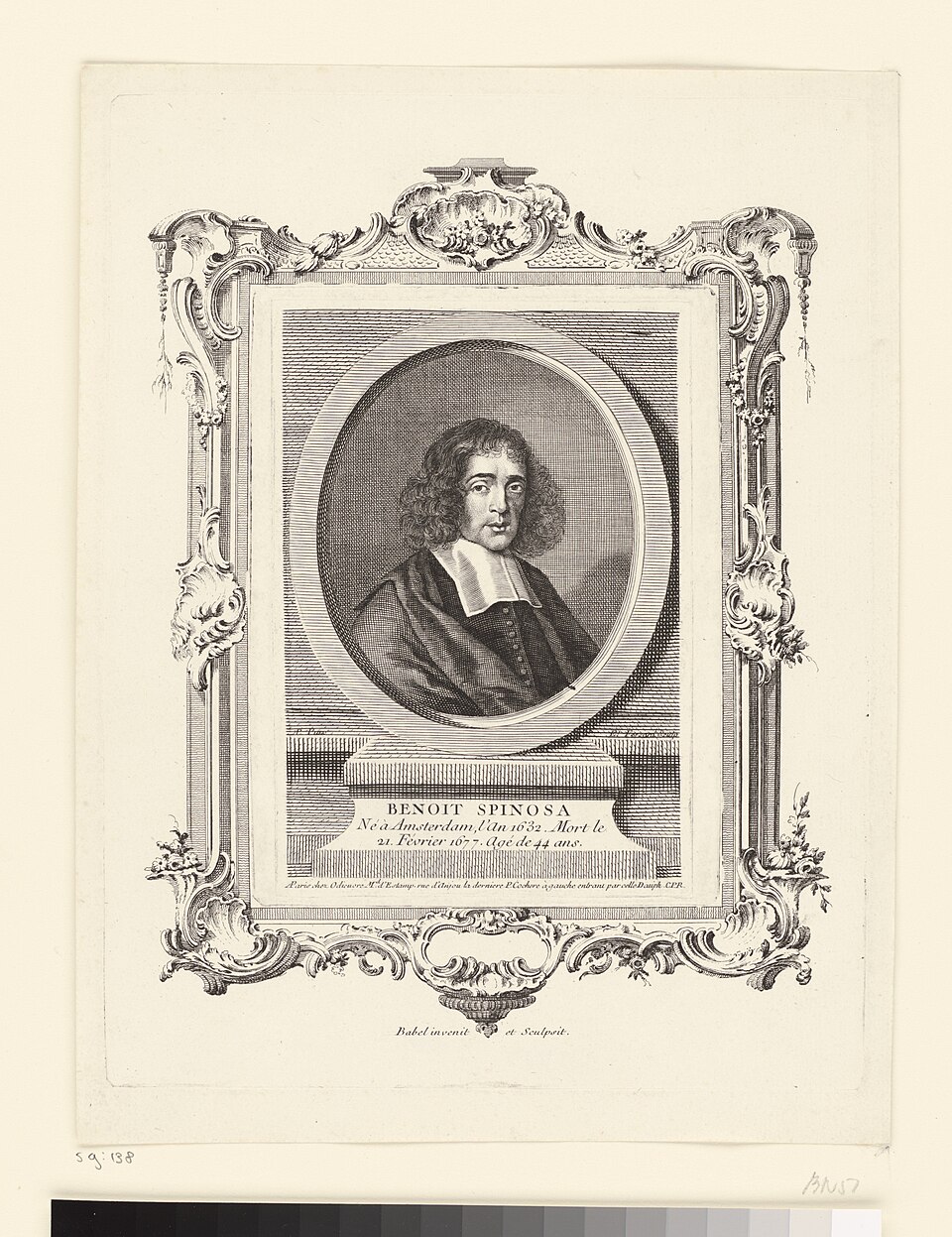
—This idea earned you the label of atheist and libertine. How did you experience that?
They call me libertine, atheist, enemy of all religion — because I refuse a God who gets angry and forgives like a man. What a reversal: I place God everywhere, and they accuse me of denying him! To a certain Albert Burgh, who urged me to doubt myself, I replied that I did not claim to hold the best philosophy, but that I knew I knew the true one — “in the same way that you know that the three angles of a triangle are equal to two right angles.” Geometry is not put to a vote. That is why I kept the manuscript of the Ethics in my chest, finished but unpublished: demonstrated truth does not need to be a martyr.
—What would you say about human freedom, you who speak constantly of necessity?
That the free man is not the one who escapes the laws of Nature — no one escapes them — but the one who understands them. A stone that is thrown, if it thought, would believe itself free to fly. We are the same as long as we are ignorant of the causes of our affects: joy, sadness, desire, which increase or diminish our power of acting. Each thing strives to persevere in its being — I call this striving the conatus, and it is our very essence. To be free, therefore, is not to will against necessity, but to consent to it by knowing it. Servitude begins where understanding ends. That is the entire path my book seeks to open.
—In 1672, the mob massacred the De Witt brothers. Do you remember that day?
How could I forget it? It was the Rampjaar, the year of disaster: Louis XIV was invading our Provinces, and panic looked for scapegoats. In The Hague, an Orangist mob tore apart Jan and Cornelis De Witt, those two statesmen who had served the Republic and freedom. I, who distrust all passion, was beside myself that day. I wanted to go out and post a placard: Ultimi barbarorum — the last of the barbarians. My landlord locked the door and kept the key on him; otherwise, the same mob would undoubtedly have torn me apart. He was right. Anger, even if just, does not resurrect anyone and exposes the wise man uselessly.
I wanted to go out and post a placard: Ultimi barbarorum, the last of the barbarians.
—Two years earlier, your Theological-Political Treatise had already been banned. What did you defend that was so dangerous?
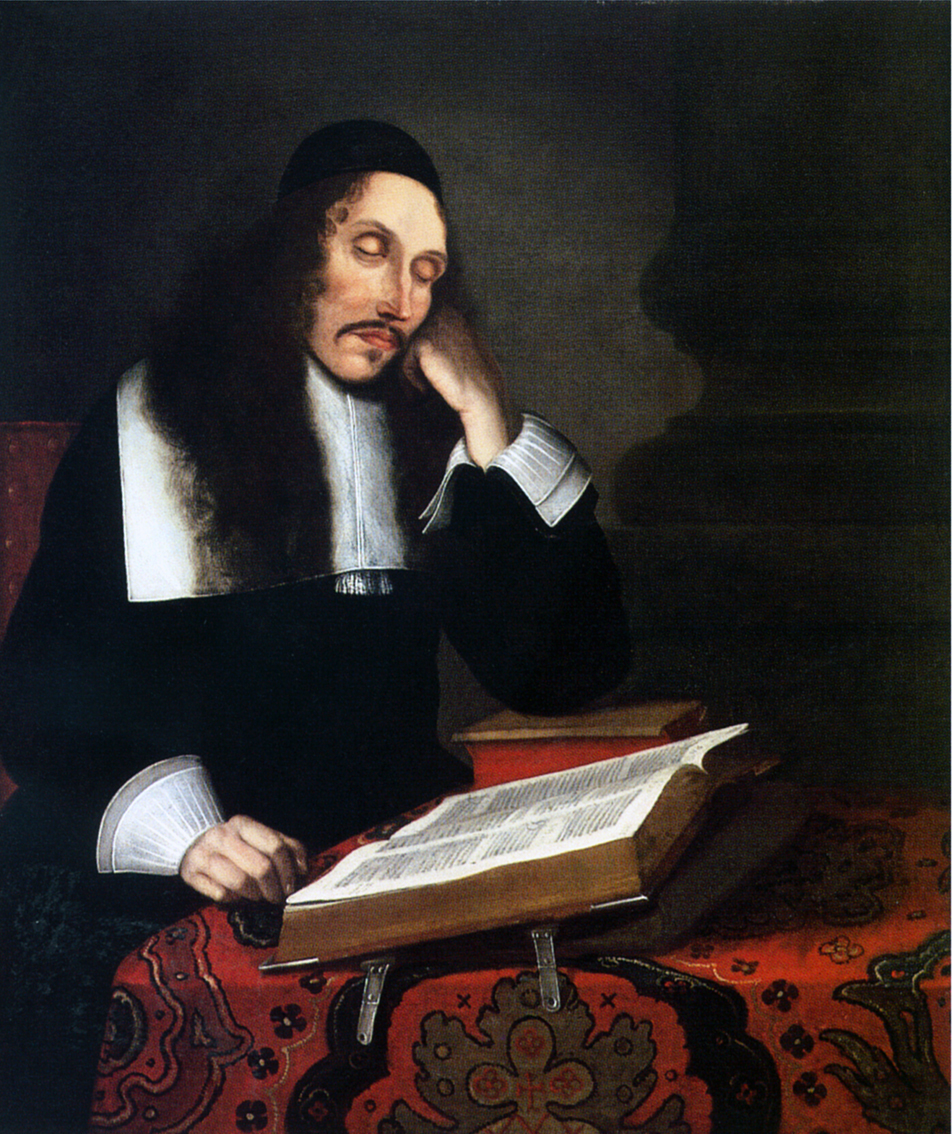
The right to think, simply. I published the Theological-Political Treatise anonymously in 1670, and it was immediately condemned, called a book forged in hell. I argued that the Scriptures should be studied like any other text, with reason, and not as an oracle; and that the state does not serve to tame minds. “The end of the state,” I wrote, “is not to transform men from rational beings into beasts or automata, but to enable them to use their free reason.” They thought I was attacking faith; I was defending the city. A republic that forbids thinking always ends up having to forbid speaking, and then living.
—Your friends worry about your frugality. How do you live, day to day?
Very simply, and I am well for it. The morning belongs to writing; the afternoon, to glass and visitors. I often make do with a milk soup with a little butter, or a gruel porridge, and a small beer. People are surprised that a man spends so little: but the body needs only a little to stay clear, and the mind hates heavy digestion. I have never owned a house; I lodge with the painter van der Spyck, in a room that serves me at once as study, workshop, and bedroom. My fortune fits in a modest wardrobe and some one hundred sixty books. That is more than I need.
—They say you like to watch spiders. What pleasure do you find in such a strange spectacle?
In the evening, with my clay pipe lit, I sometimes throw flies into a web, or make two spiders fight, and watch that for a long time — I even admit that it makes me laugh. They think me cold; I am not. But in this little theater, I see Nature entire: each creature deploys its conatus, its striving to persevere in its being, without hatred and without malice, because it cannot be otherwise. The web, the fly, the predator obey the same necessity as the stars. To understand a spider is already to understand a little of God. That is my diversion: it is not so far from my work.
To understand a spider is already to understand a little of God.

This imaginary interview was generated by artificial intelligence from sources documented in Baruch Spinoza's profile. It dramatises what the figure might have said based on what we know about them, but does not constitute attested historical testimony. For primary sources and factual documentation, refer to the full profile.