Kids interview Baruch Spinoza
by Charactorium · Baruch Spinoza (1632 — 1677) · Philosophy · 5 min read
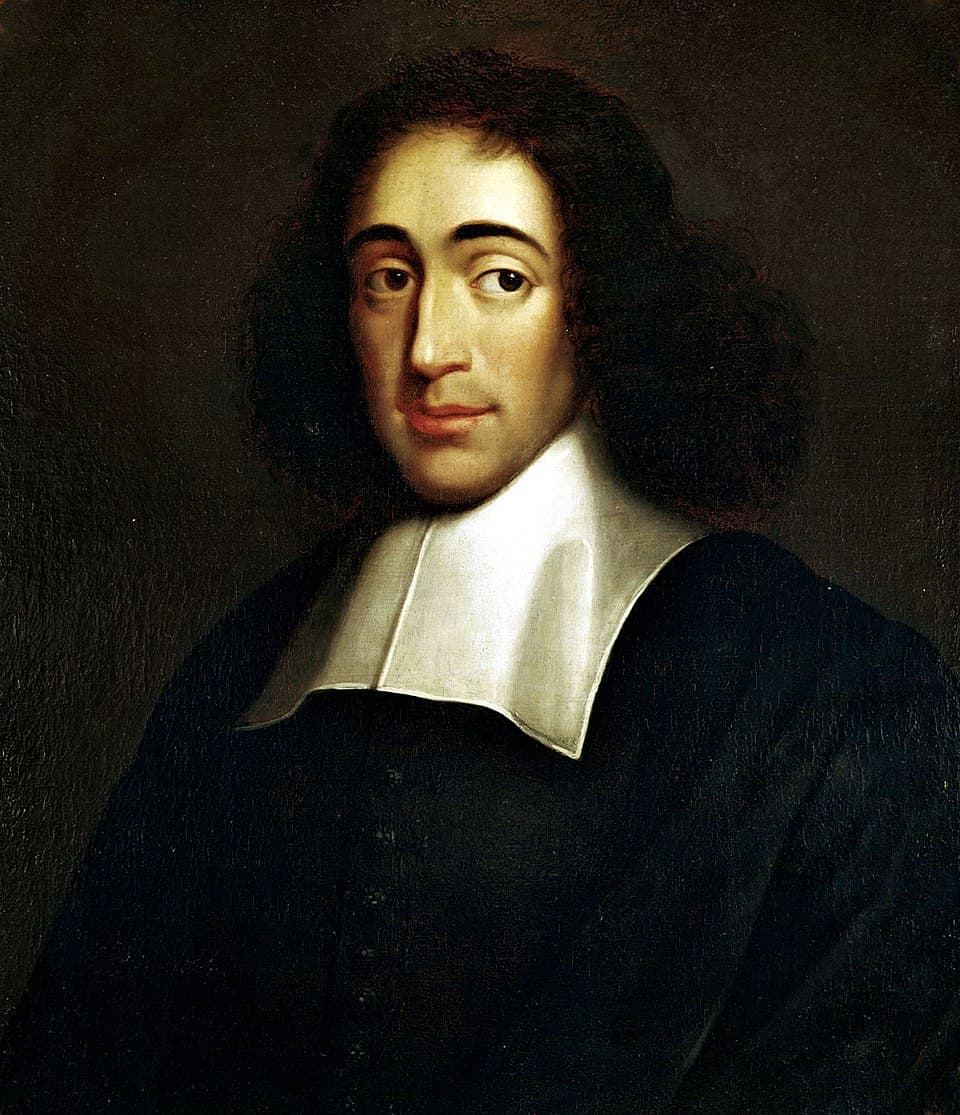
Two young visitors of twelve years old push open the door of a modest room in The Hague. A calm man is polishing a glass lens near the window. He sets down his tool, smiles, and invites them to sit and answer all their questions.
—Is it true you were cast out of your community when you were young?
Yes, my child. I was barely 23 years old, in 1656. My Jewish community in Amsterdam pronounced a herem against me — that's an excommunication, a total banishment. Imagine all ties being torn away at once: your family, your friends, your synagogue. No one is allowed to speak to you anymore. The text was terribly violent. It said I was cursed “by day and by night.” I heard those words, standing, without lowering my eyes. It was hard. But you see, I preferred to lose my place than to lie about what I believed true.
I preferred to lose my place than to lie about what I believed true.
—And after that, did you try to be forgiven and come back?
Never, you know. Many would have done so to regain their family. Not me. The sentence banished me “in the presence of the holy books,” forever. I could have wept, begged, promised to be silent. But think: what good would it be to return if I had to hide my ideas? That would be returning dead inside. So I left Amsterdam and went to a small village, Rijnsburg, near Leiden. There I began to write in peace. They had taken one community from me; I built another, made of friends who loved to think freely.
What good would it be to return if I had to hide my ideas?
—How did you earn a living then, if you were all alone?
I polished lenses, my child! You see those small glasses, in the box by the window? They are placed in spectacles and microscopes to see the world better. It is work of great precision: you must rub the glass for hours, without trembling. My lenses were so good that a great scholar, Huygens, admired them. This trade gave me just enough to live, but it gave me the essential: my freedom. No one paid me to think like them. Alas, over time, the glass dust damaged my lungs.
My trade gave me little money, but much freedom.
—But why did you refuse to become a professor at a university?
Ah, you are right to wonder! In 1673, a prince offered me a chair at the University of Heidelberg. A secure post, a salary, respect. He even promised me great freedom to philosophize. Tempting, no? But look: “extensive freedom” does not mean “total freedom.” They would have asked me not to disturb the official religion. But I wanted to be able to follow my thought wherever it led me. So I politely refused. I preferred my small room and my lenses to a fine supervised chair. Freedom is not sold for a comfortable seat.
Freedom is not sold for a comfortable seat.
—What was a normal day like for you? What did you eat?
A very orderly day, you know. In the morning, I reflected and wrote. In the afternoon, I polished my lenses. In the evening, I smoked my clay pipe and chatted with my landlord. As for meals, don't expect a feast! Often just a milk soup, or a bowl of porridge, with a light beer. My friends worried: “he eats almost nothing!” But I found that simple food sufficed to keep the body healthy and the mind clear. Imagine: no grand banquets, no taverns. A calm life, like a lake without waves.
Simple food suffices to keep the body healthy and the mind clear.
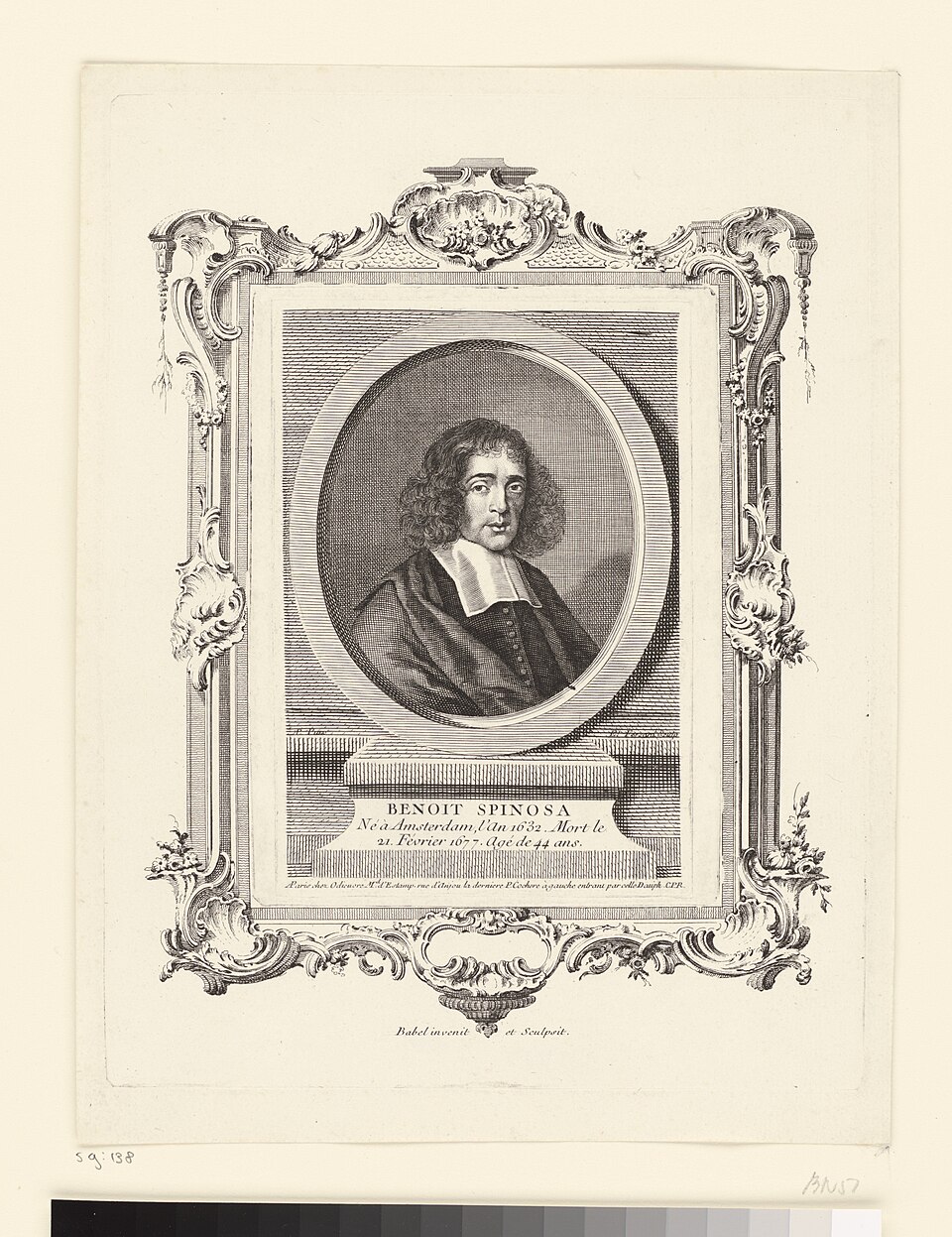
—Is it true that strange story about you watching spiders fight?
Ha! They told you that? Yes, it's true. Sometimes, to relax, I let spiders squabble among themselves, and it amused me greatly. Don't think I was cruel: I watched nature do its work, like a child observing an anthill. You see, I loved to understand how things live and act, from the largest to the smallest. My room was at once my workshop, my study, and my resting place. At my death, they found only a few clothes and about 160 books. So few things, but so many thoughts!
So few things in my room, but so many thoughts inside.
—What is your big idea, the one you are remembered for?
An idea very simple to say, but immense, my child. For me, God and Nature are one and the same. In Latin, I say Deus sive Natura: “God, that is to say Nature.” Imagine a single ocean: every wave, every fish, you, me, the stars, we are all part of it. There is not God on one side and the world on the other. Everything is one great reality, which I call substance, that which exists by itself. In the 17th century, saying that was dangerous. They called me an atheist. Yet I had never spoken so much of God.
God and Nature, for me, are one and the same ocean.
—But that's too hard to understand! How did you explain all that in your book?
I understand you, it seems difficult! So listen to my trick. My great book, the Ethics, I wrote more geometrico — “in the manner of the geometers,” like in mathematics. You know, like when you prove that a triangle has three angles? You start with very simple definitions, then you advance step by step, without cheating. At the very beginning, I write: “By God, I understand a being absolutely infinite.” And from there, each idea follows from the previous one, like the steps of a staircase. I wanted that no one could contradict me without following my reasoning. Truth is built, brick by brick.
Truth is built step by step, like the steps of a staircase.
—Was there a time when you were really very angry?
Yes. Once in my life, I lost my calm. It was in 1672, a terrible year for my country. Two men I admired, the De Witt brothers, who defended liberty, were massacred by a raging mob in The Hague. When I learned of it, I was devastated. I wanted to go out and post a placard in the street, with these words: “Ultimi barbarorum” — “the last of the barbarians.” My landlord, terrified, locked me in my home to prevent me from being killed in turn. He was probably right. But that day, my anger was worth more than my caution.
That day, my anger was worth more than my caution.
—Why was it so important to you to have the right to say what you think?
Because that is what makes us human, my child. In 1670, I published, without signing, the Theological-Political Treatise. It was immediately banned! In it, I defended an idea I find essential. I wrote that the purpose of a state is not to turn men “into beasts or automata,” but to allow them to use “free reason.” Imagine a city where no one has the right to think aloud: it would be a prison, even without walls. A people who think freely is stronger, not more dangerous. That is why I held this right so dear.
A city where one does not have the right to think is a prison without walls.
—If we could see you again today, what would we notice first?
One very simple thing, I think: my tranquility. You would see neither anger nor deep sadness on my face. I spent my life understanding that true freedom is not doing everything you want. It is understanding why things happen, and finding peace in that understanding. I sought, as I wrote, a good “capable of being shared” and lasting. I found it not in money or glory, but in shared thought. So, my children, always keep that curiosity that brought you to me. It is the most precious treasure.
True freedom is not doing everything, it is understanding everything.
This imaginary interview was generated by artificial intelligence from sources documented in Baruch Spinoza's profile. It dramatises what the figure might have said based on what we know about them, but does not constitute attested historical testimony. For primary sources and factual documentation, refer to the full profile.