Kids interview Benazir Bhutto
by Charactorium · Benazir Bhutto (1953 — 2007) · Politics · 5 min read
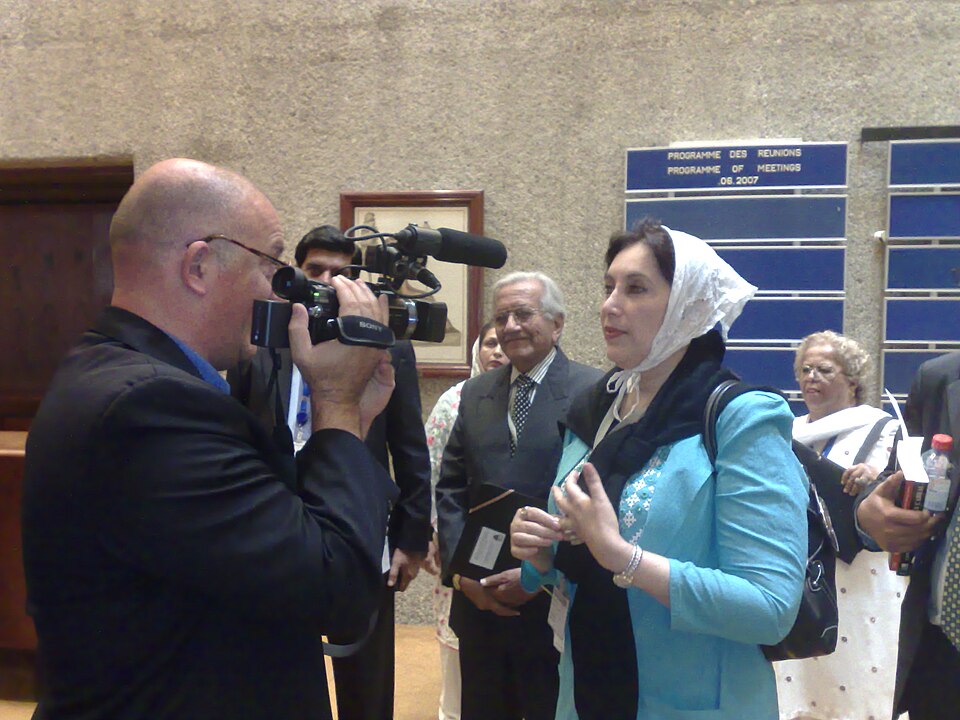
That morning, two students from a middle school class walk through the doors of a large hall, their small notebooks of questions clutched in their hands. Across from them sits a woman in a white scarf, calm and warm. It's Benazir Bhutto, ready to tell them her story.
—How old were you when your father was killed?
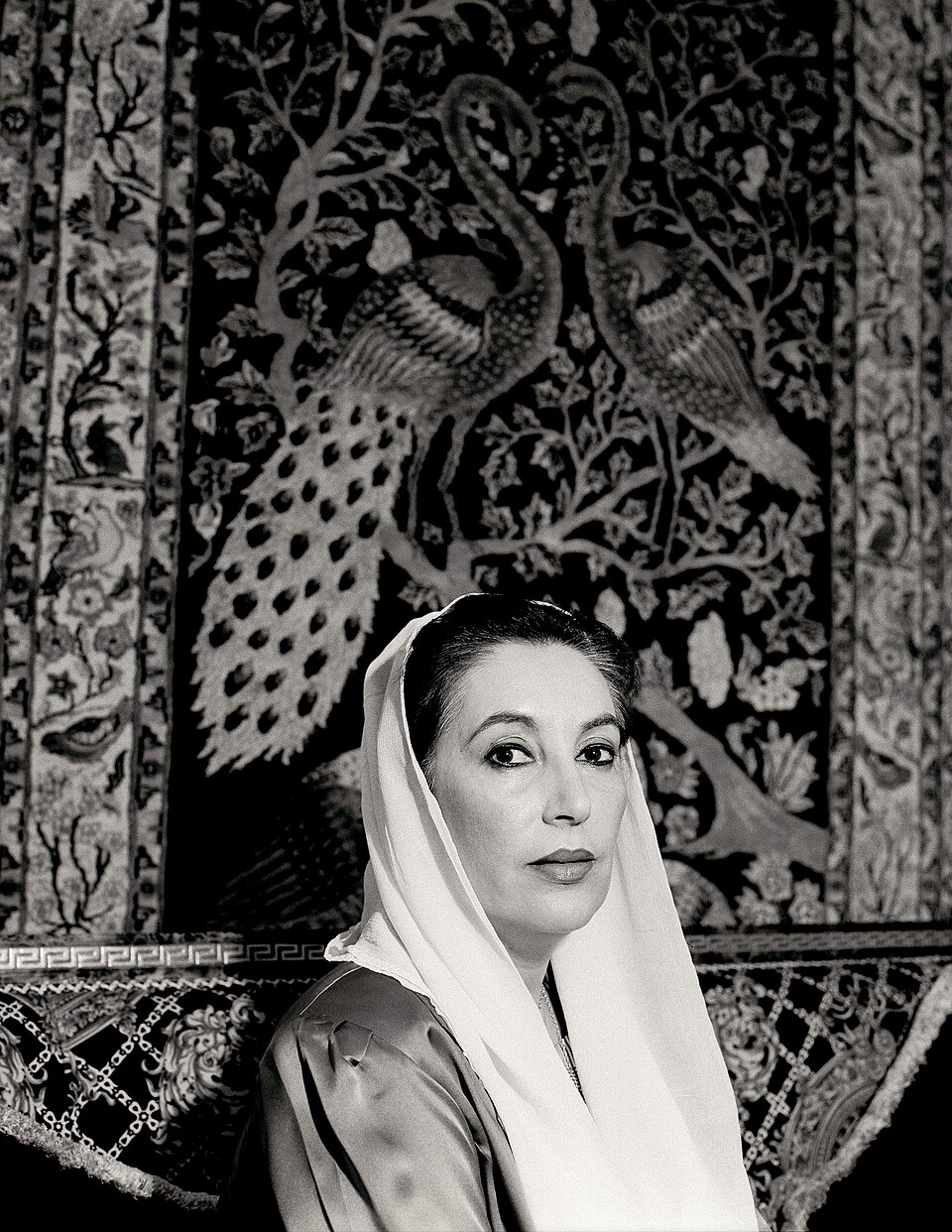
I was 26 years old, my child. My father, Zulfikar Ali Bhutto, had been Prime Minister of Pakistan. A general seized power by force and had him hanged in 1979. Imagine: they take your father away, and then kill him for political reasons. I was devastated. They locked me up, sometimes alone in a cell under crushing heat. But you know, grief can become a strength. I decided that his death would not be a full stop. I wore a white scarf, the dupatta, as a sign of mourning — and I never took it off.
Grief can become a strength.
—How did you manage to lead a party at such a young age?
My father's party, the PPP, the Pakistan People's Party, was left without a leader. Many thought a young woman wouldn't last. I believed the opposite. In 1986, I returned from exile to Lahore. Imagine a crowd so vast that the road disappeared — millions of people came to welcome me. That day I understood that I carried not only the Bhutto name but the hope of an entire people. My father used to say that democracy is the best revenge. I vowed to prove him right, without ever raising a weapon.
—What were your studies in England like?
Wonderful, and a bit intimidating! I studied at Oxford, first at Lady Margaret Hall, then at Christ Church. There is a very famous club there, the Oxford Union, where you train to debate, to persuade through speech. In 1977, I became its president — the first female president from South Asia. Imagine a room full of brilliant, confident young English people, and you have to silence them with your arguments. I learned there not to tremble before a crowd. Later, facing tens of thousands of people, that school of speech saved me.
—How did you get thousands of people to listen to you?
The secret, I learned young, at the Oxford Union. Speaking isn't about shouting louder. It's about finding the simple words that touch the heart. In front of my microphone, facing immense crowds, I didn't read a boring text. I told our story, our sorrows, our hopes. Imagine a square black with people, and suddenly silence because everyone feels understood. My voice was my weapon — the only one I wanted to carry. My father had shown the way, and the English debates had given me the technique. With words, you can lift a people without shedding a drop of blood.
—How old were you when you became head of the country?
35 years old, in 1988! I was the first woman to lead the government of a Muslim-majority country. Can you believe it? No one had ever done it before me. Many men were convinced that a woman could not run a state. Imagine walking into a large room where almost everyone looks at you thinking 'she won't last.' My heart was pounding. But I was elected, truly elected by the people. That day, I broke two barriers at once: that of women, and that of an old habit that wanted them silent.
—What did you say to the men who doubted you?
Before Parliament, in 1988, I didn't lower my eyes. I told them: 'Some doubt whether a woman can lead an Islamic state. But I am here, before you, democratically elected.' You see, I didn't deny their doubts — I faced them. Imagine walking into a class where half the students think you don't belong. The best thing is to say it out loud, calmly, and then do your work. Actions answer better than anger. My presence alone was already a response.
—Can one be Muslim and love democracy at the same time?
Yes, my child, I was deeply convinced of that. Many wanted to make us believe the opposite. I even wrote a book about it, Reconciliation, published in 2008, just after my death. In it, I explain that Islam demands justice, equality, and respect for people — exactly what democracy wants. Imagine two rivers said to be enemies, but in reality flow toward the same sea. What scared me was political Islam: people who wanted to impose their law through violence. Against them, I defended an open Islam that protects the weak instead of crushing them.
—Why did you talk so much about the rights of girls and women?
Because in too many places, girls were told: shut up, stay home. I had the chance to study, to read, to speak. Why not others? At Harvard University, I repeated that there are no rights reserved for the West: women's rights are simply human rights, everywhere, for everyone. Imagine a bird whose wing is cut off, and then scolded because it doesn't fly. That's what preventing women from learning is. A society that locks up half its children walks on one leg.
—Were you afraid when you gave your speeches?
I would have lied if I said no. In 2007, I returned to Pakistan after eight years away from home. In Karachi, on the very day of my return, a suicide attack struck my convoy — that's when someone blows themselves up in the middle of a crowd. 179 people died that evening. I was devastated, in tears. Imagine the celebration of your return turning into tragedy. I could have fled. But I continued my campaign. Because if you give in to fear, those who sow terror have won. I refused to give them that victory.
If you give in to fear, those who sow terror have won.
—Is it true you had to protect yourself even to go out?
Yes, sometimes I wore a bulletproof vest, a kind of thick jacket that stops bullets. Funny outfit, isn't it, for a woman who loved her white dupatta and traditional clothes. My loved ones begged me to stay hidden. But how can you speak to the people while barricading yourself? In Rawalpindi, on December 27, 2007, during a final rally, I was assassinated. I knew it was possible, and I went anyway. You know, courage isn't not being afraid. It's being very afraid and moving forward anyway, because what you defend is greater than yourself.
Courage is being very afraid and moving forward anyway.
This imaginary interview was generated by artificial intelligence from sources documented in Benazir Bhutto's profile. It dramatises what the figure might have said based on what we know about them, but does not constitute attested historical testimony. For primary sources and factual documentation, refer to the full profile.