Imaginary dialogue between Zulfikar Ali Bhutto and Benazir Bhutto
by Charactorium · Benazir Bhutto (1953 — 2007) · Politics · 5 min read
It is in the courtyard of Al-Murtaza, the family home in Larkana in the heart of Sindh, that Zulfikar Ali Bhutto meets his daughter Benazir. The golden dust of evening settles on the mango trees he himself had planted, and in the distance the call of the muezzin is heard. They have not spoken since the bars of Rawalpindi prison, when through the grille he entrusted her with the care of his struggle. Today the father comes not to advise, but to listen to what his daughter has made of the legacy he left her.
—Pinkie, my daughter, when they led me to the gallows in 1979, I feared you would bend. What did you make of that grief?
Father, I made that grief a vow. The night you left us, in Rawalpindi, I understood that they could take my father but not his idea. You kept telling me, remember, that democracy is the best revenge — I never stopped repeating that to myself in the solitude of the cells. They imprisoned me, placed me under house arrest in Karachi, isolated me from my own, but every prison wall became a podium in my mind. I did not mourn a victim: I carried a torch. Your Pakistan Peoples Party was not going to die with you, I promised myself that in a low voice.
They could take my father, but not his idea.
—Taking over the PPP I founded in 1967, upon your release from prison, was that not too heavy a burden for a young woman alone?
Heavy it was, and I will not hide it from you. Upon my return in 1984, then in Lahore in 1986, millions of faces awaited me — and all saw in me your shadow, your voice, your promise. It was overwhelming and exhilarating at once. But I quickly learned that leadership cannot be delegated: I had to go myself to the villages of Sindh and Punjab, shake the hands of the peasants who had loved you. I turned an orphaned party into the first opposition force against the military. The general who hanged you thought he was burying your name; he made it immortal in the mouths of the crowds.
The general thought he was burying your name; he made it immortal in the mouths of the crowds.
—When you were elected Prime Minister in 1988, at only thirty-five, what did you feel crossing a threshold no Muslim woman had crossed?
I felt, father, a mix of vertigo and responsibility. At thirty-five, I shattered two glass ceilings with one gesture: that of my age and that of my gender, in a country where tradition reserved power for men in uniform or turban. Before Parliament, I said that I knew some doubted a woman could govern an Islamic state — but that I was there, democratically elected, and that was enough to answer. I thought of you at that precise moment. You had taken me as a child to the Simla negotiations so I could observe the powerful; that day, I had become one of them. It was not a personal revenge, it was living proof that Pakistan could choose something other than dictatorship.
I shattered two glass ceilings with one gesture: that of my age and that of my gender.
—You know how much I loved the battles of ideas at Oxford. Did that eloquence you forged there serve you against the men of the inner circle?
It saved me more than once, father. At the Oxford Union, which I presided over, I faced the best English orators, and I learned there that a well-argued point disarms more surely than a threat. You sent me there to educate myself; I never imagined those club debates would become my weapon against the generals. Facing opponents who judged me in advance too young, too female, too Western, I responded with speech — in rallies, before tens of thousands of people, my voice carried without a microphone. Words were my only armor against contempt. And when they thought me cornered, it was by debating, never by pleading, that I regained the upper hand.
A well-argued point disarms more surely than a threat.
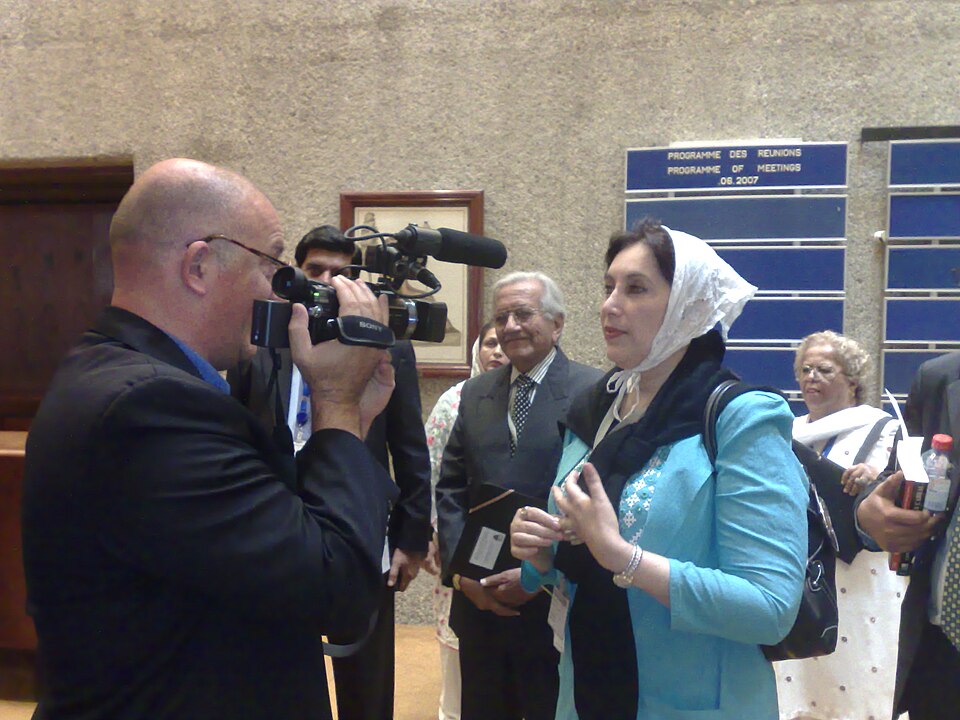
—I notice that white dupatta you never take off, even abroad. What does it say about you, my daughter?
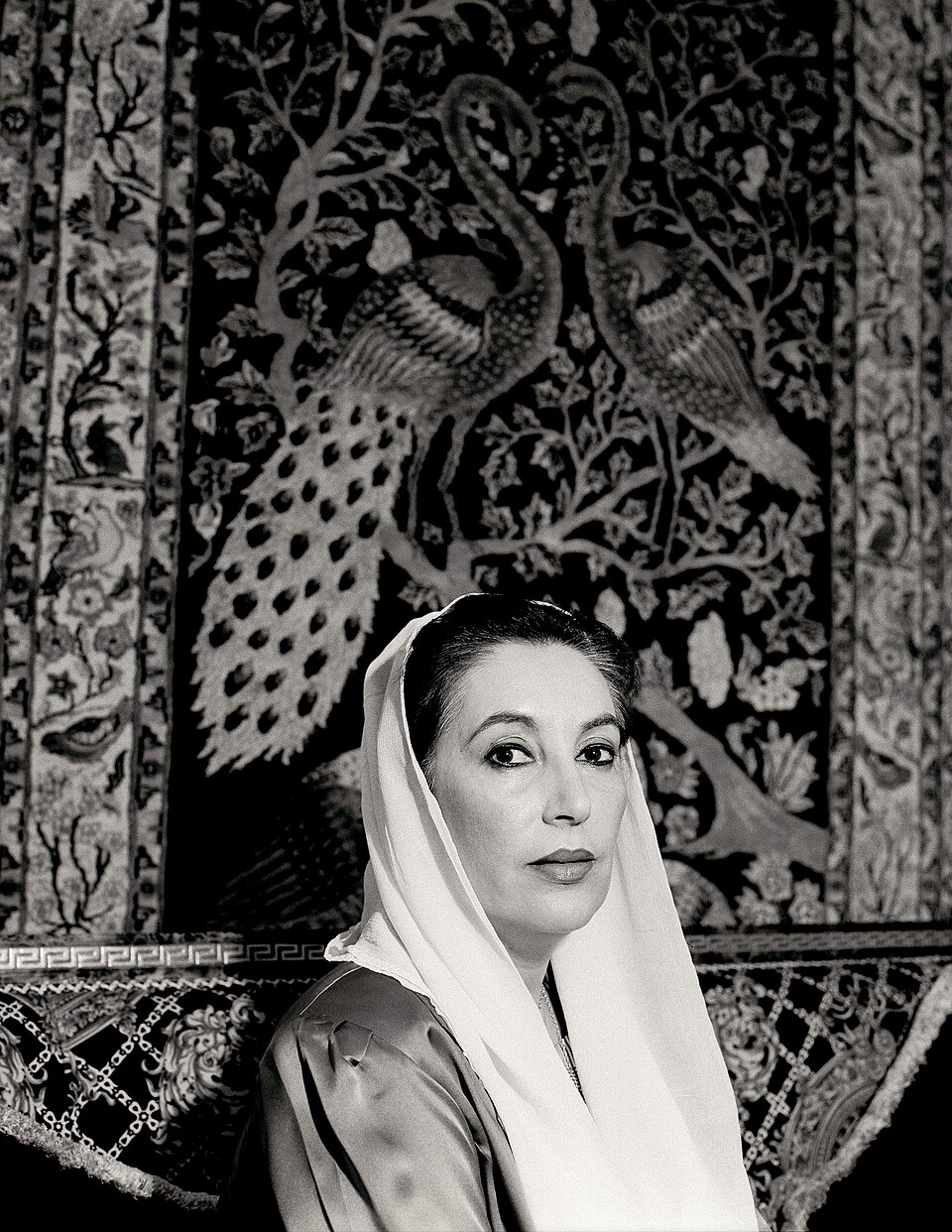
This white scarf, father, is you that I carry on my head. White is the color of mourning among us, and I have not removed it since they tore you from us. But it says something else: that one can be a modern woman, educated at Oxford and Harvard, and remain faithful to one's land. Under the shalwar kameez and the dupatta, I remained a daughter of Sindh, even when receiving Western heads of state. They wanted to force me to choose between modernity and tradition; I refused that bargain. My clothing answered before my words: I am Pakistani and I am free, and these two things do not fight each other in me.
This white scarf is you that I carry on my head.
—They said Islam and democracy could not coexist. You, who governed a land of Islam, what did you oppose to that dogma?
I opposed my entire life, father, and a book I intended as a testament of ideas. I argued that Islam and democracy are not only compatible, but that they reinforce each other, because our faith commands justice, equality, and protection of the weak. A true Islamic state must be a democratic state — that is my deepest conviction. Facing the Taliban and the political Islamism rising at our borders, I refused to leave the Holy Book in the hands of those who made it an instrument of terror. Radicalism confiscates religion; I wanted to give it back to the people. This dialogue between Islam and the world is the only lasting bulwark against barbarism.
Radicalism confiscates religion; I wanted to give it back to the people.
—Your opponents accused you of importing foreign ideas by defending women. What did you answer them, you who know our people?
I answered them that women's rights are not Western rights: they are human rights, and human rights are universal. No religion, no custom, no tradition can legitimately refuse a woman to fully participate in the life of her society. I said it in America as in our villages. How could I have claimed the opposite, I who governed? My very existence was the argument. You raised me, father, without ever treating me as less than my brothers; you sent me to study when others married off their daughters. I only extended to the country what you had given your daughter. A nation that imprisons half its people cannot claim progress.
Women's rights are not Western rights: they are human rights.
—I am told that upon your return from exile to Karachi in 2007, death brushed past you in the crowd. Why did you not step back?
Because stepping back, father, would have been giving them victory. On October 18, 2007, barely off the plane after eight years of exile, my convoy was torn by a bombing: one hundred and seventy-nine of my people fell around me, who had come simply to welcome me. I owed the blood of those people to my return — how could I have fled and betrayed them? I sometimes wore a bulletproof vest, yes, but no armor protects those who want to serve a people. I resumed my campaign the very next day. I knew I was targeted, I wrote it to my loved ones. But fear, you see, is exactly what terrorism demands, and I had not endured so many exiles to offer it to them.
No armor protects those who want to serve a people.
—My daughter, I fear for you in Rawalpindi, that city where my life was taken. What do you expect from this final campaign, despite the threats?
I expect Pakistan to finally vote freely, father, and for us to turn the page on the generals. That it is in Rawalpindi, the very city where they hanged you, does not stop me — perhaps there is a secret justice there, that your daughter pleads for democracy where they silenced you. Liaquat Bagh park will be full, the crowds await me. I know the price: those who order these attacks remain in the shadows, and impunity is their strength. But if I must fall, let it be standing, speaking to the people, and not hiding abroad. You taught me that a Bhutto never leaves the battlefield. I will keep my word to the end, whatever becomes of me.
If I must fall, let it be standing, speaking to the people.
This imaginary interview was generated by artificial intelligence from sources documented in Benazir Bhutto's profile. It dramatises what the figure might have said based on what we know about them, but does not constitute attested historical testimony. For primary sources and factual documentation, refer to the full profile.