Imaginary interview with Bertha von Suttner
by Charactorium · Bertha von Suttner (1843 — 1914) · Society · Literature · Politics · 6 min read
Vienna, winter 1913. In a cozy drawing room of Harmannsdorf Castle, an old lady with white hair pinned up in a bun receives us near a desk cluttered with proofs and letters. At seventy, the woman Europe calls the 'Queen of Peace' has the calm voice of someone who has spent her life convincing ministers — and the quiet irony of someone who has never been heard quickly enough.
—How was this novel born that ended up carrying your name across Europe?
It was born of revolt, not a literary project. I had seen too closely what Sadowa had left behind in 1866: broken families, columns of wounded, and on top of that, the triumphant dispatches from general staffs talking of glory. So I decided to give a voice to those never mentioned in victory reports — the wounded in the mud, the widows on the doorstep. I wrote Die Waffen nieder! in the first person, through the mouth of an aristocrat who goes through several wars and emerges stripped of all illusions. I am criticized for my realism; that is precisely what I wanted, because war adorned with flags shocks no one. Only naked war can awaken a sleeping conscience.
War adorned with flags shocks no one; only naked war can awaken a conscience.
—Do you remember the reception the book received when you first proposed it?
Oh, my publisher trembled! The subject — the horror of war described by a woman — seemed too scandalous for his catalog. He only agreed to print it on one almost humiliating condition: that I commit to buying back fifteen hundred copies myself. I signed without hesitation, because I knew these pages would find their readers. They did beyond all measure: translated into a dozen languages, the novel became what one did not expect from a lady's book. Tolstoy himself compared it to Uncle Tom's Cabin and dared say it could change the course of European history. Coming from him, that word gave me more courage than ten congresses. A timid publisher had almost smothered all that for a few florins of advance.
—Many do not know that your path crossed that of Alfred Nobel. How did that meeting happen?
Through a newspaper ad, like looking for a governess! In 1876, a very wealthy gentleman based in Paris was looking for a multilingual secretary to handle his correspondence. That gentleman was Alfred Nobel, the dynamite man. I stayed only a few days in his service — my heart was already pulling me back to Vienna, to Arthur, whom I married almost in flight. But from those few days was born a friendship that lasted twenty years, all in letters, until his death in 1896. We were made to clash: he manufactured the most destructive force of his century, I dreamed of making it useless. And yet we understood each other. There was in this melancholy man a moral unease that few suspected beneath his industrialist fortune.
He manufactured the most destructive force of his century, I dreamed of making it useless.
—What did you write to him in those letters to try to win him over to your cause?
I did not spare him. I reminded him that he had placed in men's hands a force capable of destroying entire nations, and I urged him to use his fortune and intelligence to make war impossible — or at least so dreadful that governments would recoil from it. He would reply with that paradox dear to him: perhaps his explosives would do more for peace than all my congresses, by making war too terrible to wage. We were never quite in agreement. But when I learned, after his death, that he had included in his will a prize for those who work for the fraternity of peoples, I understood that our letters had not been words thrown to the wind. A seed, sown in a conscience, sometimes takes twenty years to sprout.
—You have been seen directly challenging emperors and ministers. How was such audacity possible for a woman of your time?
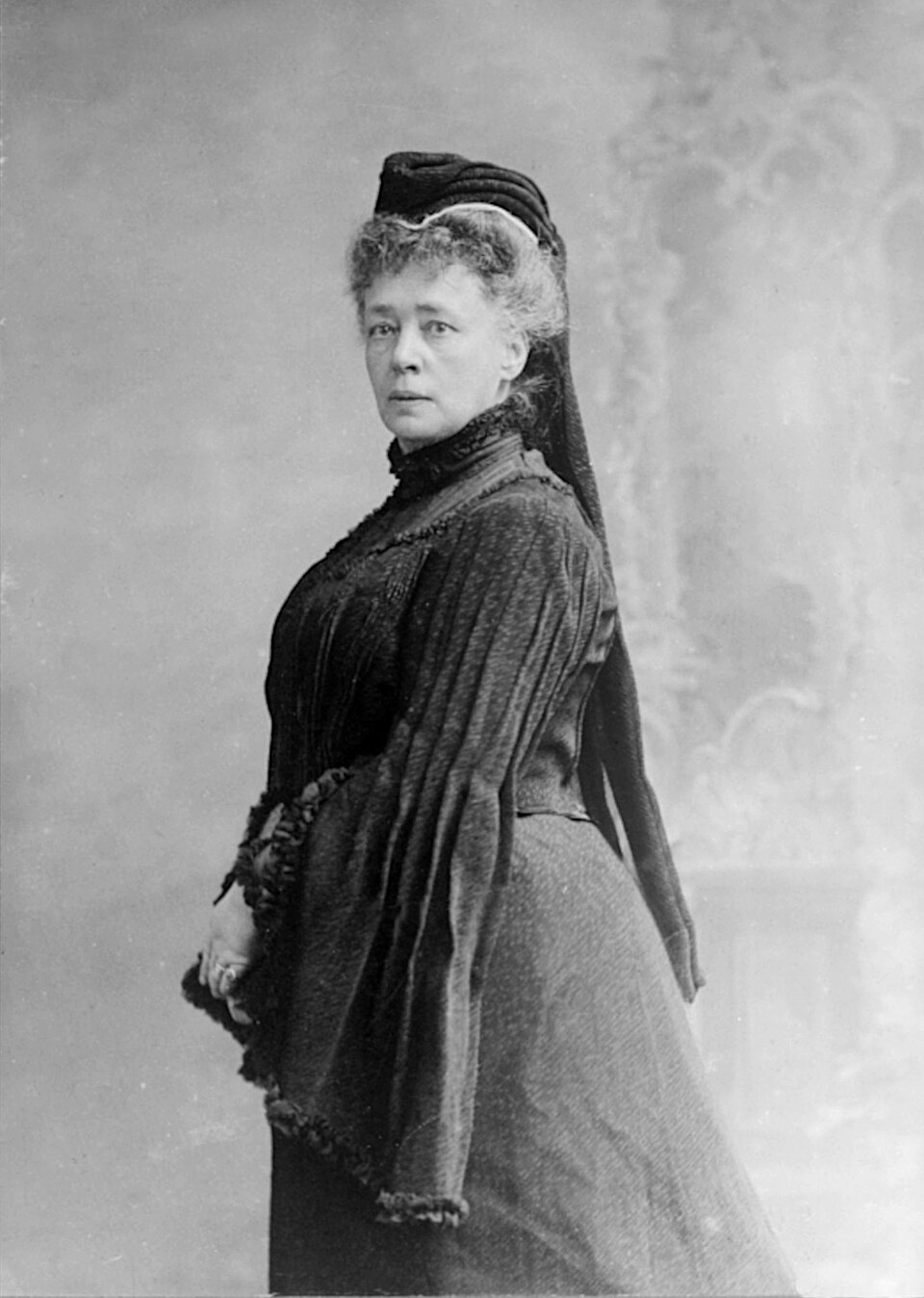
Through a privilege I did not choose and which I decided to turn into a weapon. I was born Countess Kinsky, into that high Austrian nobility where one learns languages, manners, and the art of entering a drawing room without being announced twice. This rank opened the doors of courts and diplomatic conferences where a commoner, however brilliant, would never have been received. So I entered, not to dance, but to slip a petition into the hand of a sovereign or a chancellor. My veiled gowns from the Belle Époque were my best passport. Part of my circle was offended — a countess talking about disarmament, how improper! But I was listened to, and that is all that mattered.
My veiled gowns were my best passport to carry disarmament to the sovereigns.
—What concrete solution did you demand from these governments you approached so closely?
One thing simple to state, difficult to obtain: international arbitration. That two states in dispute, rather than mobilizing their armies, submit their conflict to a neutral tribunal whose judgment they would commit in advance to respect. I repeated it everywhere: disarmament is not a utopia; nations that have resorted to arbitration have proven that a serious conflict can be resolved without spilling a drop of blood. What a few states have achieved, all can, provided they have the will. At The Hague, in 1899 and then in 1907, I saw twenty-six then forty-four governments finally sit around a table and found a Permanent Court. It was still fragile, timid, incomplete — but for the first time the idea had a roof and an address.
—In 1905, you became the first woman to receive the Nobel Peace Prize. How did you feel when you learned of it?
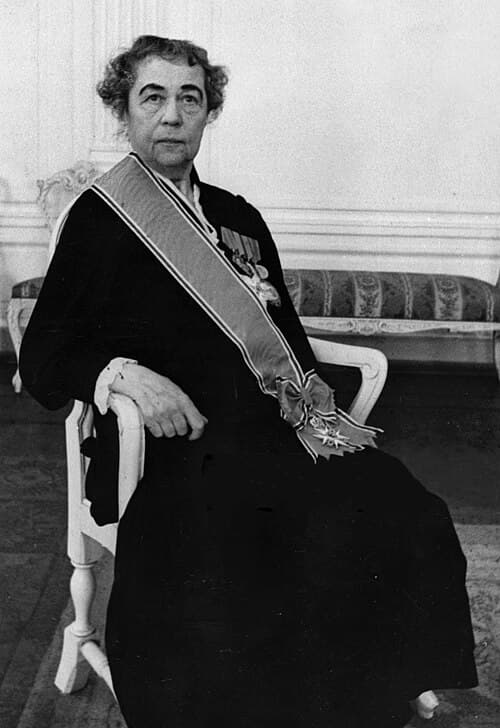
I was sixty-two, and I think surprise was less than emotion. The newspapers were already calling me the 'Queen of Peace' — a flattering and somewhat burdensome title, because queens have no army and I wanted none. Receiving this prize from a committee, under that will I may have helped inspire, tasted to me like a full circle: Nobel, dynamite, our letters, and at the end, peace rewarded by the very fortune that came from explosives. That a woman was the first to step onto that platform also had its price. I knew that behind me, others would come — and that one could no longer say these matters were not women's business.
Queen without an army: queens of peace want none.
—What did you ultimately want to say in the speech you gave in Christiania?
I wanted to tear our cause away from the suspicion of sentimentality. Before that audience in Christiania, in 1906, I wanted to say one thing and one thing only, but forcefully: the peace movement is not the dream of a few isolated idealists; it is the rational and necessary response of a humanity that understands that modern war, with its new weapons, can only lead to the destruction of civilization itself. That is my whole point. They call us dreamers; yet it is the militarists who dream, imagining clean victories with ever more powerful cannons. My conviction, which I carried in every article and every letter, is that war is not a fatality: it is an institution that men have created and that men can abolish.
—You speak of new weapons that could destroy civilization. Do you fear that Europe is truly heading for catastrophe?
I fear it every morning, reading my newspapers with my pen still cold. Everything I see around me points to it: military budgets swelling, alliances tying like ropes around a neck, nationalisms making hatred pass for virtue. We call this the Belle Époque, and it is true that industry thrives and drawing rooms sparkle. But beneath this veneer, they are forging. I have seen with my own eyes what Sadowa and the war of 1870, with its one hundred eighty thousand dead, did to men; and weapons have since progressed much faster than consciences. If governments do not very quickly seize the hand that arbitration holds out to them, I dread a conflagration next to which all our past wars will look like skirmishes.
We call this the Belle Époque; but beneath this veneer, they are forging.
—After a lifetime devoted to this struggle, do you feel you have accomplished what you wanted?
Accomplished? No. Sown, perhaps. I have spent decades at my writing desk, pen in hand from morning to night, writing articles, correcting proofs of my journal Die Waffen nieder!, answering activists from all over Europe and America. I founded a Peace Society in Vienna, wrung a few conferences from governments, saw the birth of an Arbitration Court. These are foundations, not yet a building. My fear is to leave before seeing the walls rise — or worse, to leave just when everything risks collapsing. But I console myself with one thing: ideas have a longer life than the women who carry them. If I am still read in a century, I would want them to find not a prophetess, but a proof: peace could have been chosen.
Ideas have a longer life than the women who carry them.
This imaginary interview was generated by artificial intelligence from sources documented in Bertha von Suttner's profile. It dramatises what the figure might have said based on what we know about them, but does not constitute attested historical testimony. For primary sources and factual documentation, refer to the full profile.