Kids interview Bertha von Suttner
by Charactorium · Bertha von Suttner (1843 — 1914) · Society · Literature · Politics · 5 min read
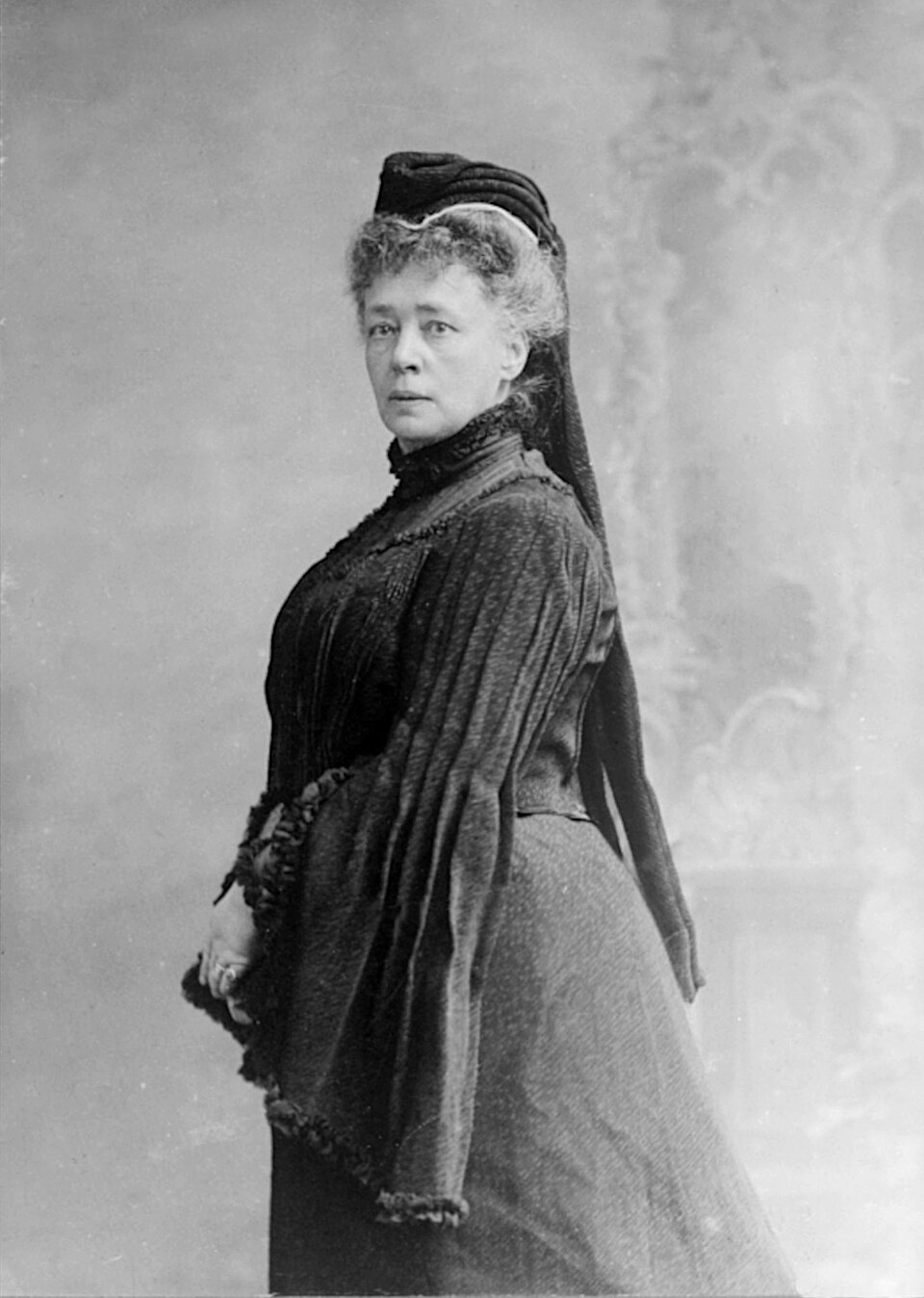
Two twelve-year-old students visit a peace exhibition when an elegant old lady, wearing a veiled hat, invites them to sit beside her. She smiles: she has spent her life writing against war, and nothing touches her more than the curiosity of two children. So they ask their questions, one after another.
—How old were you when you worked for the inventor of dynamite?
I was 33, my child. One day in 1876, in Paris, I read a small ad in the newspaper. A very rich man was looking for a secretary who spoke several languages. That man was Alfred Nobel, the one who had invented dynamite — a powder that makes everything explode. I stayed with him only a few days. Then I left quickly for Austria to marry Arthur, the man I loved. But you know, we remained friends forever. For twenty years, we wrote letters to each other. Imagine: two people who almost never see each other, but whose friendship is held together by ink and paper.
Our friendship was held together by ink and paper.
—What were your mornings like when you wrote?
I woke up very early, before the rest of the house. I would sit at my desk, at Harmannsdorf Castle, with my pen and inkwell. Mornings were my sacred time: I wrote novels, articles, letters to ministers. Before starting, I read several European newspapers — I wanted to know which countries were buying cannons, which kings were quarreling. Imagine a silent room, just the sound of the pen scratching the paper. You see, other people fought with swords. My weapon was this pen. And I used it every morning, like a soldier takes up his rifle.
My only weapon was my pen — and I used it every morning.
—Is it true that a publisher initially rejected your book?
Almost, my child! In 1889, I brought my novel Die Waffen nieder! — in English, Lay Down Your Arms! — to a publisher. He hesitated, he was afraid. A woman describing the horrors of war was very shocking in my time. So he told me: all right, but only if you buy 1,500 copies yourself. Imagine being asked to pay for the right to be read! I agreed. And you know what? The book became a huge success, translated into a dozen languages. Sometimes, you have to dare to pay the price of your conviction to finally be heard.
Sometimes you have to pay the price of your conviction to be heard.
—Why did your book make so many people cry?
Because I didn't tell war like the generals, my child. They talked about victories and medals. I described the wounded lying in the mud, women losing their husbands, children without fathers. In my book, a young woman like me lives through several wars and sees everything with her own eyes. A very great Russian writer, Tolstoy, said that my novel could change the history of Europe. Can you imagine my joy? I wanted people to feel, in their hearts, what war really is. Not the dispatches of the powerful: the tears of those who remain.
—What did you do with your afternoons, then?
Ah, my afternoons were very busy! I received activists from all over Europe, we prepared petitions together — these are large letters signed by thousands of people, to ask for peace. I also ran a magazine for seven years, a little journal I had named after my novel: Die Waffen nieder!. Every month, I explained how to settle disputes between countries without fighting. Imagine a beehive: letters going out, others coming in, friends in ten different countries. I was at the center, like a patient spider weaving, thread by thread, a great web for peace.
I wove, thread by thread, a great web for peace.
—Was being a countess useful for your cause?
Enormously, my child, even if it surprises you. I was born Countess Kinsky, from a very old noble family. Thanks to this title, doors were opened to me that were closed to others. I could enter palaces, speak to emperors, ministers, ambassadors. A common woman would never have been received. So I wore my beautiful dresses, my veiled hats — and behind that elegance, I slipped in my dangerous ideas for peace. It was my little secret: my appearance reassured these gentlemen, while my words, meanwhile, shook them up.
—Did you really dare to hand letters to emperors?
Yes, and with a pounding heart! I went to the great meetings of kings and diplomats, like those at The Hague, in the Netherlands, in 1899 and 1907. There, dozens of countries discussed making war less cruel. I handed my petitions directly to the most powerful, and I demanded two things. First, arbitration: when two countries quarrel, they go to a neutral judge instead of fighting. Second, disarmament: all together reduce the number of cannons and rifles. Can you imagine the audacity of a lady telling an emperor: “Put down your weapons”?
—Was it you who gave Nobel the idea for the Peace Prize?
Many historians think so, my child, and that makes me proud. For years, in my letters, I begged Alfred Nobel. I told him: you have placed a terrible force in the hands of men, dynamite; so use your fortune also to make war impossible. When he died, in 1896, his will was opened. And there, surprise: he gave his money to reward those who work for peace. I believe my words had made their way, slowly, into his mind. A patient friendship can change the course of things.
A patient friendship can change the course of things.
—How did it feel to be the first woman to win that prize?
An immense joy, my child. I was 62, and I was already called the “queen of peace” around the world. In 1905, I learned that I was receiving the Nobel Peace Prize — the very first woman to be given it! The following year, in Christiania, the city now called Oslo, I gave a great speech. I said that the peace movement is not the dream of a few isolated dreamers. No: it is the only reasonable response of a humanity that understands that modern weapons can destroy everything. That day, I felt that my struggle had finally been recognized.
—Did you live through the great war you wanted to prevent?
No, my child, and that is a story that still moves me. I died in Vienna, exhausted, on June 21, 1914. Seven days later, in Sarajevo, an archduke was assassinated. And from that attack was born the terrible war I had spent my whole life trying to avoid. I was lucky, in a way: I did not see the catastrophe. But listen to me carefully. As long as there are children like you asking these questions, refusing to accept that “war is normal,” then my struggle is not over. War is not inevitable: it is something men invented, and men can abolish it.
War is not inevitable: men invented it, they can abolish it.
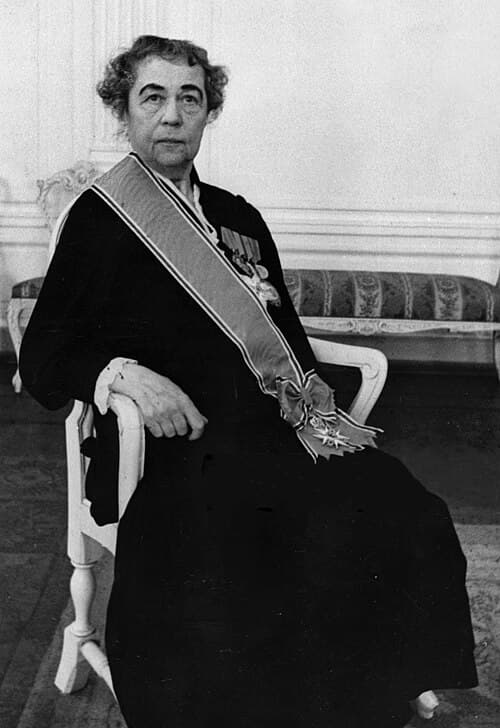
This imaginary interview was generated by artificial intelligence from sources documented in Bertha von Suttner's profile. It dramatises what the figure might have said based on what we know about them, but does not constitute attested historical testimony. For primary sources and factual documentation, refer to the full profile.