Imaginary dialogue between Michael Nesmith and Bette Nesmith Graham
by Charactorium · Bette Nesmith Graham (1924 — 1980) · Technology · Economics · 6 min read
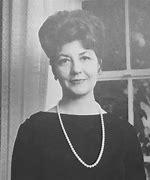
It's in the bright offices of the factory in the Dallas area, one afternoon in 1979, that Michael meets his mother amid the smell of solvent and the clatter of bottling lines. Millions of white bottles roll by where, twenty years earlier, he glued labels by hand on the kitchen table. Bette has just sold her company to Gillette and her son, himself famous from The Monkees, wants to hear the story not of the public inventor, but of the mother he saw tinkering late at night. He sets down his notebook, she smiles, and the past comes flooding back.
—Mom, before all this, you were an executive secretary at the bank in Dallas. Tell me about that daily life I never knew.
I was an executive secretary at the Texas Bank and Trust, and believe me, it was a job of precision. I typed letters, reports, contracts, from morning to night, on my typewriter. The tragedy was the slightest typo: the ink ribbon bit into the paper, and a letter erased with a rubber looked like a rag. So you had to retype everything, a whole page, because of a comma. With carbon paper slipped in for copies, a single error ruined three at once. They demanded we be flawless — the dress, the hairstyle, the perfect letter. I spent my days tracking my own mistakes, my heart tight with every keystroke. That fear of starting over, you know, is what started it all. I wasn't trying to invent: I was just trying not to have to retype everything.
I wasn't trying to invent: I was just trying not to have to retype everything.
—You've often told me about the painters in front of the windows. What did you see that day that changed everything?
It was around the holidays, in Dallas. I watched painters decorating store windows, and I noticed something very simple: when they made a wrong stroke, they never scratched out their error. They just painted over it with another coat, and that was it. I thought: why should a secretary do any differently than a painter? The next day, I brought to the office a little white tempera paint and a small watercolor brush. I would cover my mistake, let it dry, and type over it. No one noticed a thing. My colleagues started asking me for some. In 1956, I called it Mistake Out. All the fortune you see rolling by here, my boy, was born from a window painter's brush and a secretary who was fed up with starting over.
Why should a secretary do any differently than a painter?
—You're well placed to know: what did our kitchen turned laboratory really look like? I remember the blender screaming.
You remember it better than anyone! Our kitchen was my first laboratory, and my kitchen blender was my first industrial machine. I mixed the white paint to get the right consistency, neither too thick nor too thin, and that racket woke you some nights, I know. The garage became my workshop: rows of little bottles, a brush stuck in each cap. I filled everything by hand, one by one, for years. You, my big boy, helped me fill and glue labels after school. We weren't rolling in money, but there was something happy in that mess. I think I was never as free as at that kitchen table, between two smells of paint and your face bent over the bottles.
My kitchen blender was my first industrial machine.
—How did a secretary with no chemistry training manage to develop a real formula that dried fast and held?
Through sheer nerve and the right people, plain and simple. I had no science, only a very specific problem to solve. So I went to ask advice from the high school chemistry teacher of your brother — picture the scene, a mother asking for a recipe for quick-drying white paint. He explained how to adjust the components. Then I knocked on the door of a paint factory, and their employees helped me fix what was wrong. I tried, failed, started over dozens of times, in the evenings, once the house was quiet. Every bottle sold told me if I was right. I didn't invent in a laboratory: I learned by doing, by listening to those who knew. A good question asked to the right person is worth all the degrees I didn't have.
A good question asked to the right person is worth all the degrees I didn't have.
—They say the bank fired you because of a typo like no other. What really happened?
Ah, that story! One day, distracted, I typed at the bottom of an official letter the name of my own little company instead of the bank's. Need I say my employer didn't appreciate seeing my business signing their correspondence. I was let go. At the time, with you to raise, it was dizzying: no more salary, no more security. But in hindsight, that firing was the greatest gift. As long as I had my job, I only worked on my correction fluid in the evenings, half-heartedly. The day after I was fired, I devoted myself to it entirely. The bank pushed me out, and outside was where my real life awaited. Sometimes, my boy, a door has to slam shut for you to finally dare to open your own.
The bank pushed me out, and outside was where my real life awaited.
—Look around us: this factory, these machines. How does it feel to you, who filled each bottle by hand?
It makes me dizzy, I admit. In 1975, we opened this modern factory, capable of producing about twenty-five million bottles a year. Twenty-five million! I who painfully filled a few dozen per evening in the garage. When I walk between these automatic lines, I think back to the brush stuck in each cap, to my hands stained white. There's a kind of miracle in seeing a kitchen idea become an industry. But you know, I always look at the workers as former colleagues, not as numbers. Many are women, like the secretaries who were my first customers. I didn't build a money-making machine: I built a place where women earn a living thanks to a problem that other women knew by heart.
There's a kind of miracle in seeing a kitchen idea become an industry.
—You just sold to Gillette for a huge sum. Is it a victory or a heartbreak to let go of your baby?
Both at once, and that's the whole difficulty. Gillette bought the Liquid Paper Corporation for about forty-seven and a half million dollars. On paper, it's the crowning achievement of a success I never dared dream of at my kitchen table. A woman who started from nothing, a self-made woman, as we say back home. But a correction fluid that was mixed in a blender, filled by hand, labeled with your son, is not just a company: it's a part of yourself. Signing meant accepting that others would decide in my place from now on. I weighed it for a long time. Deep down, money interests me less for itself than for what it enables. This check is not an end; it will serve to help other women win, like me, their independence.
A correction fluid mixed in a blender, filled by hand, is not just a company: it's a part of yourself.
—Speaking of which, you created the Gihon Foundation and another foundation under your maiden name. Why devote your fortune to women?
Because I know exactly where I come from. In 1976, I founded the Gihon Foundation, to support women and the arts, then in 1978 the Bette Clair McMurray Foundation, under my maiden name. Its purpose is summed up in one sentence: to help women find new ways to become financially independent. I was that young mother raising her son alone, who trembled at the thought of losing her secretarial job. I know what it is to depend on a salary that another can withdraw with a word. If my story proves one thing, it's that a woman can start from a kitchen and build something solid. I don't want my success to remain an exception: I want it to open a path, and for others to follow it after me.
I don't want my success to remain an exception: I want it to open a path.
—As a child, I saw you struggling with the bottles without imagining all this. What would you like me to remember from those years?
That nothing was written, my boy. When you glued those labels after school, we had no factory, no fortune, no trademark — only a stubborn idea and a lot of fatigue. I want you to remember the patience of those evenings, more than today's success. Success is visible in these machines; but it was born from tiny, repeated gestures, one bottle after another. I made mistakes, I was afraid, doors were closed on me. And I kept going, because a problem held me and I refused to leave it unanswered. Now that you're forging your own path, remember: you build nothing great without first consenting to do very small things for a long time. That's our real story — not the check, but the kitchen.
You build nothing great without first consenting to do very small things for a long time.
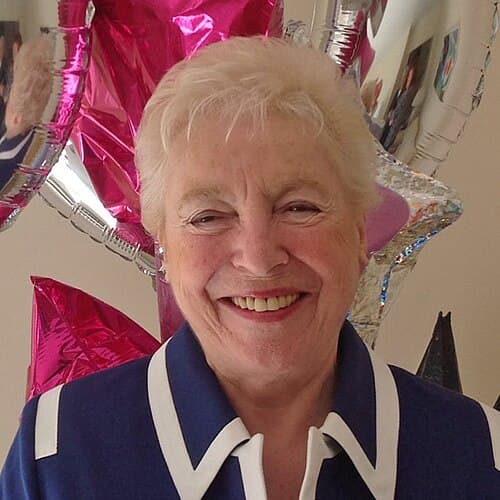
This imaginary interview was generated by artificial intelligence from sources documented in Bette Nesmith Graham's profile. It dramatises what the figure might have said based on what we know about them, but does not constitute attested historical testimony. For primary sources and factual documentation, refer to the full profile.