Imaginary dialogue between L'évêque Conleth de Kildare and Brigid of Kildare
by Charactorium · Brigid of Kildare (451 — 525) · Spirituality · Mythology · 5 min read
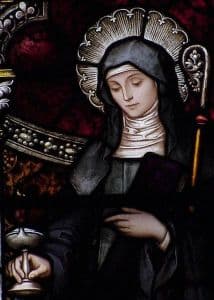
It is in the wooden enclosure of Kildare, on a February evening when the cold of Imbolc still bites the wicker huts, that Bishop Conleth comes to sit beside the abbess. The flame of the sacred fire trembles behind its hedge, and the smell of warm milk rises from the byres. For years they have governed this double community together, he for the altar, she for the rule. Tonight, setting aside monastery business, he wants to hear her speak of herself, like an old companion more than a bishop.
—Brigid, even before I joined you at Kildare, they already told the story of your mantle on the Curragh. Tell me how the king granted you that land.
You who now know every sod of that plain, Conleth, can guess how much I wanted it. The King of Leinster received me with a laugh: he granted me as much land as my brat could cover, thinking to be rid of a stubborn nun with a scrap of wool. I spread my mantle on the grass, and the Lord made it grow in all four directions until it covered the whole Curragh. The king paled, then knelt and asked for baptism. It was not my mantle that grew, you see, but his faith that finally opened. That is where we built Cill Dara, the church of the oak, which you lead with me.
It was not my mantle that grew, but his faith that finally opened.
—When I agreed to come and serve the altar here, you told me Kildare would become a great hearth. Why a double monastery, where you command as much as I?
I remember the day I summoned you, Conleth — I needed a bishop for ordination and sacraments, for an abbess cannot do everything. But I never wanted a master over me. Here, monks and nuns pray under one rule, and we govern side by side, each according to their charge. Some are surprised: a woman who holds the crozier and dispenses the word like a desert father. I answer that Christ did not measure charity by the gender of the giver. Our community feeds the poor, copies the Scriptures, trains the young. You see that two hands are better than one to carry such a house.
I never wanted a master over me; we govern side by side.
—At nightfall, I see your sisters take turns around the flame, behind that hedge where I am not allowed to enter. Why this fire, Brigid, and why forbid me to approach it?
Yes, Conleth, even you, my bishop, stay outside that hedge — do not take offense. This fire is guarded by the hands of consecrated virgins, and it must burn without ever going out, day and night. Twenty of my sisters take turns watching it; on the twentieth night, none keeps watch, for it is said that I then watch over the flame myself. This light is a sign: it reminds that Christ is the brightness that never fades. The elders of this island once kept fires for the goddess; I wanted this one to burn for the true God, so that none of our fathers' fervor be lost, but turned toward Heaven.
This light reminds that Christ is the brightness that never fades.
—I have heard that you wove a cross of rushes at the bedside of a dying pagan chieftain. You who love simple gestures, tell me about that vigil.
That old chieftain was dying, his mind troubled, unable to hear a long sermon. Sitting beside him, I gathered the rushes thrown on the floor of his hut and began to knot them, four equal arms around a woven center. While weaving, I explained our faith: the crossed wood, Christ, the salvation offered. His eyes followed my fingers, and through that little cross he understood what words alone could not give him. Before dying, he asked for baptism. Since then, my sisters weave these crosses to place at the threshold of houses. You know, Conleth: sometimes a humble object opens the heart better than a grand speech.
Sometimes a humble object opens the heart better than a grand speech.
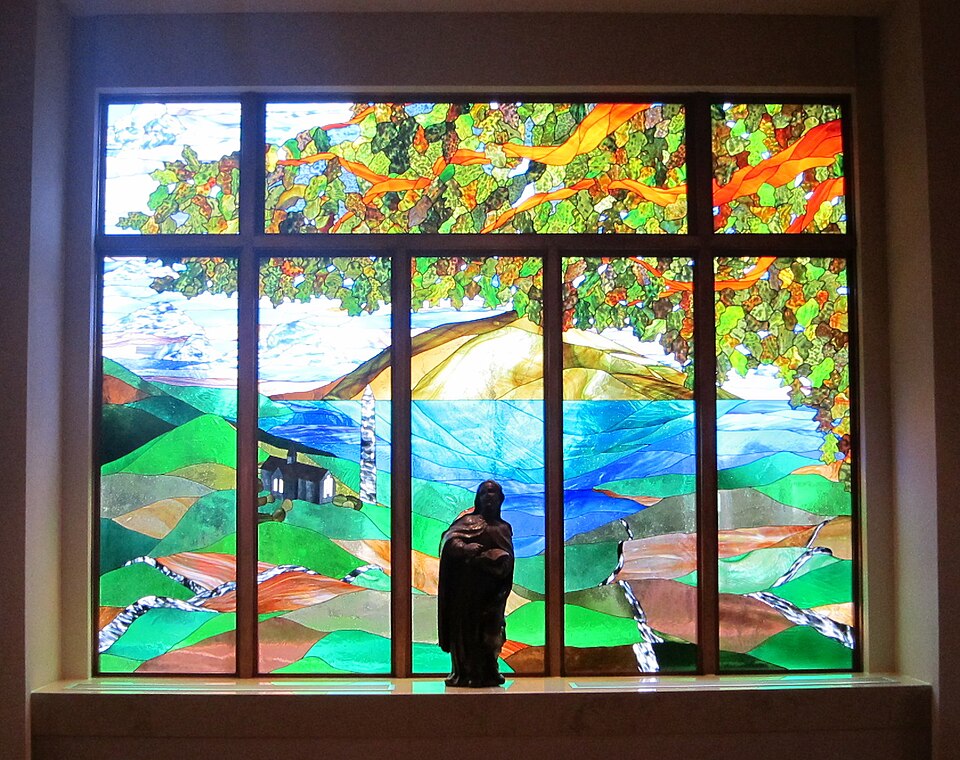
—The local people celebrate the first day of February as in the time of the druids, at Imbolc. Are you not afraid, Brigid, that they confuse you with the ancient Brigid of fire?
I know this fear, Conleth, but I do not entirely share it. These people carried in them, from their fathers, a love of a goddess of fire, poetry, and smithcraft. Should we tear out their hearts or turn them toward God? That my feast falls on Imbolc, when light returns, does not displease me: the true return of light is Christ. They call me golden flame in hymns; may that flame lead them to the eternal kingdom rather than to the idol. The oak that gave its name to Cill Dara was sacred to the ancients; I made it the threshold of a church. I do not destroy their fervor, I baptize it.
I do not destroy their fervor, I baptize it.
—They sing that strange poem attributed to you, where you offer not gold but a lake of beer to the King of Heaven. Tell me, where did you get such an idea?
Ah, that poem makes you smile, Conleth, I can see. Where I come from, welcoming is not offering cold gold, it is sharing the table, milk, warm beer with the chilled traveler. So I imagined offering the King of kings what I have most generous: a great lake of beer, so that all the family of Heaven might rejoice forever. It may seem naive, but hospitality is sacred to us: whoever knocks at the door is Christ. Here, no poor person, no stranger leaves with an empty stomach. Heaven, I picture it as a long vigil where nothing is ever lacking, and where no one is left outside.
Heaven, I picture it as a long vigil where no one is left outside.
—Our byres overflow, yet you give butter and milk to the poor without counting. How do you keep your house from running out, Brigid?
You gently scold me, Conleth, for you keep the accounts and I keep my hands open! It is true, when a hungry person appears, I cannot refuse. Many times I have emptied the butter store for a beggar, and many times the churn was full again by morning, as if the Lord refilled what my charity had emptied. Our cows give abundantly; I believe this abundance is returned to us precisely because we share it. To hoard is to let rot; to give is to let the spring flow. Do not worry about the house: it has never collapsed under the weight of its generosity, only grown.
To hoard is to let rot; to give is to let the spring flow.
—Some whisper that an abbess keeping a perpetual fire looks too much like the priestesses of old. To me, your bishop, what do you truly answer?
To you, Conleth, I will answer plainly, for you know me better than those whisperers. Yes, this fire resembles the ancient fires; I do not deny it nor hide it. But the meaning has changed: my sisters serve no goddess, they tend a lamp that speaks of God's presence among us, like the sanctuary lamp. I could have extinguished all the fires of this island to owe nothing to the past; I chose to keep one and purify it. The people understand that language. If we had spoken only in Latin and prohibitions, we would have gained ruins and lost souls. You who bless this altar every day, you know I yield nothing on faith.
I could have extinguished all the fires of the island; I chose to purify one.
—Our scriptorium already copies beautiful manuscripts, and our school attracts young people from afar. What do you hope, Brigid, to leave to Kildare after us?
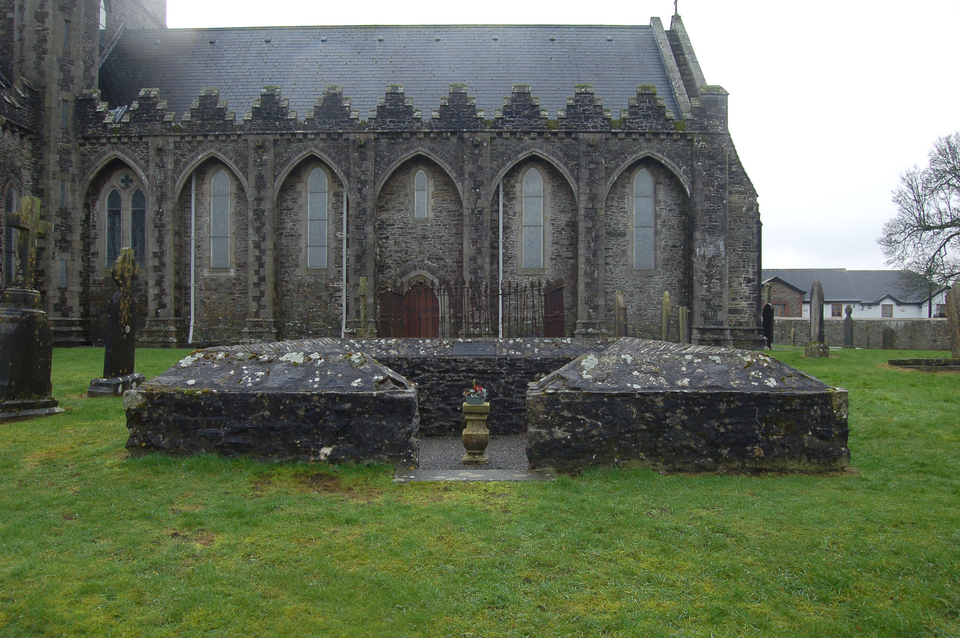
I hope, Conleth, that this church of the oak will remain a hearth long after you and I rest near the altar. That the monks continue to illuminate the word of God, that the school trains hearts as much as scholars, that the poor always find bread there. I do not build for my memory — stones and praise mean nothing to me — but so that the light of faith may shine on this people for a long time. If I am remembered, let it be as a woman who opened doors: to the doubting king, to the dying pagan, to the hungry on the road. The rest, the gold of tombs and hymns, belongs to those who come after. Let us only keep the flame burning.
I do not build for my memory, but so that the light may shine on this people for a long time.
Read further
This imaginary interview was generated by artificial intelligence from sources documented in Brigid of Kildare's profile. It dramatises what the figure might have said based on what we know about them, but does not constitute attested historical testimony. For primary sources and factual documentation, refer to the full profile.