Imaginary interview with Brigid of Kildare
by Charactorium · Brigid of Kildare (451 — 525) · Spirituality · Mythology · 6 min read
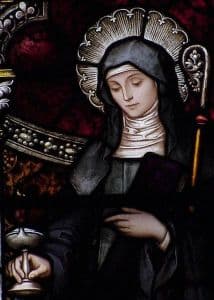
Kildare, sometime around the turn of the 6th century. The wind from the Curragh Plain whistles against the palisade of the monastic enclosure while, behind its hedge of branches, the sacred flame casts a flickering light on the thatched huts. There, between the morning milking and the prayer of Terce, an abbess in a grey wool mantle agrees to sit down and talk.
—How did a woman come to govern such a large monastery in the land of Leinster?
The Lord does not ask whether the hands that serve Him are those of a man or a woman. When I laid the first stones of Kildare, the Cill Dara, the church of the oak, someone had to order the days: the chant of Matins, the copying of psalters, the welcoming of the poor at the gate. I took the crook as one takes up a charge, not as one takes a throne. Bishop Conleth came to bring the oil and consecrated bread, for an abbess does not consecrate them; but the enclosure, the monks and nuns, the flock and the granary—all these fall under my word. People still marvel at this in the neighboring tuatha. I see only a house where each holds his place under the same thatched roof.
I took the crook as one takes up a charge, not as one takes a throne.
—What does that scriptorium represent, spoken of even in neighboring kingdoms?
Enter the scribes' hut, away from the noise of the cattle: there, monks bent over scraped skins trace letter after letter, and sometimes illuminate a page with interlacings so tight you'd think it the work of angels rather than men. A double monastery is not only a place of prayer, it is a school. There we learn the Latin of the saints' Vita, we keep the memory of the Scriptures for those who will come after us, when we are no more. I hold that knowledge is a form of charity: feeding the hungry spirit as much as the belly. My concern is not the beauty of a folio, but that some unknown generation may one day open these pages and find there the light that Saint Patrick brought to this island.
Knowledge is a form of charity: feeding the hungry spirit as much as the belly.
—Do you remember the day the King of Leinster promised you land?
How could I forget? I asked him for a piece of ground to build on, and he answered laughing, as the mighty laugh at God's handmaids: as much land as my mantle could cover. A wool brat, can you imagine—enough to bed a sheep, not to found a house. So I laid my mantle on the grass, and let it do its work. It stretched eastward, westward, until it covered the whole plain of the Curragh, that bare expanse where horses gallop. The king stopped laughing. That day he understood that it was not my strength that spread the wool, but He who sends me, and he bowed to receive baptism. I never asked for more than the wind was willing to unroll.
I laid my mantle on the grass, and let it do its work.
—Why do you hold so tightly to that old wool mantle?
Because it carries my whole life in its folds. It is the same brat I wear every day over my undyed tunic, the one I cinch at the belt when I go to the cows before dawn. One evening, I came home soaked to the bone by Leinster rain, and I threw the wet mantle onto a sunbeam coming through the window, as onto a clothesline—and it hung there, drying in the light. People smile at such things. But I believe God delights in the small everyday wonders as much as in great ones: a cloth drying on a sunbeam is worth as much as a conquered plain. The Curragh speaks of His power; the mantle on the sunbeam speaks of His tenderness for the ordinary gestures of a handmaid.
God delights in the small everyday wonders as much as in great ones.
—What would you say about that flame your nuns tend without ceasing?
Come at nightfall, behind the hedge of branches that no man crosses, and you will see the perpetual fire dance without ever faltering. We are twenty to take turns guarding it; each keeps her night, and when the twentieth comes, there is no sister named to take the turn—then it is I who stay alone with the flame until daybreak. The elders of this land honored fire long before the Cross came; I do not ignore that. But our fire does not devour, it illuminates: it says that the prayer of Kildare never goes out, any more than the light we await from the Kingdom. Keeping a flame all night teaches faithfulness—that stubborn virtue that asks for no miracle, only constancy.
Our fire does not devour, it illuminates.
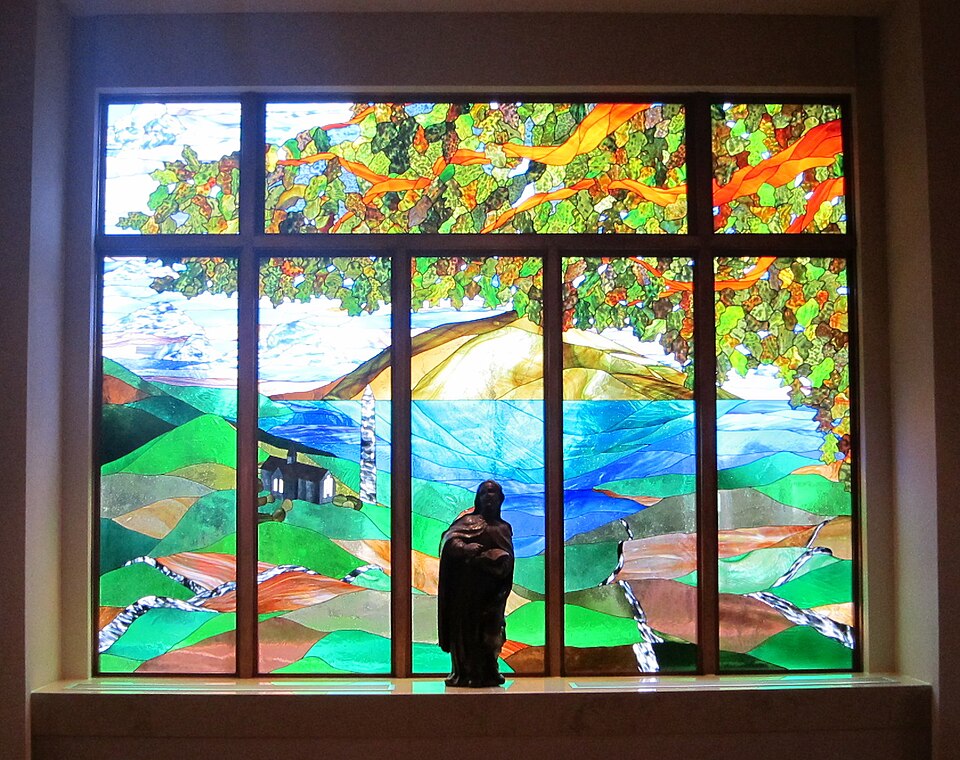
—Doesn't that flame evoke the ancient cults of your island, before Christianity?
I do not deny it. On this land, fires were burned at Imbolc, at the start of February, when the light returns and the ewes give their first milk; and they invoked Brigid, she of fire, forge, and poetry, whose name I bear. The people of the Curragh do not change their hearts in a day. So I did not extinguish their fires; I learned to turn them toward Heaven. The same month of February that gathered them around the embers became my feast; the sacred oak that gives its name to Kildare now shelters a church. I believe you do not convert an island by tearing out its roots, but by grafting them onto a higher tree. The flame remains—it is the hand that offers it that has changed.
You do not convert an island by tearing out its roots, but by grafting them onto a higher tree.
—How did that woven rush cross attributed to you come about?
It came about at the bedside of a dying man. I had been called to an old pagan chieftain who was passing, his mind still clouded with fever. I had nothing to occupy him but the rushes strewn on the floor of his hut, so my fingers began to knot them, strand by strand, four equal arms. And while weaving, I spoke to him: this is the wood where the Lord suffered, this is why He died, this is what He promises you. He watched the cross grow in my hands as one watches a story take shape. Before his breath left him, he asked for baptism. Since then, these rush crosses are woven in the houses of Leinster; they are slipped under the thatch to protect the hearth. A simple marsh reed can open a heart—I only kept my hands busy while God opened his.
A simple marsh reed can open a heart.
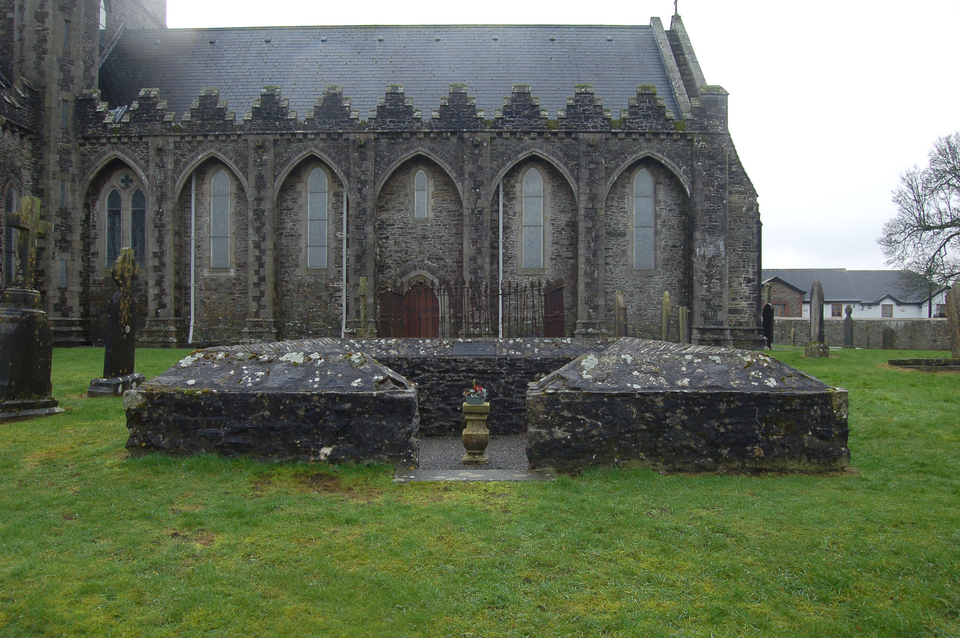
—Why choose to teach the faith with your hands rather than with long speeches?
Because the people of this land are shepherds, smiths, peat-cutters; they understand what they can touch. A speech in Latin slides off them like rain off the brat, but a rush cross they see born, which they can remake with their own fingers by the fire, that stays with them. This is how I have always worked: I multiply butter in the churn when the poor are hungry, I weave rushes when a soul is dying, I lay my mantle on the grass when land is needed. Great truths pass better through small things. Christ Himself spoke of seeds, sheep, and leaven, not of treatises. An abbess who wants to feed spirits does like the farmer: she sows where the soil has already been turned by daily life.
Great truths pass better through small things.
—They say you dreamed of offering a lake of beer to Heaven. Where did such an image come from?
From my table, quite simply. In our house, hospitality is sacred: the traveler who knocks at the enclosure receives lodging, barley bread, milk, butter from our cows, and the light beer that cheers the meal before the silence of night. So when I think of the Kingdom, I do not imagine it cold or stingy. I would like a great lake of beer for the King of kings; I would like the family of Heaven to drink it throughout all eternity. That makes the austere smile. But what better portrait of Paradise than endless hospitality, a heavenly household seated at table forever? A God one could not receive at one's table would not be my God. Generosity is not a sin: it is the form love takes when it has enough to share.
A God one could not receive at one's table would not be my God.
—What do those miracles of milk and butter, so often reported, mean to you?
Milk is the very life of this island. I was born of a noble father, Dubthach, and a slave mother who milked the beasts; the smell of the churn cradled my childhood before that of incense. So the Lord willed that His graces pass through what I know: so many times the butter multiplied under my hand to feed a line of poor that should have exhausted it all, and the pail did not run dry. These are not great noisy wonders, they are kitchen and stable miracles. But I believe God hides where people are hungry, in a pot of milk rather than in thunder. Feeding a hungry person is praying with one's hands; and an abbess who leaves a door closed at noon has understood nothing of the Gospel.
Feeding a hungry person is praying with one's hands.
Read further
This imaginary interview was generated by artificial intelligence from sources documented in Brigid of Kildare's profile. It dramatises what the figure might have said based on what we know about them, but does not constitute attested historical testimony. For primary sources and factual documentation, refer to the full profile.