Kids interview Brigid of Kildare
by Charactorium · Brigid of Kildare (451 — 525) · Spirituality · Mythology · 5 min read
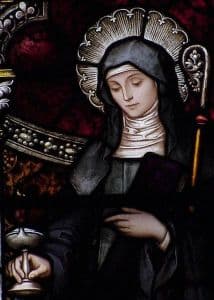
Two young visitors, twelve years old, push open the door of the wooden church of Kildare. An abbess in a light veil welcomes them near the burning fire. She sits down, smiles, and invites them to ask anything they want to know.
—Is it true that you got the land for your monastery thanks to your cloak?
You know, my child, I needed land to build. So I went to see the king of Leinster, one of those petty kings we called the lords of a tuath, a tribe. He mocked me. He promised me as much land as my cloak, my brat, could cover. Imagine his face! I laid my woolen cloak on the ground. And it began to grow, and grow, until it covered the whole great plain of the Curragh. The king stopped laughing. He gave me the land, and he asked for baptism. That is how Kildare was born.
He promised me the land of a cloak; God made it a whole plain.
—Were you afraid, alone before a king who mocked you?
A little, yes. But I'll tell you something: when you walk for the poor, you walk taller. I was the daughter of a noble father, Dubthach, and an enslaved mother. I knew what it is to be small before the powerful. Before that king seated in his hall, I had only my faith and my brat on my shoulders. Imagine a young woman in a simple woolen tunic, facing a warrior covered in jewels. But I asked nothing for myself. I asked for a roof for those who have none. That is what gives courage.
When you walk for the poor, you walk taller.
—They say that at Kildare there was a fire that never went out. What was it like?
Ah, the fire! It was the heart of Kildare. A sacred flame that my sisters kept day and night, never letting it die. There were twenty of us taking turns to guard it. Each one watched for one night. And on the twentieth night, my child, it was I who kept watch near the embers. Imagine the black silence, just the crackling of wood and the cold outside. Around the fire, a round hedge that no man was allowed to cross. Long after me, a chronicler called Gerald of Wales would come to see that flame, still alive. That fire was like a prayer that never falls silent.
That fire was a prayer that never falls silent.
—Why was it so important never to let the fire go out?
You know, in my island, fire has always been sacred. Even before we were Christians, the people here lit fires at the beginning of February, for Imbolc, the feast that heralds the return of light and the milk of ewes. I wanted that flame to speak of Christ, the true light. A hymn says of me that I am a golden, luminous flame. Keeping that fire was a way of telling the whole country: here, the light does not go out. Imagine a lighthouse set in the middle of green hills. That is what Kildare was for travelers.
—Did you invent the little cross made of rushes that people weave in Ireland?
So they say, yes. Listen carefully, for it is a beautiful story. I was at the bedside of an old pagan chief who was dying. He knew nothing of my faith. So, to keep him occupied, I gathered rushes, those long grasses that grow near marshes, and I began to weave them. A cross with four equal arms. And as my fingers tied the strands, I explained to him, very softly, who Christ was. In the end, he understood. He asked for baptism before closing his eyes. Even today, at home, we weave these crosses every 1st of February.
—Why did you tell your faith by weaving grasses instead of making a great speech?
Because great speeches, my child, slide off people like rain off the brat. But an object made with one's hands, that stays. That dying old chief would not have listened to a sermon. So I kept it simple. My hands moved, my voice followed. It was like telling a story by the fire. At home, we love things you can touch: the milk you churn, the wool you spin, the rush you knot. I often spoke of God with simple things: butter, a spring, a flame. Heaven is better understood through hands than through big words.
Heaven is better understood through hands than through big words.
—Was it rare for a woman to rule over both monks AND nuns in your time?
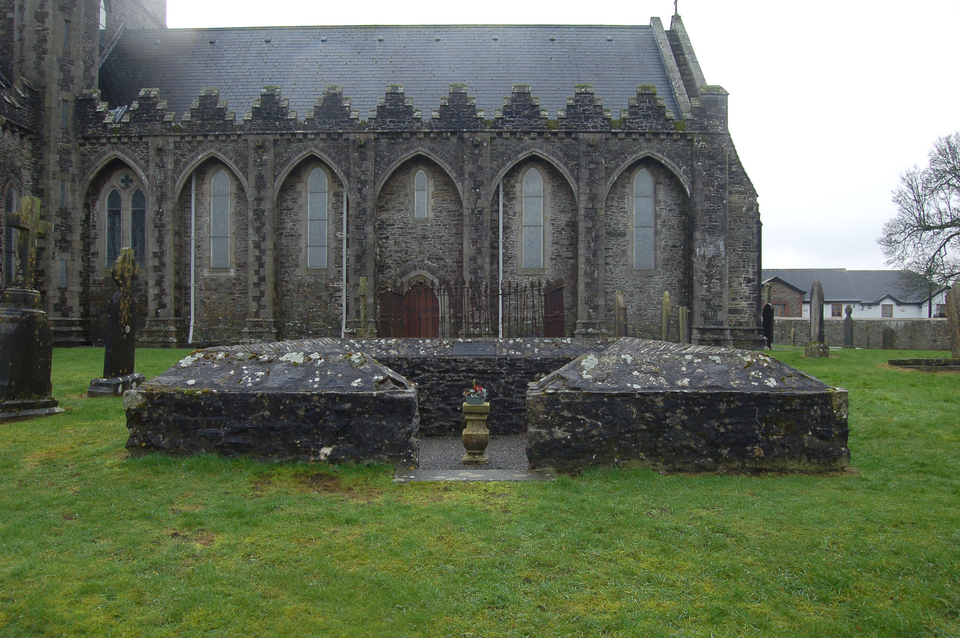
Very rare, yes, and I won't hide it from you. I was an abbess, that is, the mother who governs a house of nuns. But at Kildare, I did something unusual: a double monastery, where both monks and nuns lived together. For this, I joined forces with a bishop, Conleth. He handled what only a bishop could do; I governed the whole community. Imagine a great holy farm, with its round wattle huts and its oak church, and at its head a woman holding the crozier. That was hardly seen before. But God does not look at whether one is man or woman.
—What was in your monastery, besides prayers?
Oh, many things! Kildare was not just a place of silence. We had a scriptorium, a workshop where my monks copied books by hand and decorated them with colors and gold. Long after me, Gerald of Wales would describe a gospel book of Kildare so beautiful that it seemed traced by an angel. There were also cows to milk, wool to spin, barley bread to bake. And above all, the door wide open: we gave shelter and a meal to travelers, the poor, the sick. In our home, to refuse hospitality was to refuse Christ himself.
—Why do you share your name with a Celtic goddess?
Ah, you have sharp ears! Yes, before us, the people of Ireland prayed to a goddess named Brigid, mistress of fire, poetry, and the forge. My people had only just emerged from those ancient beliefs, once carried by the druids, the learned priests of old. So, you see, my name and hers got a little mixed up in people's hearts. I see no shame in that. The light they sought in their fires, I showed them where it truly shines. Imagine an old path that is not destroyed, but extended all the way to a church. That is my work.
—Why is your monastery called Kildare? Does it mean something?
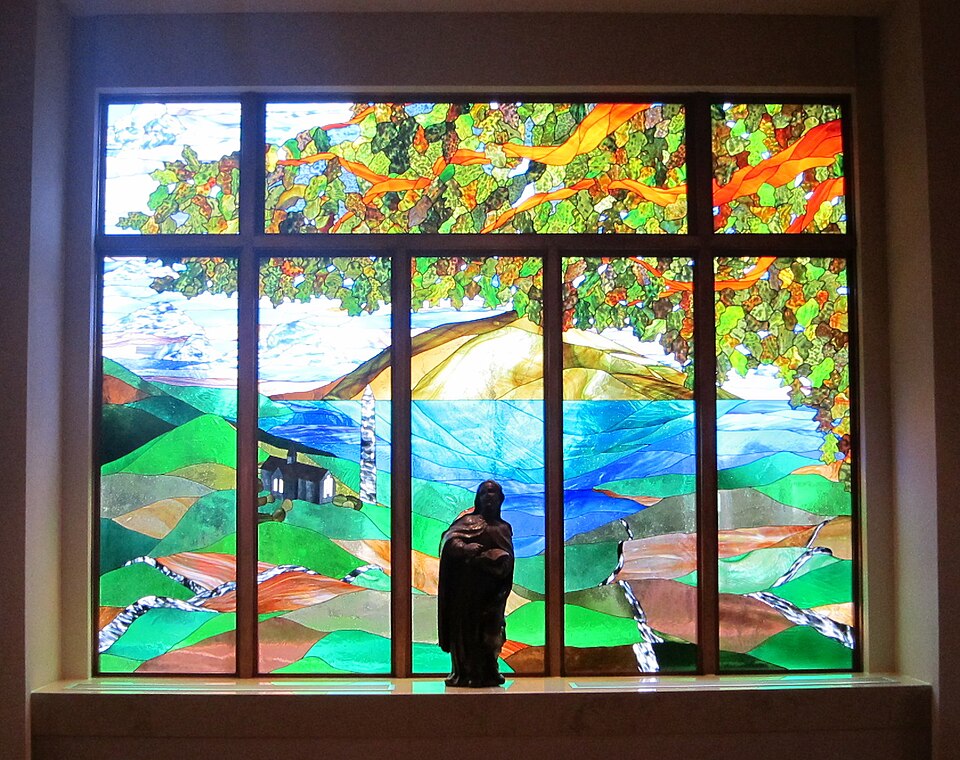
Yes, and it is lovely. In our language, Cill means a church or a monk's cell. And Dara is the oak. Cill Dara, Kildare, is therefore the church of the oak. For I built my house near a great oak that the land had venerated for ages. The ancient Celts loved trees, springs, fires. I did not cut down their oak: I planted my cross beside it. Imagine a huge tree spreading its branches over our thatched huts. Beneath it, we prayed to the God of Heaven. The land of Ireland and the new faith grew together, like two roots in the same soil.
I did not cut down their oak: I planted my cross beside it.
—If we could have eaten with you in the evening, what would have been on the plate?
Nothing very rich, my child, but given with a good heart! Barley or oat bread, fresh milk, butter that we churned ourselves, a little cheese. Sometimes a fish or an egg. And light beer, for in our country it accompanies meals. They said of me that I multiplied butter to feed the poor who knocked at my door. Do you know that I even wished, in a poem, to offer the King of Heaven not gold, but a great lake of beer, so that all the heavenly family might enjoy it? In our home, sharing the table is already praying.
In our home, sharing the table is already praying.
Read further
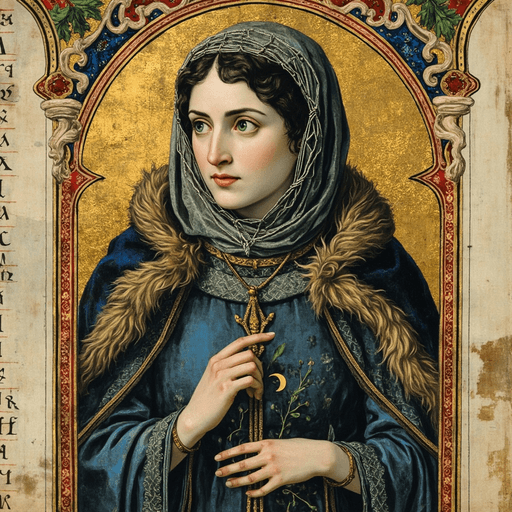
This imaginary interview was generated by artificial intelligence from sources documented in Brigid of Kildare's profile. It dramatises what the figure might have said based on what we know about them, but does not constitute attested historical testimony. For primary sources and factual documentation, refer to the full profile.