Kids interview Buffon
by Charactorium · Buffon (1707 — 1788) · Sciences · 5 min read
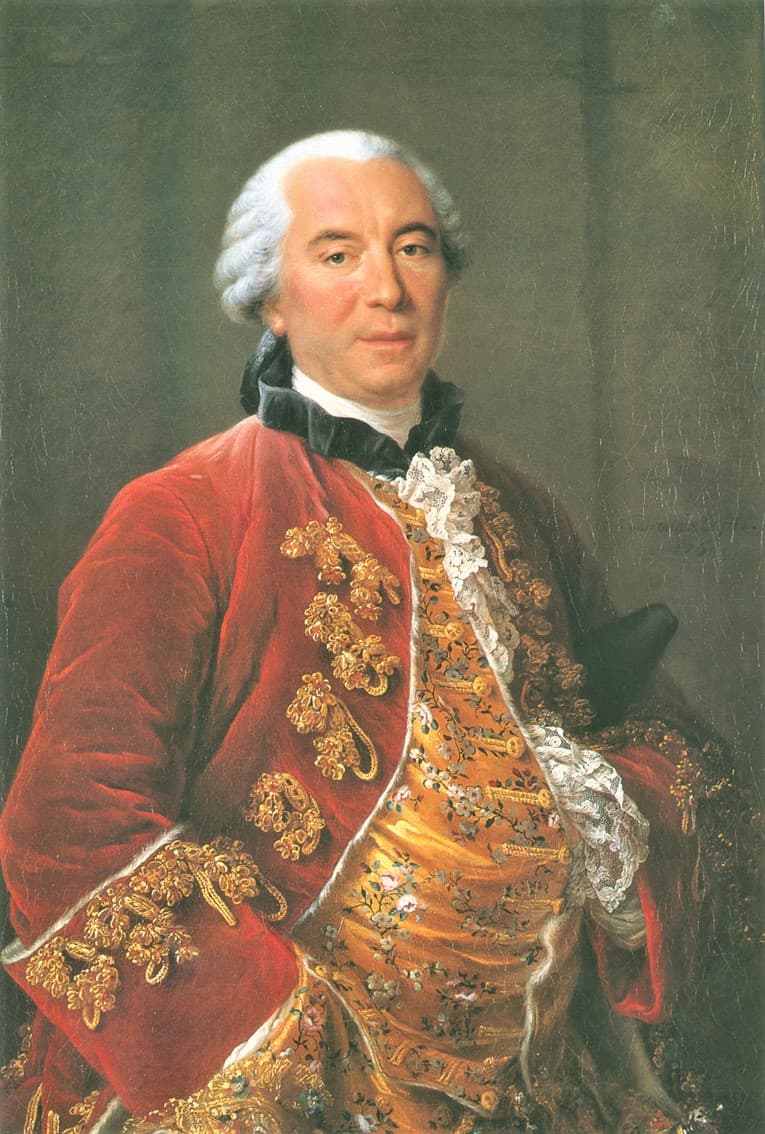
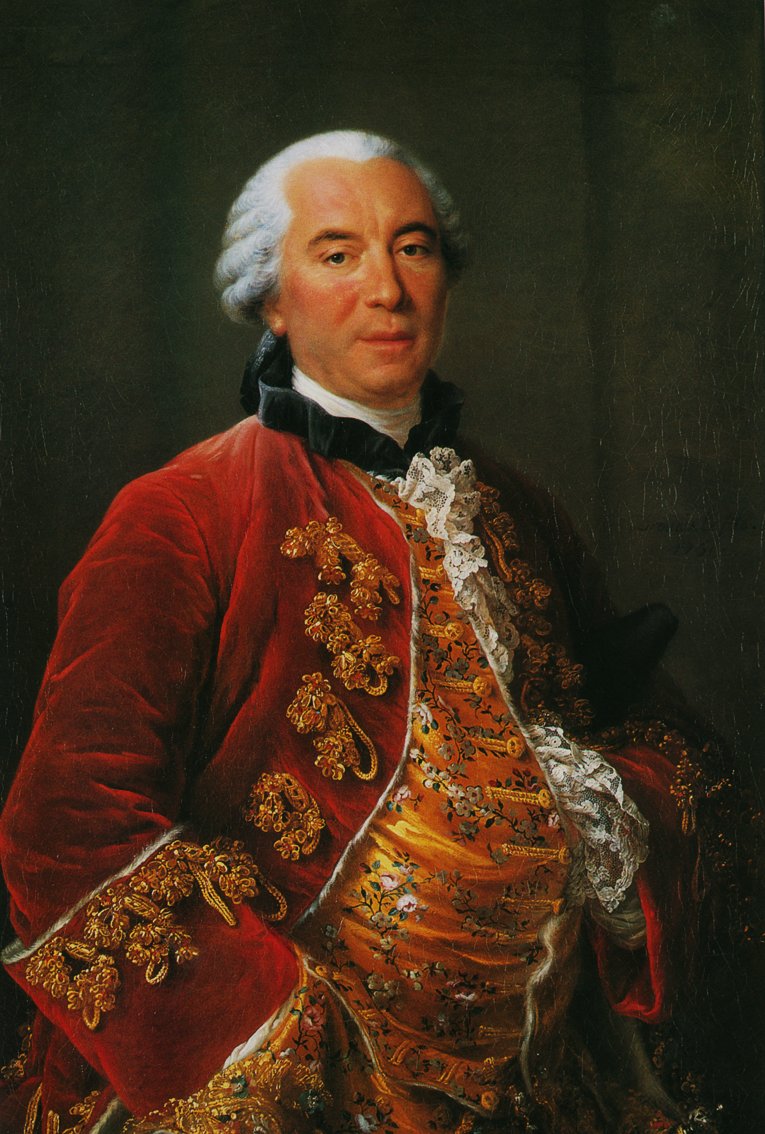
That morning, a school group pushes open the gate of the King's Garden. Two young visitors step forward, notebook in hand, toward an old gentleman with a powdered wig. The Comte de Buffon awaits them, his eyes gleaming: it had been a long time since anyone had asked him such good questions.
—Is it true that you heated iron cannonballs to find out the age of the Earth?
Yes, my child, and you should have seen it! I had iron cannonballs of different sizes heated white-hot in my forges. Then I measured how long each took to cool down by placing my hand on them. Imagine the Earth as a huge cannonball that came out of the fire a long time ago. If I know how long a small one takes to cool, I can guess for the big one. I concluded that our Earth is at least 75,000 years old. That was enormous for the time! People then believed it was only a few thousand years old.
The Earth is a cannonball that came out of the fire, and I listened to it cool.
—And were people okay with your number?
Oh no! It caused quite a stir, you know. In my time, many thought the Earth was only a few thousand years old, as the old sacred books told. And I came along with my 75,000 years! The doctors of the Sorbonne, who were the masters of theology in Paris, reprimanded me in 1751. They wanted me to recant. So I was cautious; I wrote that I submitted. But deep down, I kept thinking that nature had a much longer history. I put all that into Les Époques de la nature years later, in 1778.
You can bow before the doctors and keep your thoughts straight.
—What was the garden like when you arrived?
Much smaller than today, my boy! When I was appointed intendent of the King's Garden in 1739, it was mainly a garden of medicinal plants. I turned it into a true kingdom of knowledge. I doubled its area, planted avenues, and brought in seeds and animals from all over the world. Imagine crates arriving from distant lands, full of shells, strange bones, animal skins never seen before. I stored everything in my cabinet of curiosities. I spent nearly fifty years there. This garden became the ancestor of the great museum you can still visit today.
They entrusted me with a garden; I made it a window onto the whole world.
—What was the point of your cabinet filled with rocks and animals?
Excellent question! A cabinet of curiosities was a room where I kept minerals, fossils, stuffed animals, rare shells. To you, it might look like a messy attic. But to me, it was an open book! By comparing a bone from here and a bone from far away, I understood how nature works everywhere. All of this fed my great work, the Histoire naturelle, 36 volumes! Illustrious visitors came from all over Europe to admire my collections. And each piece told me a little bit of the story of our Earth.
A well-observed pebble says more than a poorly read book.
—I heard you rewrote the same sentence many times, is that true?
Up to eleven times, sometimes! Do you find that crazy? For me, writing and thinking are the same thing. If my sentence is clear, my idea is clear. If it's muddled, I haven't understood it yet. So I would take my goose quill, dip it in the inkwell, and start over. Again and again. In 1753, when I was received at the Académie française, I gave my Discours sur le style. I said that only well-written works pass to posterity. Not rare facts, not discoveries: the beauty of well-expressed thought.
A poorly written sentence always hides a poorly thought idea.
—Why would a scholar care about the beauty of words?
Because science that is not understood is useless, my child! What good is discovering a truth if no one can read it? I wanted my books to be read like a beautiful story. Take my description of the horse: I painted a portrait worthy of a hero. I had this idea, which you may know: 'le style est l'homme même.' That means your way of writing shows who you really are. The rest—lists, scholarly names—time erases. But a well-expressed thought crosses centuries and reaches you.
A truth that no one can read remains a sleeping truth.
—It's strange, a scholar who owns forges. What did you make?
Iron, simply! In Montbard, in Burgundy, I had important forges. Do you know what a forge is? A large workshop where ore is heated to extract metal. The fire roars day and night, it's unbearably hot. It brought me a lot of money, it's true. But it wasn't just about gold. My forges were also my laboratory! That's where I heated my cannonballs to study how bodies cool. I was both a scholar and an ironmaster. The same fire fueled my fortune and my research.
The same fire forged my iron and advanced my science.
—Where did you live when you worked in Montbard?
In an old tower, believe it or not! In Montbard, I converted an old medieval tower into a study. At the top, far from the noise, alone with my papers. I got up at five o'clock in the morning. And because I liked staying in bed, I asked my servant Joseph to drag me out by force! I even gave him a reward when he succeeded. Around the tower, I designed terraced gardens myself, like stairs. I wrote there, in the silence of early morning, most of my Histoire naturelle. Regularity was my secret for working so much.
My best tool as a scholar was my five o'clock wake-up.
—There was another scholar, Linnaeus, you disagreed with him?
Not at all in agreement, my child! Linnaeus was a great Swedish naturalist. In 1735, he invented a system to classify all living beings: two little Latin names for each. That's called nomenclature. It's practical, yes, like a big list of labels. But for me, that wasn't enough! Putting a label on an animal is not knowing it. I preferred to describe it at length, in French, tell how it lives, how it moves, what it eats. For me, nature is not a well-organized drawer. It's a living thing that must be observed closely.
Sticking a label on an animal is not yet knowing it.
—Did you think animals could change over time?
I had that intuition, yes! I used a word for it: degeneration. Don't think it's an insult. I meant that animals gradually transform, according to the climate where they live and what they eat. A species that moves to a cold country no longer looks exactly like its cousin from a warm country. To recognize the same species, I looked at whether the animals could have offspring together. That was a brand-new idea. Much later, other scholars would go much further with evolution. But in my time, I already felt that the living world was not fixed forever.
The living world is not fixed: it transforms, slowly, like the Earth itself.
Read further
This imaginary interview was generated by artificial intelligence from sources documented in Buffon's profile. It dramatises what the figure might have said based on what we know about them, but does not constitute attested historical testimony. For primary sources and factual documentation, refer to the full profile.