Imaginary dialogue between Carl von Linné (Linnaeus) and Buffon
by Charactorium · Buffon (1707 — 1788) · Sciences · 6 min read
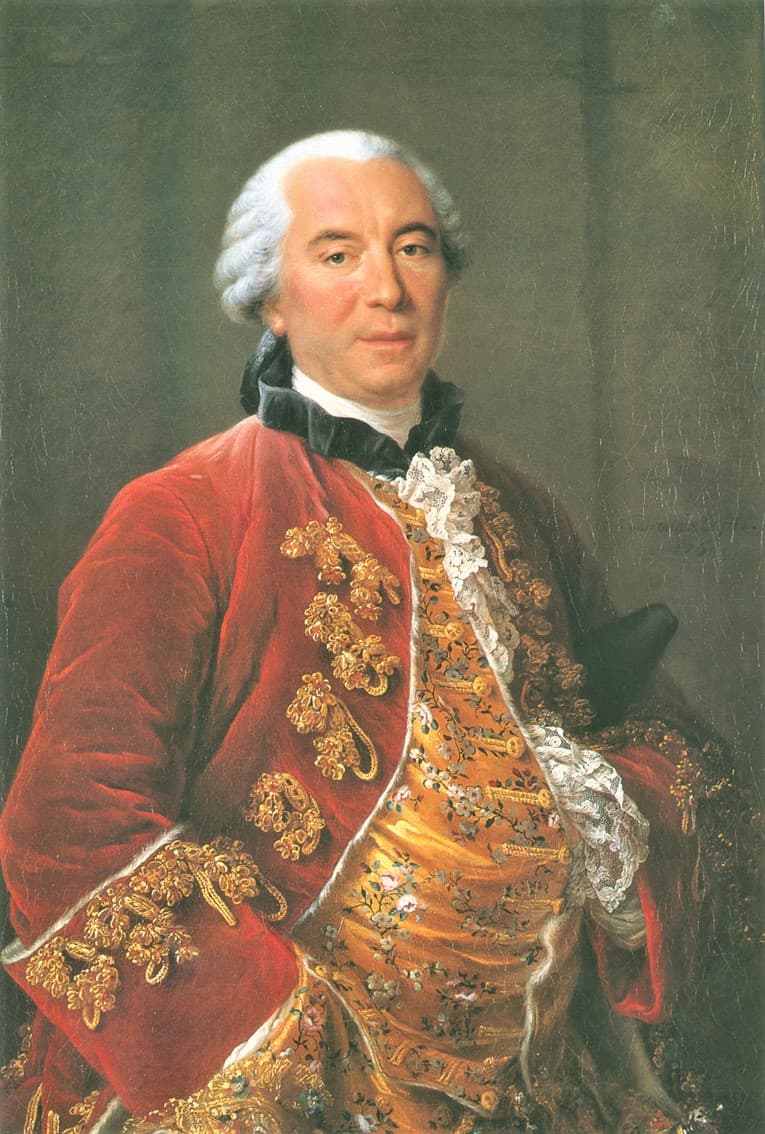
It is along the paths of the King's Garden, in this summer of 1776, that a singular visitor comes to meet Buffon: Carl Linnaeus, the great naturalist from Uppsala, passing through Paris. Between the greenhouses and the flowerbeds where herbariums from around the world are drying, the two men walk side by side, the scent of medicinal plants floating in the warm air. They have known each other by reputation for forty years — since the Systema Naturae divided learned Europe — and their mutual esteem is as keen as their disagreement. The Swede has come to confront, perhaps for the last time, his method with that of his eternal French rival.
—Monsieur de Buffon, since my Systema Naturae of 1735, you have mocked my Latin nomenclature. Why stubbornly refuse simple names in favor of long descriptions?
My dear Linnaeus, you know I consider you the most industrious of men — but your two Latin words lock the animal in a box and think they have understood it. Naming is not knowing. When I describe the horse or the lion, I want one to hear its gait, to guess its habits, its homeland, its relationship to man. Your labels are convenient for the clerk who files, not for the philosopher who thinks. Nature does not proceed by genera and classes: these are artifices of our mind. She knows only individuals, and individuals resemble each other by imperceptible degrees. That is why I write in French, at length, rather than pasting a kitchen label on the flank of each creature.
Naming is not knowing. Your two Latin words lock the animal in a box and think they have understood it.
—You speak of resemblances by degrees. But then, how do you fix the boundaries of a species, if everything slides and blends as you claim?
By a single criterion, and it is sure: fertility. Beings that, when mating, perpetuate their lineage are of the same species; the donkey and the mare produce the mule, but the mule is sterile — proof that there are two species, not one. That is solid, whereas your characters drawn from a stamen or a petal are only appearances. And I add this, which will startle you: a species can degenerate. Transport an animal to another climate, change its food, and over generations its form alters. I do not say it becomes another — I say it varies, it modifies itself. Nature is less immutable than your table would have us believe, my friend.
A species can degenerate. Nature is less immutable than your table would have us believe.
—This garden where we walk has cost you half your life. What have you done, exactly, with this simple medicinal plant garden?
I have made it what you see. When the King appointed me intendant in 1739, it was only an enclosure of herbs for apothecaries. I doubled its area, knocked down the too-narrow walls, negotiated the neighboring plots inch by inch. Above all, I wrote to the whole world: captains, missionaries, travelers send me seeds, skins, minerals, animals in spirits. My cabinet is today one of the richest in Europe — you toured it this morning, you saw. I bequeath not only collections: I bequeath an institution that will survive me, a place where one will come to study all of nature. Nearly fifty years I have worked on it. The King gave me a garden; I return to France a sanctuary of the sciences.
—They say your reception at the Académie française in 1753 was less a speech than a manifesto. Why does a naturalist meddle in the art of writing?
Because they are wrongly separated, Linnaeus! Do you think that thought and its expression are two things? A badly written idea is a badly conceived, poorly matured idea. Facts, discoveries, curiosities, all perish and go out of fashion; only well-made works will pass to posterity. Style, you see, is the order and movement one puts into one's thoughts — it is bound to the man himself, to his own way of grasping the truth. That is why I never deliver a page that I have not weighed. Your Latinist colleagues may despise this care as a vanity of wit; I see it as the very condition of lasting truth. To write badly is to think halfway.
Style is bound to the man himself. To write badly is to think halfway.
—It is whispered that you rework certain pages up to ten or eleven times. Is that true, or is it the legend you let circulate about yourself?
It is true, and I am not ashamed of it. My goose quill uses more ink crossing out than tracing. Such a description of a bird, such an opening on the epochs of the globe, I have rewritten ten times, eleven sometimes, until the sentence flows without anything catching the ear or the mind. People think me facile because they read me without effort — it is quite the opposite: what is read easily was written painfully. Genius is only long patience, my dear. Where others throw their observations in bulk, I wait for the material to settle, for order to reveal itself. A poorly stated truth is a truth that will not be remembered. The naturalist who neglects his pen betrays the nature he claims to serve.
—At Montbard, they say you heat iron cannonballs in your forges for very strange calculations. What do you hope to draw from this fire?
Nothing less than the age of the world, Linnaeus! Follow my reasoning: if the Earth was first a mass of fire, as I believe, it has been cooling since its origin. So I had iron cannonballs of different sizes cast, I let them cool, and I measured the time they took to become manageable again, then cold. From these proportions, relating them to the whole globe, I derive a calculation: the Earth is at least seventy-five thousand years old, and undoubtedly much more. My forges serve me as much as a laboratory as a livelihood. You classify living things today; I try to trace the thread of time back to the earliest ages. Nature has a history, and that history I measure in the crucible.
Nature has a history, and that history I measure in the crucible.
—Seventy-five thousand years! Has the Sorbonne not already reprimanded you for such audacities against sacred chronology?
It did, yes, as early as 1751. The theology faculty noted fourteen propositions from my Natural History that it judged contrary to Scripture — my age of the Earth, my views on its formation. I was urged to recant. I did so, in appearance: I published a declaration saying I abandoned everything that might offend the account of Moses. But note well, my friend, that I did not withdraw a single line from my book. One does not fight the robe head-on; one bows, thanks, and continues. The scholar must live to pursue his work, not be broken for a quarrel of words. Galileo taught me prudence. My epochs will one day say what the declaration conceals.
One does not fight the robe head-on; one bows, thanks, and continues.
—One last curiosity, more familiar. All learned Europe tells that your servant drags you out of bed by force. Is this story founded?
It is, and it is my Joseph who must be thanked for it. I am lazy by nature upon waking, you see, and I understood very early that I would lose my finest hours sleeping. So I made a bargain with him: that he throw me out of bed at five o'clock, by force if necessary, and that he yield neither to my complaints nor to contrary orders. I even promised him a crown for each time he got me up before dawn. At first I cursed him; today I owe him a dozen volumes. Those early morning hours, in the silence of my tower, are the most fruitful of my day. Without Joseph, I might have written only half of my work.
—So you are shut up in your tower at Montbard every morning. How is the rest of your day regulated, far from the bustle of this Paris garden?
With mechanical regularity, for that is what makes a man's strength. In the morning, as soon as Joseph has overcome me, I climb to my tower, away from everything, and write for four or five hours without being disturbed. In the afternoon, I come back down to the world: correspondence, garden affairs, my forges to oversee, visitors to receive. In the evening, I reread and correct what the day produced, sometimes until nine o'clock. I eat little, I sleep early, I give pleasure only the bare minimum. People think me favored by heaven; but talent without discipline is only a field left fallow. I have made each day an instrument in the service of a single design.
Talent without discipline is only a field left fallow.
—Here we are at the end, old rival. If posterity were to decide between you and me, what would you hold most dear?
Let us not play prophets, Linnaeus — leave that care to those who come after. You will have brought order to chaos, and that is an immense service; schoolchildren will bless you for giving them names to remember. I will have wanted to restore nature to its grandeur and movement, to give back the time and history that your tables freeze. You have classified it; I have tried to tell its story. Perhaps we will be found more complementary than rival — your rigor and my breadth. What I know is that we will both have looked nature in the face, instead of reading about it only in ancient books. That, I believe, is our true kinship. The rest belongs to the centuries.
You have classified it; I have tried to tell its story.
Read further
This imaginary interview was generated by artificial intelligence from sources documented in Buffon's profile. It dramatises what the figure might have said based on what we know about them, but does not constitute attested historical testimony. For primary sources and factual documentation, refer to the full profile.